Google Home Speaker vs Amazon Echo Dot Max: Gemini or Alexa at Home?
TL;DR
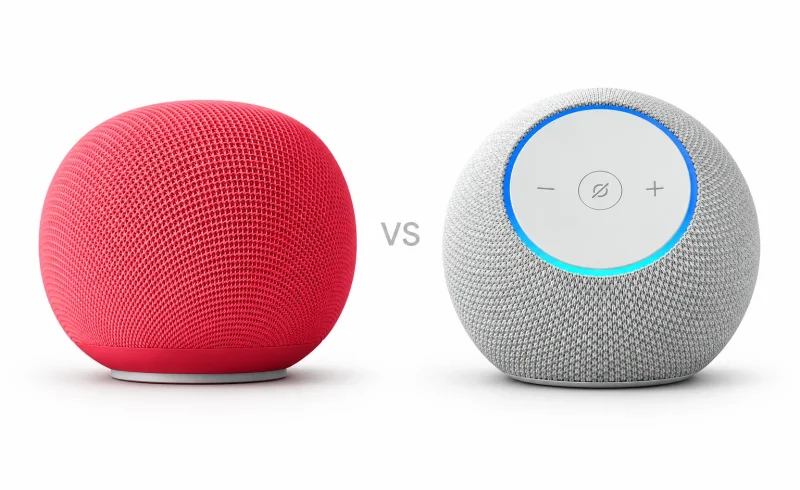
Choose Google Home Speaker for a home built around Gemini, Nest speakers and Cast groups, or Echo Dot Max for an Alexa household. Music is close enough that the assistant and home connections determine the fit.
Google Home Speaker lists at $99.99 (on sale for $79.99 on November 15, 2026) and Echo Dot Max at $119.99. Over two years, Echo costs $119.99 for a Prime household, which gets Alexa+ included, or $599.75 with standalone Alexa+; Google costs $99.99 with free Gemini or $299.99 with Standard. Basic Gemini is free; Alexa+ on Echo is included with eligible Prime membership or costs $19.99 a month separately.
| Feature | Google Home Speaker | Amazon Echo Dot Max |
|---|---|---|
| US list price | $99.99 ($79.99 on November 15, 2026) | $119.99 |
| Sound drivers | 58 mm full-range driver | 63.5 mm woofer and 20.32 mm tweeter |
| Room adaptation | No | Yes |
| Microphones | 3 | 4 |
| Voice assistant | Gemini for Home | Alexa, with Alexa+ through qualifying paid access |
| Matter controller | Yes | Yes |
| Thread border router | Yes | Yes |
| Built-in Zigbee hub | No | Yes |
| Physical microphone mute | Yes | Yes |
| Size, height × width × depth | 3.4 × 4.2 × 4.2 in | 3.9 × 4.27 × 4.27 in |
| Optional assistant plans | Standard $10/month or $100/year, Advanced $20/month or $200/year | Alexa+ $19.99/month or included with eligible Prime |
US models: Google Home Speaker (2026) and Echo Dot Max (2025 release). Setup prices include one speaker and its supplied power adapter, assume existing Wi-Fi, internet and a suitable phone, and exclude tax and optional services.
📑 Table of Contents
- Tom's Guide gives Echo a small sound lead
- Gemini handles follow-ups, but both missed a calendar request
- Echo includes a Zigbee hub, and both support Matter and Thread
- Google groups Nest speakers and connects to Google TV Streamer
- Google's hidden volume taps differ from Echo's visible controls
- Google adds TV pairing in a smaller body than Nest Audio
- Optional assistant plans change the two-year bill
- Final Verdict
- FAQ
Tom's Guide gives Echo a small sound lead
Echo Dot Max delivered warmer Billy Joel vocals, more bass presence and more distinct separation of Olivia Rodrigo's mids and highs to Tom's Guide's Mike Prospero. Google's midrange sounded compressed to him, and he described its bass as merely OK. He characterized the overall difference as subtle.
Both speakers sounded very similar to WIRED's Nena Farrell on “Dark Blue” and “Fast Car.”
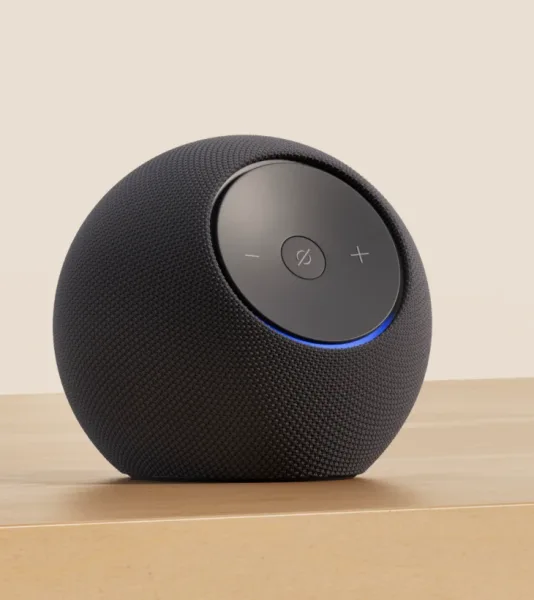
Echo placed first among SoundGuys' Google alternatives: Google sounded thin and increasingly shrill at higher volume, while Echo retained its bass and vocal character until roughly a 70% volume-control setting. RTINGS' Google review and Echo review described limited deep bass and limited maximum volume on each speaker.
Echo Dot Max sounded better than the regular Dot to Craig's Tech Talk (05:32). In his later comparison with the larger full-size Echo, he put Max below that model. Max's high end was too prominent in his office, so he reduced treble.
Both speakers offer bass and treble adjustment.
Google's sound stayed consistent across listening angles in RTINGS' assessment, while Echo's tonal balance changed for listeners sitting beside or behind it.
Gemini handles follow-ups, but both missed a calendar request
Google asked which version of “Fast Car” Farrell wanted; Echo selected the wrong version. WIRED preferred Gemini's conversational manner and found Google could hear requests over music or its own speech. Its successful tasks included moving and adding calendar events and setting two thermostats after an explicit request.
Both speakers failed to retrieve a clearly labeled first day of school from the calendar. Gemini returned a different date, while Alexa's listening ring switched off twice. Google's camera questions also produced access or upgrade responses, and Gemini Live could not provide the requested current television recap.
Google gave a wrong sports answer that Gemini corrected after a follow-up in Tom's Guide's review, and saved a recipe to Google Keep without saying where it had gone.
Echo includes a Zigbee hub, and both support Matter and Thread
Echo Dot Max includes a Zigbee hub as well as Matter support and a Thread border router. Google Home Speaker supplies a Google Home Matter hub and a Thread 1.3 border router. Both can fill the hub and border-router roles for compatible Matter-over-Thread accessories.
Alexa's Matter multi-admin support allows a compatible accessory to connect to multiple smart-home platforms. The accessory must support multi-admin, and available functions depend on its device category and platform compatibility.
Echo's presence and temperature routines offer another route into automation. Tom's Guide reported temperature, ambient-light and presence sensors plus eero extension, while Craig's Tech Talk described ultrasound presence sensing for routines.
Google setup requires a Google account, the Google Home app, internet, Wi-Fi and Bluetooth. Its household options include Voice Match, and linked services are available to everyone in the home. Echo setup uses an Amazon account and the Alexa app.
Google groups Nest speakers and connects to Google TV Streamer
Google Home Speaker joins groups with Nest speakers, Nest displays and Cast-enabled devices. Google also offers spatial surround through a separately purchased Google TV Streamer, giving an existing Google media setup a defined route from room music to television sound.
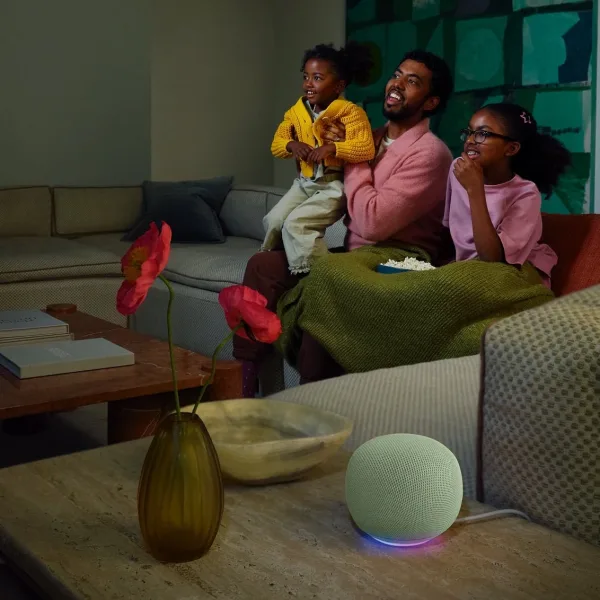
Google Home Speaker paired with the Streamer in C. Scott Brown's demonstration. He described a two-speaker arrangement but had only one unit, so he could not demonstrate stereo pairing.
Google's hidden volume taps differ from Echo's visible controls
Google hides its volume positions until a tap lights them up. Prospero still had to try them to tell volume up from volume down after the lights revealed their positions. Echo places volume and microphone controls on top, while Google's rear two-stage hardware mute switch provides a separate physical way to disable its microphones.
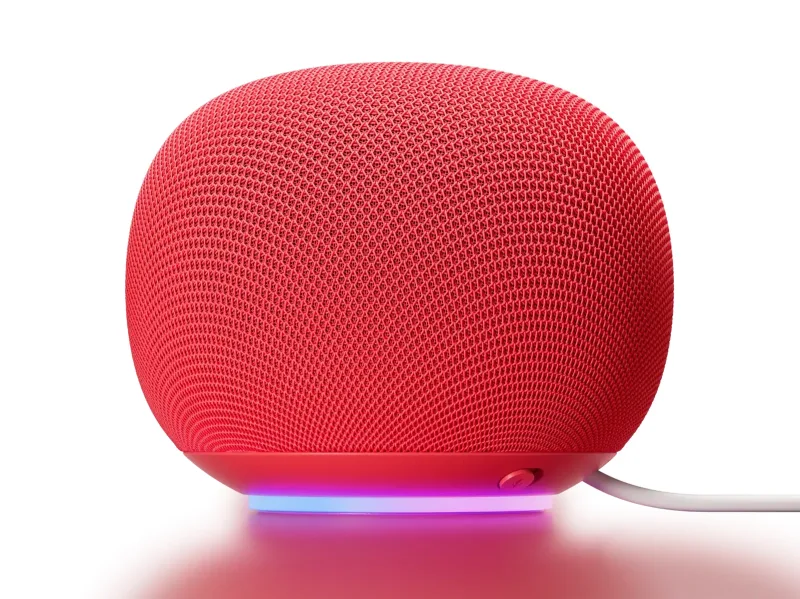
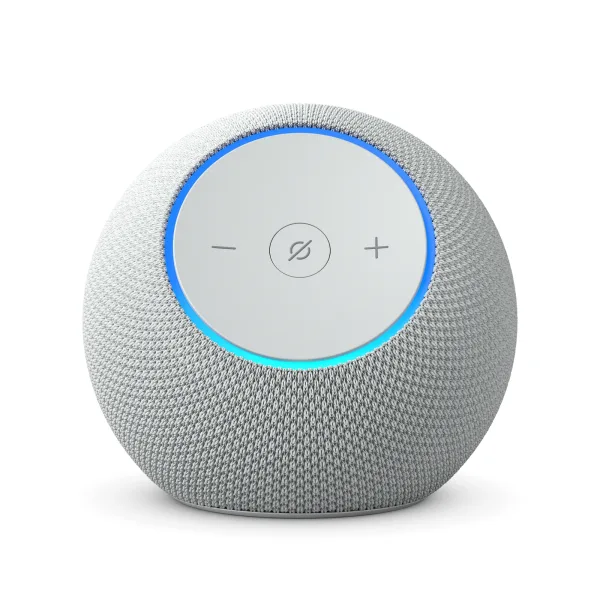
Google's permanently attached power cord matters when moving it through an arranged cable run, a detail Brown disliked. Echo uses its supplied power adapter and indicates a disabled microphone with a red light.
Google adds TV pairing in a smaller body than Nest Audio
Google Home Speaker sounded better than Nest Mini but not quite as good as Nest Audio to Brown in his comparison with older Nest speakers (05:51), with both compared speakers set to 50% volume.

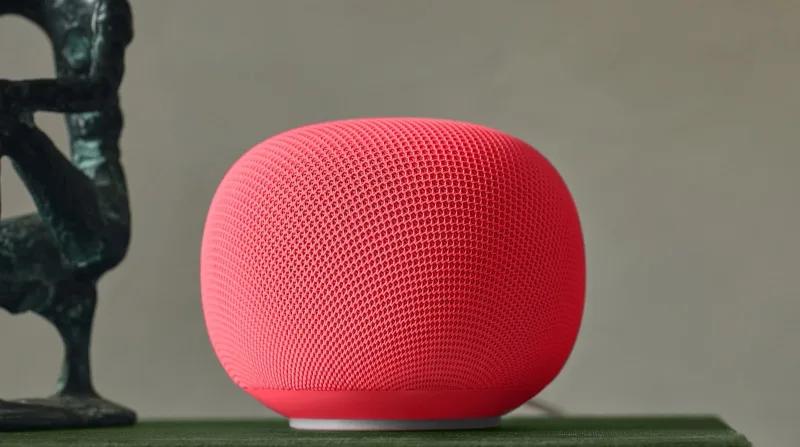
Existing Nest Audio owners should skip Google Home Speaker unless they want two-speaker Google TV Streamer pairing or a smaller, lighter speaker, in Brown's view; the Nest Audio vs HomePod comparison shows how that speaker stacks up against Apple's. Nest Mini owners have more reason to upgrade for sound, according to him.
Optional assistant plans change the two-year bill
Basic Gemini carries no Google Home Premium fee. Standard adds Gemini Live at $10 a month or $100 a year; Advanced adds camera and home-description features at $20 a month or $200 a year. The current Google offer includes a limited 30-day Standard trial for eligible new subscribers; its renewal timing can alter the actual bill.
Alexa+ on Echo requires eligible Prime membership or standalone access at $19.99 a month; it is separate from ordinary Alexa. An existing eligible Prime household pays no additional Alexa+ fee.
Over 24 months, speaker plus assistant plan, before tax and trials:
| Setup | Two-year cost |
|---|---|
| Google Home Speaker with free Gemini | $99.99 ($79.99 on sale) |
| Google Home Speaker with Standard | $299.99 ($279.99 on sale) |
| Google Home Speaker with Advanced | $499.99 ($479.99 on sale) |
| Echo Dot Max with Alexa+ through Prime | $119.99 plus existing Prime |
| Echo Dot Max with standalone Alexa+ | $599.75 |
Final Verdict
Music is a tie, with WIRED hearing near parity and Tom's Guide leaning slightly toward Echo, leaving Gemini versus Alexa as the deciding household choice.
- Google Calendar tasks and conversational follow-ups: Google Home Speaker, which moved and added events for WIRED even though retrieval failed.
- Existing Alexa household: Echo Dot Max keeps the household on Alexa.
- Existing eligible Prime membership: Echo Dot Max provides Alexa+ without an additional assistant fee.
- Lower upfront price: Google Home Speaker, $20 less at list price.
- Nest and Cast speaker groups or Google TV Streamer: Google Home Speaker provides the grouping and TV connection described above.