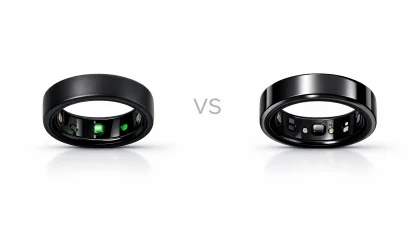
RingConn Gen 3 vs Oura Ring 5: No Subscription or Slimmer Ring?
TL;DR
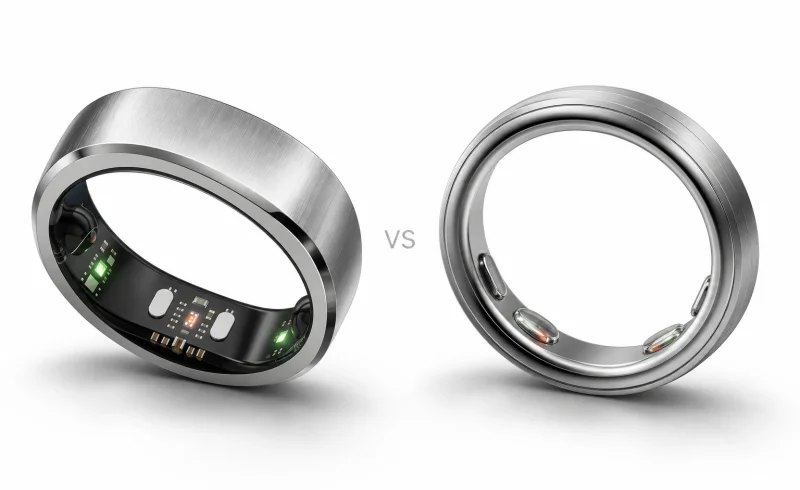
RingConn Gen 3 suits someone who wants long stretches of sleep and health tracking with full app access and no recurring fee. Oura Ring 5 suits someone who wants a slimmer, lighter ring and will pay for its recovery explanations and partner integrations.
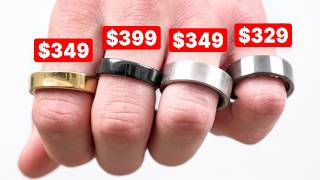
US regular prices as of November 15, 2026, start at $349 for RingConn and $399 for Oura in Silver or Black, a $50 hardware difference. Oura adds $5.99 a month or $69.99 a year for detailed insights, so over two years it costs about $539 against RingConn's $349. RingConn includes a portable charging case; Oura includes a charging dock.
| Feature | RingConn Gen 3 | Oura Ring 5 |
|---|---|---|
| US hardware price, before tax | From $349 | $399 Silver or Black |
| Full app access | No subscription | $5.99/month or $69.99/year |
| Maker-rated battery life | 10-12 days with vibration, 11-14 without | 6-9 days |
| Approximate full ring charge | 90 minutes | 80 minutes |
| Portable charging case | Included, fits all Gen 3 sizes | Optional $99, size-specific |
| Ring sizes | 6-15 | 6-13 |
| Band thickness | 2.3 mm | 2.28 mm |
| Weight | 2.5-3.5 g by size | From 2 g |
| Inner surface | Epoxy resin | Titanium |
| Water-resistance rating | 100 m, IP68 | 100 m, IP68 |
| Offline ring storage | 10 days | Up to 3 days |
| Vibration alerts | Yes | No |
| Phone requirements | iOS 17+ or Android 10+ | iOS 16+ or Android 11+ with Google Play services |
| Health-platform integration | Apple Health and Health Connect | Apple Health and Health Connect |
Battery ratings vary with size, settings and use. Both need a compatible phone; the hardware prices include their standard charging equipment. Oura's other finishes cost $499. Size numbers belong to each manufacturer's sizing system.
📑 Table of Contents
- Oura reports more sleep than RingConn
- Oura logged workouts more reliably in Persaud's comparison
- RingConn lasted longer in Hanna's battery test
- RingConn offers sizes through 15; Oura uses titanium inside
- RingConn adds alerts, but its buzz can be easy to miss
- Oura charges for interpretation; RingConn keeps the dashboard open
- Final Verdict
- FAQ
Oura reports more sleep than RingConn
In Mike Hanna's sleep analysis (04:45), two weeks of simultaneous wear produced average sleep totals of 7 hours 21 minutes for RingConn and 7 hours 39 minutes for Oura. Deep sleep averaged 1 hour 41 minutes versus 1 hour 48 minutes; REM averaged 1 hour 22 minutes versus 1 hour 31 minutes.
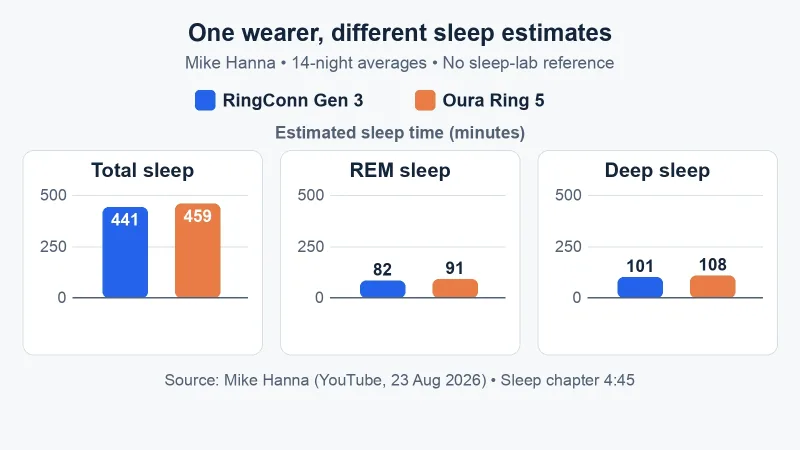
Without a sleep-lab reference, that gap doesn't say which ring is right. Best Buy Canada's Christine Persaud found broadly aligned sleep, heart-rate and oxygen readings while wearing both for months.
TechMishka reported occasional awakenings on Oura that he could not remember; Wareable's review found Oura captured an interrupted night with two separate sleep periods. Oura's November 9 known-issues list describes missing sleep-stage graphs on some Ring 5 nights with iOS app 7.20.0 or later.
Oura logged workouts more reliably in Persaud's comparison
RingConn counted 998 steps and Oura counted 1,006 during Hanna's manually counted 1,000-step walk. Step counting is close; workout classification is where they split.
In Persaud's months-long comparison, RingConn repeatedly labeled kickboxing, strength training and HIIT as walking. A 35-minute strength session became a 15-minute walk. She preferred Oura's automatic activity recognition, while still recommending RingConn for passive health tracking, battery life and fee-free access.

TechMishka had a different experience: RingConn detected most of his sports sessions. His workout comparison (05:35) also found both rings' workout readings sometimes differed substantially from a Garmin Fenix 8. Android Central likewise found Oura's workout heart rate often low beside comparison wearables at high intensity.
For workout tracking, Hanna favors a dedicated fitness tracker. The WHOOP 5.0 and Oura Ring 4 comparison explores that separate training-band-versus-ring choice.
RingConn lasted longer in Hanna's battery test
RingConn lasted 14 days and Oura 11 days in Hanna's charge-to-empty test. RingConn rates the Gen 3 for 10-12 days with vibration enabled or 11-14 without, and Oura rates the Ring 5 for 6-9 days, so Oura beat its own rating here.
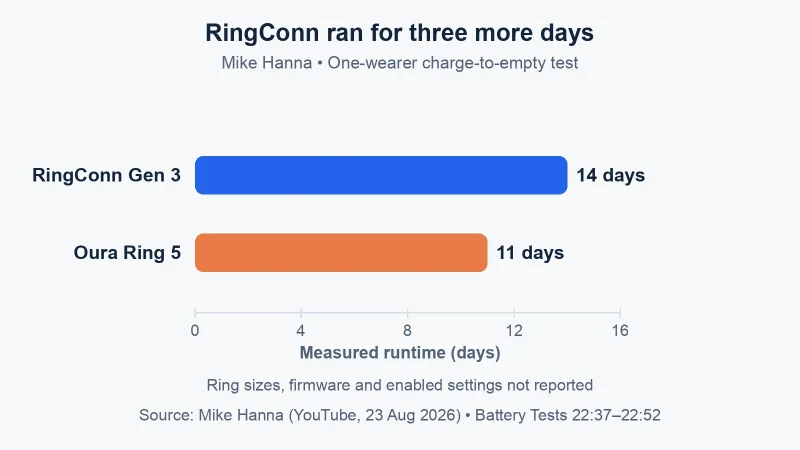
TechMishka recorded 59% remaining on RingConn and 49% on Oura in a partial-discharge comparison. His readings also put RingConn ahead on battery remaining, although neither ring had reached empty in that comparison. Hanna's closing advice favors RingConn when battery life decides the choice, and Oura when compact comfort does.
RingConn's included case also changes travel. It charges every Gen 3 ring size, while Oura's optional $99 portable case fits a specific size. Oura's included dock already makes its $399 ring usable at home. Approximate full-charge times are 90 minutes for RingConn and 80 for Oura, according to their makers.
RingConn offers sizes through 15; Oura uses titanium inside
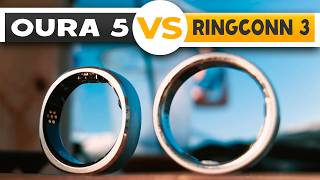
RingConn extends to size 15, while Oura stops at 13. Their nominal sizes are separate systems: RingConn recommends its Gen 3 sizing kit, and Oura's Ring 5 sizing differs from Ring 4.
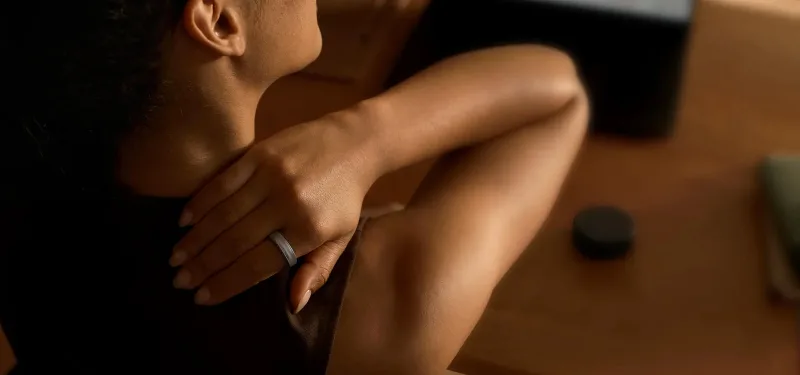
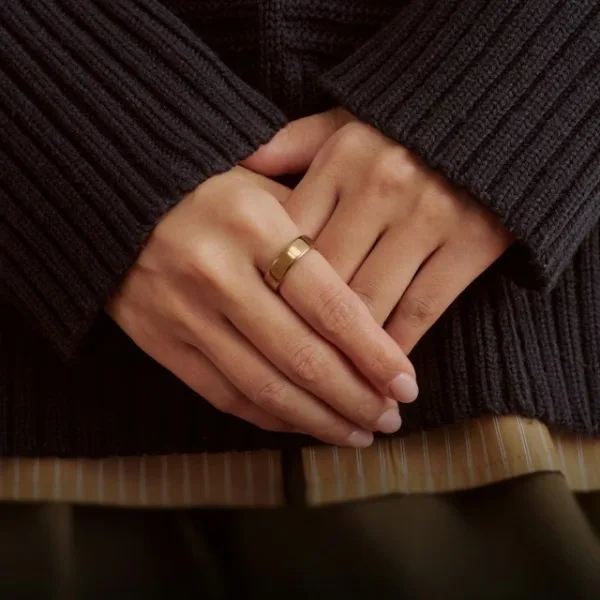
Oura is a fraction thinner and lighter: 2.28 mm and from 2 g, against RingConn's 2.3 mm and 2.5-3.5 g. Persaud found Oura slimmer and RingConn comfortable, though her usual size eight felt tighter to remove. RingConn uses an epoxy inner surface; Oura uses titanium inside and out.
Both carry a 100 m water-resistance rating. For an existing Oura owner weighing a different platform, the Ring 4 and Galaxy Ring comparison explains the earlier phone-ecosystem trade-off; its fit and battery figures belong to those older models.
RingConn adds alerts, but its buzz can be easy to miss
RingConn's vibration motor adds battery, inactivity and health alerts. Persaud barely felt it after months of use and could not distinguish the reason for a buzz; Gadgets & Wearables also found alerts inconsistent. RingConn's FAQ says it has no wake-up alarm.
RingConn's vascular insights describe trends, with optional cuff readings entered by the wearer. The ring supplies no individual systolic or diastolic blood-pressure reading. Its sleep-breathing insights and Oura's nighttime breathing observations offer different views of overnight patterns; neither diagnoses sleep apnea. Oura's US breathing view uses a rolling 30-day window.
Oura charges for interpretation; RingConn keeps the dashboard open
RingConn gives its sleep, activity, stress and health information without a membership. Persaud described its recovery suggestions and Lifestyle Score. Oura charges for its detailed insights and offers partner integrations.
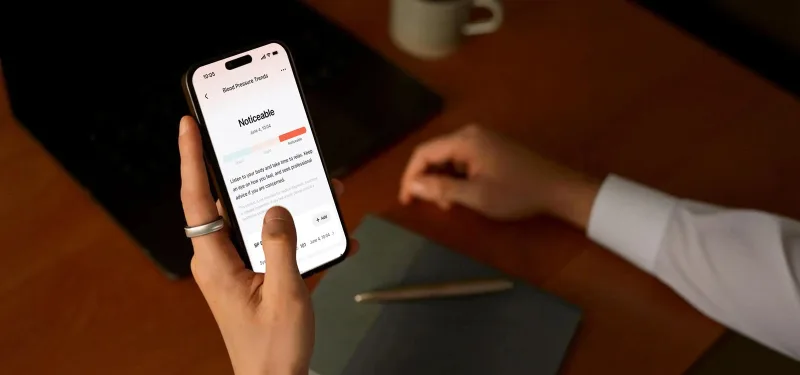

Hanna liked RingConn's four-area overview most. In Marko Maslakovic's Gadgets & Wearables comparison, Oura's interpretation and integrations lead, but RingConn is his practical ownership choice. TechMishka likewise preferred Oura's polish while leaning toward RingConn's case, battery and continuing access.
Both work with iPhones and Android phones and connect to Apple Health or Health Connect. The minimum versions differ, as the table shows. Oura's Natural Cycles connection needs both Oura membership and a separate Natural Cycles subscription; it shares overnight temperature trends.
Oura membership costs $5.99 monthly or $69.99 annually, with one introductory month for new members. Without it, the app retains three daily scores, battery and account functions, and personal-data export remains available.
Final Verdict
If long battery life and full access without recurring fees decide it, choose RingConn Gen 3, the practical pick of most reviewers who wore both; if a slimmer, lighter ring and Oura's more polished app and integrations matter more, Oura Ring 5 is worth its higher two-year cost.
- Longer trips and fee-free tracking: RingConn Gen 3, with a portable case included.
- Automatic exercise logging: Oura Ring 5, going by Persaud's months with both rings, with the workout-heart-rate limitations above.
- Slimmest, lightest fit: Oura Ring 5, from 2 g and 2.28 mm thick.