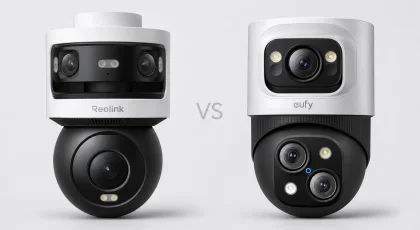
Kiwibit Bird Feeder 2 Pro vs Birdfy Feeder Metal 2 4K: Camera Detail or Squirrel-Proofing?
TL;DR
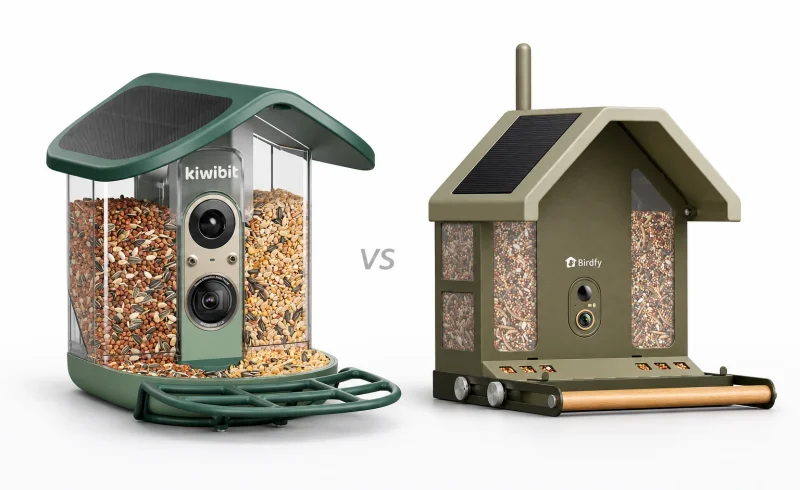
Kiwibit Bird Feeder 2 Pro suits someone who wants selectable camera modes and a removable, divided seed hopper. Birdfy Feeder Metal 2 4K suits a yard where squirrels chew feeders and the household wants automatic species names without a paid plan. Both reviews that tested the pair, Reviewed and ChirpNook, put Kiwibit ahead on camera quality, though its autofocus can miss a quick visitor. Birdfy's metal body resists chewing but still lets animals reach the food.
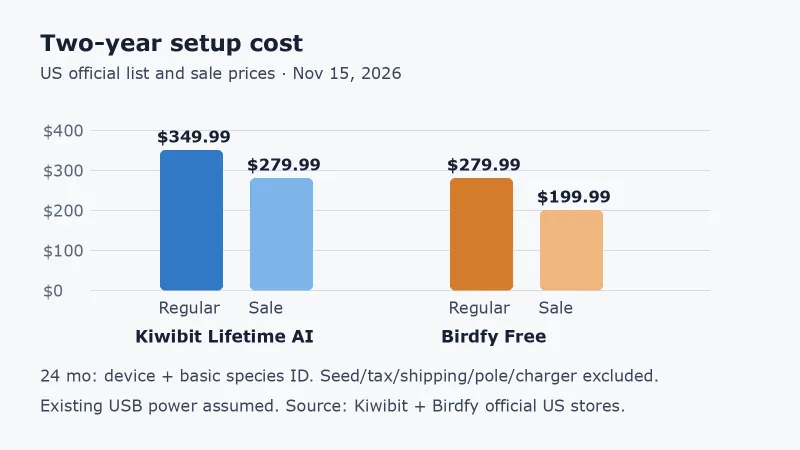
For US setups with continuing bird identification, Kiwibit's Lifetime AI version costs $349.99 regularly, versus $279.99 for Birdfy's Standard Set. On November 15, 2026, their official sale prices were $279.99 and $199.99. Those same amounts cover two years of basic ID with these configurations, before seed, tax and optional accessories. The sale makes Kiwibit 40% more expensive, so its camera modes and hopper need to matter to your daily use.
US prices as of November 15, 2026.
| Feature | Kiwibit Bird Feeder 2 Pro | Birdfy Feeder Metal 2 4K |
|---|---|---|
| Video modes | 4K at 15 fps; 1080p at 60 or 120 fps | 4K |
| Field of view | 130° | 120° |
| Longest clip | Up to 3 minutes | 20 seconds on Free plan |
| Night vision | No | Color and infrared monochrome |
| Solar roof | 5 W | 2 W |
| Battery capacity | 5,200 mAh, removable | 9,000 mAh |
| Total seed capacity | 1.7 L, two compartments | 1.8 L |
| Weather rating | IP65 | IP66 |
| Operating temperature | -4 to 122°F | 14 to 113°F |
| Local microSD replay | Yes, card supplied separately | No |
| Alexa live view | Yes | Yes |
| Google Home live view | — | Yes |
| Continuing species ID in selected setup | Lifetime AI version | Included in Standard Set |
| Regular working setup price | $349.99 at Kiwibit | $279.99 at Birdfy |
| Working setup sale price | $279.99 at Kiwibit | $199.99 at Birdfy |
Both setups include solar roofs and wall/tree mounting hardware, charge from an existing USB power source, and need no hub or memory card. Poles, replacement power adapters and seed cost extra.
📑 Table of Contents
Kiwibit leads on camera, but its focus can lag
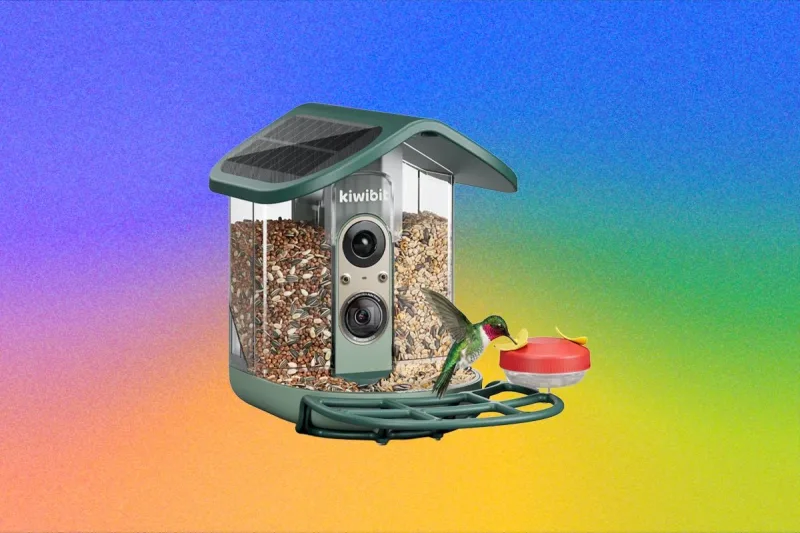
Reviewed, which tested both feeders, named Kiwibit its best overall pick for an excellent camera, and ChirpNook, which also tested both, chose it for camera quality. Kiwibit records 4K at 15 frames per second or 1080p at 60 or 120 fps. Its 4K detail pleased Reviewed; TechRadar found the motion juddery. Birdfy's 4K images looked exceptionally clear to Reviewed, while Tom's Guide's Mike Prospero found a small sharp-focus area, soft birds outside it and washed-out skies. He preferred footage from the older 1080p BirdBuddy he had used previously.
 Courtesy of Kiwibit
Kiwibit's autofocus also misses opportunities. Better With Birds' Jaymi Heimbuch found it still hunting after chickadees and nuthatches had grabbed a seed and departed, although settled birds produced detailed images. WIRED's Kat Merck found crisp images of takeoffs and landings, but sometimes saw birds watch the moving lens or fly away.
Kiwibit's 120 fps mode divides reviewers. TechRadar's Sam Kieldsen found slideshow-like playback and preferred 1080p at 60 fps, without sound in either slow-motion mode. Heimbuch and Reviewed found useful slow-motion footage; Notebookcheck reported some choppiness.

Birdfeeding with Kurtis found Birdfy's camera disappointing after more than a month of backyard use, despite praising the feeder's design and seed capacity. Clip length also differs: Kiwibit recorded visits of up to three minutes in WIRED's test, while Birdfy's free plan saves 20-second Moments.
Kiwibit offers a card slot; Birdfy uses the cloud
Both feeders can attach the wrong name to a bird. In WIRED's four-week Kiwibit review, Merck saw a crow labeled as a pileated woodpecker and species that do not live in her western Washington area. TechRadar generally found the IDs accurate, but a visit containing several species received only one species tag. Birdfy correctly named several sparrows in Tom's Guide's test, then mislabeled a brown-headed cowbird as a Barbados bullfinch. Its squirrel tags repeatedly stopped at "animal."
Birdfy includes automatic basic species ID on every model from November 1, 2026. More detailed animal insights and longer storage belong to its paid tiers. The Kiwibit Lifetime AI version includes continuing identification and advertises up to 60 days of cloud history; Birdfy Free retains Moments for 30 days. A Kiwibit microSD card supplies another recording destination, whereas Birdfy has no microSD replay. Birdfy Free also limits edited exports to 1080p, with 4K editing exports in paid tiers.
In Grant Rettig's app review (27:33), he rates Kiwibit among the more accurate feeders he has tried, while noting that it still confuses similar species.

Birdfy adds metal protection and night viewing
Birdfy surrounds its camera and seed windows with metal, limiting the exposed plastic that squirrels can chew. Reviewed's tests of both models named Kiwibit the overall pick and Birdfy the squirrel-resistant pick. Yet animals repeatedly knocked Birdfy's seed-tray protector onto the ground, and Kiwibit's deterrent sounds failed to drive squirrels away. Birdfy's housing protects the feeder while its seed remains accessible to scavengers.
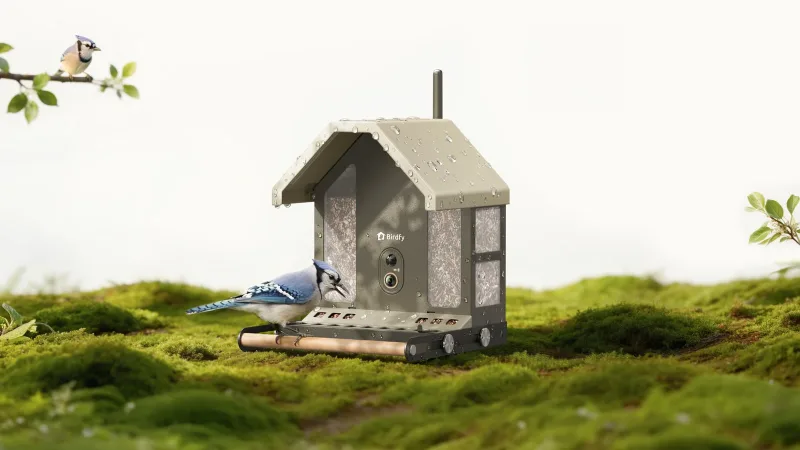
Birdfy also serves after-dark watching: its maker lists color and infrared monochrome night modes, while the Kiwibit 2 Pro has no night mode. Birdfy is rated IP66 and Kiwibit IP65, so both handle rain.
Kiwibit lets you lift out the seed hopper
Kiwibit's dual-compartment hopper lifts out for filling and washing. It holds 1.7 liters in total and lets you carry the containers away for refilling or cleaning, with different seed mixes on either side. Birdfy holds 1.8 liters and stays assembled for a normal refill.
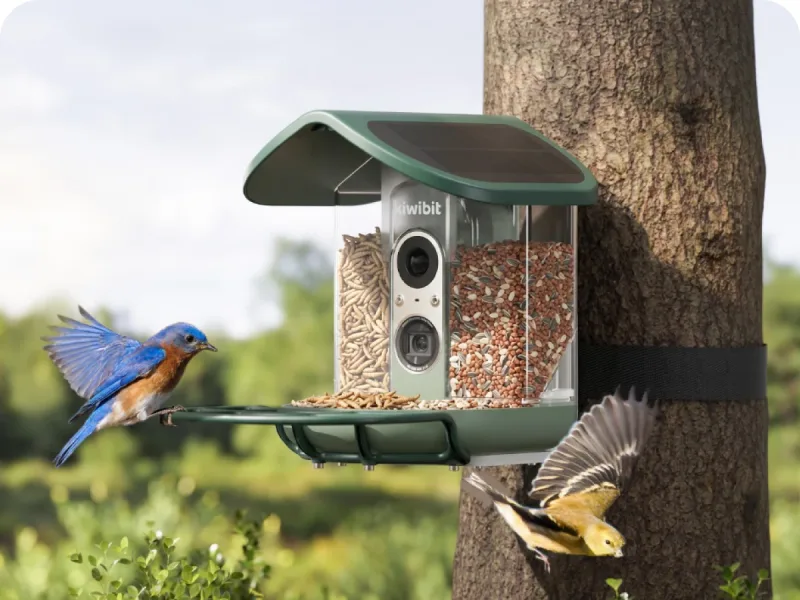
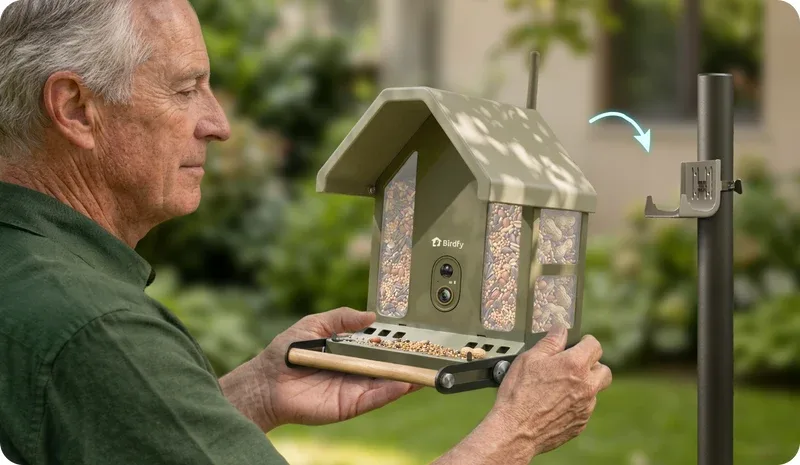
Birdfy was easy to refill in Tom's Guide's test, but reaching its corners for a thorough cleaning required unscrewing parts. Kiwibit's removable containers suit someone who washes the hopper frequently.
Kiwibit has a removable battery; Birdfy has 9,000 mAh
Kiwibit is rated to work down to -4°F, against 14°F for Birdfy, which matters for winter feeding in colder states. Kiwibit pairs a 5 W roof with a removable 5,200 mAh battery; Birdfy pairs 2 W with 9,000 mAh. WIRED's Kiwibit stayed charged through four weeks in western Washington, including cloudy days. Reviewed's Birdfy stayed charged during its New England testing.
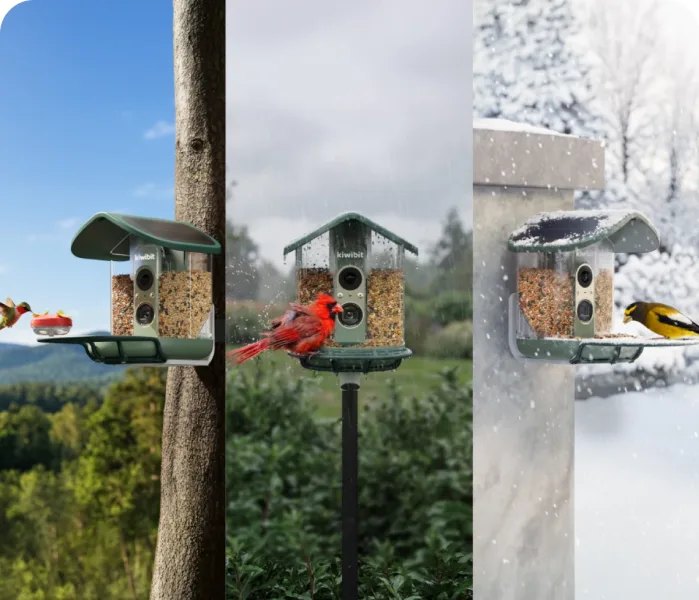
Both support family sharing through their iPhone and Android apps, 2.4 GHz or 5 GHz Wi-Fi and Alexa live view. Birdfy supports Google Home live viewing on a Nest Hub, so its live feed can appear on that display.
Kiwibit's app has divided reviewers: Reviewed and Digital Camera World found it approachable, while WIRED and TechRadar found navigation cluttered. Birdfy's app pleased Tom's Guide, although separate owners reported missed visits and unstable connections.
Kiwibit Lifetime AI costs more upfront
Birdfy Standard and Kiwibit Lifetime AI avoid a continuing basic-ID bill, but their upfront costs differ. The regular US prices are $279.99 for Birdfy and $349.99 for Kiwibit. Their November 15, 2026 sale prices are $199.99 and $279.99. For two years with these included services, those are also the equipment-and-basic-ID totals; seed, tax, shipping and optional mounting or charging equipment are additional.
Kiwibit's lower-priced subscription version is a different calculation: it costs $259.99 regularly or $219.99 in the November 15 sale, with continuing AI identification paid separately after the trial. Its core live view, motion clips, notifications and sharing work without that plan.
Final Verdict
If image quality decides it, choose Kiwibit: Reviewed and ChirpNook, which tested both, rate its camera higher, though its autofocus can lag behind quick visitors. If squirrels, night viewing or a lower price decide it, choose Birdfy.
- Frequent refilling and washing: Kiwibit Bird Feeder 2 Pro, for its removable divided hopper.
- Squirrels damaging plastic feeders: Birdfy Feeder Metal 2 4K, for its metal body, accepting that animals can still reach seed.
- Lower upfront cost with two years of included basic ID: Birdfy Standard at $279.99 regularly versus $349.99 for Kiwibit Lifetime AI; November 15 sale totals are $199.99 versus $279.99.