
Wearable Devices in 2026: How to Choose Between Rings, Watches, Bands, Glasses, and Earbuds
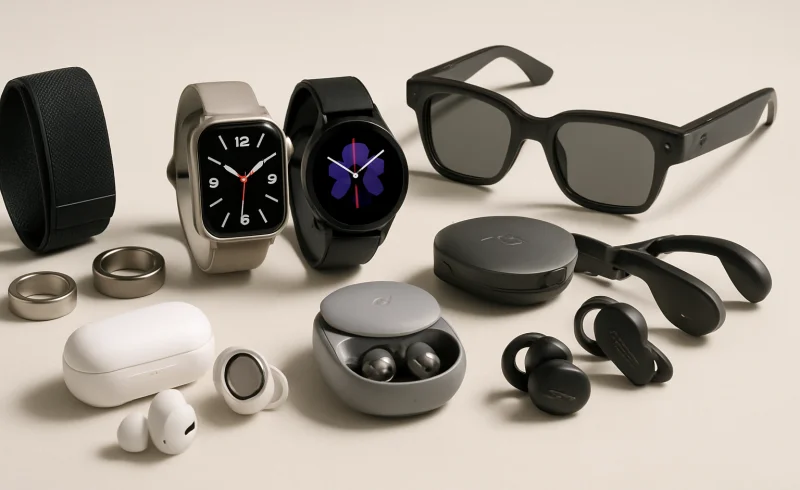
In 2026, wearable devices necessitate thoughtful consideration of ecosystem integration, battery life, privacy, and health monitoring accuracy. This guide delves into these factors, offering insights to help you decide whether these gadgets enhance your daily...
Table of Contents
- Start With the Wearable's Job
- Which Comparison to Read First
- Five Decisions That Matter More Than a Long Feature List
- Matching the Form Factor to Daily Life
- Common Trade-offs and Failure Points
- Scope and Methodology
Start With the Wearable's Job
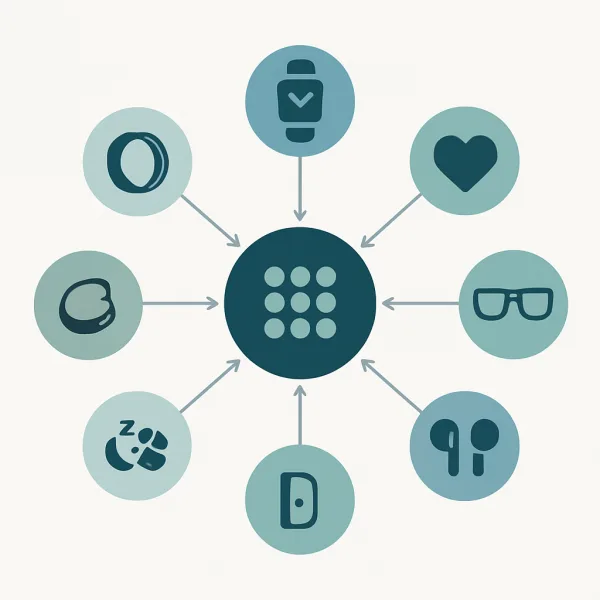
“Wearable” now covers devices that behave very differently once they are on your body. A smart ring can disappear into the background and collect data without giving you another screen. A smartwatch can put workouts, notifications, calls, maps, and apps on your wrist. A screenless fitness band can emphasize continuous tracking while pushing most interpretation to the phone. Smart glasses can mean either cameras and audio near your eyes or a personal display in front of them. Earbuds can isolate outside noise or deliberately leave your ears open to it.
That makes the usual question — which device has the most features? — a poor starting point. The more useful question is: what job should the wearable do, and what daily friction are you willing to accept to get it done?
For this comparison hub, the main decision points are compatibility, interaction style, charging cadence, sensor limitations, comfort, app dependence, and privacy. Those factors tend to shape everyday use more than a long list of sensors or software features.
Smart rings: passive tracking with almost no interface
A smart ring makes sense when the appeal is continuous or overnight tracking without a display on the body. The trade-off is that the phone app becomes the primary interface, and fit matters unusually much: a ring that is uncomfortable, rotates excessively, or does not fit consistently can undermine the whole reason for wearing it.
The useful comparison is therefore not simply which ring records more metrics. It is also how each ring fits into a phone ecosystem, how much of the experience depends on its companion software, and whether the ongoing service model suits the way you expect to use the data. See Oura Ring 4 vs Samsung Galaxy Ring.
Smartwatches: the most interactive option
A smartwatch is closer to a small computer on the wrist. That can be useful when you want information during the day without reaching for a phone: workout screens, timers, notifications, navigation, calls, or other glanceable interactions. Some models also support cellular connections for a degree of independence from the paired phone.
The cost of that flexibility is attention and maintenance. A bright display, frequent notifications, active apps, GPS, and cellular use all compete for battery life. Just as important, smartwatch compatibility is not a minor setup detail; the phone platform can determine which device is practical in the first place. The linked Apple Watch Series 10 vs Samsung Galaxy Watch 6 comparison is most useful as an ecosystem decision, not as a contest over isolated specifications.
Screenless fitness wearables: data first, screen second
A screenless wearable removes one of the biggest sources of distraction from the wrist. That can suit people who want training, sleep, or recovery trends without turning the wearable into another notification surface. In exchange, more of the experience moves into the companion app, and the usefulness of the device depends heavily on how its software interprets the collected data.
That is the central tension in WHOOP 5.0 vs Oura Ring 4: not merely wrist versus finger, but two different approaches to passive tracking, recovery guidance, and app-led interpretation.
Smart glasses: do not treat them as one category
“Smart glasses” can describe fundamentally different products. One pair may center on cameras, microphones, open-ear audio, voice interaction, and AI features. Another may function primarily as a wearable display connected to a phone, computer, or other video source. Those products can look superficially similar while solving different problems.
That is why Ray-Ban Meta vs RayNeo display glasses should begin with the question camera-and-audio assistant or personal display? before image quality, speakers, controls, or software enter the discussion.
Earbuds: isolation and awareness are opposite design goals
Audio wearables also split into different philosophies. Sealed in-ear earbuds can use active noise cancellation to reduce outside sound. Open-ear designs deliberately preserve environmental awareness, which changes how they behave in traffic, offices, public transport, and other noisy places.
The comparison between Galaxy Buds 3 Pro, Liberty 4 Pro, and Bose Ultra Open is therefore more useful when read as a choice between isolation, fit, controls, ecosystem features, and awareness — not as a single ranking of sound quality.
Which Comparison to Read First
- You want a screen-free ring for sleep, recovery, and daily health trends → Oura Ring 4 vs Samsung Galaxy Ring
- You want a smartwatch and phone-platform fit is the first constraint → Apple Watch Series 10 vs Samsung Galaxy Watch 6
- You want screenless training and recovery guidance rather than a wrist display → WHOOP 5.0 vs Oura Ring 4
- You are deciding between camera/audio smart glasses and wearable display glasses → Ray-Ban Meta vs RayNeo display glasses
- You are deciding between sealed noise-cancelling earbuds and an open-ear design → Galaxy Buds 3 Pro vs Liberty 4 Pro vs Bose Ultra Open
Five Decisions That Matter More Than a Long Feature List
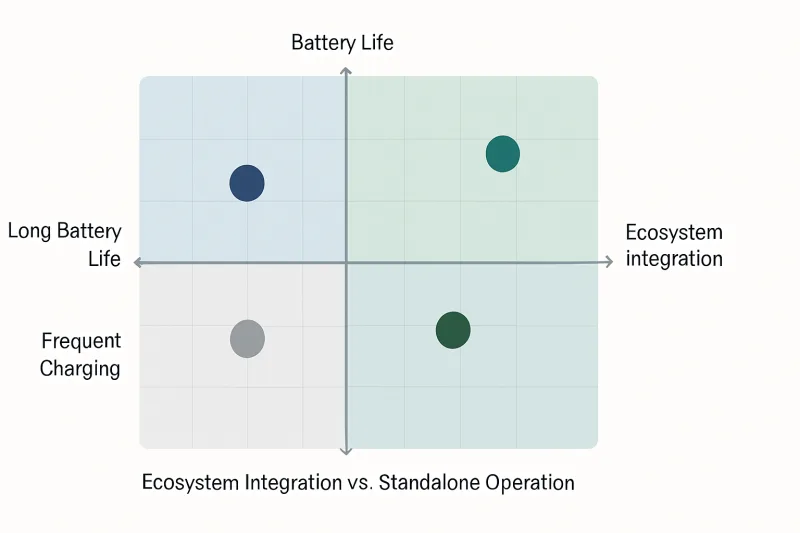
1. Compatibility comes before features
A wearable can look ideal on paper and still be the wrong device if its most important functions depend on a phone, operating system, account, or companion app you do not use. Check the real dependency chain: phone compatibility, required apps, account requirements, supported integrations, and which functions disappear outside the maker's preferred ecosystem.
This matters especially with smartwatches, where the phone platform can define the experience, but it also matters for rings, fitness bands, earbuds, and glasses. “Works over Bluetooth” is not the same as “all intended features work with my devices.”
2. Decide how much interface you want on your body
A smartwatch asks for attention; a ring largely avoids it. A screenless band sits between those extremes by collecting data continuously but moving interpretation to a phone. Smart glasses and earbuds add another dimension because the interface may be voice, audio, cameras, or a visual display rather than a touchscreen.
Think about when you actually want feedback. During a run, a visible pace or heart-rate zone may be useful. During sleep, a screen is irrelevant. During a meeting or commute, audio prompts may be more practical than another glowing display. The right interface depends on the moment in which the wearable is supposed to help.
3. Treat charging as part of the routine, not a footnote
Battery life is not just a specification. It determines when the device leaves your body and which data may be missed while it charges. A device that needs attention every day can be perfectly workable if charging fits naturally into a shower or desk routine. A device intended to capture sleep or multi-day trends becomes more inconvenient if its charging pattern repeatedly overlaps with the periods you care about most.
Manufacturer battery figures are useful as a baseline, but they are conditional. Displays, GPS, calls, cellular connections, audio, sensor settings, and other active features can change runtime substantially. Compare the claimed figure with your expected pattern of use rather than treating one headline number as universal.
4. Separate wellness trends from medical certainty
Wearables can be useful for observing trends in heart rate, sleep, activity, temperature, recovery, and related metrics. That does not make every reading equally precise in every context. Optical heart-rate sensing, for example, can become less reliable during vigorous movement because motion interferes with the signal. Fit, skin contact, placement, movement, and the activity itself can all matter.
For practical use, the question is not whether a wearable is “accurate” in the abstract. Ask which metric matters to you, under what conditions it is collected, whether the device is measuring or estimating it, and how the result should be interpreted. A wellness metric should not be treated as a diagnosis unless the specific feature is explicitly intended and cleared for medical use in your region.
5. Privacy is about the whole data path
Wearables can collect intimate information for long periods, but a Bluetooth specification by itself does not tell you whether a product has good or poor privacy. The more useful questions are where data is processed, whether cloud storage is required, what third-party integrations receive, how long information is retained, whether it can be exported or deleted, and what happens when optional sharing features are enabled.
This is especially important for health-oriented wearables and camera-equipped glasses because the sensitivity of the collected information can be very different. Privacy therefore belongs in the same decision as features and comfort, not in a generic security warning added at the end.
Matching the Form Factor to Daily Life
If sleep and passive tracking are the main goal
Start with rings and screenless trackers rather than smartwatches. The absence of a display can reduce distraction, and the form factor is designed around continuous wear. Then narrow the decision by comfort, sizing, charging routine, app dependence, and the specific sleep or recovery metrics you actually plan to use.
The two relevant paths here are Oura Ring 4 vs Samsung Galaxy Ring for ring-to-ring differences and WHOOP 5.0 vs Oura Ring 4 for wrist-based training guidance versus a ring-centered experience.
If the wearable should replace small phone interactions
A smartwatch is the more natural fit. Notifications, timers, workouts, calls, maps, media controls, and glanceable information all benefit from a display. The first filter, however, should still be platform compatibility. A watch with a longer feature list is not more useful if the functions you care about are restricted by the phone it must pair with.
Use Apple Watch Series 10 vs Samsung Galaxy Watch 6 to examine that trade-off through the lens of ecosystem fit, screen-based interaction, health features, and battery expectations.
If training and recovery interpretation matter more than notifications
A screenless fitness wearable can make more sense than a smartwatch when the goal is to collect data continuously and review it later rather than interact with it throughout the day. This shifts importance away from watch apps and display quality and toward comfort, data continuity, recovery models, workout handling, and the companion software.
WHOOP 5.0 vs Oura Ring 4 is the relevant comparison if you are deciding between a wrist-based, training-oriented system and a ring-based approach to sleep, readiness, and daily trends.
If you are considering smart glasses
Define the task before comparing hardware. For hands-free photos, audio, microphones, voice interaction, or assistant features, camera-and-audio glasses are one branch. For a large virtual screen for video, games, or computer output, display glasses are another. Mixing those branches into one specification checklist leads to misleading conclusions because the most important hardware is different.
The linked Ray-Ban Meta vs RayNeo display glasses comparison is most useful when approached from that task split first.
If audio is the priority
Start with how much of the outside world you want to hear. Noise-cancelling in-ear models and open-ear earbuds are designed around opposing goals: isolation versus awareness. That difference affects commuting, office use, outdoor activity, comfort, bass perception, and how high you may be tempted to set the volume in noisy surroundings.
See Galaxy Buds 3 Pro vs Liberty 4 Pro vs Bose Ultra Open with that distinction in mind before comparing codec support, controls, spatial-audio modes, or case features.
Common Trade-offs and Failure Points
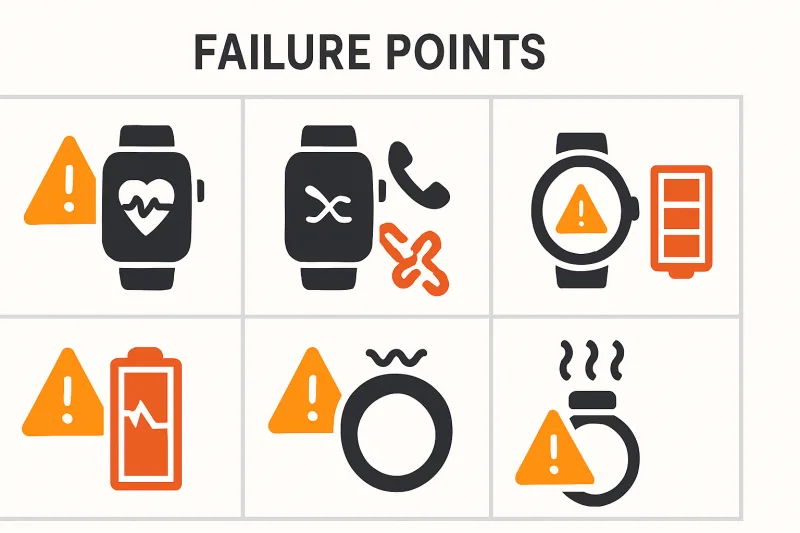
More sensors do not automatically mean more useful data
A longer sensor list can widen what a device attempts to track, but signal quality, fit, algorithms, and interpretation still matter. A metric that is noisy during the activity you care about may be less useful than a smaller set of consistently collected trends.
Comfort is a functional requirement
The most capable wearable still fails if it regularly comes off your body. Rings can be sensitive to sizing and swelling. Watches and bands can feel intrusive during sleep. Earbuds depend on ear shape and seal. Glasses place weight on the nose and ears. Comfort is not cosmetic when continuous wear is part of the product's purpose.
The companion app is part of the device
Many wearables do not make sense as hardware alone. Setup, historical trends, firmware updates, coaching, data export, privacy controls, and integrations often live in the app. That means app quality, account requirements, and long-term software support belong in the comparison alongside the physical device.
Battery runtime and battery lifespan are different questions
A longer runtime between charges can reduce daily friction, but it does not by itself prove that the battery will retain capacity longer over years. Avoid turning short-term runtime claims into unsupported durability conclusions. For longevity, look for replaceability, service options, warranty terms, charging behavior, and evidence about degradation rather than assuming that fewer charging sessions automatically mean a longer-lived device.
Health features need context
A device may produce precise-looking numbers without those numbers carrying medical meaning. Treat readiness, recovery, stress, sleep-stage, and similar scores as model outputs that summarize sensor data, not as direct measurements of a medical condition. When a health feature matters beyond general wellness, check its intended use and regional status separately.
Privacy cannot be reduced to one radio protocol
Bluetooth, Wi-Fi, cellular connectivity, cloud accounts, and third-party services all create different data flows. The relevant privacy question is not whether a wearable is connected; it is what information moves where, under which settings, and with what user control.
Scope and Methodology
This page is a decision hub for a selected group of wearable comparisons. It is not a ranking of every wearable device released in 2026, and it does not claim hands-on testing of every product named here.
The comparisons are organized around practical decision points that recur across wearable categories: platform compatibility, form factor, interaction style, charging cadence, sensor limitations, health-feature scope, privacy, comfort, durability, and dependence on companion software. Where a specification or capability comes from a manufacturer, it should be treated as a manufacturer claim unless the linked comparison provides independent evidence for it.
The scope includes smart rings, smartwatches, screenless fitness wearables, smart glasses, and audio wearables. It does not attempt to cover the wider Internet of Things, medical diagnostic equipment, or every device that can technically be worn on the body.
The goal is narrower: help readers identify the comparison that matches the problem they are actually trying to solve, then evaluate the trade-offs that will still matter after the novelty of the hardware wears off.