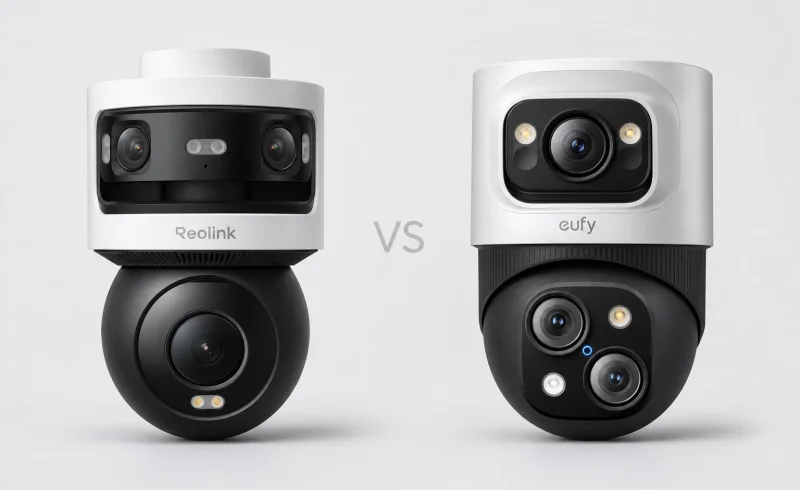
Reolink OMVI 3i PoE vs eufy PoE Bullet-PTZ Cam S4: panorama or recorder?
TL;DR
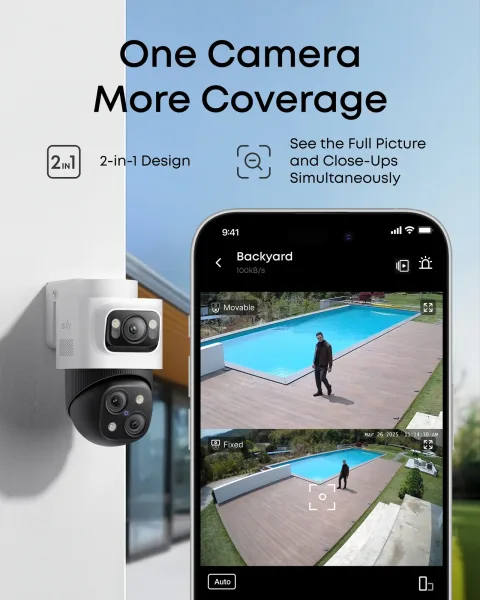
Reolink OMVI 3i PoE suits a single-camera setup when you want local recording without a recorder; eufy PoE Bullet-PTZ Cam S4 fits an existing compatible eufy NVR system. Reolink's fixed panorama spans 180° horizontally, versus eufy's 105.4°, while both keep an overview running as a lower camera follows movement.
The camera-only US list prices are $349.99 for Reolink and $329.99 for eufy, a $20 difference that excludes storage and power equipment. Eufy needs its recorder to work. On November 15, 2026, Reolink's US store had it on sale for $219.99. Coverage and recording setup separate them more clearly than image quality.
| Feature | Reolink OMVI 3i PoE | eufy PoE Bullet-PTZ Cam S4 |
|---|---|---|
| Fixed-view resolution | 5120 × 1920 | 3840 × 2160 |
| Moving-view resolution | 3840 × 2160 | 2560 × 1440 per lens |
| Fixed horizontal field of view | 180° | 105.4° |
| Listed frame rate | 20 fps | 20 fps |
| Motorized pan travel | 350° | 360° |
| Zoom type | Digital | 8× hybrid |
| Local recording destinations | microSD up to 512 GB, compatible NVR, FTP/NAS | Compatible eufy recorder |
| Standalone recording | Yes | No |
| Color night mode | Spotlight | Ambient light or spotlight |
| Weather rating | IP66 | IP65 |
| Two-way audio | Yes | Yes |
| Phone apps | iOS and Android | iOS and Android |
| Google Assistant | Yes | Yes, through NVR system |
| Alexa | — | Yes, through NVR system |
| US camera-only list price | $349.99 | $329.99 |
US list prices as of November 15, 2026, before discounts. Eufy's moving view uses two 2K lenses; its 16MP total and Reolink's 18MP total combine sensors rather than describe one recorded image.
📑 Table of Contents
- What the cameras actually record
- Eufy can show color at night without a spotlight
- A panorama keeps the rest of the yard in view
- Tracking and zoom serve the detail view
- The recorder changes the whole installation
- Ethernet and the mounting point come first
- Reolink adds desktop apps; eufy adds a monitor on the NVR
- Final Verdict
- FAQ
What the cameras actually record
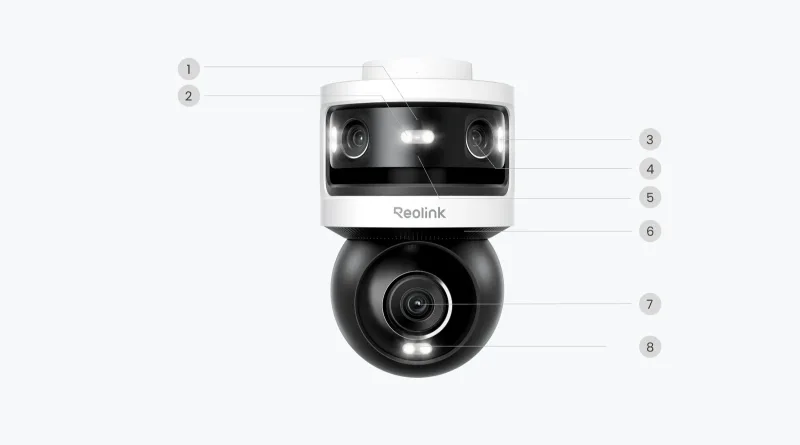
Reolink records its panorama and moving view at different shapes: a wide 5120 × 1920 overview and a conventional 3840 × 2160 tracking image. Eufy records a 3840 × 2160 fixed view and uses two 2560 × 1440 lenses below it. Both manufacturers list 20 frames per second for these views.
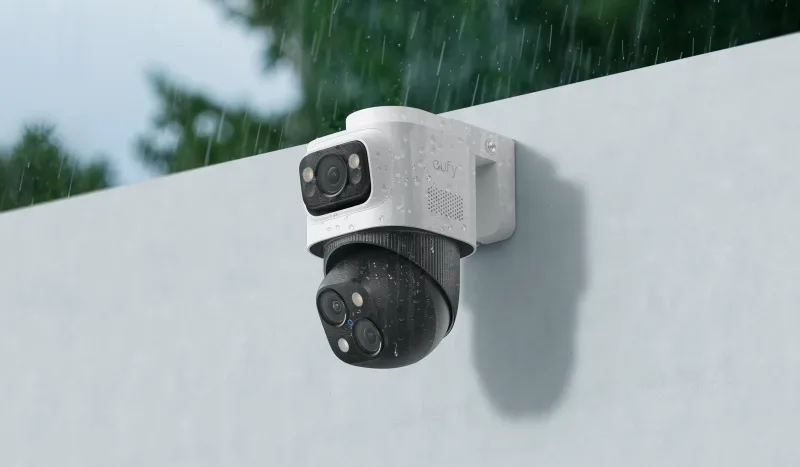
Reolink's daylight footage looked clear and detailed to Techtest's Michael Barton. TechHive contributor Michael Ansaldo, writing on PCWorld, found sharp video from the PoE Cam S4 cameras supplied with the S4 Max recorder.
Eufy can show color at night without a spotlight
Eufy offers color video using ambient light without switching on its spotlight. Reolink uses its spotlight for color after dark or infrared for a black-and-white image. If a visible light shining across the yard would bother someone, that difference changes which night mode you can use.
Reolink's two views did not look equally clean at night in Techtest's review: the panoramic infrared image outperformed the lower camera. PCWorld reported detailed low-light video from eufy's S4 cameras.
A panorama keeps the rest of the yard in view
Reolink captures 180° horizontally in its fixed view; eufy's covers 105.4°.
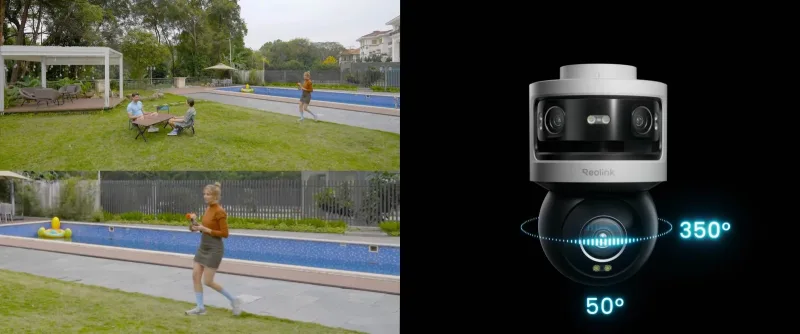
A broad frontage can stay in Reolink's overview while the lower camera follows someone toward the door.
Tracking and zoom serve the detail view
Eufy's lower unit pans 360° and tilts 70°; Reolink's pans 350° and tilts 50°. Those numbers describe where the motor can point, rather than how much ground appears in one frame. Eufy's 8× hybrid zoom combines its lens views and digital processing; Reolink's zoom is digital. Ljud & Bild's Jonas Ekelund found that fast-moving subjects could blur in Reolink's moving view, despite its 4K resolution.
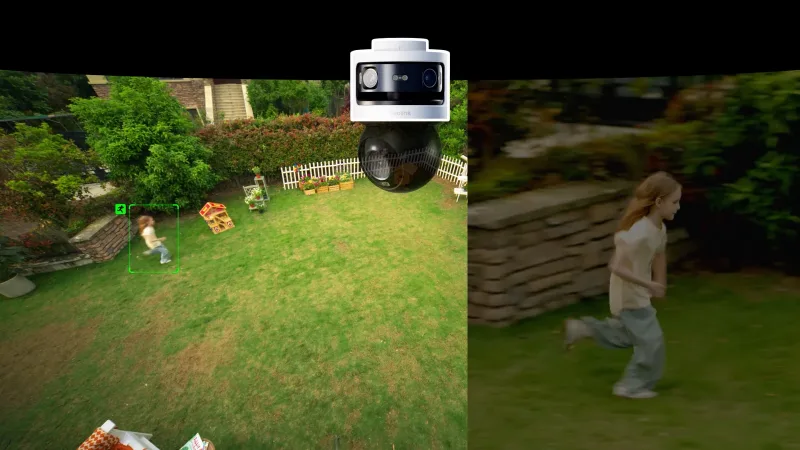
Reolink's fixed overview continues recording while the lower view follows a subject. Techtest found that arrangement worked well with a single person.
The recorder changes the whole installation
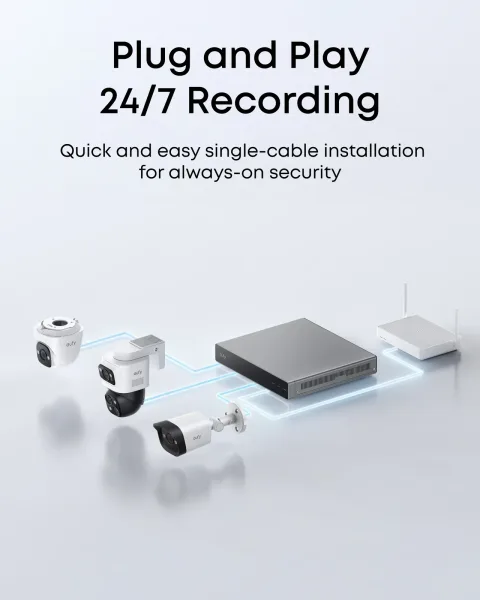
Reolink can save video to a microSD card of up to 512 GB without an NVR, or send recordings to compatible network storage. Eufy's camera cannot operate by itself: its US listing specifies an NVR S4. A $329.99 S4 camera is an addition to that recording system, not a complete one-camera installation.
Reolink's ONVIF Profile T support also gives a third-party integration route, though another recorder may not expose both views or every tracking control.
Neither system requires a monthly plan for its core local recording. An eufy S4 adds another view to a recorder you already use; a standalone Reolink stores its footage on the camera, so that storage stays at the mounting point.
Ethernet and the mounting point come first
Reolink takes power from an 802.3at PoE+ port with at least 30 watts available, or from a separately supplied 12V/2A adapter while Ethernet carries data. Eufy's quick-start guide shows its camera connecting directly to the NVR over Ethernet. Both installations need a physical cable run to the camera; neither is a battery camera that you can move between fence posts.
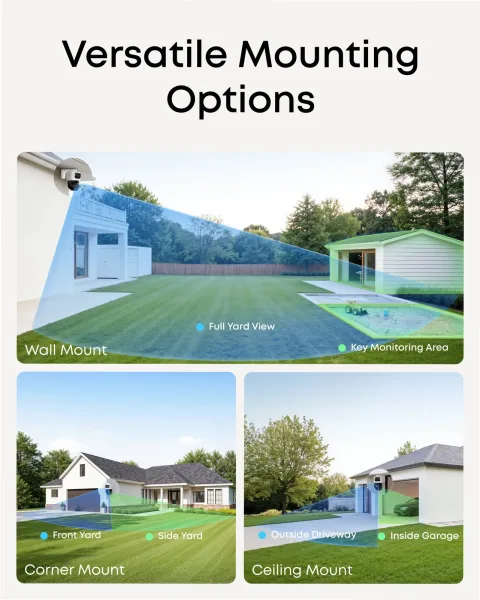
Reolink measures 202 × 151 × 125 mm, compared with eufy's 164 × 147 × 92 mm. Reolink is rated IP66 and eufy IP65 for dust and water. A ceiling or wall position also has to leave the lower camera room to rotate.
If Ethernet cannot reach the mounting point, the Reolink vs Night Owl system comparison addresses the separate choice between PoE cabling and cameras that send video over Wi-Fi.
Reolink adds desktop apps; eufy adds a monitor on the NVR
Both systems let Android and iPhone users view their cameras through an app; the current iPhone apps require iOS 15.1 or later. Reolink also has Windows and Mac clients; eufy offers a monitor interface on the NVR and a web portal. Google Assistant support is listed for both, with eufy's voice integration supplied through the NVR system.
Reolink's Auto Framing has a platform catch: standalone use requires Reolink App 4.60 or later, while recorder support depends on the NVR model and firmware.
Eufy lists Alexa for the NVR system.
Final Verdict
If standalone local recording decides it, choose Reolink OMVI 3i PoE; if you are extending a compatible eufy recorder, the PoE Bullet-PTZ Cam S4 fits that system.
- Broad frontage: Reolink OMVI 3i PoE, for its 180° fixed horizontal panorama.
- One camera without a recorder: Reolink OMVI 3i PoE, for onboard microSD recording.
- An additional camera for an eufy NVR S4: eufy PoE Bullet-PTZ Cam S4, for the supported recorder connection.