
Apple Watch Series 10 vs Samsung Galaxy Watch6 Classic: Ecosystem Choice Defines Your Experience
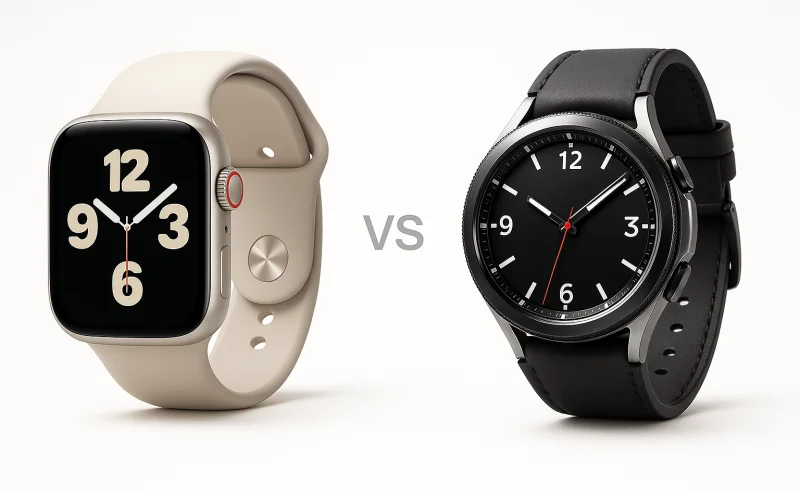
Explore the differences between Apple Watch Series 10 and Samsung Galaxy Watch6 Classic. Discover how your phone's ecosystem influences your smartwatch choice, affecting compatibility, health tracking, and customization features for a tailored user experience.
TL;DR
Quick Decision
- If you want a seamless, low-friction extension of your iPhone and its services → choose Apple Watch Series 10.
- If you prefer a customizable, hardware-driven smartwatch for Android, especially with a Samsung phone → choose Samsung Galaxy Watch6 Classic.
- If advanced health tracking is your primary goal → either can work, but lean towards Apple for water-based metrics and Samsung for body composition analysis.
Key Differentiators The core choice isn't about features, but about your phone's operating system and your preferred interaction style. The Apple Watch prioritizes consistency and deep iPhone integration, acting as a reliable remote for your pocket. The Galaxy Watch6 Classic, with its physical rotating bezel, offers more tactile control and system-wide customization, but its best experience is often reserved for Samsung phone users.
Who Should Skip Both If you regularly switch between iPhone and Android or prioritize a watch experience entirely free from ecosystem lock-in, you should consider a more platform-agnostic Wear OS watch or a dedicated fitness tracker instead.
| Feature | Apple Watch Series 10 | Samsung Galaxy Watch6 Classic |
|---|---|---|
| Power | ||
| Battery life | Up to 18 hours of normal use; up to 36 hours in Low Power Mode | Up to 40 hours (AOD off); up to 30 hours (AOD on) |
| Display | ||
| Resolution | 42mm: 374 x 446; 46mm: 416 x 496 | 480 x 480 |
| Display type | LTPO3 OLED Always-On Retina display | Super AMOLED |
| Pixel density | 326 ppi | 327 ppi |
| Durability | ||
| Dust resistance | IP6X | IP68 |
| Water resistance | 50m (swimproof) | 5ATM |
| Connectivity | ||
| Wi-Fi | Wi-Fi 4 (802.11n) | 802.11 a/b/g/n 2.4+5GHz |
| Bluetooth | Bluetooth 5.3 | Bluetooth v5.3 |
| Location technologies | L1 GPS, GLONASS, Galileo, QZSS, and BeiDou | GPS, Glonass, Beidou, Galileo |
| Compatibility | ||
| Operating system | watchOS | Wear OS powered by Samsung |
| Phone compatibility | iPhone Xs or later, including iPhone SE (2nd generation or later), with iOS 18 or later | Android 10.0 or later, 2GB RAM |
| Design & Build | ||
| Case sizes | 42mm, 46mm | 47mm |
| Dimensions | 42mm: 42 x 36 x 9.7 mm; 46mm: 46 x 39 x 9.7 mm | 46.5 x 46.5 x 10.9 mm |
| Case material | Aluminum or titanium | Stainless steel |
| Physical controls | Digital Crown with haptic feedback, side button | 2 buttons, physical rotating bezel |
| Front cover material | Ion-X front glass (aluminum) or sapphire front crystal (titanium) | Sapphire Crystal Glass |
| Health & Sensors | ||
| ECG | Supported | Supported |
| Depth gauge | Supported | Not supported |
| Blood oxygen | Supported | Supported |
| Temperature sensing | Supported | Supported |
| Body composition (BIA) | Not supported | Supported |
| Water temperature sensor | Supported | Not supported |
| Performance & Storage | ||
| Storage | 64GB | 16GB |
| Processor | S10 SiP with 64-bit dual-core processor | Exynos W930 dual-core 1.4GHz |
📑 Table of Contents
Ecosystem Compatibility
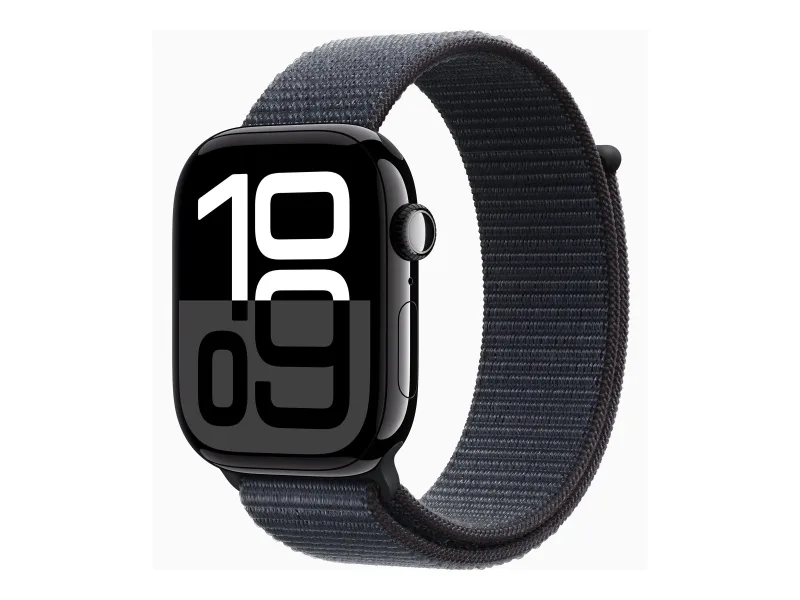
Apple Watch Series 10 is explicitly locked to Apple’s phone ecosystem: it requires an iPhone Xs or later (including iPhone SE 2nd gen+) running iOS 18 or later. That tight coupling typically enables very consistent Apple-service workflows (messages, wallet, and Apple Health continuity), but it also means the watch isn’t a realistic choice if you’re on Android or might switch soon. Some users note pairing issues, which matters more here because there’s no fallback «works with other phones» path.
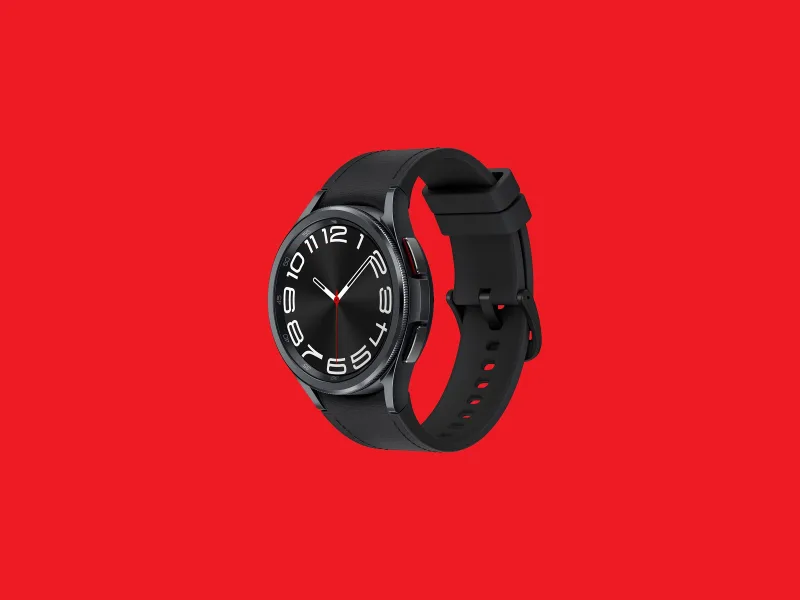
Samsung Galaxy Watch6 Classic targets the broader Android side: it supports Android 10.0 or later with 2GB RAM and runs Wear OS powered by Samsung. In practice, it can be the more coherent daily companion for Android users—especially Samsung phone owners—because it’s built around Google/Samsung services and a Wear OS app model that feels more «Android-like.» The trade-off is that best-in-class integrations can be «best on Samsung,» and the experience can be more variable when mixing Google, Samsung, and third-party apps.
Comparative conclusion: On pure compatibility, Watch6 Classic has the wider reach (Android 10+ vs iPhone Xs+/iOS 18+), while Apple Watch Series 10 is the better fit only if you’re firmly iPhone-first and want Apple services continuity. Winner: Tie (it depends entirely on which phone ecosystem you’re committed to).
Battery Life & Performance
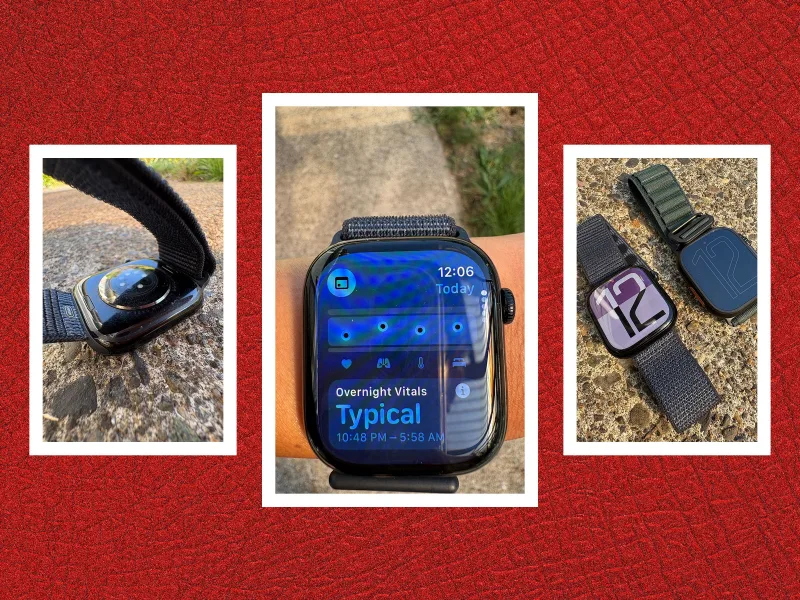
Apple Watch Series 10 is rated for up to 18 hours of «normal use,» or up to 36 hours in Low Power Mode. That’s a clear baseline expectation of roughly daily charging unless you’re willing to trade features for longevity via Low Power Mode. In real-world terms, multiple reviewers report severe battery drain after updates, with some claims of only 3–4 hours on minimal usage (Android Authority; Apple Support Communities).
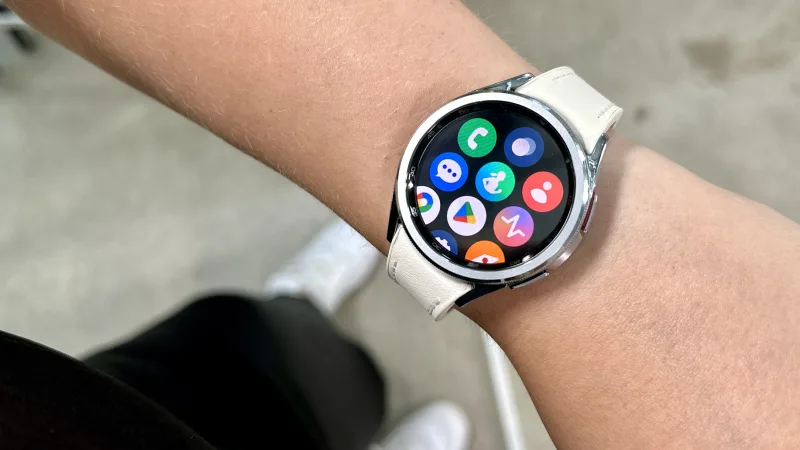
Samsung Galaxy Watch6 Classic is rated higher at up to 40 hours with AOD off, or up to 30 hours with AOD on. That spec suggests a meaningful buffer beyond a single day even with Always-On Display enabled—often the difference between nightly charging and stretching into a second day. That said, some users note faster battery drain after updates in community threads (e.g., Tom’s Hardware forums).
Conclusion: On paper, the Galaxy Watch6 Classic has a material battery-life advantage (40h/30h vs 18h/36h in Low Power), and the real-world drain complaints appear to affect both—so Samsung’s higher baseline still matters. Winner: Samsung Galaxy Watch6 Classic
Health & Fitness Features
Apple Watch Series 10 covers the core health sensors most people expect: ECG, blood oxygen, and temperature sensing are all supported. Where it differentiates is on water-oriented metrics, adding a depth gauge plus a water temperature sensor—features that can matter for swim training and recreational diving-style use. These are concrete hardware capabilities rather than app-level add-ons.
Samsung Galaxy Watch6 Classic also includes the same baseline health sensor set—ECG, blood oxygen, and temperature sensing are supported. However, it does not include a depth gauge or water temperature sensor, so it’s less specialized for water-based tracking beyond standard swimproof use. Its health proposition is more centered on general wellness and gym-friendly metrics.
Conclusion: For aquatic and water-condition tracking specifically, Apple Watch Series 10 has the clearer edge thanks to depth gauge + water temperature support that Samsung lacks.
Apple Watch Series 10 does not offer body composition (BIA) measurement, so it can’t natively estimate metrics like body fat percentage from an on-wrist impedance scan. You can still track weight and trends via apps/ecosystems, but the watch itself isn’t providing that BIA-style snapshot. If body recomposition is a key goal, this is a meaningful missing sensor.
Samsung Galaxy Watch6 Classic includes body composition (BIA) support, giving it a built-in tool for users who want quick, repeatable composition readings alongside workouts. That can be especially relevant for strength training or weight-management routines where composition trends matter as much as step count. It’s a direct sensor advantage rather than a software workaround.
Conclusion: For users who prioritize body composition insights, Galaxy Watch6 Classic wins because it offers BIA while Apple Watch Series 10 does not.
Winner: Tie — Apple Watch Series 10 is materially stronger for water-focused health metrics (depth + water temperature), while Galaxy Watch6 Classic has a real advantage for body composition tracking via BIA; the better choice depends on which sensor you’ll actually use.
User Experience & Customization
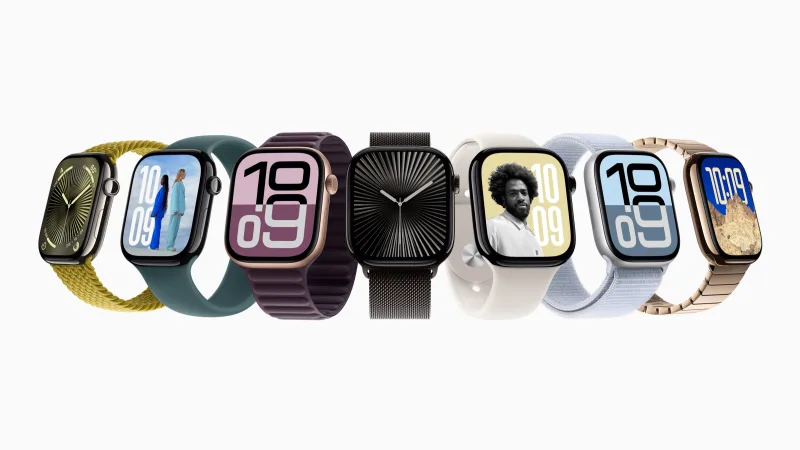
Apple Watch Series 10 tends to deliver a more standardized, guided setup and a highly consistent day-to-day flow inside watchOS—especially if you already use Apple-first services (iMessage/FaceTime, Apple Pay, Apple Maps, Apple Music/Podcasts, Focus). That consistency is reinforced by Apple’s tighter platform rules, which typically make notifications and first-party apps feel predictable across updates and devices. That said, some users report pairing issues, and multiple reviewers report battery drain severe enough to undercut the «it just works» experience in real-world use.
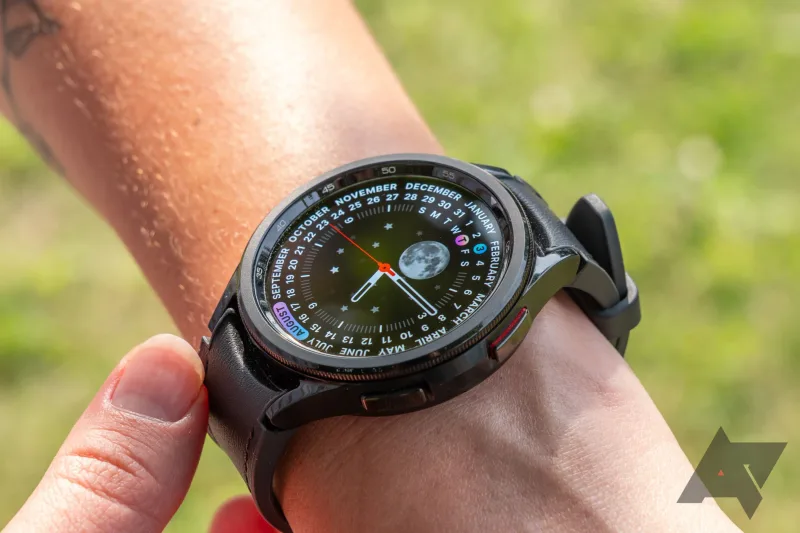
Samsung Galaxy Watch6 Classic generally feels more configurable and «device-like» in daily operation thanks to Wear OS plus Samsung’s One UI Watch layer, with more knobs for watch faces, tiles, and system behaviors. Its physical controls are a real UX differentiator: two buttons plus a physical rotating bezel can make scrolling and selection faster and more tactile than purely touch-driven navigation. The trade-off is higher variance—some users report slow touchscreen response and frequent self-locking, and some users note faster battery drain after updates.
Comparative conclusion: For pure UX consistency—especially if you live inside Apple services—the Apple Watch Series 10 has the cleaner, more uniform software experience. For users who prioritize customization and hardware-driven navigation (rotating bezel), the Samsung Galaxy Watch6 Classic has the more flexible interface model, even if app experience can be less consistent.
Winner: Samsung Galaxy Watch6 Classic — its stronger customization range and bezel-based navigation provide a clearer, defensible advantage in this section, while both watches show some credible UX complaints in the wild.
Display & Design
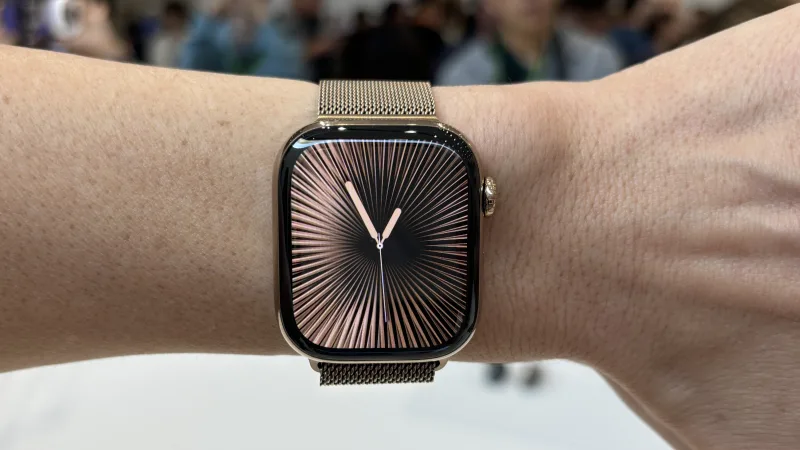
Apple Watch Series 10 uses an LTPO3 OLED Always‑On Retina display with 326 ppi and two size-specific resolutions: 374×446 (42mm) or 416×496 (46mm). That higher 46mm pixel count can make dense UI (complications, text, charts) look a bit cleaner than lower-resolution panels, especially at smaller font sizes.
Samsung Galaxy Watch6 Classic uses a Super AMOLED panel with 480×480 resolution and 327 ppi, which is effectively the same sharpness on-paper as Apple’s 326 ppi. Its perfectly square pixel grid also suits round watch faces well, keeping circular dials and complications looking symmetrical.
Conclusion: On pure sharpness, it’s a near tie (326 ppi vs 327 ppi); Apple’s 46mm 416×496 gives it a small legibility edge in some UI layouts, while Samsung’s 480×480 is clean and consistent for traditional circular face designs.
Apple Watch Series 10 comes in 42mm or 46mm cases at 9.7 mm thickness, with aluminum or titanium options and Ion‑X glass (aluminum) or sapphire (titanium). Input is centered on the Digital Crown with haptic feedback plus a side button, which favors quick, repeatable scrolling without covering the display.
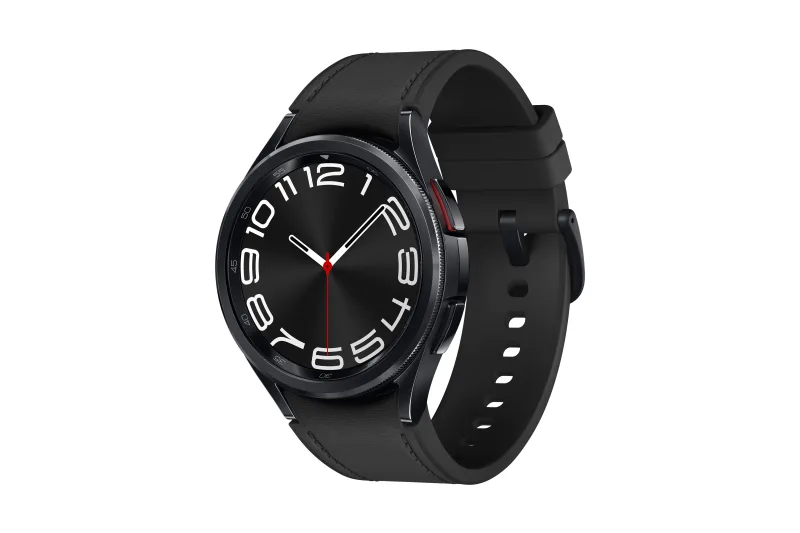
Samsung Galaxy Watch6 Classic is 47mm and thicker at 10.9 mm, built in stainless steel with sapphire crystal glass standard. Its defining usability feature is the physical rotating bezel plus two buttons, which many users prefer for tactile navigation when touch control is less convenient.
Conclusion: Samsung has the clearer design win if you want a traditional watch feel and hardware-first control (rotating bezel + standard sapphire), while Apple is better for a thinner profile (9.7 mm vs 10.9 mm) and a modern, information-dense smartwatch layout.
Winner: Tie — Apple Watch Series 10 leads on thinness and can be more readable in its 46mm 416×496 configuration, while Galaxy Watch6 Classic counters with a more classic build (stainless + sapphire) and the rotating bezel for tactile navigation.
Durability & Build Quality
Apple Watch Series 10 is rated IP6X for dust resistance and 50m for water resistance (swimproof). On paper, that’s solid for everyday exposure like workouts, rain, and pool swimming—but it’s still not a «wear it anywhere, anytime» guarantee: Apple specifically warns against showering because soap can damage the watch (a chemical exposure issue more than a depth/pressure one).
Samsung Galaxy Watch6 Classic carries IP68 dust/water ingress protection plus 5ATM water resistance. Like Apple’s 50m rating, 5ATM is generally positioned for swim-focused use rather than high-velocity water sports, but the added IP68 label signals broader sealing claims (especially around water ingress beyond dust).
Conclusion: For resistance ratings alone, both are very close—50m vs 5ATM is effectively a wash for most users—while IP68 vs IP6X gives Samsung a slight spec advantage on paper. In practice, both still require common-sense care around soaps and harsh exposures.
Apple Watch Series 10 uses aluminum or titanium cases, paired with Ion‑X glass (aluminum models) or sapphire front crystal (titanium models). It’s also thinner at 9.7 mm, which can reduce snagging but doesn’t inherently make it tougher.
Samsung Galaxy Watch6 Classic uses a stainless steel case with sapphire crystal glass on the front. It’s thicker at 10.9 mm and includes a physical rotating bezel, a design that can help shield the display edge during knocks (at the cost of added bulk).
Conclusion: If you prioritize scratch resistance and a traditionally rugged build, Samsung’s stainless steel + sapphire + bezel design is the more defensible durability-oriented package. If you want premium materials with a thinner profile (and sapphire only when you choose titanium), Apple can still be a great fit—but the «toughest configuration» depends on which Series 10 case you buy.
Winner: Tie
The Bottom Line
After digging into ecosystem fit, battery, sensors, and day-to-day usability, the choice comes down to which strengths you’ll actually lean on.
For iPhone Users: The Apple Watch Series 10 is the better buy thanks to its iPhone-first design and the most seamless continuity with Apple services.
For Android Users: The Samsung Galaxy Watch6 Classic is the clear pick for broader Android compatibility and a more customizable Wear OS experience with hardware-driven control via the rotating bezel.
For Fitness Enthusiasts: Tie — pick Apple Watch Series 10 if you’ll use its water-focused sensors (depth gauge and water temperature), or Samsung Galaxy Watch6 Classic if body composition (BIA) is central to your training.
Overall, this comparison ends in a split decision: Samsung makes the stronger case on battery life and customization, while Apple counters with a more consistent iPhone-integrated experience and standout water-oriented metrics.
Choose based on your smartphone ecosystem and whether you value customization and longer battery over Apple’s consistency; either way, you’re landing in «excellent smartwatch» territory—just optimize for the strengths you’ll use every day.
FAQ
Is Apple Watch Series 10 compatible with Android phones?
Does Samsung Galaxy Watch6 Classic work with iPhones?
Which watch has better battery life?
Are both watches water-resistant?
Does Apple Watch Series 10 experience severe battery drain?
Is it safe to wear Apple Watch Series 10 in the shower?
Does Samsung Galaxy Watch6 Classic have touchscreen response issues?
"Images are used for editorial and informational purposes only. All trademarks and images belong to their respective owners."