
Oura Ring 4 vs Samsung Galaxy Ring: Health Platform vs Ecosystem Sensor
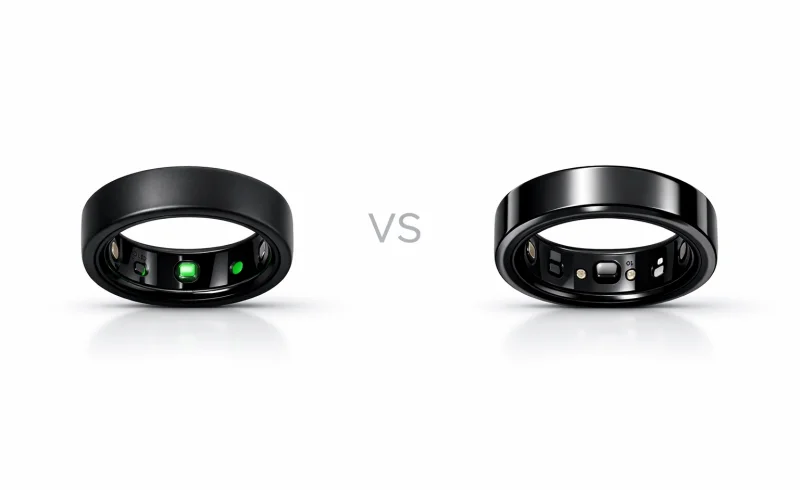
Oura Ring 4 and Samsung Galaxy Ring both track sleep, recovery, and daily health—yet they’re built for different owners. Compare insights, ecosystem fit, battery, durability, and pricing to pick the ring that matches how you actually use health data.
TL;DR
If you want a dedicated health-coaching platform and are willing to pay a monthly subscription for deep insights → choose Oura Ring 4.
If you care about a simpler, subscription-free experience and are already invested in the Samsung phone and health ecosystem → choose Samsung Galaxy Ring.
If you need basic sleep and activity tracking without strong opinions → either works well.
The fundamental trade-off is between depth and simplicity. Oura Ring 4 is a software-driven health analyst that provides structured guidance, but its value is locked behind a subscription. The Samsung Galaxy Ring is a capable, passive sensor that feeds data into Samsung Health, but its insights are more aggregated and less interpretive.
If you need live, real-time workout metrics and performance feedback, you should look at dedicated fitness watches instead, as neither ring is designed for that primary use case.
| Feature | Oura Ring 4 | Samsung Galaxy Ring |
|---|---|---|
| Power | ||
| Battery life | 5-8 days of battery life | Seven-day charge (for sizes 12 and 13; up to 6 days for smaller sizes) |
| Battery life with charging accessory | Combined with a full cradle charge, you can use Galaxy Ring for up to 14 days | |
| Sizing | ||
| Ring sizes | Sizes 4-15 | Sample rings come in 9 sizes, from 5 to 13 |
| Sensors | ||
| Motion sensor | Accelerometer tracks movement and activity 24/7 | Accelerometer |
| Skin temperature sensor | Digital sensor measures temperature trends | Temperature sensor |
| Optical heart rate sensor | Green and infrared LEDs alternate to measure heart rate and heart rate variability 24/7 | Optical heart rate sensor |
| Durability | ||
| Dust resistance | IP6X dust resistance classification certification (IEC 60529) | |
| Water resistance | Water resistant up to 100m/328 ft | 10ATM water resistance classification certification (ISO 22810:2010) |
| Connectivity | ||
| Bluetooth | Bluetooth Low Energy | Bluetooth (pairing mode) |
| Compatibility | ||
| Supported phone OS | Available on iOS and Android | Android (Samsung Android phones; other Android phones: compatible with Android phones that support Google mobile services) |
| Tablet / computer pairing | You cannot connect your Ring to a tablet or a computer | |
| Materials & Finishes | ||
| Body material | Non-allergenic titanium on inner & outer surfaces | Titanium |
| Available finishes / colors | Black, Silver, Stealth, Brushed Silver, Gold, Rose Gold | Titanium Black, Titanium Silver, Titanium Gold |
| Health Tracking Features | ||
| Cycle tracking | Women’s Health: Cycle Insights, Fertile Window, and Pregnancy Insights | Cycle tracking |
| Sleep tracking | Sleep | Sleep |
| Stress tracking | Daytime Stress and Resilience | Stress |
📑 Table of Contents
Insights & coaching
Depth of insights (interpretation vs aggregation)
Oura Ring 4 is positioned as a coaching-led platform: the app emphasizes sleep optimization, recovery monitoring, readiness-style scoring, and longitudinal trend analysis—i.e., it’s built to help you connect habits (sleep timing, alcohol, travel, stress) to changes in physiology over weeks and months. Its sensor stack supports that focus, with 24/7 heart rate + HRV via green/IR LEDs, a digital temperature sensor for trends, and continuous movement tracking via a 3D accelerometer. The key practical implication is that Oura’s value increases the more consistently you wear it and revisit the guidance layer.
Samsung Galaxy Ring is framed more as a high-quality sensor that feeds Samsung Health: it continuously measures vital signs and activity patterns, but the experience is more utilitarian and dashboard-driven than coaching-driven. It covers the expected bases—heart rate, SpO₂, skin temperature, and sleep stages (deep/light/REM)—and contributes those metrics into a broader Samsung Health view that can also blend phone and watch data. The practical implication is that you often get «enough» insight without the ring needing to become your primary health platform.
Conclusion: Oura Ring 4 has the edge for users who want deeper interpretation and habit-level guidance, while Galaxy Ring is stronger if you mainly want metrics aggregated cleanly inside Samsung Health.
Onboarding and daily «feedback loop»
Oura Ring 4 uses a more structured onboarding flow that asks for lifestyle context and quickly turns raw signals into scores and recommendations, reinforcing a daily check-in loop around sleep and readiness. That interpretive approach aligns with Oura’s emphasis on trend history and behavior changes over time, rather than real-time workout feedback. If you don’t engage with the coaching layer, Oura becomes less compelling because it’s not designed to be «just raw data.»
Samsung Galaxy Ring has lighter onboarding—especially for existing Samsung Health users—because the ring tends to show up as another data source rather than a guided program. Day to day, it’s designed to be more passive: the ring can fade into the background while Samsung Health acts as the unified dashboard across devices. The trade-off is that insight generation is thinner; it aggregates well, but it interprets less.
Conclusion: Oura Ring 4 wins for coaching-style onboarding and a strong daily insight loop, while Galaxy Ring wins if you prefer a low-friction, passive tracker that doesn’t demand regular app engagement.
Winner: Oura Ring 4 — it delivers a more defensible advantage in insight depth and coaching, while Galaxy Ring’s main upside here is a different (more passive, ecosystem-aggregated) experience rather than equally deep guidance.
Ecosystem & compatibility
Oura Ring 4 is explicitly available on iOS and Android, which makes it the more flexible choice if you switch phones or live in a mixed-device household. On the connectivity side, it uses Bluetooth Low Energy, and Oura positions itself as a platform with multiple third-party integrations (per editor context), which matters if you want your ring data to remain useful outside a single brand’s health app. The practical upside is that Oura can act as a more «standalone» health system rather than just a sensor feeding one ecosystem.
Samsung Galaxy Ring, by contrast, is Android-only and is optimized for Samsung Android phones; Samsung also notes it’s compatible with other Android phones that support Google Mobile Services, but the experience can be less complete outside Samsung’s software stack (per editor context). Setup runs through the Galaxy Wearable app, reinforcing that the ring is designed as an extension of Samsung’s device layer rather than a brand-agnostic tracker. Samsung’s own compatibility notes also explicitly say you cannot connect the Ring to a tablet or a computer, underlining how phone-centric the experience is.
Conclusion: On pure compatibility, Oura Ring 4 has the edge because it’s cross-platform (iOS + Android) and is framed as a broader integration-friendly health platform, while Galaxy Ring is best when you’re already committed to Samsung phones and Samsung Health.
Winner: Oura Ring 4
Sleep & recovery tracking
Oura Ring 4 positions sleep and recovery as the core product loop: it’s built around sleep optimization, recovery monitoring, and a readiness-style scoring model that’s meant to get more valuable as your trend history grows over weeks and months. It also emphasizes habit correlation (e.g., travel, stress, alcohol, illness) rather than treating sleep as just another metric in a dashboard. That matches the brand’s «health-analytics first» identity: the app is designed to interpret data and push behavior-level guidance, not just display charts.
Samsung Galaxy Ring includes sleep tracking as a headline feature, and it explicitly calls out sleep stages (deep, light, REM) alongside heart rate, SpO2, and skin temperature monitoring. In practice, though, its positioning is more «sensor feeding Samsung Health» than a ring-led coaching system—especially if you’re already using other Samsung devices (and potentially a Galaxy Watch). That ecosystem-first approach can make the ring feel more passive: strong at aggregation inside Samsung Health, lighter on interpretation and recovery coaching.
Conclusion: Oura Ring 4 has the edge for sleep/recovery depth and long-term insight, while Galaxy Ring is better if you primarily want sleep stages plus core vitals inside Samsung Health with minimal day-to-day engagement.
Overnight recovery signals (HR/HRV, temperature) and how they’re used
Oura Ring 4 tracks recovery-oriented vitals continuously (including heart rate and HRV via alternating green + infrared LEDs, plus a digital temperature-trend sensor) and uses them in a sleep-and-readiness narrative. The practical upside is coherence: the metrics are presented as inputs to recovery and sleep quality, not as standalone numbers. The trade-off is that it’s not designed as a real-time workout feedback tool—its strength is overnight physiology and next-day readiness, not live training guidance.
Samsung Galaxy Ring also covers the same core pillars—optical heart rate, temperature, SpO2, and sleep staging—and frames them as continuous measurement and analysis of «vital signs and activity patterns.» Where it differs is emphasis: the ring’s recovery value is often realized as part of a broader Samsung Health picture (phone + watch + ring), which can reduce the sense that the ring itself is your primary recovery coach. If you want more interpretation, that may depend on Samsung-specific software layers and how deeply you’re invested in the Galaxy ecosystem.
Conclusion: Oura Ring 4 wins on recovery insight framing (analytics + guidance), while Galaxy Ring matches the vital-sign coverage but leans more toward ecosystem aggregation than ring-driven coaching.
Winner: Oura Ring 4 — It shows a clearer, defensible advantage in sleep-and-recovery specialization (readiness/recovery focus and longitudinal insight design), while Galaxy Ring’s main strength here is integrating sleep stages and vitals into Samsung Health rather than offering deeper ring-led recovery analytics.
Battery & charging reality
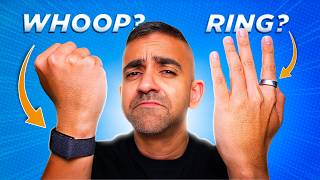
Oura Ring 4 is positioned as a «week-class» ring with a stated 5–8 days per charge. In practice, that range implies anything from topping up roughly twice a week (at 3–4 days) to closer to once a week (at 7–8 days), depending on usage and how well your ring’s battery holds up over time. Multiple reviewers report shorter real-world endurance—some units lasting only 2–3 days before needing a recharge, which can undercut the «set-and-forget» expectation if you’re counting on week-long intervals (Multiple reviewers report …).
Samsung Galaxy Ring publishes a more size-specific estimate: 7 days for sizes 12–13, and up to 6 days for smaller sizes. That makes its baseline claim slightly clearer for planning, because you can set expectations based on the size you’ll actually buy (rather than a broad range). However, isolated reports suggest abnormal drain in some situations—one report describes losing ~1% every two minutes, which (if reproducible) would be far outside «week-class» behavior (Isolated reports suggest …).
Conclusion: On stated per-charge battery alone, Galaxy Ring’s 6–7 day size-based estimate is a small edge over Oura’s broader 5–8 day range, but Oura’s real-world variance and Samsung’s drain outliers both mean neither ring is immune to «bad battery weeks.»
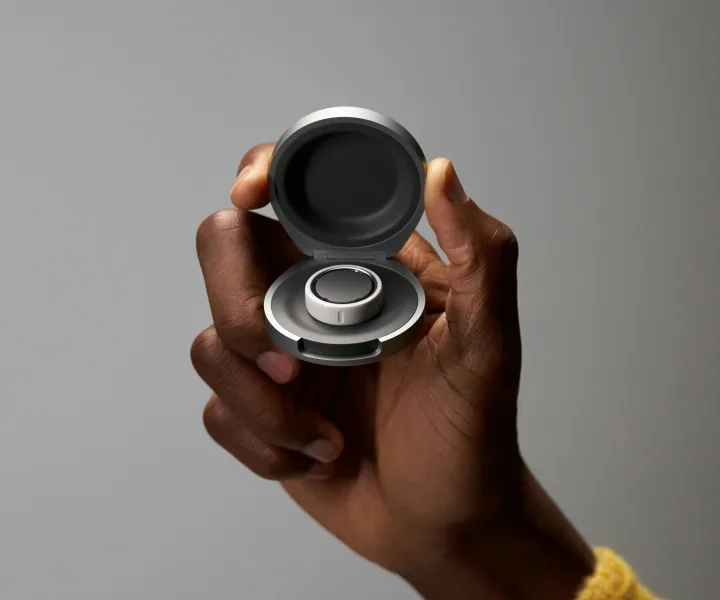
Oura Ring 4 doesn’t list an extended-runtime claim tied to a charging accessory in the provided specs, so your practical ceiling is the ring’s own 5–8 days and your willingness to keep up a regular charging rhythm. If the ring becomes unresponsive—a scenario that can look like «battery is dead» even when it isn’t—Oura support guidance includes restart/soft reset steps to restore normal behavior. Some users note reliability-adjacent friction such as not charging fully or missing sleep data, which can make battery feel worse because you’re troubleshooting instead of simply topping up (Some users note …).
Samsung Galaxy Ring adds a concrete travel advantage: with a full cradle charge, up to 14 days total use is the stated claim. That can materially reduce how often you need to find power when you’re away from home, especially if your ring size is already in the 6–7 day band. Samsung also documents reboot/pairing recovery (e.g., holding the multipurpose button for 7 seconds to reboot if it won’t enter pairing mode), which matters because connection problems and perceived battery issues often travel together.
Conclusion: Galaxy Ring has the clearer charging «system» advantage thanks to the up-to-14-day ring+cradle claim, while Oura’s experience leans more on the ring alone—and user-reported charging/data glitches can make the battery story feel less predictable.
Winner: Samsung Galaxy Ring
Durability & wearability
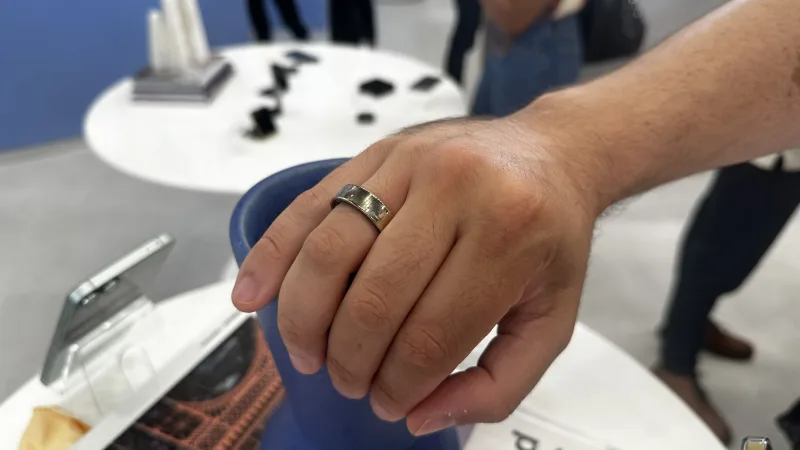
Oura Ring 4 uses non-allergenic titanium on the inner and outer surfaces, which is a strong baseline for comfort during continuous wear. It’s also rated water resistant up to 100 m / 328 ft, putting it in true «shower, swim, and sweat» territory without special handling. For buyers who plan to wear a ring 24/7 (sleep and recovery tracking), that combination supports long-term wear consistency.
Samsung Galaxy Ring also uses titanium and is explicitly positioned as a lightweight titanium design. Its water resistance is 10 ATM (ISO 22810:2010), which is broadly comparable to 100 m-style ratings for everyday water exposure. If wearability is partly about «forgetting it’s there,» Samsung’s lightweight framing is a practical plus, though the spec sheet doesn’t quantify weight.
Conclusion: On materials and water resistance, both are highly wearable titanium rings with strong water ratings, so neither has a decisive advantage on these basics.
Oura Ring 4 does include an important ownership note: the ring may get scratched and can scratch softer metal jewelry or other objects in close contact (e.g., stacked rings). That’s not unusual for titanium, but Oura’s explicit warning highlights a real day-to-day durability consideration for hands-on work or mixed-jewelry wear. Because Oura’s value is closely tied to continuous wear, cosmetic wear-and-tear can matter more to perceived longevity.
Samsung Galaxy Ring adds a durability assurance Oura doesn’t list: IP6X dust resistance (IEC 60529). That’s a clear advantage for gritty environments—think sand, dust, or job sites—where ingress protection reduces worry about fine particles. Separately, some users report repeated disconnections (Bluetooth-related), but that’s a connectivity reliability issue rather than physical durability.
Conclusion: For strict durability credentials, Samsung Galaxy Ring’s IP6X dust rating is a meaningful, spec-backed edge, while Oura’s scratch interaction note is more of a caution than a counter-advantage.
Winner: Samsung Galaxy Ring — the added IP6X dust resistance is the clearest, defensible durability advantage when both already match well on titanium build and water readiness.
Fit, sizing & finishes
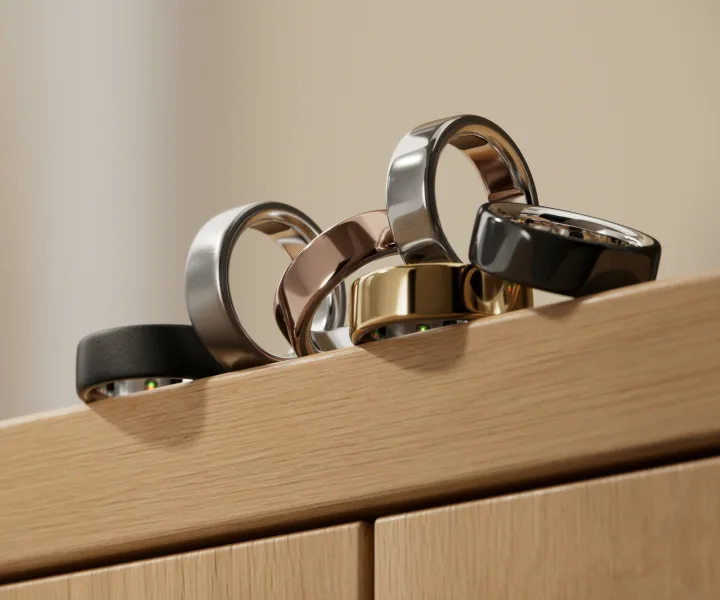
Oura Ring 4 comes in sizes 4–15, which is a notably broad range for catching edge cases (very small or very large fingers) and for switching between fingers to improve comfort. Oura also explicitly recommends wearing the ring on the index, middle, or ring finger for best signal quality, which makes getting a truly dialed fit more consequential than it sounds. One nuance: Oura notes its Ring 4 sizing differs slightly from Gen3, so existing owners shouldn’t assume a perfect match when upgrading.
Samsung Galaxy Ring sizing is narrower: its sample rings cover 9 sizes from 5–13. That still spans many users, but it gives you fewer «in-between» options if you’re trying to optimize comfort or sensor contact on a specific finger. Setup and pairing go through the Galaxy Wearable app, but the core fit limitation is simply the smaller size window.
Conclusion: On sizing alone, Oura Ring 4 has the clear advantage thanks to 4–15 vs 5–13, which increases the odds of a better fit (and therefore consistent wear and cleaner data).
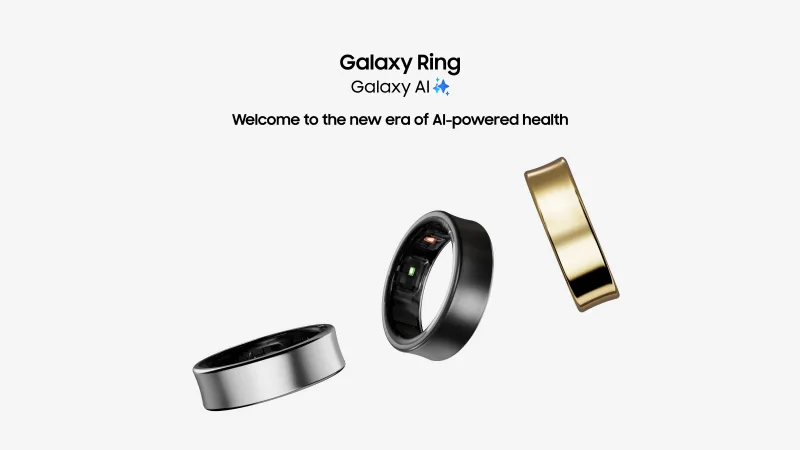
Oura Ring 4 offers six finishes: Black, Silver, Stealth, Brushed Silver, Gold, Rose Gold. Because a ring is always-visible jewelry, more finish variety can meaningfully improve long-term compliance—especially for users who want the tracker to disappear into an existing watch/band stack. The body material is also non-allergenic titanium on inner and outer surfaces, which aligns with all-day wear.
Samsung Galaxy Ring offers three finishes—Titanium Black, Titanium Silver, Titanium Gold—and uses a lightweight titanium design. The selection is simpler and more restrained, which may be a plus if you just want a classic titanium look without overthinking variants. But it’s objectively fewer styling options than Oura provides.
Conclusion: For finish and style matching, Oura Ring 4 leads with 6 finishes vs 3, giving more flexibility to choose a look you’ll actually keep wearing.
Winner: Oura Ring 4
Ownership model & friction
Oura Ring 4 is explicitly positioned as a software-led product: its core value comes from ongoing insights (sleep optimization, recovery/readiness, habit correlation), and that value is tightly linked to continued app engagement—and, per the editor notes, many meaningful features are gated behind a subscription, shifting total cost of ownership from a one-time purchase to an ongoing service relationship. In practice, this means the hardware is most compelling if you plan to wear it continuously and keep checking the guidance loop over months as trend history accumulates. Some users report battery life dropping to 2–3 days despite a typical 5–8 day expectation, which can add friction if you’re already paying for a service and then charging more often.
Samsung Galaxy Ring is simpler by design for «core use»: it acts more like a passive sensor feeding Samsung Health, and the editor notes emphasize no required subscription for the core experience, which generally reduces long-term ownership friction. Battery expectations are also framed around straightforward maintenance: up to 7 days for larger sizes (12–13) and up to 6 days for smaller sizes, plus up to 14 days when combined with a full cradle charge. The trade-off is platform dependence—official compatibility is Android-only and optimized for Samsung Android phones (with broader Android support noted only for devices that support Google Mobile Services)—so outside the Samsung ecosystem the experience can feel more fragmented than «set and forget.»
Comparative conclusion: On pure ownership friction, Samsung Galaxy Ring has the edge because it delivers a more straightforward, no-subscription core experience and can be especially low-effort inside Samsung Health. Oura Ring 4 can be the higher-value long-term system if you want deep interpretation and trend-based coaching—but that value is more conditional (subscription + consistent wear), and battery-life variability reported by some owners can amplify day-to-day friction.
Winner: Samsung Galaxy Ring
The Bottom Line
After all the spec-and-experience details, the choice comes down to whether you want a coaching-first health platform or a passive sensor that slots into an existing ecosystem.
Best for deep sleep and recovery coaching: The Oura Ring 4 is the clear pick because it leans hardest into readiness/recovery scoring and longitudinal, habit-level interpretation.
Best for Samsung Health and Galaxy phone owners: The Samsung Galaxy Ring fits best since it’s designed to feed Samsung Health with low friction and strong Galaxy-centric synergy.
Best for iPhone users or mixed-device households: The Oura Ring 4 wins on flexibility thanks to iOS/Android support, making it easier to stick with one ring through phone changes.
Best for buyers avoiding ongoing subscription costs: The Samsung Galaxy Ring is the better match because the core experience is simpler and doesn’t hinge on an ongoing service layer.
Best for shoppers prioritizing style options: The Oura Ring 4 takes it with its broader size range and wider finish lineup, which helps you find a look—and fit—you’ll actually wear consistently.
Overall,
for readers who want the ring to be the primary health analytics and behavior-change system, especially for sleep and recovery depth. The trade-off is that Samsung Galaxy Ring is the more straightforward, ecosystem-friendly option with less ownership friction—particularly if you’re already all-in on Galaxy.If you know your persona, the decision is fast: «coach me» equals Oura Ring 4, «track it quietly in Samsung Health» equals Samsung Galaxy Ring—then check current pricing for your exact size/finish before you buy.
FAQ
Is Oura Ring 4 or Samsung Galaxy Ring better for sleep tracking?
Do you need a Samsung phone for the Galaxy Ring?
Which ring has better battery life?
Which is better if I don't want a subscription?
Which ring has more sizes and finishes?
What are common issues with Oura Ring 4 battery life?
How durable is the Samsung Galaxy Ring?
Which ring works with both iOS and Android?
"Images are used for editorial and informational purposes only. All trademarks and images belong to their respective owners."
New Draft 2026-03-25 01:21
- Fitness monitoring and smartphone integration → Apple Watch Series 10 vs Samsung Galaxy Watch 6
- Optimize training and recovery → WHOOP 5.0 vs Oura Ring 4: Best for Recovery & Training?
- Decide between smart glasses for multimedia or display → Ray-Ban Meta vs RayNeo 4 Pro: Capture or Personal Screen?
- Choose earbuds for commuting with superior audio quality → Galaxy Buds 3 Pro vs Liberty 4 Pro vs Bose Ultra Open