
Apple Watch Series 10 vs Samsung Galaxy Watch 6: Choosing Your Smartwatch Ecosystem
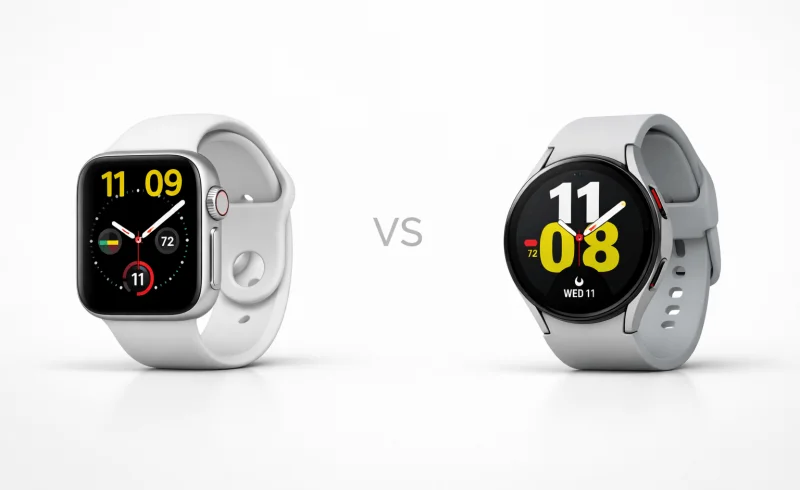
Apple Watch Series 10 vs Samsung Galaxy Watch 6: compare display, health sensors, battery, performance, durability, and ecosystem fit. See which smartwatch makes more sense for iPhone vs Android users as of Feb 2026.
TL;DR
Quick Decision
- If you use an iPhone and want the most seamless, low-maintenance companion with standout health tracking → choose the Apple Watch Series 10.
- If you use an Android phone and want a highly configurable watch with better battery life and broader compatibility → choose the Samsung Galaxy Watch 6.
- If your main priority is accurate fitness tracking and you don't mind daily charging → either watch works well.
Key Differentiators Your decision is fundamentally about ecosystem versus flexibility. The Apple Watch is an exceptional iPhone extension, offering a polished, consistent experience with unique health features, at the cost of being unusable with any other phone. The Galaxy Watch is a versatile Android companion with a more customizable interface and longer battery life, but it can suffer from software variability depending on your phone and updates. The trade-off is between Apple's controlled reliability and Samsung's adaptable openness.
Who Should NOT Buy Either If you prioritize extreme battery life measured in weeks, or need a smartwatch that works equally well with both iPhone and Android, you should look at dedicated fitness trackers or other wearable categories instead.
| Feature | Apple Watch Series 10 | Samsung Galaxy Watch 6 |
|---|---|---|
| Display | ||
| Resolution | 46mm: 416x496 pixels. 42mm: 374x446 pixels. | 44mm: 480×480. 40mm: 432×432. |
| Display Type | Always-On Retina LTPO3 display; Wide-angle OLED | Super AMOLED; Full Color Always On Display |
| Max Brightness | Up to 2,000 nits maximum brightness | |
| Cover Glass / Crystal | Ion-X front glass (aluminium cases); Sapphire front crystal (titanium cases) | Sapphire Crystal |
| Durability | ||
| Dust Resistance | Dust resistance IP6X | IP68 |
| Water Resistance | Water resistance 50m (swimproof) | 5ATM + IP68 / MIL-STD-810H |
| Connectivity | ||
| NFC | Apple Pay | NFC |
| Wi-Fi | Wi-Fi 4 (802.11n) | Wi-Fi 2.4+5GHz |
| Cellular | LTE and UMTS | LTE |
| Bluetooth | Bluetooth 5.3 | Bluetooth 5.3 |
| Positioning / GNSS | L1 GPS, GNSS, Galileo and BeiDou | GPS/Glonass/Beidou/Galileo |
| Ultra Wideband (UWB) | Second-generation Ultra Wideband chip | Absent |
| Sizing & Fit | ||
| Case Sizes | 46mm; 42mm | 44mm; 40mm |
| Weight (case only) | 46mm: aluminium (GPS) 36.4g; aluminium (GPS + Cellular) 35.3g; titanium 41.7g. 42mm: aluminium (GPS) 30g; aluminium (GPS + Cellular) 29.3g. | 44mm: 33.3g. 40mm: 28.7g. |
| Dimensions (H x W x D) | 46mm case: Height 46mm; Width 39mm; Depth 9.7mm. 42mm case: Height 42mm; Width 36mm; Depth 9.7mm. | 44mm: 42.8 x 44.4 x 9.0 mm. 40mm: 38.8 x 40.4 x 9.0 mm. |
| Power & Charging | ||
| Fast Charging | Fast-charge capable; Up to 80% charge in about 30 minutes | Fast Charging (WPC-based wireless charging) |
| Battery Capacity | 44mm: 425mAh. 40mm: 300mAh. | |
| Battery Life (rated) | All-day battery life, up to 18 hours of normal use; Up to 36 hours in Low Power Mode | Up to 40 hours (Always On Display off) / Up to 30 hours (Always On Display on) |
| Sensors & Health | ||
| Barometer | Absent | Barometer |
| Gyroscope | High dynamic range gyroscope | Gyro Sensor |
| Depth Gauge | Depth gauge | Absent |
| Accelerometer | High-g accelerometer | Accelerometer |
| Temperature Sensor | Temperature sensor | Temperature Sensor |
| Ambient Light Sensor | Ambient light sensor | Light Sensor |
| Compass / Geomagnetic | Compass | Geomagnetic Sensor |
| Body Composition / BIA | Absent | Samsung BioActive Sensor (Bioelectrical Impedance Analysis) |
| Water Temperature Sensor | Water temperature sensor | Absent |
| Optical Heart Rate Sensor | Third-generation optical heart sensor | Samsung BioActive Sensor (Optical Heart Rate) |
| ECG / Electrical Heart Signal | Electrical heart sensor; ECG app | Samsung BioActive Sensor (Electrical Heart Signal) |
| OS & Compatibility | ||
| Operating System | watchOS | Wear OS Powered by Samsung (Wear OS 4) |
| Phone Compatibility | Not supported: Android | Android 10 or higher and with more than 1.5GB of memory |
| Performance & Storage | ||
| Storage | 64GB capacity | 16GB storage |
| Memory (RAM) | 2GB memory | |
| Neural / AI Engine | 4-core Neural Engine | |
| Processor / Chipset | S10 SiP with 64-bit dual-core processor | Exynos W930 Dual-Core 1.4GHz |
📑 Table of Contents
Ecosystem fit
Phone compatibility and «core experience» dependency
Apple Watch Series 10 is explicitly «Not supported: Android» for phone compatibility, so its ecosystem fit is fundamentally iPhone-only. In practice, it’s designed as an iPhone extension: onboarding can inherit accounts/settings and day-to-day features are built around Apple’s tightly integrated workflows (notifications mirroring the phone, Apple Pay, and unified health data). The upside is a consistent, low-maintenance experience; the downside is reduced flexibility if you switch away from iPhone.
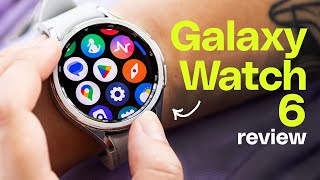
Samsung Galaxy Watch 6 supports Android 10 or higher with >1.5GB of memory, so it fits a wider range of phones than the Apple Watch. It can also run basic functions without a phone (e.g., activity tracking and music storage) per Samsung support documentation, reinforcing its «standalone-capable» positioning. However, the overall experience can vary by phone brand and configuration, which is a common trade-off in the Android/Wear OS world.
Conclusion: Galaxy Watch 6 wins on broad compatibility and long-term platform flexibility, while Apple Watch Series 10 wins if you want the most seamless experience specifically inside the iPhone ecosystem.
Setup, accounts, and day-to-day workflow style
Apple Watch Series 10 prioritizes automatic onboarding when paired with iPhone—accounts, permissions, and key settings typically carry over with minimal manual steps. That design approach tends to produce predictable UI behavior and consistent cross-device features, aligning with Apple’s «it just works» philosophy. The trade-off is structurally limited customization: you get fewer levers to change navigation logic, defaults, or system behavior.
Samsung Galaxy Watch 6 generally requires a more modular setup flow (Galaxy Wearable + plugins + Google services), with more explicit choices and account sign-ins along the way. The benefit is greater adjustability and a more «mini Android device» feel, supported by Wear OS app variety and deeper watch-face/widget customization. The cost is more moving parts—and multiple reviewers report Galaxy Watch 6 instability after updates, including lagging and worse battery drain, notification problems, and spontaneous restarts.
Conclusion: Apple Watch Series 10 has the edge for the most frictionless, consistent onboarding and daily companion workflow, while Galaxy Watch 6 has the edge for configurability and a more independent, Android-like watch experience—but with a higher risk of software variability depending on updates and phone setup.
Winner: Tie — Apple Watch Series 10 is the better fit for iPhone-first users who value seamless integration and consistency, while Samsung Galaxy Watch 6 is the better fit for Android users who want broader compatibility and deeper customization.
Display & readability
Outdoor brightness & glanceability
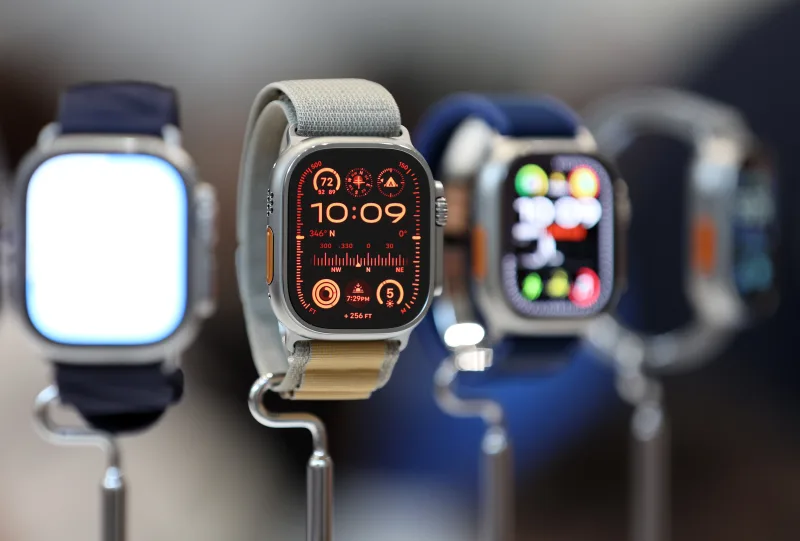
Apple Watch Series 10 is the only one here with a stated peak brightness: up to 2,000 nits maximum brightness, paired with an Always‑On Retina LTPO3 (wide‑angle OLED) panel. On-paper, that’s a concrete indicator of outdoor readability, especially for always-on complications where glare and quick glances matter.
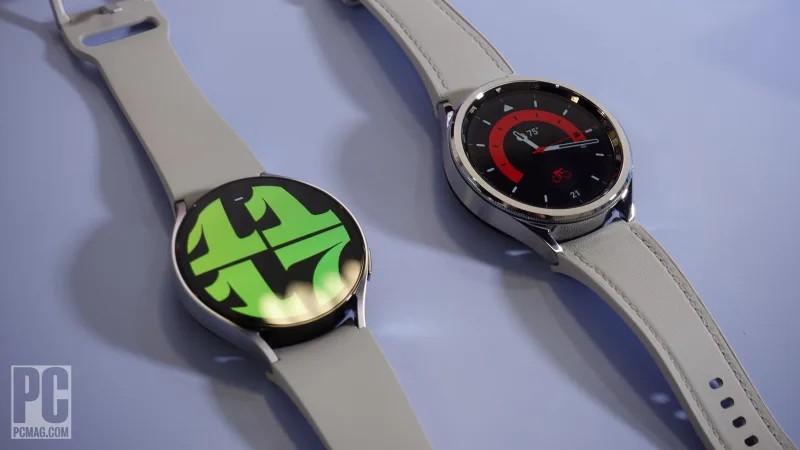
Samsung Galaxy Watch 6 uses a Super AMOLED with a Full Color Always On Display, but the provided spec matrix does not list a max-brightness figure. Without a comparable nit rating, it’s harder to make an evidence-based call that it matches Apple’s outdoor visibility headroom.
Conclusion: On brightness-backed readability, Apple Watch Series 10 has the defensible edge because it provides a specific 2,000‑nit claim while Samsung’s brightness isn’t specified in the provided data.
Sharpness (resolution) at comparable sizes
Apple Watch Series 10 lists 416×496 (46mm) and 374×446 (42mm). Those are strong numbers, but Apple’s larger case option doesn’t translate to the highest pixel count among these models.
Samsung Galaxy Watch 6 is higher on raw pixel resolution: 480×480 (44mm) and 432×432 (40mm). All else equal, that extra pixel density can make small text, app icons, and fine watch-face details look crisper.
Conclusion: For pure pixel sharpness, Galaxy Watch 6 wins on the provided specs (480×480 vs 416×496 at the larger size; 432×432 vs 374×446 at the smaller size).
Cover glass clarity & scratch resistance (readability over time)
Apple Watch Series 10 varies by case: Ion‑X front glass on aluminum models and Sapphire front crystal on titanium models. That means long-term clarity (fewer scratches that catch light) depends on which Series 10 configuration you buy.
Samsung Galaxy Watch 6 lists Sapphire Crystal across the line in the provided specs. If you’re trying to preserve legibility over years of wear, sapphire’s scratch resistance is a practical advantage because micro-scratches can reduce contrast and increase glare.
Conclusion: For keeping the display looking clear over time, Galaxy Watch 6 has the cleaner spec advantage (standard Sapphire Crystal) unless you specifically choose an Apple Watch Series 10 titanium model.
Winner: Tie — Apple Watch Series 10 has the only stated brightness spec (2,000 nits) for outdoor readability, while Samsung Galaxy Watch 6 counters with higher listed resolutions and standard sapphire crystal for sharpness and long-term clarity.
Health & sensors
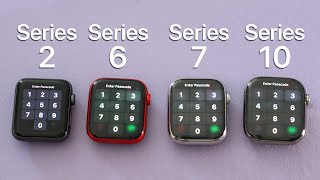
Core heart metrics and «medical-style» health features
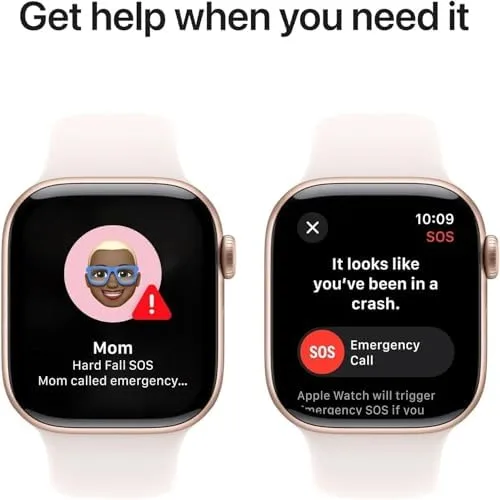
Apple Watch Series 10 includes a third-generation optical heart sensor and an electrical heart sensor that powers its ECG app. On the headline feature side, it also supports sleep apnea detection plus safety features like Emergency SOS (per SoT health feature summary). That combination is oriented toward passive monitoring that’s easy to keep running in the background.
Samsung Galaxy Watch 6 uses the Samsung BioActive Sensor for both optical heart rate and electrical heart signal (ECG-capable hardware). It covers the core heart metrics well on paper, but it doesn’t list sleep apnea detection in the provided facts, so it leans more toward general wellness and fitness tracking than Apple’s «flagship health narrative» here.
Conclusion: Apple Watch Series 10 has the clearer advantage for users prioritizing Apple’s specific health/safety headline features (notably sleep apnea detection + Emergency SOS) on top of ECG-capable hardware.
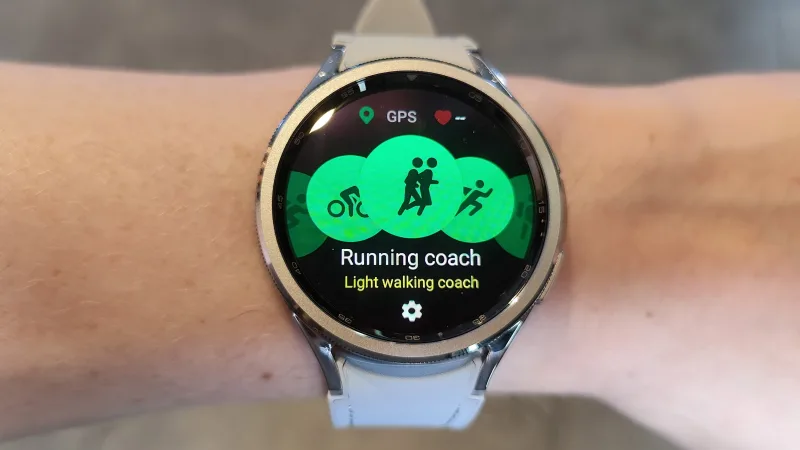
Body composition and specialized sensors
Apple Watch Series 10 adds some uniquely «environmental» sensors: a depth gauge and a water temperature sensor, alongside its temperature sensor and motion sensors (high-g accelerometer, high dynamic range gyroscope). Those extra sensors are most meaningful if you actually log water-based activities or want more context around swim sessions beyond basic heart rate.
Samsung Galaxy Watch 6 counters with Bioelectrical Impedance Analysis (BIA) built into the BioActive Sensor for body composition, plus a barometer that Apple explicitly lacks. In practice, BIA is a differentiator if you want on-wrist composition snapshots (e.g., body fat percentage trends) without stepping on a separate smart scale.
Conclusion: Samsung Galaxy Watch 6 has the edge for body metrics breadth thanks to BIA + barometer, while Apple Watch Series 10 is the more specialized pick for water-related sensing (depth and water temperature).
Sensor data you can rely on day-to-day
Apple Watch Series 10 benefits from Apple’s tightly controlled hardware/software stack, which typically supports «set it and forget it» health tracking with fewer moving parts to manage. The provided SoT notes also emphasize Apple’s low-maintenance approach: features tend to behave consistently, and health data is designed to roll up cleanly into a single history.
Samsung Galaxy Watch 6 can deliver a lot of health data, but multiple reviewers report issues like lag, battery drain, notification problems, and spontaneous restarts after updates. Those are software-stability concerns rather than sensor-count issues, but they directly affect whether health tracking feels dependable over weeks and months.
Conclusion: Apple Watch Series 10 has the advantage on reliability-of-experience for health tracking, while Samsung’s richer sensor mix can be undercut if software hiccups interrupt the routine.
Winner: Apple Watch Series 10 — It matches Samsung on the heart-rate/ECG hardware basics and adds clearer, differentiated health/safety features (notably sleep apnea detection and Emergency SOS) with a more consistent day-to-day health-tracking experience; Samsung’s BIA + barometer are meaningful upsides, but they don’t outweigh Apple’s overall health/safety and reliability lead in this section.
Performance & storage
Apple Watch Series 10 ships with 64GB of storage, which leaves substantially more room for offline music/podcasts, photos, and larger app caches over time. On paper, it also pairs its S10 SiP (64‑bit dual‑core) with a 4‑core Neural Engine, signaling more headroom for on-device intelligence features (even if Apple doesn’t publish RAM in the provided specs). For anyone who treats the watch as a long-term «install more, keep more offline» device, 64GB is a practical advantage.
Samsung Galaxy Watch 6 includes 16GB of storage and lists 2GB memory (RAM) alongside an Exynos W930 dual‑core 1.4GHz processor. That’s a workable baseline for core Wear OS apps, but the 16GB ceiling can make offline media and app growth feel tighter—especially as system updates and caches accumulate. Samsung also explicitly positions the Watch 6 as usable without a phone for basics like activity tracking and music storage, and that offline use case is inherently more comfortable with more storage.
Conclusion: For storage-driven use—offline media, more apps, and more long-term «breathing room»—Apple Watch Series 10’s 64GB vs 16GB is a clear, meaningful advantage.
Apple Watch Series 10 has no provided SoT evidence of widespread performance instability, and the broader positioning emphasizes a low-maintenance, tightly controlled experience where background health tracking and notifications are meant to «just work.» With the specs given, Apple’s differentiator is less about raw GHz and more about specialized silicon (the 4‑core Neural Engine) supporting Apple’s on-device feature ambitions.
Samsung Galaxy Watch 6, despite listing 2GB RAM, has a shakier real-world performance narrative: Multiple reviewers report issues such as lag after updates, worse battery drain, notification problems, and spontaneous restarts (report; report; report). Those complaints don’t prove every unit is problematic, but they do raise the risk that «specs on paper» won’t consistently translate to smooth day-to-day use.
Conclusion: Given the much larger storage plus fewer cited stability concerns in the provided sources, Apple Watch Series 10 has the stronger overall performance-and-storage story—while Samsung’s explicit 2GB RAM spec is a point in its favor, it’s not enough here to offset the storage gap and reported update-related issues.
Winner: Apple Watch Series 10
Battery & charging
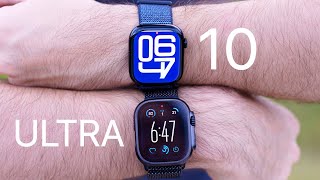
Rated battery life (endurance)
Apple Watch Series 10 is rated for up to 18 hours of «all‑day» use, with an extension to up to 36 hours in Low Power Mode. That framing is optimized for daily charging, where you top up during a morning routine or before sleep rather than chasing multi-day longevity. In practice, Apple’s own spec makes clear that the longer figure is conditional on a mode change, not the default baseline.
Samsung Galaxy Watch 6 is rated higher: up to 40 hours with Always On Display (AOD) off, and up to 30 hours with AOD on. Because both AOD-on and AOD-off figures are stated, it’s easier to predict the endurance impact of leaving the display always visible. Samsung also lists larger battery capacities—425 mAh (44mm) and 300 mAh (40mm)—though Apple doesn’t provide a capacity number here for direct comparison.
Conclusion: On published endurance specs, Galaxy Watch 6 has the clear advantage (40h AOD off / 30h AOD on vs Apple’s 18h baseline), especially if you want fewer charging sessions across a week.
Charging speed & convenience
Apple Watch Series 10 explicitly claims fast charging up to 80% in about 30 minutes, which is a concrete, time-based promise that maps well to short top-ups. If your usage pattern is «charge briefly, wear all day,» that 30-minute 80% target is a practical advantage for recovery charging between workouts or before bed.
Samsung Galaxy Watch 6 also supports fast charging, but it’s described as WPC-based wireless charging without a comparable time-to-percent figure in the provided specs. The WPC note is useful for standards context, but it doesn’t tell you whether a quick pre-commute top-up will be meaningfully faster or slower than Apple’s «80% in ~30 minutes» claim.
Conclusion: For charging predictability, Apple Watch Series 10 has the edge because it states a specific result (80% in ~30 minutes) rather than just the charging standard.
Winner: Samsung Galaxy Watch 6 — it holds the more meaningful day-to-day advantage on stated endurance (up to 40 hours vs Apple’s 18 hours), even though Apple is more specific—and likely more convenient—on fast top-ups.
Durability & materials
Water & dust resistance ratings
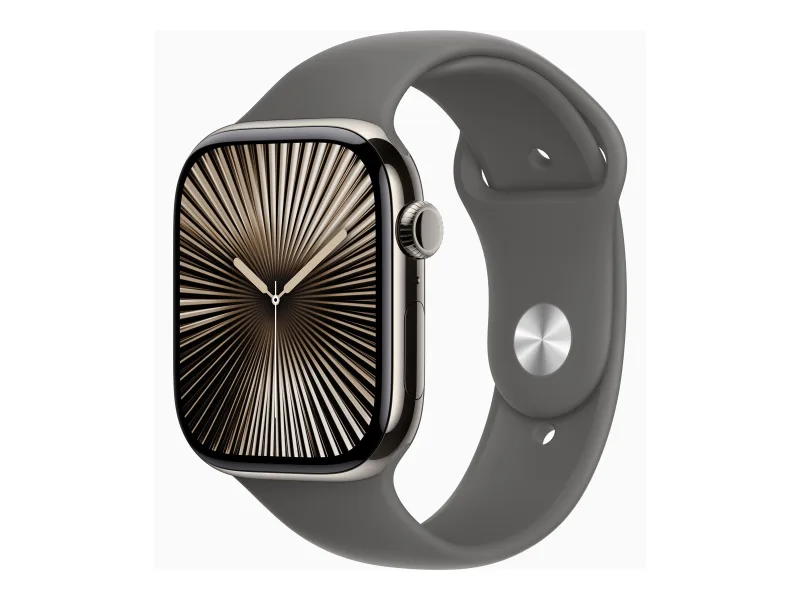
Apple Watch Series 10 is rated 50m (swimproof) and carries IP6X dust resistance. That combination is strong for pool swimming and dusty environments, but Apple doesn’t list an IP water rating or a MIL spec in the provided specs.
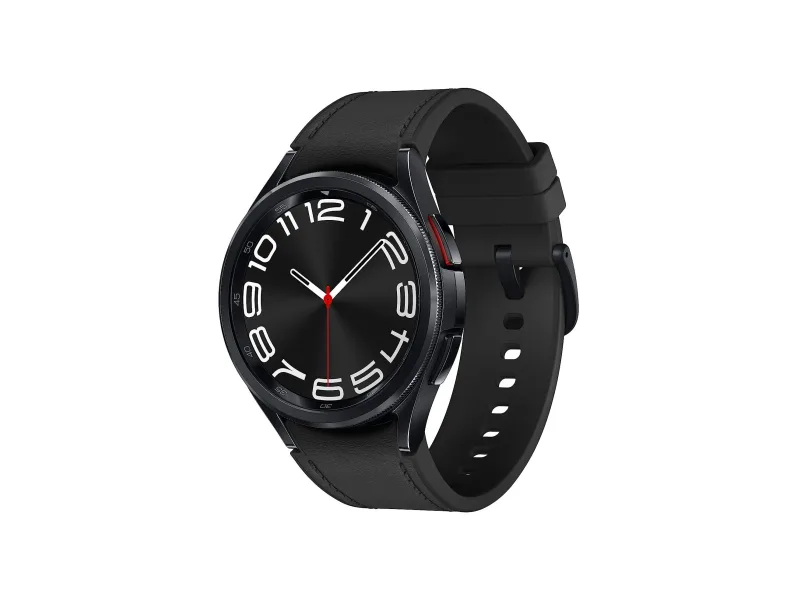
Samsung Galaxy Watch 6 is rated 5ATM + IP68 and is positioned with MIL-STD-810H. Compared with Apple’s IP6X, Samsung’s IP68 explicitly covers dust and water ingress as a combined standard alongside the 5ATM swim rating.
Conclusion: Galaxy Watch 6 has the clearer «rugged mixed-conditions» spec stack (5ATM + IP68 + MIL-STD-810H vs 50m + IP6X), especially if you care about broader environmental protection language beyond swimproofing.
Cover glass and materials robustness
Apple Watch Series 10 changes durability depending on the case: Ion‑X front glass on aluminum models, and sapphire front crystal on titanium models. Practically, that means you can choose a more scratch-resistant top-tier build, but only by moving to the titanium variant.
Samsung Galaxy Watch 6 lists Sapphire Crystal across the line in the provided specs. That simplifies the decision if scratch resistance is a priority, because you’re not navigating «base glass vs premium glass» tiers.
Conclusion: Galaxy Watch 6 is more consistent on cover-glass durability, while Apple Watch Series 10 can match it if you buy the titanium (sapphire) version—a trade-off between up-front cost/material tiering and uniform specs.
Winner: Samsung Galaxy Watch 6 — its 5ATM + IP68 + MIL-STD-810H positioning and standard Sapphire Crystal read as the more defensible durability package on paper, while Apple’s best durability depends on choosing the higher-end titanium model.
Connectivity extras
Apple Watch Series 10 has the standout «extras» silicon: a second-generation Ultra Wideband (UWB) chip, alongside Bluetooth 5.3, Wi‑Fi 4 (802.11n), NFC (Apple Pay), and multi-constellation positioning including L1 GPS, GNSS, Galileo, and BeiDou. In practice, UWB is what enables the most premium «nearby» experiences inside Apple’s ecosystem (for example, precision finding workflows highlighted in long-term coverage).
Samsung Galaxy Watch 6 matches the core wireless stack with Bluetooth 5.3, Wi‑Fi (2.4+5GHz), NFC, and broad GNSS coverage (GPS/Glonass/Beidou/Galileo). However, its spec sheet explicitly lists UWB as absent, which removes an entire class of proximity-based features that Apple leans on.
Conclusion: If you value «nearby» ecosystem features and precision interactions, Apple Watch Series 10 wins on connectivity extras thanks to UWB (present vs absent). If you prioritize Wi‑Fi flexibility on a wider range of networks, Galaxy Watch 6 has the edge with dual-band 2.4/5GHz vs Apple’s Wi‑Fi 4.
Apple Watch Series 10 is offered in LTE and UMTS variants, reinforcing its role as an iPhone-first companion that still stays connected away from the phone. The broader Apple ecosystem angle matters here: these connectivity features tend to behave predictably when your phone, accounts, and services are all Apple-managed.
Samsung Galaxy Watch 6 also comes in LTE variants, and Samsung notes it can run without a phone for basics like activity tracking and music storage. That said, multiple reviewers report Galaxy Watch 6 software-related connectivity friction—like notification problems and even spontaneous restarts—which can undermine the value of being «standalone» if your use depends on reliable background sync.
Winner: Apple Watch Series 10
Software stability
Apple Watch Series 10 runs watchOS in a tightly controlled Apple stack, and it’s explicitly not compatible with Android. In practice, that closed pairing tends to reduce variability because the watch software and the paired phone environment are designed and updated as a unit. The result is typically more uniform behavior across system UI and first-party apps, even if it comes with less freedom to change defaults or system logic.
Samsung Galaxy Watch 6 runs Wear OS Powered by Samsung (Wear OS 4) and supports Android 10+ with >1.5GB memory, which immediately introduces more «it depends» factors across phones and vendor services. A common complaint is post-update lag, battery drain, notification issues, and spontaneous restarts—signals that day-to-day smoothness can be more variable depending on software version and configuration. That variability isn’t guaranteed for every owner, but it’s a meaningful stability risk that shows up repeatedly in user reports.
Conclusion: On stability and predictability, Apple Watch Series 10 has the edge because its software environment is more uniform by design, while Watch 6’s broader Android/Wear OS stack can introduce more moving parts and update-to-update inconsistency.
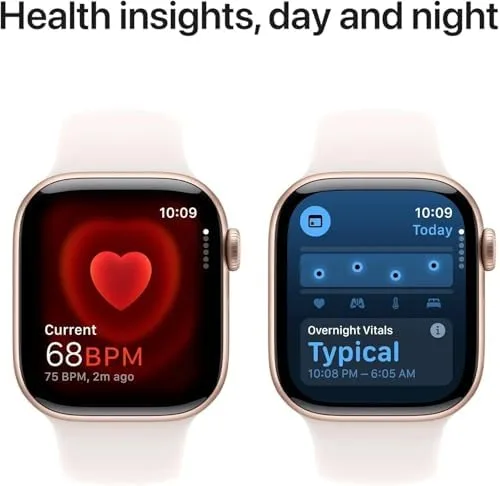
Apple Watch Series 10 also looks better positioned for «set-and-forget» reliability in daily use because the platform prioritizes consistent system behaviors (notifications, background health tracking, and UI transitions) over deep customization. While its hardware specs don’t guarantee stability, Apple’s approach of aligning watch updates closely with the iPhone experience generally reduces cross-device edge cases. The main trade-off is that flexibility drops sharply if you want the watch to act independently or you ever leave the iPhone ecosystem.
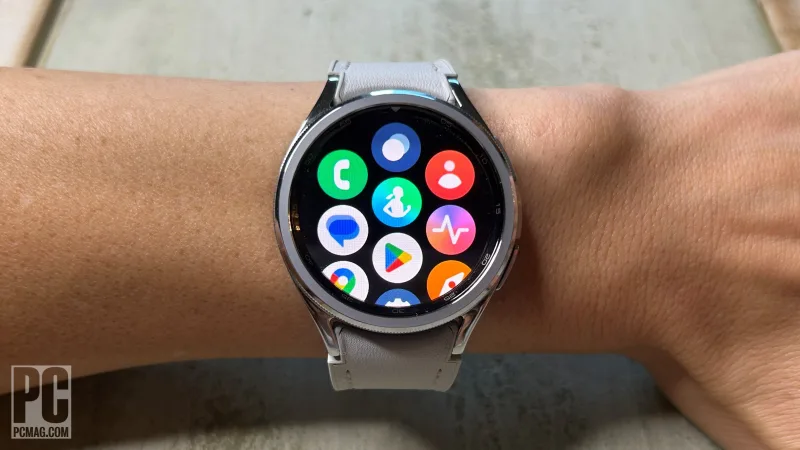
Samsung Galaxy Watch 6, by contrast, behaves more like a configurable Android device on your wrist: more watch faces, broader third-party options, and deeper control over services (especially Google apps). However, that openness can come with more opportunities for background-sync and notification inconsistencies depending on phone power-management behavior—and the reported restarts/lag after some updates reinforce that the experience can be less uniform across time. If you enjoy tweaking settings and apps, that «openness» may outweigh the stability downside.
Conclusion: Apple Watch Series 10 wins for users who prioritize low-maintenance consistency; Galaxy Watch 6 can still be the better choice if you value configurability and broader Android-service flexibility and can tolerate higher variability risk.
Winner: Apple Watch Series 10
The Bottom Line
After digging through ecosystem fit, display, health, performance, battery, durability, and software, the «best» choice here comes down to what phone you use and how much variability you’re willing to tolerate.
You use an iPhone (and stay on iPhone): The Apple Watch Series 10 is the clear pick thanks to smoother onboarding, tighter integration, and a more consistent companion experience.
You use Android and want Google apps on your wrist: Go with the Samsung Galaxy Watch 6 for broader Android compatibility, Wear OS flexibility, and deeper customization.
You want the most passive, low-maintenance health tracking: Choose the Apple Watch Series 10, which led on reliability-of-experience plus standout health/safety features like sleep apnea detection and Emergency SOS.
You care most about rated battery life: The Samsung Galaxy Watch 6 wins on published endurance (up to 40 hours with AOD off), making it the easier fit for fewer charges.
You want the most storage for offline music/apps: The Apple Watch Series 10 takes it with a meaningful 64GB vs 16GB advantage for offline media and long-term breathing room.
Ultimately, this is a split decision: Apple leads on iPhone-first consistency, health/safety framing, storage, and UWB-powered extras, while Samsung counters with stronger rated battery life, a more rugged spec stack, and standard sapphire across the line.
Pick based on your phone ecosystem and your tolerance for setup/update variability—then check current in-stock configurations and choose the right size and LTE option based on budget and how often you plan to leave your phone behind.
FAQ
Which is better for iPhone: Apple Watch Series 10 or Galaxy Watch 6?
Which is better for Android phones?
Which has better battery life?
Which smartwatch has more storage for apps and music?
Is Galaxy Watch 6 usable without a phone?
Which is more durable for everyday wear?
Does Galaxy Watch 6 have software stability issues?
Which watch has better health monitoring features?
"Images are used for editorial and informational purposes only. All trademarks and images belong to their respective owners."
New Draft 2026-03-25 01:21
- Track daily health with a smart ring → Oura Ring 4 vs Samsung Galaxy Ring: Best Smart Ring?
- Optimize training and recovery → WHOOP 5.0 vs Oura Ring 4: Best for Recovery & Training?
- Decide between smart glasses for multimedia or display → Ray-Ban Meta vs RayNeo 4 Pro: Capture or Personal Screen?
- Choose earbuds for commuting with superior audio quality → Galaxy Buds 3 Pro vs Liberty 4 Pro vs Bose Ultra Open