Insta360 X6 vs GoPro MAX2: night video or daylight detail?
TL;DR
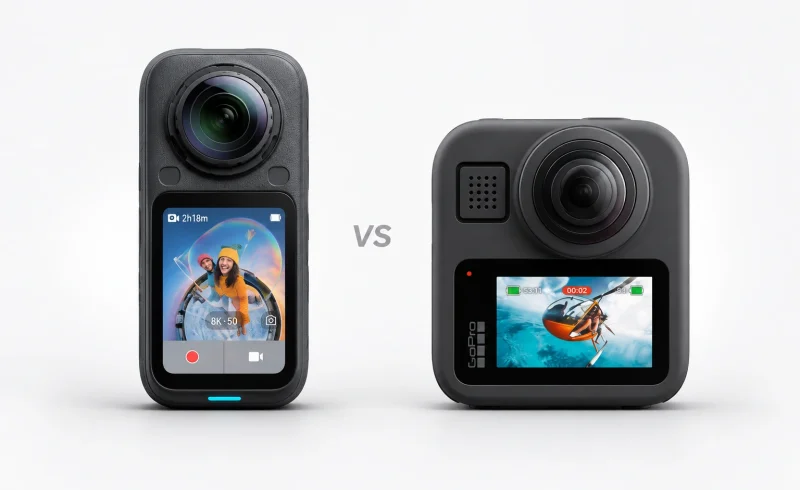
The Insta360 X6 is the better camera for most travelers: it keeps more of a night scene visible and records much longer at 8K/30. The GoPro MAX2 is the better pick for daylight action, when scratched lenses, helmet mounting and front buttons matter more than filming after dinner. It also costs much less: $499.99 list against $699.99, and GoPro has cut it as low as $299.99 in promotions.
| Specification | Insta360 X6 | GoPro MAX2 |
|---|---|---|
| Sensor format | Dual 1/1.1-inch | — |
| Maximum 360 video | 8K/50 fps | 8K/30 fps |
| Maximum single-lens video | 5K/60 fps | 4K/60 fps |
| Weight with battery | Approximately 196 g | Approximately 190 g |
| Screen diagonal | 2.32 inches | 1.82 inches |
| Battery capacity | 2,600 mAh | 1,960 mAh |
| Rated 360 runtime at 8K/30 | Approximately 140 minutes | — |
| Internal storage available | 47 GB | None |
| Body-only waterproof depth | 20 m | 5 m |
| User-replaceable lenses | Yes | Yes |
| Stated operating range | −20°C to 40°C | −10°C to 35°C |
| Official US list price | $699.99 | $499.99 |
Insta360 rates the X6 runtime at 25°C with the screen off.
📑 Table of Contents
- Daylight detail gives MAX2 a narrow lead
- After sunset, choose X6
- X6 lasts longer when recording the whole sphere
- MAX2 is safer for a stationary 4K/60 take
- MAX2 makes a scratched lens less disruptive
- X6 goes underwater; MAX2 sits low on a helmet
- X6 saves editing work; MAX2 keeps physical controls
- Final Verdict
- FAQ
Daylight detail gives MAX2 a narrow lead
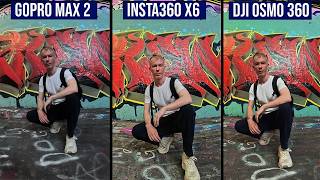
In daylight the reviewers split, with a slight lean toward MAX2. WIRED prefers its footage overall, while TechRadar's Sam Kieldsen finds X6 potentially as good or slightly better. DC Rainmaker's road comparisons show similar fine detail and occasional X6 overexposure in bright scenes. For a sunny bike ride, MAX2 is the safer bet, though by a far smaller margin than X6's lead at night.
Stitching rarely decides between them in ordinary outdoor footage. Tom's Guide found the seams unobtrusive on both cameras, while close objects can still reveal where the two views join. Hugh Hou's X6 vs MAX2 chapter (09:18) puts the two cameras on the same rig.
X6 has the frame-rate headroom for slowing down an 8K shot: 50 fps against MAX2's 30 fps. If high-resolution motion is your priority, the DJI Osmo 360 II vs Insta360 X6 comparison brings another current 360 option into that choice.
After sunset, choose X6
X6 retains more of a dark street than MAX2, and that matters when a travel camera stays out after sunset. TechRadar's night scenes and DC Rainmaker's field comparison, republished by DroneXL both point toward X6; WIRED also preferred it at night. PureVideo lifts dim detail that MAX2's conventional video leaves harder to see.
Night color still needs some tolerance. WIRED saw blues drift toward green and yellows toward orange, while DC Rainmaker found occasional overexposure around bright areas. The 360 Guy's night comparison (05:16) is a way to judge whether that brighter rendering suits the scenes you shoot.
MAX2's star-trail and light-painting effects serve creative long exposures. Those effects can turn moving lights into a finished sequence, but they do not replace a low-light video mode for an ordinary nighttime walk.
X6 lasts longer when recording the whole sphere
X6 recorded just under 155 minutes at 8K/30 against MAX2's 73 in Tom's Guide's X6 review, by Peter Wolinski. Neither overheated in that mode. TechRadar's separate X6 test reached 136 minutes at 8K/30 without a heat stop.
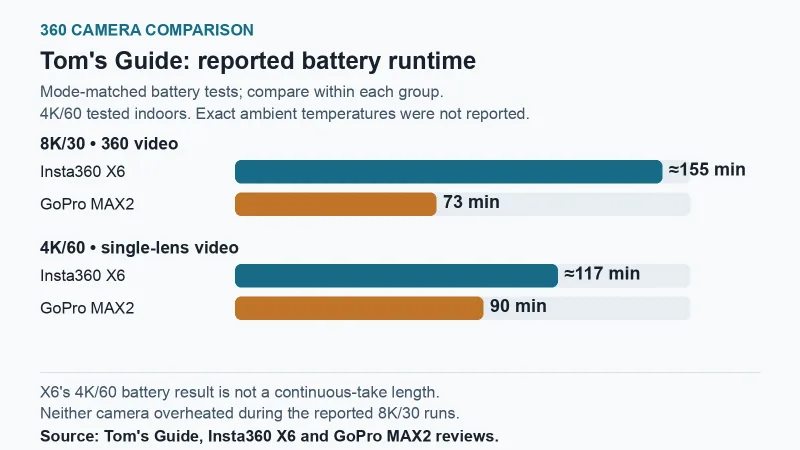
Single-lens 4K/60 is a different proposition. Tom's Guide reported just under 117 minutes of battery runtime for X6 against MAX2's 90, alongside heat stops on X6. For a ride captured in 360 at 8K/30, X6 wins on endurance; for an uninterrupted flat-video recording, the heat result below matters more than total minutes.
MAX2 is safer for a stationary 4K/60 take
MAX2 completed Tom's Guide's 90-minute indoor 4K/60 run without a thermal stop; X6 first stopped at 56 minutes under the reviewer's usual cooler conditions. A stationary camera filming a lesson or performance gets less cooling air than one moving on a bike, so MAX2 is the more dependable choice for that particular job.
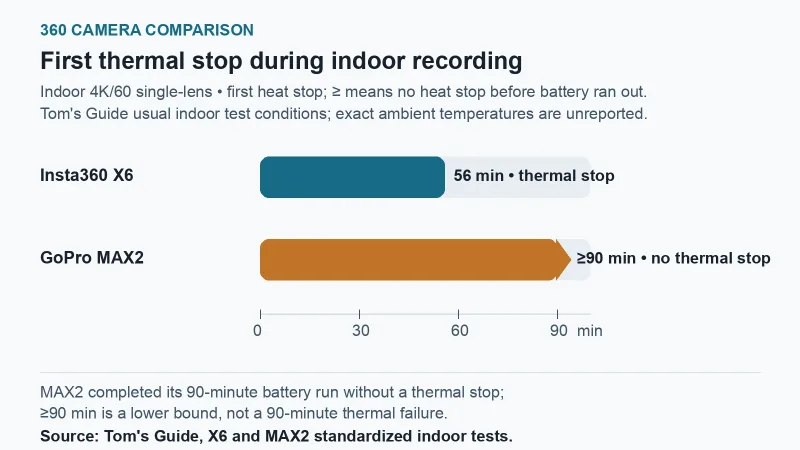
X6's high-frame-rate modes demand shorter takes. At 8K/50, the same reviewer saw its first heat stop at 25 minutes, followed by further stops every 20 to 25 minutes. X6 at 8K/30 avoided that interruption in the test, making the lower frame rate the sensible setting for a long unattended 360 recording.
MAX2 makes a scratched lens less disruptive
A scratched lens is a quicker fix on the MAX2: its lenses twist off by hand without a calibration step. X6 also has replaceable lenses, but its replacement kit uses tools. With exposed glass on both sides of a 360 camera, the difference is how much of a shooting day a scratch can interrupt.
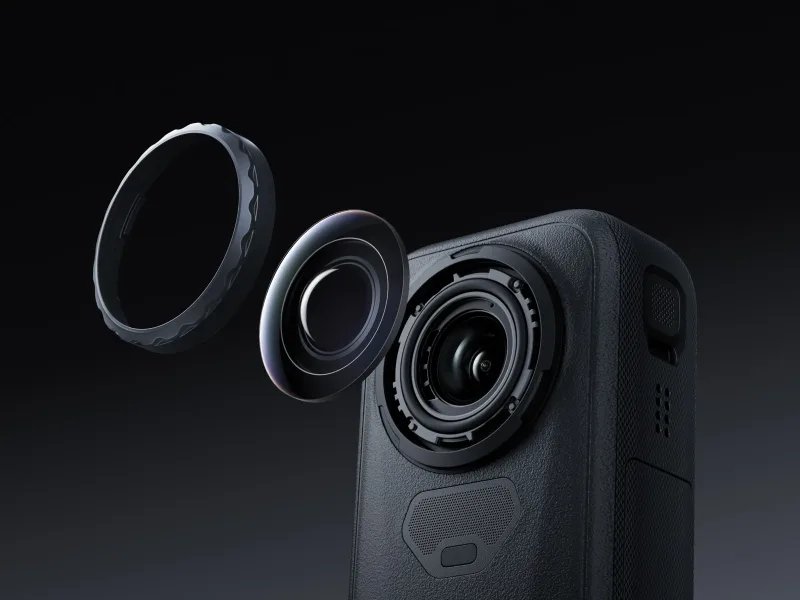
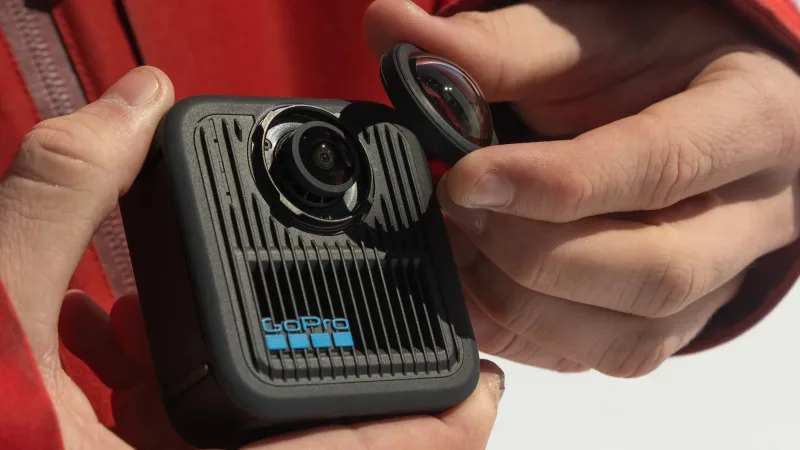
Both systems let you replace damaged glass, so a scratch does not mean a new camera with either one.
X6 goes underwater; MAX2 sits low on a helmet
X6 has the more capable underwater system, but its 20 m body rating is only the starting point. DC Rainmaker describes swapping to the dedicated underwater lenses for the Invisible Dive Case Pro, which is rated by Insta360 to 60 m. MAX2's manual rates the sealed body to 5 m while warning that underwater distortion makes it unsuitable for underwater shooting.
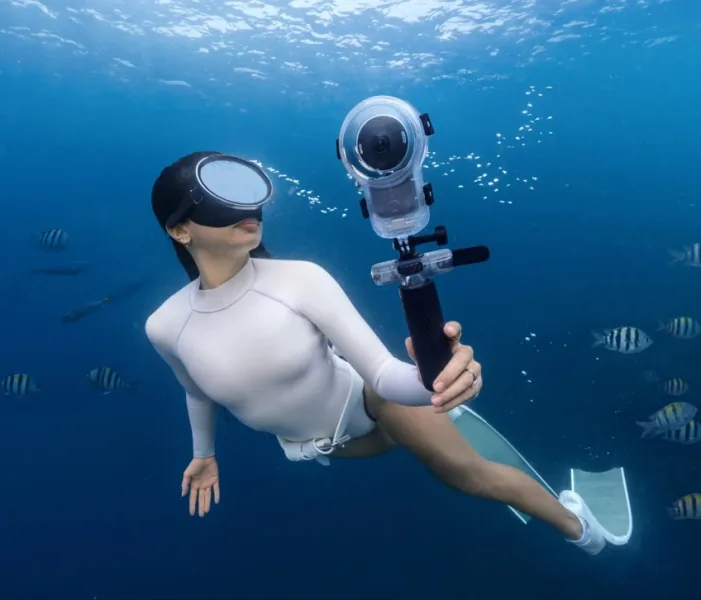
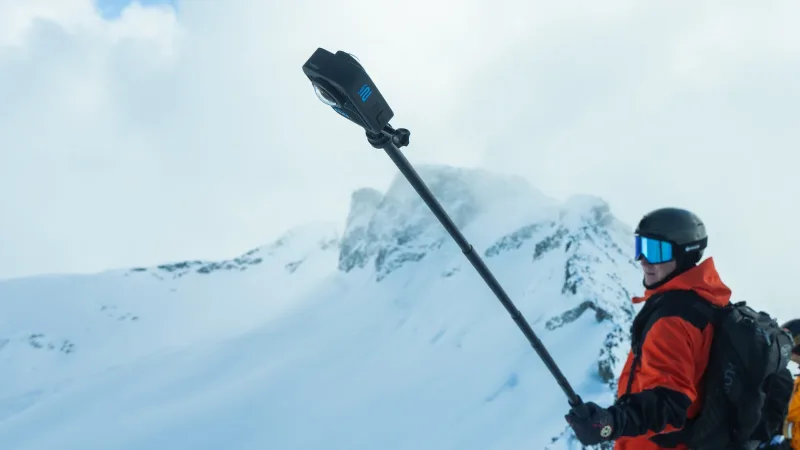
MAX2's shorter body sits lower on a helmet or chest mount. It accepts a threaded selfie stick and folds GoPro mounting fingers into the body; X6 also has a threaded mount and a quick-release connection. Choose X6 with its intended case-and-lens system for diving footage, or MAX2 for a low-mounted surface-action camera.
X6 saves editing work; MAX2 keeps physical controls
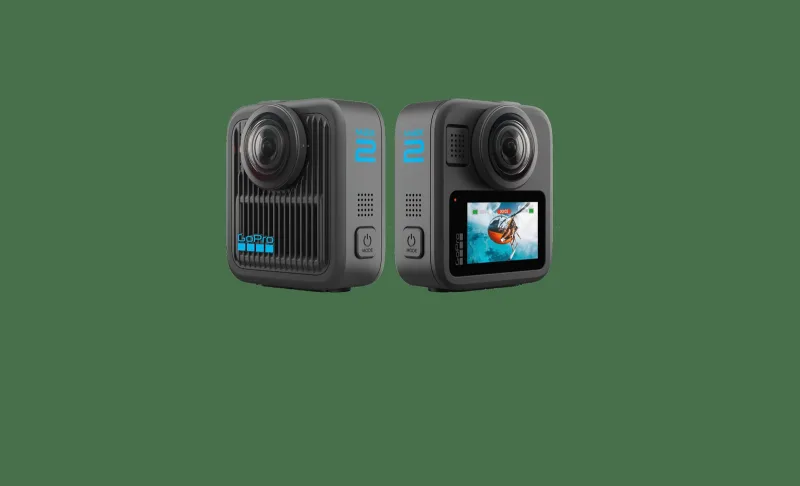
X6 replaces the front buttons with haptic controls under a larger 2.32-inch OLED, keeping physical record and power buttons on the side; MAX2 keeps physical buttons on the front. WIRED found the X6's haptic controls less reliable to activate than the X5's buttons, which matters with gloves on.
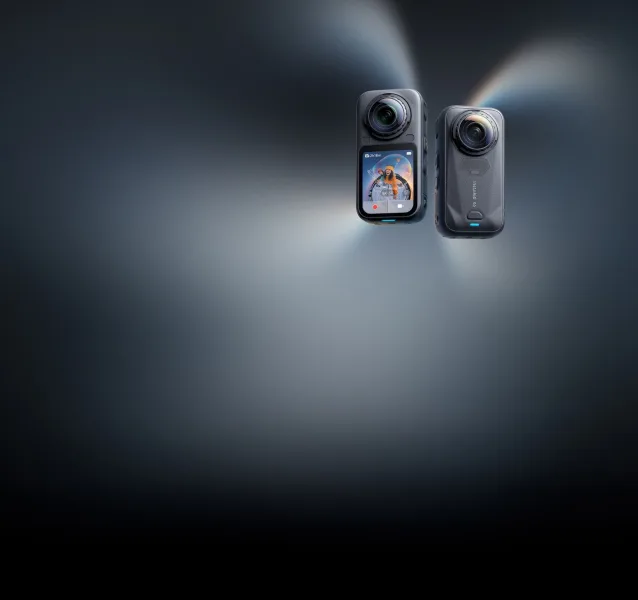
X6 can save a day when the memory card is still in a laptop: it has 47 GB of usable internal storage. MAX2 needs a microSD card to record. Both can use cards up to 1 TB, but only X6 gives you somewhere to put a clip after leaving the card behind.
For casual phone-based reframing, Insta360's automatic tools reduce the work of turning a sphere into a conventional clip; MAX2's Quik also tracks subjects and lets you steer the viewpoint by moving your phone. TechRadar's full X6 review encountered crashes during export with its beta iOS app on an iPhone 13, so demanding edits are a reason to use Studio on a computer instead of assuming a phone will finish every job.
MAX2 gives more direct control over onboard sound pickup in single-lens mode. Its audio settings can select front, back or the lens being used, while X6 emphasizes automatic wind reduction and voice enhancement. That suits filming a speaker in a known direction.
Stabilization is too close to call for 360 capture. FlowState and Max HyperSmooth keep the horizon level as the view is reframed later, and reviewers found both cameras' 360 footage smooth. X6's single-lens footage showed some judder in Tom's Guide's test, so flat-video action may not look as smooth as its 360 footage.
Final Verdict
For most travelers, choose the Insta360 X6: its more usable night footage and longer 8K/30 recording time cover a wider shooting day.
- Evening walks and trips with long 360 takes: Insta360 X6, for low-light detail and endurance.
- Daylight helmet footage and repairs away from a workbench: GoPro MAX2, for its low body and hand-swappable lenses.
- Stationary single-lens 4K/60 recordings: GoPro MAX2, for its uninterrupted indoor test run.
- Diving with dedicated underwater optics: Insta360 X6, for its supported case-and-lens system.