
Tractive Smart vs Apple AirTag: GPS or Bluetooth for Your Pet?
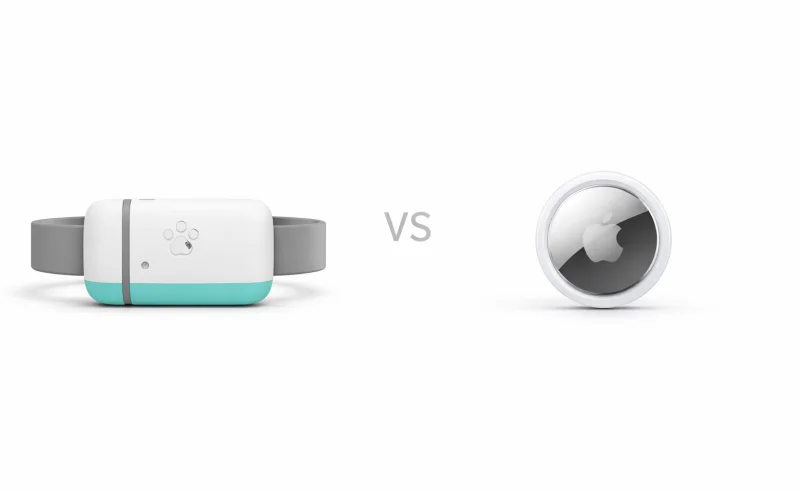
Choosing between a pet GPS tracker and a Bluetooth tracker comes down to where your pet roams. Compare Tractive Smart vs Apple AirTag on real-time tracking, range, battery, setup, and long-term costs to pick the right fit.
TL;DR
Quick Decision
- If you need real-time, independent tracking for an outdoor pet that might roam or bolt → choose Tractive Smart.
- If you want a low-maintenance, set-and-forget finder for an indoor pet in an Apple-dense urban area → choose Apple AirTag.
- If your pet never leaves a fenced yard and you just need a last-known-location backup → either can work, with trade-offs.
Key Differentiators The core choice is between an active GPS device and a passive Bluetooth tag. Tractive Smart operates like a dedicated beacon, providing live location updates anywhere with cellular service but requiring a subscription and weekly charging. The AirTag is more like a digital breadcrumb, relying on passing iPhones to report its location, which makes it free to operate and maintenance-light but unreliable for tracking movement in real-time or in rural areas.
Who Should NOT Buy Either If you want a one-time purchase with no ongoing fees and live tracking that doesn’t depend on cellular towers, neither is a perfect fit, and you should consider a dedicated radio-frequency (RF) tracker instead.
Market price overview
Tractive Smart
Apple AirTag

 Joom
Joom Joom
Joom Joom
Joom Joom
Joom
 re:Store
 re:Store
 Joom
Joom| Feature | Apple AirTag | Tractive Smart |
|---|---|---|
| Audio | ||
| Built-in Speaker / Sound | Built-in speaker | Sound |
| Power | ||
| Battery Life | More than a year (standard replaceable battery) | Up to 5 days (with Power Saving Zones) |
| Battery Type | User-replaceable CR2032 coin cell battery | |
| Charging Method | Not applicable (replaceable battery) | CAT Mini charger |
| Battery Capacity | 450 mAh | |
| Physical | ||
| Weight | 11 grams | 25 g |
| Dimensions | Diameter: 31.9 mm; Height: 8.0 mm | 55 × 28 × 17 mm |
| Durability | ||
| Water Resistance | Rated IP67 (maximum depth of 1 meter up to 30 minutes) | Waterproof |
| Connectivity & Network | ||
| NFC | NFC tap for Lost Mode | |
| Bluetooth | Bluetooth for proximity finding | |
| Tracking Range | Depends on Find My network (nearby devices detecting Bluetooth signal) | Unlimited (as long as there is sufficient cellular coverage) |
| Location Technology | Find My network (Bluetooth signal) + Ultra Wideband (U1) + NFC | GPS satellites + cellular networks (LTE) |
| Ultra Wideband (UWB) | Apple-designed U1 chip for Ultra Wideband and Precision Finding | Not supported |
| Cellular Connectivity | Not supported | 2G and/or LTE (CatM1) cellular coverage required |
| Plans & App Compatibility | ||
| Subscription Required | Not required | Required |
| Supported Mobile Platforms | iPhone and iPod touch (iOS 14.5 or later); iPad (iPadOS 14.5 or later) | iOS and Android |
📑 Table of Contents
Tracking tech & update speed
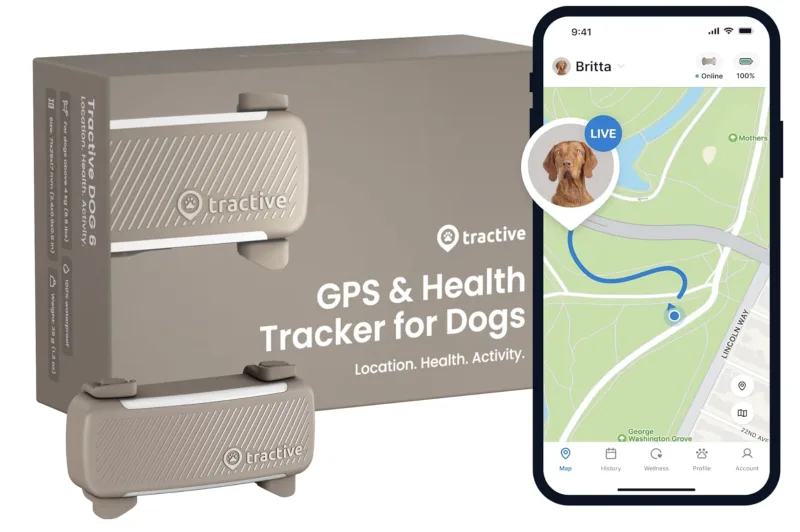
Tractive Smart is a true pet GPS tracker: it uses GPS satellites plus cellular networks (2G and/or LTE CatM1) and is designed for active tracking over distance. In Live mode, it can provide updates every 2–3 seconds, which is the kind of refresh rate that can keep up with a running dog or a cat that’s slipping through yards. Its stated tracking range is «Unlimited (as long as there is sufficient cellular coverage)», making it fundamentally independent of nearby phones.
Apple AirTag is a Bluetooth tracker that reports location through Apple’s Find My network, meaning it relies on nearby Apple devices detecting its Bluetooth signal to update position. Its effective Bluetooth range is commonly cited as about 30 ft (10 m) indoors and up to 100 ft (30 m) outdoors, and outside that range it becomes dependent on opportunistic «pings» from passing iPhones. Apple ecosystem features like UWB (U1) Precision Finding can help you home in when you’re already close, but it’s not built to deliver continuous, frequent updates at distance.
Conclusion: For a living, moving pet where you may need true «chase the dot» tracking, Tractive Smart clearly wins on underlying tracking tech and update behavior (GPS + cellular with 2–3 second live updates vs Bluetooth + Find My network pings). AirTag can still work for «find nearby / last seen» recovery in dense Apple-device areas, but it’s a different class of product than an always-on pet tracker.
Winner: Tractive Smart
Range & coverage reliability

Tractive Smart is designed for independent, long-distance tracking: its stated tracking range is «Unlimited (as long as there is sufficient cellular coverage)», using GPS satellites + cellular networks (LTE) with 2G and/or LTE (CatM1) coverage required. In practice, that makes it a better fit for roaming or escape scenarios where your pet may be far from you and not near other people’s devices. The trade-off is that coverage reliability is directly tied to network conditions—Tractive itself notes you may need to check network settings and coverage if the tracker shows «Offline» in-app.
Apple AirTag is fundamentally different: it broadcasts Bluetooth and relies on the Find My network—nearby Apple devices detecting that signal—to report location. Its practical Bluetooth range is short at roughly 30 ft (10 m) indoors and up to 100 ft (30 m) outdoors, and remote updates are opportunistic rather than continuous. That can work well in dense, Apple-heavy environments, but in low-density areas the «range» is less about distance and more about whether any iPhones happen to pass nearby.
Conclusion: For coverage reliability over distance, Tractive Smart has the clear edge because it can keep reporting location beyond Bluetooth range as long as cellular service exists, while AirTag’s updates are inherently dependent on nearby Apple devices.
Tractive Smart also supports a more «tracker-like» recovery loop once coverage exists: it can deliver live updates every 2–3 seconds (per manufacturer/retailer listings), which is valuable when a pet is actively moving. However, this reliability comes with operational dependencies: it requires a monthly subscription to access the cellular network, and any lapse in subscription or weak signal can reduce usefulness when you need it most.
Apple AirTag, by contrast, is excellent at very short-range «closing the gap» in places where Find My is active, thanks to Ultra Wideband (U1) Precision Finding on compatible iPhones. But it’s explicitly not built as an active, independent tracker—location reporting depends on the Find My ecosystem and can be delayed or absent if no Apple devices are nearby.
Conclusion: For real-time recovery and dependable updating during movement, Tractive Smart wins on the strength of 2–3 second live updates and cellular-backed range; AirTag’s advantage is proximity finding, but only once you’re already in the right area and have compatible Apple hardware.
Winner: Tractive Smart
Pet fit: safety, roaming, recovery
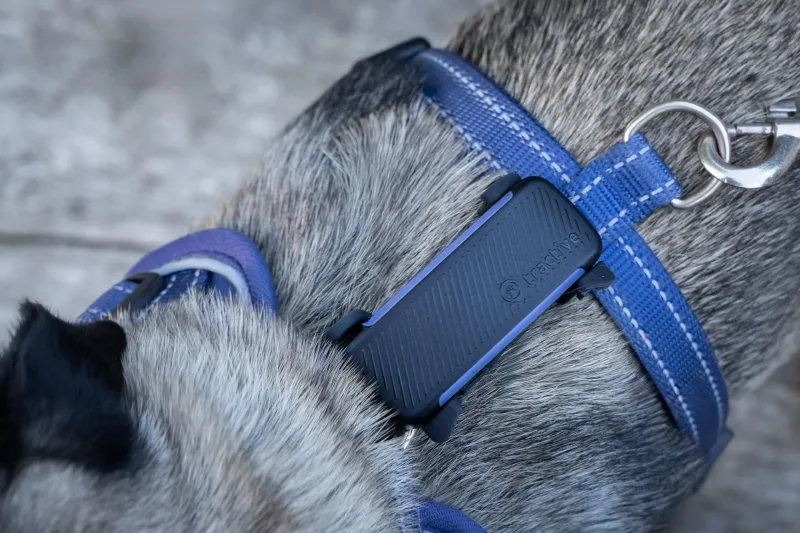
Tractive Smart is designed for recovery when a pet is actively moving: it uses GPS satellites + cellular (2G/LTE CatM1) and supports live updates every 2–3 seconds. Its stated tracking range is «Unlimited (as long as there is sufficient cellular coverage)», which aligns with escape scenarios where your pet may quickly get far beyond your immediate proximity. The trade-off is that «unlimited» depends on network conditions—if coverage is weak, the app can show the tracker as «Offline,» and Tractive explicitly points users to check network settings and coverage.
Apple AirTag behaves more like an object finder than a pet safety tracker: it uses Bluetooth + Apple’s Find My network to report location, not GPS/cellular. In practice, that means the AirTag’s location is opportunistic—it updates when it’s near other Apple devices that can detect it, rather than continuously reporting movement on its own. Its effective Bluetooth range is often cited around 30 ft (10 m) indoors and up to 100 ft (30 m) outdoors, which is helpful for near-field «is it in the house/yard?» recovery but not dependable for a pet that’s already running away.
Conclusion: For roaming and rapid recovery, Tractive Smart has the clear functional advantage because it’s built for independent, frequent location updates (2–3 seconds) over an effectively unlimited area with coverage. AirTag can still work in dense, Apple-heavy environments, but its passive update model is a meaningful limitation for tracking a moving animal beyond short-range proximity.
- Tractive Smart fits best: outdoor pets, escape/bolt risk, and scenarios where you need real-time movement tracking.
- Apple AirTag fits best: indoor pets or urban areas where you mainly want nearby finding and occasional network-assisted location pings.
Winner: Tractive Smart
App, setup & daily UX
Tractive Smart setup is more involved because it’s a true GPS + cellular tracker: Tractive’s own activation flow includes charging it at least 2 hours before first use, installing the Tractive app, creating an account, pairing the device, and choosing a plan (subscription is required). On the upside, once configured, the experience is built around active tracking controls—its app is map/status-centric and supports live updates every 2–3 seconds, which aligns with «open the app and track now» expectations. Day-to-day, it behaves like a small device you manage, including charging (rated up to 5 days with Power Saving Zones) and occasionally checking connectivity if it shows «Offline» in-app.
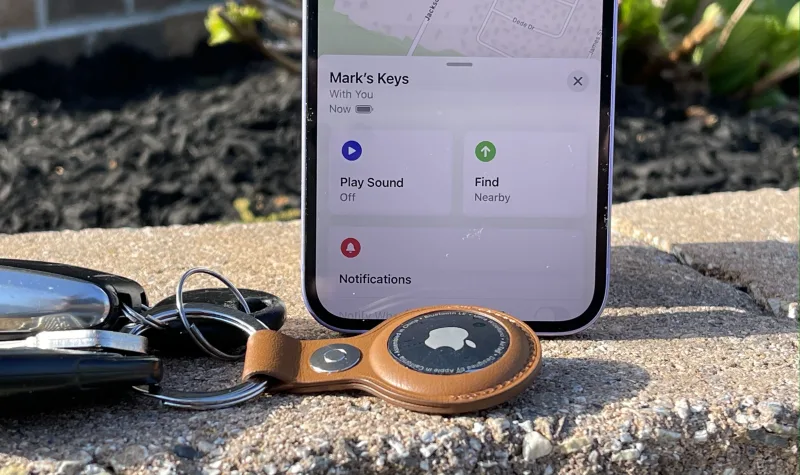
Apple AirTag is designed for low-touch setup and low-touch ownership inside Apple’s ecosystem: you pull the tab, hold it near an unlocked iPhone, and follow the on-screen prompts in Find My. After that, interaction is typically minimal because AirTag relies on Bluetooth + the Find My network rather than an always-on «tracking mode,» so it often fades into the background until you need it. Maintenance is also simple and infrequent, with a user-replaceable CR2032 battery rated at about a year.
Conclusion: Apple AirTag wins for setup speed and «set-and-forget» daily UX—specifically for iPhone users. Tractive Smart is the better fit if your «daily UX» means opening an app and getting real-time, independent tracking rather than waiting for opportunistic Find My updates.
Winner: Apple AirTag
Battery & maintenance
Tractive Smart is a rechargeable GPS/LTE tracker with a stated battery life of up to 5 days (with Power Saving Zones) and a 450 mAh battery. In practice, that shorter window means more frequent check-ins—especially because Tractive’s live tracking can update every 2–3 seconds, which naturally encourages a «charge and monitor» ownership pattern. Tractive also notes the battery is not user-replaceable and must not be removed, so long-term battery wear is more of a device-level concern than a quick DIY fix.
Apple AirTag, by contrast, is explicitly designed for low-touch upkeep: its battery lasts about a year and it uses a user-replaceable CR2032 coin cell. That combination makes maintenance both infrequent and simple—swap the battery rather than charging—and it aligns with AirTag’s passive Find My behavior (Bluetooth pings via nearby Apple devices), which doesn’t demand frequent power-hungry updates. For iPhone owners, setup is also lightweight (pull tab, hold near iPhone, follow prompts), so there’s less «device management» overall.
Conclusion: Apple AirTag clearly wins on battery convenience and long-term maintenance—~1 year replaceable CR2032 vs up to ~5 days rechargeable and non-replaceable battery—while Tractive Smart asks for more charging attention in exchange for GPS/cellular tracking capabilities rather than low-maintenance operation.
Winner: Apple AirTag
Durability & carry comfort
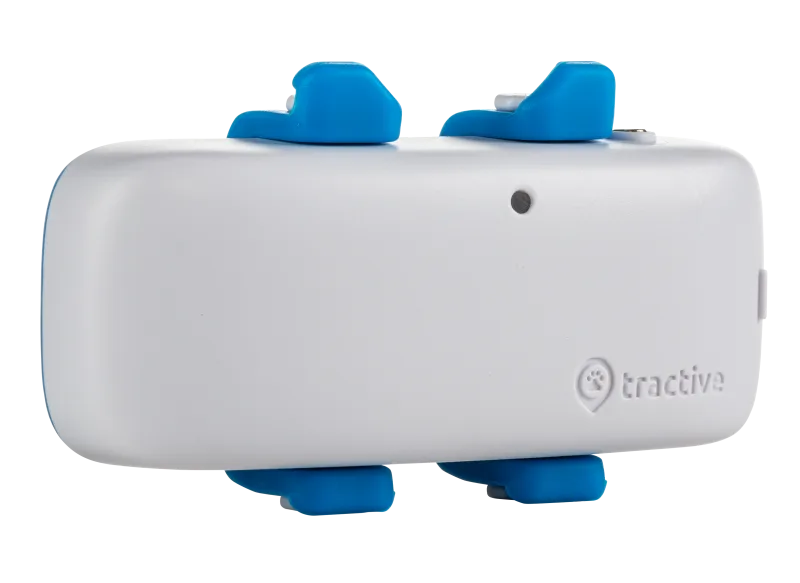
Tractive Smart is the larger, more «device-like» option at 25 g and 55 × 28 × 17 mm, and it’s described in the specs as waterproof. That extra size can make it feel more secure on a collar or harness for outdoor use, but it can be more noticeable for small pets. Its battery is built-in (450 mAh) and not user-replaceable per regulatory documentation, so long-term wearability includes the practical need to recharge rather than swap cells.
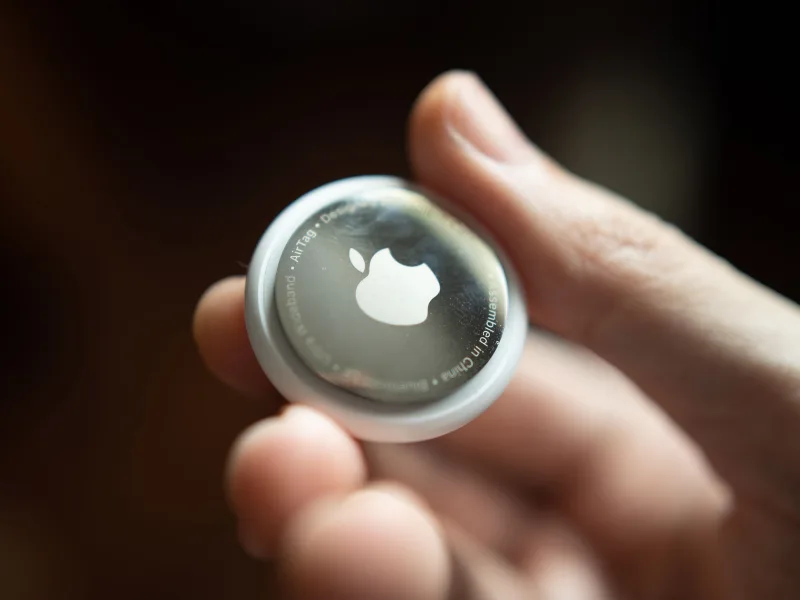
Apple AirTag is substantially smaller and lighter at 11 g with a 31.9 mm diameter and 8.0 mm height, which generally reduces collar bulk. It’s rated IP67 (up to 1 m for 30 minutes) in the provided specs, making it meaningfully resistant to rain and splashes even if not positioned as a pet-wearable. Because it uses a replaceable CR2032 and is cited as lasting about a year, it can be a lower-maintenance tag to keep attached once you have a secure holder.
Conclusion: For pure comfort and low-profile carry, Apple AirTag has the clear advantage (11 g vs 25 g). For a more purpose-built, collar-mounted tracker feel that prioritizes outdoor use, Tractive Smart can be the better fit despite the added bulk—so this category is a trade-off rather than a clean win.
Winner: Tie
Ecosystem, compatibility & limits
Tractive Smart is designed as a dedicated pet-tracking system that works across iOS and Android, which matters in mixed-device households. Its positioning is also more «tracker-first»: it uses GPS satellites + cellular networks (LTE) and is marketed around unlimited range (with sufficient cellular coverage) rather than relying on nearby phones. The constraint is structural: it requires a subscription to access cellular tracking, and performance degrades when cellular coverage is weak.
Apple AirTag, by contrast, is deeply tied to Apple’s platform: official compatibility is iPhone/iPod touch (iOS 14.5+) or iPad (iPadOS 14.5+), and it leverages Apple-only tech like Ultra Wideband (U1) for Precision Finding on compatible iPhones. It reports location via the Find My network, meaning its usefulness is best where there are many Apple devices around rather than being inherently «always connected.» This is also why it’s commonly described as better for «find nearby» recovery than independent pet tracking: location updates are opportunistic, not continuous.
Conclusion: Tractive Smart wins on broad compatibility and independence from nearby phones (iOS + Android, GPS + cellular), while Apple AirTag wins on Apple ecosystem integration (Find My + UWB). If you need real-time, standalone pet location, Tractive’s platform-agnostic approach is a better fit; if you live fully in Apple’s ecosystem and only need occasional recovery in dense areas, AirTag’s integration is hard to beat.
Winner: Tie
The Bottom Line
After breaking down tracking tech, range, UX, and upkeep, the choice comes down to whether you need active, independent tracking or a passive finder that shines up close.
For outdoor dogs that can run off-leash or escape: The Tractive Smart is the clear pick because its GPS + cellular Live mode delivers frequent (2–3 second) updates designed for chasing real movement.
For indoor cats in an apartment or small neighborhood: The Apple AirTag makes more sense since Find My–based «last seen/nearby» recovery and Precision Finding are often enough at short ranges in Apple-dense areas.
For rural homes, hiking, camping, low phone density: Choose Tractive Smart because AirTag updates depend on nearby Apple devices, while Tractive can track over distance as long as cellular coverage exists.
For Apple-only household that wants «set and forget»: Go with the Apple AirTag thanks to its frictionless Find My setup and low-touch ownership (including the long, replaceable battery).
For mixed iOS/Android family sharing tracking duties: The Tractive Smart wins because it supports both platforms, avoiding the iOS-only limits of AirTag tracking.
Overall,
for pet recovery: it consistently led on true GPS tracking, real-time updating, and distance reliability (coverage permitting). Apple AirTag still does better on setup simplicity, battery convenience, and close-range «finish the search» precision inside Apple’s ecosystem.Pick based on where your pet spends time (urban vs. rural) and how quickly you need updates—if you need independent, real-time location, choose Tractive Smart; if you mainly want an Apple-integrated finder for short-range recovery, choose Apple AirTag.
FAQ
Is a Bluetooth tracker good enough for finding a lost pet?
Do I need a subscription for Tractive Smart?
How often does Tractive Smart update location?
How far can an Apple AirTag reach?
Which is easier to maintain long-term?
Will AirTag work for non-Apple users?
What should I buy for rural or low-density areas?
Is Tractive Smart waterproof?
📄 Used Manuals & Documentation
Tractive Smart
"Images are used for editorial and informational purposes only. All trademarks and images belong to their respective owners."
Navigating the Smart Pet Device Landscape
- a reliable automatic pet feeder with camera features → PETLIBRO Granary Automatic Cat Feeder with Camera vs PETKIT Fresh Element Solo Smart Pet Feeder: Camera Control or Simple Reliability?
- to improve pet hydration with a smart fountain → PETKIT Eversweet 3 Pro vs PETLIBRO Dockstream: Which Wins?
- a pet camera for interactive monitoring → Furbo 360 Dog Camera vs Petcube Bites 2 Lite
- self-cleaning litter boxes for odor control → FEELNEEDY vs OROLEY Self-Cleaning Litter Box Comparison
- a GPS tracker for extensive pet roaming → Tractive Smart vs Tractive XL: Best GPS Tracker for Your Dog?
- comparing pet GPS trackers for security and range → Petivity Smart GPS vs Fi Series 3: Best Dog GPS Tracker?
- evaluating pet camera vs baby monitor → Furbo 360 vs Nanit Pro: Pet Camera or Baby Monitor?
- UPFAS Little Box 500C vs Lohhuby CAST LB500B: Best Pick?