
Tractive Smart vs Tractive XL: Picking the Right Fit for Your Dog’s Lifestyle
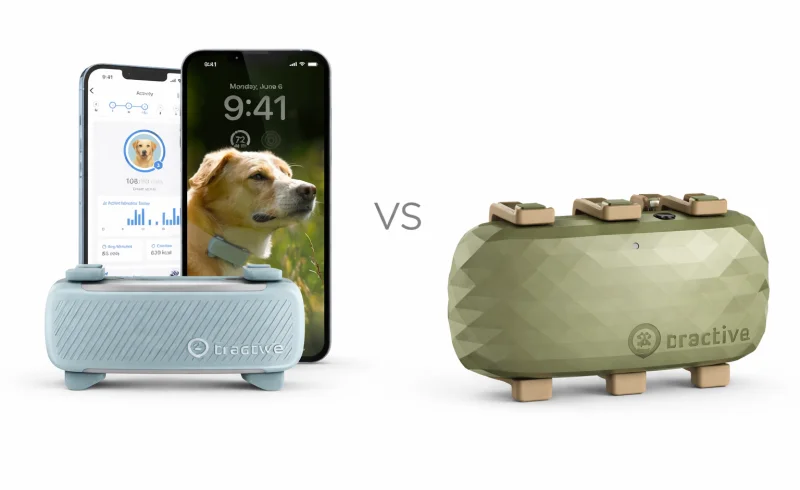
Tractive Smart vs Tractive XL: Compare size, battery life, durability, and tracking features to pick the best GPS tracker for your dog’s lifestyle and collar setup.
TL;DR
Quick Decision
- If your top priority is everyday comfort and you want a lightweight tracker for short-range escapes and health insights → choose Tractive Smart.
- If your main concern is battery endurance and you need a rugged, set-it-and-forget-it tracker for a large dog that roams far → choose Tractive XL.
- If you have a medium-sized dog in a suburban home with a fenced yard → either works, but you’ll be choosing between weekly charging (Smart) and collar bulk (XL).
Key Differentiators The core trade-off is between a companion device and field infrastructure. The Tractive Smart is a lighter, more interactive tool for checking daily activity and managing escape risks, while the Tractive XL is a heavier-duty, longer-lasting unit for dogs that are out of sight for days. You’re choosing between frequent app engagement and a passive safety net.
Who Should NOT Buy Either If you need deep integration with other smart home platforms or want to export detailed location history for analysis, you should look at trackers with more open software ecosystems instead.
| Feature | Tractive Smart (DOG 6) Smart Dog Tracker | Tractive XL (DOG XL) Smart XL GPS & Health Tracker for Dogs |
|---|---|---|
| Durability | ||
| Waterproof rating | IP68 | IP68 |
| Bite-proof fiberglass casing | Yes | Absent |
| Compatibility | ||
| Mobile OS compatibility | Android 10.0+, iOS 17.0+ | Android 10.0+, iOS 17.0+ |
| Size & Weight | ||
| Weight | 39 g | 90g |
| Dimensions | 71 × 29 × 17 mm | 89 × 51 × 24 mm |
| Fits collar widths up to | Up to 2.8 cm | Up to 4 cm |
| Power & Battery | ||
| Charger type | USB-C | DOG XL/Adventure charging cable |
| Battery capacity | 930 mAh | 3000 mAh |
| Battery life (with Power Saving Zones) | Up to 2 weeks | Up to 4 weeks |
| Battery life (without Power Saving Zones) | Up to 6 days | 5-15 days |
| Battery life (with Power Saving Zones) - comparison table | Up to 14 days | Up to 30 days |
| Recommended Pet Size | ||
| Recommended pet weight | Dogs above 4 kg | Dogs above 25 kg |
| Connectivity & Location | ||
| Wi-Fi | WiFi (2.4 GHz b/g/n) | WiFi (2.4 GHz b/g/n) |
| Bluetooth | Bluetooth 5.0 | Bluetooth 5.0 |
| Unlimited range | Yes | Yes |
| Location systems | GPS, GLONASS, Galileo | GPS, GLONASS, Galileo |
| Cellular connectivity | LTE/4G (CatM1), 2G | LTE/4G (CatM1), 2G |
| Works with various networks | Yes | Yes |
| Tracking & Health Features | ||
| Health Alerts | Yes | Yes |
| Live Tracking | Yes | Yes |
| Bark Monitoring | Yes | Not supported |
| Activity & Sleep Monitoring | Yes | Yes |
| Heart & Respiratory Rate Monitoring | Yes | Yes |
📑 Table of Contents
Fit, comfort, collar setup
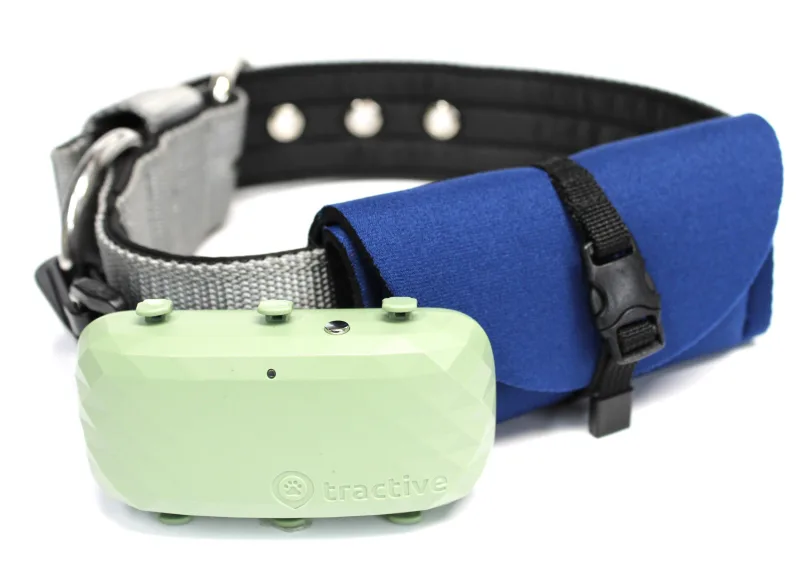
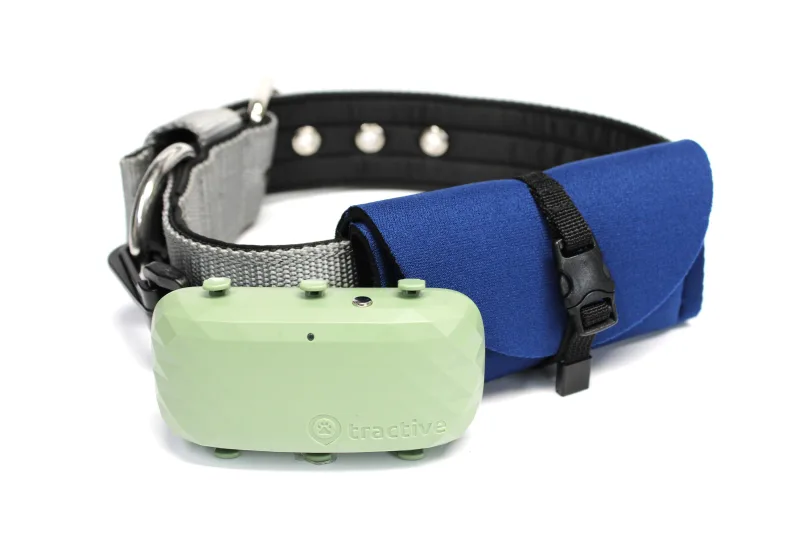
On-collar size and day-to-day comfort
Tractive Smart is materially easier to wear on most dogs because it’s 39 g and 71 × 29 × 17 mm. That smaller footprint typically translates into less collar flop, less contact with the chest on deep-chested dogs, and fewer «bumps» into door frames or crate edges during normal routines.
Tractive XL is much more noticeable on the collar at 90 g and 89 × 51 × 24 mm. The extra mass and thickness can be a non-issue on truly large dogs, but it’s more likely to feel intrusive on borderline sizes—especially for dogs that are sensitive to bulky attachments.
Conclusion: Tractive Smart has the clear comfort edge for small-to-medium dogs purely on 39 g vs 90 g and the substantially smaller dimensions.
Collar compatibility (widths) and gear flexibility
Tractive Smart fits collar widths up to 2.8 cm, which lines up well with many everyday nylon/leather collars used for urban/suburban dogs. The smaller form factor also tends to make collar rotations simpler (e.g., swapping between a regular collar and a training setup), because it’s less demanding about strap real estate.
Tractive XL fits collars up to 4 cm, which better matches the wider, heavy-duty collars commonly used on dogs 25 kg+. That said, XL’s bulk can make frequent gear changes less convenient (for owners who swap collars/harnesses often), simply because you’re moving a larger, more specialized attachment each time.
Conclusion: No single winner—Smart is more adaptable for typical collar rotations (up to 2.8 cm), while XL is the better match for wide (up to 4 cm) working-style collars on large dogs.
Fit-for-purpose sizing (who it’s physically «for»)
Tractive Smart is recommended for dogs above 4 kg, which aligns with its lighter hardware and «everyday companion» ergonomics. In practice, it makes more sense when the dog is seen daily and charging/maintenance is part of the routine rather than an exception.
Tractive XL is recommended for dogs above 25 kg (55 lbs) and is explicitly positioned as a larger-dog device with a bigger battery. Physically and practically, it fits scenarios where the tracker is more like infrastructure—built to sit on a sturdy collar for longer stretches on big, active dogs.
Conclusion: Tractive Smart wins for everyday fit and comfort across the broadest range of dogs, while Tractive XL is the more appropriate physical choice only when your dog truly matches the 25 kg+ collar-and-body scale.
Winner: Tractive Smart
Battery endurance & charging

Battery size (what the hardware is built to support)
Tractive Smart runs a 930 mAh battery, which aligns with its smaller, lighter form factor (39 g, 71 × 29 × 17 mm) and «check it often, charge it routinely» ownership style. That capacity is typically enough for owners who see their dog daily and don’t mind putting the tracker on a charger as part of a weekly/biweekly rhythm.
Tractive XL jumps to a 3000 mAh battery—over 3× the stated capacity—which matches its larger body (90 g, 89 × 51 × 24 mm) and more «infrastructure» role for big, active dogs. The larger pack is a practical advantage when the tracker is used in lower-contact scenarios (farm, working, hunting), where charging cadence matters more than compactness.
Conclusion: On raw battery hardware, Tractive XL clearly wins—the 3000 mAh vs 930 mAh gap is too large to treat as a minor difference.
Quoted runtime with Power Saving Zones (best-case planning)
Tractive Smart is rated for up to 2 weeks / 14 days when using Power Saving Zones, which is realistic for urban/suburban routines where the dog regularly returns to known Wi‑Fi areas. For many companion-dog owners, a «charge every 1–2 weeks» cadence is manageable and fits the product’s smaller-collar positioning.
Tractive XL is rated for up to 4 weeks (also shown as up to 30 days) with Power Saving Zones, which can materially reduce «battery anxiety» if you’re not interacting with the device constantly. That longer runway is especially valuable when the tracker is more of a safety net than a daily dashboard.
Conclusion: With Power Saving Zones, Tractive XL wins for endurance (up to 30 days vs up to 14 days), meaning fewer must-not-miss charging cycles.
Runtime without Power Saving Zones (more demanding, more variable)
Tractive Smart is listed at up to 6 days without Power Saving Zones—fine for frequent recharging, but it leaves less buffer if you forget a charge or if you rely on more continuous tracking behavior. This aligns with Smart’s «managed device» reality: you’ll likely notice and react to battery status more often.
Tractive XL is rated at 5–15 days without Power Saving Zones, which spans from roughly Smart-like endurance (at the low end) to clearly longer runtimes (at the high end). That range signals higher sensitivity to usage and conditions, but it still offers the potential for substantially more time between charges than Smart.
Conclusion: Without Power Saving Zones, Tractive XL still has the edge overall thanks to its higher ceiling (up to 15 days vs up to 6 days), though the 5-day low end means heavy usage can narrow the gap.
Charging experience & «back to ready» practicality
Tractive Smart uses USB‑C, which is convenient if you want to use common cables already around the house. For first-time setup, Tractive notes the tracker should charge at least 2 hours before first use, and it reaches about 75% in ~1.5 hours, which helps for quick top-ups before a walk even if you didn’t fully recharge.
Tractive XL uses a dedicated DOG XL/Adventure charging cable, which can be less convenient if you prefer universal USB‑C, especially when traveling or keeping spare cables in multiple locations. However, the XL’s longer intervals between charges can offset that inconvenience simply by making «charging events» less frequent.
Conclusion: For plug-and-go convenience, Tractive Smart wins on charging ergonomics (USB‑C plus a documented ~1.5-hour 75% ramp), but XL can still feel easier over time if you prioritize fewer charges over cable standardization.
Conditions that affect battery in real use (applies to both)
Tractive Smart benefits from strong GPS conditions: Tractive notes battery life can improve when the tracker is used outdoors under clear skies, because it can obtain positions more efficiently. Tractive also warns GPS can be blocked indoors by walls/roofs, which can contribute to delays in updates—a reminder that poor signal conditions can make tracking (and power draw) less predictable.
Tractive XL uses the same satellite families (GPS, GLONASS, Galileo) and also benefits from the same «clear sky» reality, so endurance is not just battery size—it’s also about signal environment and how often you demand live updates. In higher-stakes, long-range scenarios, those conditions matter more because any delay or inefficiency can be more consequential.
Conclusion: Neither tracker is immune to signal-driven variability, but XL’s larger battery gives it more buffer when conditions aren’t ideal or usage ramps up.
Winner: Tractive XL — The endurance advantage is decisive across stated specs (3000 mAh vs 930 mAh, up to 30 days vs up to 14 days with Power Saving Zones, and up to 15 vs up to 6 days without), even though Tractive Smart is more convenient to charge thanks to USB‑C and faster «back-to-usable» guidance.
Durability in rough play
Tractive Smart meets the baseline for wet, dirty play with an IP68 waterproof rating, so rain, puddles, and mud shouldn’t be a problem. But its compact build (71 × 29 × 17 mm, 39 g) can create a false sense of toughness: in practice it’s less forgiving of rough play, chewing attempts, and heavy vegetation abrasion over time (per the editor’s non-obvious limitation note).
Tractive XL is also IP68, so it matches Smart on water and dust ingress protection. Where it diverges is physical intent: it’s larger (89 × 51 × 24 mm, 90 g) and designed for dogs 25 kg+, aligning better with hard-use scenarios where the tracker may get knocked around and caked with dirt for days (editor framing: «infrastructure» that tolerates neglect).
Conclusion: Both are equally well-protected against water (IP68 vs IP68), but Tractive XL is the more defensible pick for genuinely harsh, rough-play environments thanks to its heavy-duty positioning and large-dog focus—while Tractive Smart prioritizes compact comfort over abuse tolerance.
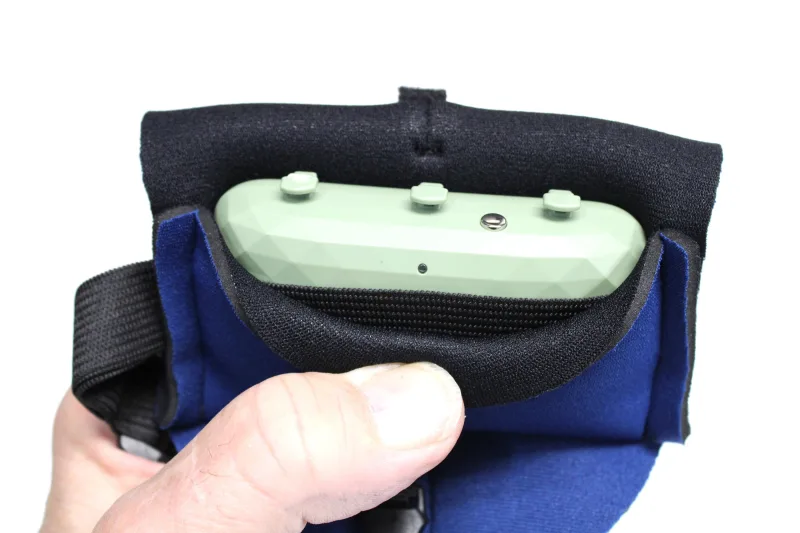
Tractive Smart also tends to feel like a device you actively «manage»: more frequent check-ins and more frequent charging cycles (up to 2 weeks with Power Saving Zones) mean more handling and more opportunities for everyday wear. That interaction rhythm is fine for most companion dogs, but it’s not ideal when the dog is highly destructive or routinely pushes through brush.
Tractive XL, by contrast, is engineered around lower-touch ownership: up to 4 weeks with Power Saving Zones and a 3000 mAh battery reduce how often you need to remove/re-mount it—useful when collar gear gets muddy or the dog is hard to catch. Its larger footprint can be a comfort trade-off, but it also better matches the «working/outdoor dog» durability brief described in the editor notes.
Winner: Tractive XL
Tracking tech & coverage basics
Location & network stack (what «coverage» is built on)
Tractive Smart uses the same core positioning stack listed for Tractive’s current Smart line: GPS + GLONASS + Galileo, plus LTE/4G (CatM1) with 2G fallback and «unlimited range» via cellular networks. For local assist/nearby comms, it also includes 2.4 GHz Wi‑Fi (b/g/n) and Bluetooth 5.0. In practice, that combination is designed for frequent app check-ins where the phone can pull updates as long as the tracker has cellular service.
Tractive XL matches that headline approach on paper: GPS + GLONASS + Galileo, LTE/4G (CatM1) + 2G, and «unlimited range,» with 2.4 GHz Wi‑Fi and Bluetooth 5.0 as well. Regulatory documentation also explicitly lists multi-constellation GNSS (GPS/GLONASS/Galileo) and 2.4G Wi‑Fi for the XL. Functionally, you’re buying into the same satellite + cellular tracking model rather than a different «radio technology tier.»
Comparative conclusion: On core tracking tech and coverage fundamentals, it’s effectively a tie—the specs point to the same satellite systems and the same cellular concept, so day-to-day differences are more about conditions and power strategy than raw tracking stack.
Real-world coverage constraints (indoors, garages, apartments)
Tractive Smart carries the usual GPS limitation: the manufacturer notes that walls and roofs can block GPS signals indoors, which can cause delayed updates when your dog (or the tracker) is inside. That matters most in «where is the dog in the house/garage?» scenarios, where users may expect instant precision but the tracker may need clearer sky view to lock reliably.
Tractive XL is subject to the same physics: it still depends on GNSS signals that weaken indoors and then relays positions over cellular, so indoor or semi-indoor use can also mean slower or less consistent refresh. Because XL is often chosen for wider-ranging, higher-stakes use, a delay can feel more consequential even if the underlying cause isn’t unique to XL.
Comparative conclusion: Neither model can «solve» indoor GPS blockage; coverage behavior is condition-limited on both, so expectations should be set around outdoor sky view and cellular availability, not tracker size.
Winner: Tie
Health & activity features
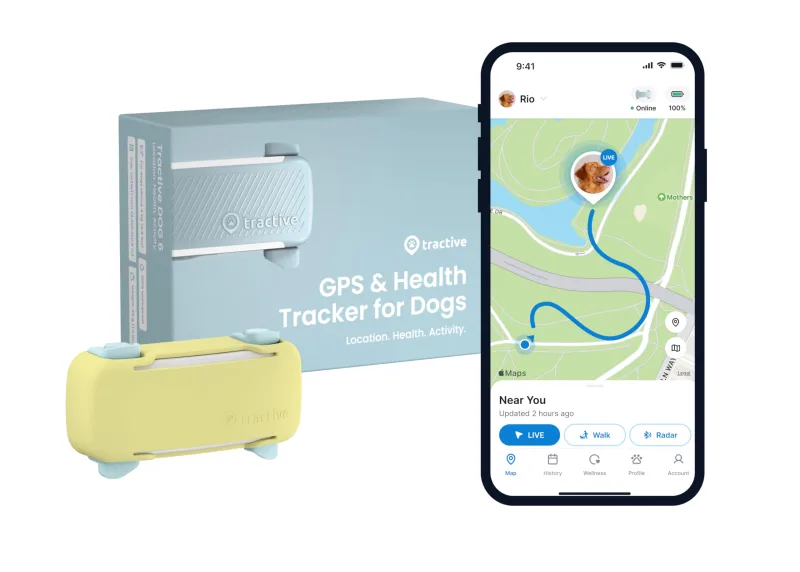
Tractive Smart includes the full baseline set: Health Alerts, Live Tracking, Activity & Sleep Monitoring, and Heart & Respiratory Rate Monitoring. On top of that, it supports Bark Monitoring (Yes), making it the more behavior-focused option if you want day-to-day insight beyond location and general wellness trends. Because Smart is lighter (39 g) and fits narrower collars (up to 2.8 cm), it’s also easier to keep on a dog daily—supporting more consistent health/activity data collection.
Tractive XL matches the same core health stack—Health Alerts: Yes, Activity & Sleep Monitoring: Yes, and Heart & Respiratory Rate Monitoring: Yes—so you’re not giving up the fundamentals. The key omission is explicit in the specs: Bark Monitoring: Not supported, so the «behavior insight» layer is thinner even though the fitness/vitals features remain. XL’s larger hardware (90 g, up to 4 cm collar width) aligns more with big-dog use, but it doesn’t add extra health metrics to compensate for the lack of bark tracking.
Comparative conclusion: For health and activity specifically, both cover the essentials, but Tractive Smart has a clear feature advantage because it adds Bark Monitoring while keeping the same baseline health/vitals toolkit as XL.
Day-to-day UX: how often you’ll actually use the health features
Tractive Smart tends to encourage more frequent app check-ins—owners often review activity, sleep, and notifications more regularly, which can be valuable if you’re actively monitoring behavior changes. The trade-off is that higher engagement makes small software hiccups more noticeable; some users note data syncing delays affecting health data. Practically, Smart works best when you’re comfortable treating it like a «companion app» you look at often.
Tractive XL usually creates a more passive rhythm: owners are more likely to open the app only when they need location or a periodic trend check, so the health features feel less «notification-driven» in daily life. That reduced interaction can make the experience feel smoother, but it also means bark-related behavior monitoring simply isn’t on the table. If connectivity or refresh timing becomes critical, note that GPS trackers can see delays when signal is obstructed (e.g., indoors under roofs/walls), which can affect update responsiveness in general.
Comparative conclusion: Smart is better for attentive, insight-driven monitoring (especially behavior via barking), while XL suits owners who want the core health baselines without building a daily habit around the dashboards.
Winner: Tractive Smart — it offers the same core health/activity/vitals features as XL plus Bark Monitoring, making it the more capable health-and-behavior tracking package.
App experience & ownership rhythm
Setup & onboarding (same app, same flow)
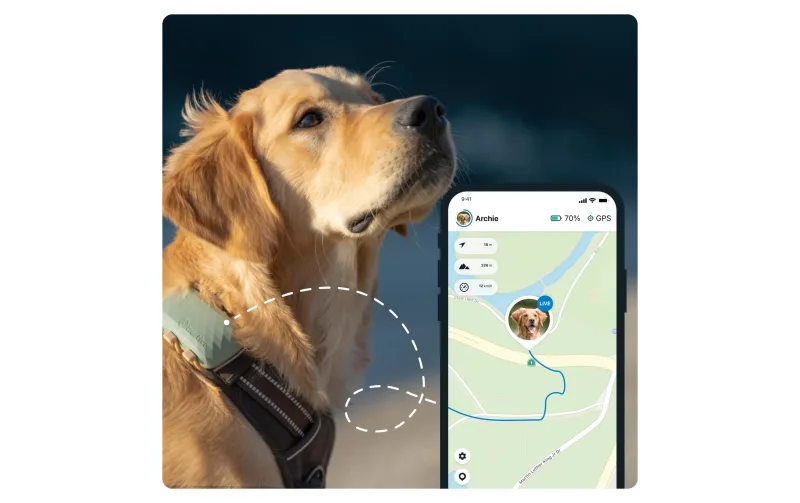
Tractive Smart uses the Tractive GPS app for real-time tracking, and that app runs on iOS and Android. On the spec side, it supports Android 10.0+ and iOS 17.0+, so most current phones are covered.
Tractive XL uses the same Tractive app and subscription-backed setup model, with the same Android 10.0+ / iOS 17.0+ compatibility. In other words, you’re not choosing between two software experiences at install time—you’re choosing between two hardware profiles that change how you live in the app.
Conclusion: Tie on setup/onboarding—the practical difference isn’t the app itself, but how often each device pushes you to open it.
Ecosystem openness (what you can do with your data)
Tractive Smart sits inside Tractive’s single ecosystem: a mature app with core features like live tracking and health/activity dashboards, but it’s also tightly tied to Tractive’s subscription backend. That closed-loop reality matters more if you’re the kind of owner who wants to export history, automate workflows, or integrate with third-party platforms—because you’ll bump into those limits more often with frequent check-ins.
Tractive XL is constrained by that same ecosystem: it’s still the Tractive app, still subscription-reliant, and still not positioned as an «open» platform for integrations or deep data portability. The difference is behavioral: XL owners typically interact with fewer secondary screens day-to-day, so the closed nature of the ecosystem tends to be less visible in routine use.
Conclusion: Tie on ecosystem constraints—both live in the same walled garden, but Smart users feel the walls more if they engage heavily with stats and history.
Daily interaction cadence (battery-driven «ownership rhythm»)
Tractive Smart encourages a higher-touch routine partly because endurance is shorter: up to 2 weeks (14 days) with Power Saving Zones and up to 6 days without. With a smaller 930 mAh battery and a lighter device (39 g), it fits everyday collars well—but it’s also the tracker you’re more likely to «manage» (checking battery, glancing at history, reviewing alerts) on a regular basis.
Tractive XL shifts the rhythm toward lower-touch ownership: it pairs a much larger 3000 mAh battery with up to 4 weeks (30 days) with Power Saving Zones and 5–15 days without, meaning fewer charging-driven interruptions. That longer endurance is the core reason XL tends to feel more like «infrastructure,» especially in lower-contact scenarios where the dog may be out longer or you simply don’t want a weekly charging habit.
Conclusion: Tractive XL has the clear edge for a lower-friction ownership rhythm—30 days vs 14 days (power-saving) is a meaningful gap that directly reduces how often you have to think about the tracker.
When the app misbehaves, what hurts more?
Tractive Smart owners often lean into higher-engagement features (activity trends, notifications, history), which increases exposure to software hiccups. Some users report health data syncing delays/failed syncs, and that kind of issue is more disruptive when your routine depends on frequent data refreshes beyond «where is my dog right now?»
Tractive XL users may open the app less frequently, but the stakes can be higher when they do—particularly for large, active dogs or wide-area roaming where a fast refresh matters. Tractive also notes that GPS can be blocked indoors by walls/roofs, leading to delays in updates; when you’re checking less often, those delays can feel more critical in the moment you do need location.
Conclusion: No single winner on reliability perception—Smart tends to surface more «dashboard/sync» friction because it invites more engagement, while XL makes occasional delays feel more consequential because checks are rarer and often more urgent.
Winner: Tractive XL — The shared app makes software largely a wash, but XL’s much longer practical endurance (up to 30 days vs up to 14 days with power-saving) creates a more passive, lower-friction ownership rhythm for most owners.
The Bottom Line
After digging into comfort, battery, durability, and day-to-day ownership, the choice comes down to which trade-offs fit your dog and routine.
For small-to-medium dog on daily walks: Tractive Smart is the better fit thanks to its much lighter, smaller on-collar profile and the added day-to-day insight of bark monitoring.
For large dog that roams (farm, hunting, working): Tractive XL is the clear pick because its bigger hardware and far larger battery support longer, lower-contact stretches between charges.
For owner who wants to charge as little as possible: Tractive XL wins on endurance, with up to roughly four weeks in Power Saving Zones backed by its 3000 mAh battery.
For multi-gear household (collars, training setups, harness swaps): Tractive Smart is easier to live with because its smaller footprint fits slimmer collars and is simpler to move between setups.
For high-engagement monitoring (alerts, trends, behavior): Tractive Smart is the stronger option since it pairs the core health/activity stack with bark monitoring and fits the «check it often» rhythm better.
Ultimately, both share the same tracking backbone and the same Tractive app—so there isn’t a universal winner; it depends on size and lifestyle. The decisive split is comfort and richer daily insights (Smart) versus battery-first, rugged, low-touch ownership (XL).
Match the tracker to your dog’s weight class and your charging tolerance: pick Smart if it’ll be worn every day, and pick XL if you want maximum runway and fewer must-not-miss charging cycles.
FAQ
Which is better for small dogs: Tractive Smart or Tractive XL?
Which tracker lasts longer on a charge?
Do Tractive Smart and XL use the same app?
Do both models have unlimited range?
Is bark monitoring available on both?
Will GPS work reliably indoors?
What warranty coverage do these trackers have?
Which tracker is more durable for rough outdoor use?
"Images are used for editorial and informational purposes only. All trademarks and images belong to their respective owners."
Navigating the Smart Pet Device Landscape
- a reliable automatic pet feeder with camera features → PETLIBRO Granary Automatic Cat Feeder with Camera vs PETKIT Fresh Element Solo Smart Pet Feeder: Camera Control or Simple Reliability?
- to improve pet hydration with a smart fountain → PETKIT Eversweet 3 Pro vs PETLIBRO Dockstream: Which Wins?
- a pet camera for interactive monitoring → Furbo 360 Dog Camera vs Petcube Bites 2 Lite
- self-cleaning litter boxes for odor control → FEELNEEDY vs OROLEY Self-Cleaning Litter Box Comparison
- comparing pet GPS trackers for security and range → Petivity Smart GPS vs Fi Series 3: Best Dog GPS Tracker?
- a Bluetooth tracker for short-range monitoring → Tractive Smart vs Apple AirTag: Pet GPS vs Bluetooth Tracker
- evaluating pet camera vs baby monitor → Furbo 360 vs Nanit Pro: Pet Camera or Baby Monitor?
- UPFAS Little Box 500C vs Lohhuby CAST LB500B: Best Pick?