
Petivity Smart GPS vs Fi Series 3: Choosing Between a Simple Tag and an Active Monitoring System
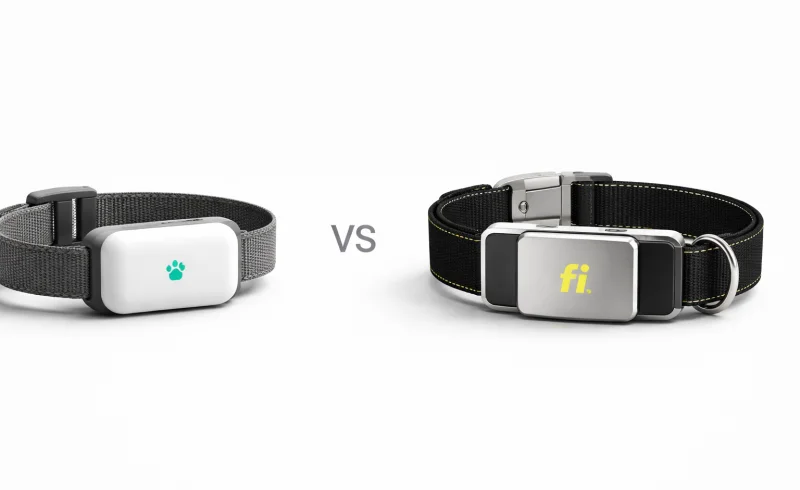
Compare Petivity Smart GPS vs Fi Series 3 across tracking speed, alerts, durability, battery, and app experience. See which dog GPS tracker fits low-risk walks vs escape-prone adventures.
TL;DR
Quick Decision
- If you want a low-commitment, clip-on tracker for occasional location checks and already have a collar your dog loves → choose Petivity Smart GPS.
- If you need rapid escape alerts and rugged, continuous tracking for a high-mobility or escape-prone dog and are ready for a structured routine → choose Fi Series 3.
- If your dog mostly stays in controlled environments and you just want basic peace of mind → either works, but Petivity is simpler and cheaper.
Key Differentiators The core trade-off is between simplicity and control. Petivity offers an easy, low-friction add-on that doesn't disrupt your dog's existing gear, but provides slower location updates and a passive app experience. The Fi Series 3 is a more opinionated, collar-first ecosystem designed for active monitoring, with faster live tracking and greater durability, at the cost of a higher price and more daily involvement.
Who Should NOT Buy Either If you need detailed, long-term behavioral analytics or a tracker that doesn't require a monthly cellular subscription, look at advanced activity monitors or local Bluetooth trackers instead.
| Feature | Fi Series 3 Smart Dog Collar | Petivity Smart GPS + Activity Tracker for Dogs |
|---|---|---|
| Power & Charging | ||
| Charging method | Charging base (wireless contact) | Wireless charging |
| Battery life (claimed) | Up to 3 months | Up to 30 days |
| Form Factor & Physical | ||
| Device form factor | Integrated smart collar | Attaches to existing collar or harness |
| Subscription & Coverage | ||
| Supported regions | United States, Canada, Mexico | United States, Canada, Mexico |
| Monthly subscription price (USD) | $19/month | $9.99/month |
| Subscription required for GPS tracking | Yes | Yes |
| Tracking & Connectivity | ||
| Cellular network | AT&T | AT&T and T-Mobile |
| Primary tracking technology | GPS + cellular | GPS + cellular |
| Durability & Water Resistance | ||
| Waterproof rating | IP68 and IP66K | IPX7 |
📑 Table of Contents
Tracking speed & escape response

Lost Mode update cadence (how fast the dot moves)
Petivity Smart GPS advertises Lost Mode live tracking updated every 10 seconds, which is a solid cadence for checking a dog’s direction changes in near real time. Because Petivity uses GPS satellites plus mobile networks (AT&T or T-Mobile), you’re still dependent on cellular signal quality when you most need updates.
Fi Series 3 lists Lost Mode updates as «every few seconds,» implying a meaningfully tighter refresh loop than a fixed 10-second interval. Fi’s location model is also described as GPS and LTE‑M in tandem (AT&T), which is built around keeping the collar connected while away from Wi‑Fi.
Conclusion: For pure tracking responsiveness in an escape, Fi Series 3 has the edge thanks to a faster stated Lost Mode cadence (every few seconds vs every 10 seconds).
Alerts & «escape scenario» posture (how quickly you’re told)
Petivity Smart GPS is positioned as a lightweight, occasional location-awareness tool: daily use tends to be more passive, and the experience can feel «sparse» if you expect frequent, proactive prompts. In practice, that makes it better suited to reassurance checks than a high-urgency «drop everything» workflow.
Fi Series 3, by contrast, is explicitly geared toward active monitoring: it can send escape alerts instantly to your phone (per review-based SoT), aligning with escape-prone dogs and off-leash/high-mobility use cases. That «collar as the primary control surface» approach also matches Fi’s more opinionated ecosystem, where monitoring and notifications are central rather than occasional.
Conclusion: If your priority is rapid awareness and escalation when a dog bolts, Fi Series 3 is better aligned to escape response than Petivity’s more check-when-needed model.
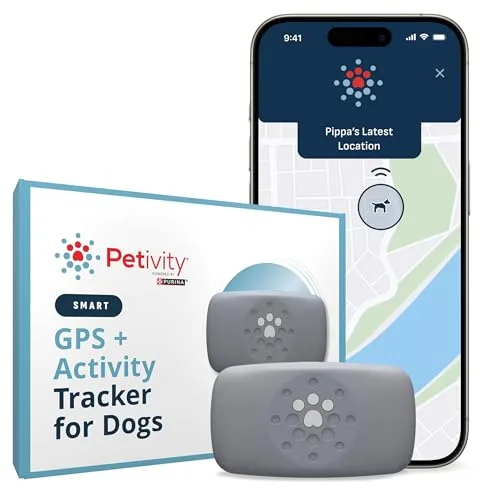
Winner: Fi Series 3 — Its stated Lost Mode refresh rate (every few seconds) and escape-alert positioning are more defensible advantages for urgent, high-mobility tracking than Petivity’s 10-second update cadence and more passive monitoring posture.
Coverage & connectivity model

Petivity Smart GPS uses mobile networks (AT&T or T-Mobile) for away-from-home connectivity, paired with GPS satellites and mobile networks for positioning. That dual-carrier approach can be a practical hedge if one provider is weak where you walk or travel, because it’s not locked to a single network in the spec sheet. In real-world terms, it aligns with «check-in» tracking—useful when you want occasional reassurance without turning tracking into a daily ritual.
Fi Series 3 uses LTE-M (AT&T) and positions via GPS and LTE-M in tandem, with an ecosystem designed around persistent connectivity (including optional use with the Fi Base for additional functionality). The trade-off is carrier dependence: if AT&T LTE-M is spotty where you need it, performance can suffer even if another carrier is strong. That said, Fi’s model is purpose-built for owners who actively monitor a dog’s status and expect the collar to behave like an always-on system rather than a tag you consult occasionally.
Conclusion: Neither is a universal coverage winner—Petivity has the edge for flexibility on paper (AT&T or T-Mobile), while Fi is more «opinionated» and cohesive around AT&T LTE-M and its base-enabled ecosystem, which can be a benefit if it matches your local coverage and tracking habits.
Petivity Smart GPS does not require Wi‑Fi for tracking (Wi‑Fi required for tracking: No) and is explicitly marketed as connecting across the U.S., Canada, and Mexico, which can matter if you cross borders and want continuity without changing hardware. However, its usefulness still hinges on cellular consistency; if coverage is variable in the places your dog roams, the real-world experience can feel less dependable than the spec suggests.
Fi Series 3 also does not require Wi‑Fi for tracking (No) and similarly relies on cellular connectivity for GPS functionality (LTE) away from home. A common complaint is unreliable app connectivity and customer support problems, per user discussions reported in the Fi community, which can undermine confidence if you’re depending on the system for frequent check-ins. On the other hand, Fi’s always-connected design and tighter collar/app coupling can feel more «monitoring-forward» for high-risk dogs—if your coverage is solid and the app behaves reliably.
Winner: Tie — Petivity wins on carrier flexibility and stated cross-border connectivity, while Fi wins on a more cohesive always-on ecosystem model; in practice, local cellular performance and how actively you plan to monitor matter more than the raw connectivity specs.
Durability & water protection

Petivity Smart GPS is rated IPX7 for the device—submersion up to 1 m (3.3 ft) for 30 minutes—which covers rain, puddles, and the occasional dunk. Petivity also positions it as waterproof and lightweight, suggesting it’s intended to be worn without much day-to-day fuss. What you don’t get in the published specs is a separate protection rating for any collar or band component, since it’s designed to attach to an existing collar/harness.
Fi Series 3 is rated IP68—submersion up to 1.5 m for up to 30 minutes—which is a measurable step up from 1 m in the same time window. More importantly for messy real-world wear, Fi also lists IP66K for the collar/band, meaning resistance to high-pressure water jets (150 PSI) up to 3 minutes. That combination is better aligned with frequent outdoor exposure, hose-down cleaning, and rougher conditions.
Conclusion: On water protection, Fi Series 3 has the clear edge thanks to higher submersion tolerance (1.5 m vs 1 m) plus an extra IP66K rating that Petivity doesn’t match.
Petivity Smart GPS emphasizes low intrusion: the tracker is 30 g (1.1 oz) and meant to be a simple add-on rather than the «core» collar itself. That can be a durability win in its own way—less bulk and fewer hard edges—especially for dogs already comfortable in their current setup. The trade-off is that Petivity’s ruggedness story is mostly limited to the waterproof claim, with fewer published construction details beyond being «lightweight.»
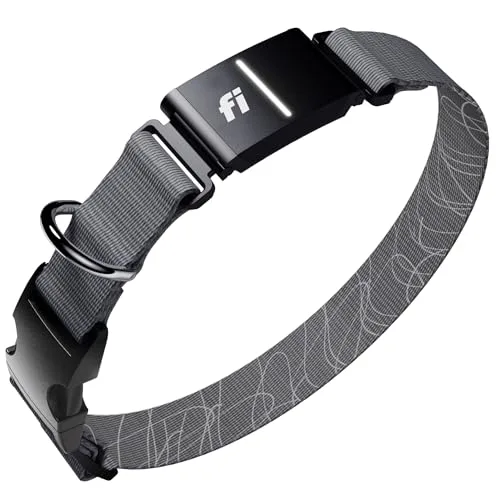
Fi Series 3 is explicitly built like continuous-wear equipment, including a reinforced stainless steel frame (per review-cited specs) alongside the higher ingress ratings. That design intent matches higher-risk use cases (escape-prone dogs, big properties, hiking) where scrapes, impacts, and repeated wet/dirty cycles are more likely. The downside is that this «collar-as-system» approach can add commitment and routine, but it’s also what supports Fi’s more rugged positioning.
Winner: Fi Series 3 — the combination of IP68 + IP66K protection and reinforced stainless-steel construction is a meaningful, defensible advantage for demanding environments.
Battery life & charging routine
Battery life (how often you’ll really charge)
Petivity Smart GPS is rated for up to 30 days per charge, which sets a clear expectation for most owners: roughly monthly charging if your usage matches the manufacturer claim. Because it’s a 30 g (1.1 oz) tracker meant to attach to an existing collar or harness, the battery target aligns with its «check-in when needed» positioning rather than always-on, high-intensity tracking.
Fi Series 3 publishes a wider set of battery expectations depending on lifestyle profile: up to 3 months (Homebuddy), 4–6 weeks (Outdoorsy), or up to 2 weeks (The Rancher). That variability is a clue that Fi’s runtime is more sensitive to how often the collar is away from known networks and how much tracking it’s doing, but for many dogs it can stretch beyond Petivity’s 30-day claim.
Conclusion: Fi Series 3 has the edge on potential time between charges (up to 3 months vs up to 30 days), but Petivity’s single, simple claim is easier to plan around if you want predictability over maximum runtime.
Charging method & daily routine (what «maintenance» feels like)
Petivity Smart GPS uses wireless charging, and the product framing in the provided context is intentionally low-touch: straightforward setup and mostly passive daily use. In practice, that usually means fewer required «system behaviors» to remember—charge it occasionally, and check the app when you want location or activity context.
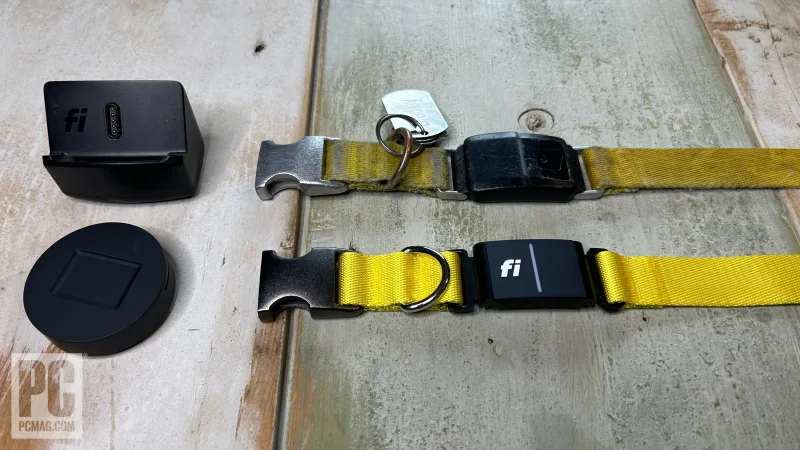
Fi Series 3 charges via the Fi Base and lists an about 3-hour 0–100% charge time, which makes the routine more structured (you dock it to a specific accessory). That structure ties into Fi’s more opinionated ecosystem approach—good for consistency, but less «set it and forget it» than a simple wireless top-up.
Conclusion: Petivity wins for the simplest charging experience, while Fi wins if you like a defined dock-and-go routine (and don’t mind the base being part of ownership).
Battery trade-off during active tracking (when it matters most)
Petivity Smart GPS advertises live location updates every 10 seconds in its «Updated live» mode, but there’s no provided spec here for how that impacts battery during sustained high-frequency tracking. That omission doesn’t mean it’s worse—it just means you have less clarity on what battery looks like when you’re actively monitoring an escape scenario.
Fi Series 3 is explicit about the cost of intensive tracking: Lost Mode battery is about 2 days on a full battery, even though normal profiles can run much longer. That’s a useful planning detail for high-risk owners because it sets expectations: the more you rely on «every few seconds» tracking, the more runtime compresses.
Conclusion: Fi Series 3 has the clearer, more actionable battery story under stress (Lost Mode ~2 days), which is a meaningful advantage for owners who may actually need sustained live tracking.
Winner: Fi Series 3 — It offers longer potential runtime (up to 3 months) and more transparent expectations for high-intensity tracking (Lost Mode ~2 days), even if Petivity remains easier and less structured to keep charged day to day.
Comfort, fit & wearability

Petivity Smart GPS is built around low-intrusion wear: the tracker weighs 30 g (1.1 oz) and measures 2.36" x 1.33" x 0.7", and it’s explicitly designed to fit any dog collar or harness. That flexibility matters for comfort because you can keep your dog’s preferred strap width, padding, and buckle placement while adding tracking as a small add-on module.
Fi Series 3 is intended to be the primary collar system rather than a universal add-on, so fit and comfort are more tied to adopting its specific collar hardware and daily routine. In practice, that «collar-first» design can feel more structured for continuous wear, but it’s less accommodating if your dog already has a well-fitting collar/harness you don’t want to replace.
Conclusion: On pure comfort and fit flexibility, Petivity Smart GPS has the edge because 30 g plus attach-to-any-collar/harness lets you preserve the dog’s existing, proven setup—whereas Fi Series 3 asks you to commit to its collar ecosystem for the intended experience.
Winner: Petivity Smart GPS
App experience & insights

Petivity Smart GPS is designed for a lighter-touch app relationship: it supports real-time GPS tracking (Yes) and activity monitoring (Yes), but the intended flow is mostly «check when you need reassurance.» The editor notes align with that: onboarding tends to involve fewer decisions, and daily use is generally passive unless you’re actively looking for location or basic activity context.
Fi Series 3 is more software-driven: it also offers real-time GPS tracking (Yes) and activity monitoring (Yes), but the app is meant to be opened often for goals, status, and monitoring habits. In the same editor guidance, Fi’s ecosystem is described as more mature and actively developed, with a stronger sense that the app is central to the product’s value over time.
Conclusion: Fi Series 3 has the edge for users who want a deeper, more app-centric monitoring experience, while Petivity is better if you prefer minimal interaction and just want occasional check-ins.
Live tracking feel & escape-response workflow
Petivity Smart GPS specifies a Lost Mode refresh of «updated live every 10 seconds.» That cadence is typically adequate for routine scenarios (urban walks, moderate roaming risk), but it implies a slightly more «paced» map experience when you’re watching movement in real time.
Fi Series 3 lists Lost Mode updates as «every few seconds,» which is meaningfully tighter for active recovery—especially when a dog is moving quickly or changing direction. Supporting that positioning, Fi is described as being able to send escape alerts instantly to your phone (per review-based SoT).
Conclusion: Fi Series 3 wins on live-tracking responsiveness, because «every few seconds» updates are a clear practical advantage over 10-second intervals when time matters.
Reliability signals inside the app experience
Petivity Smart GPS has fewer surfaced ecosystem dependencies in the provided facts: it connects to mobile networks (AT&T or T-Mobile) and is positioned as functional-but-narrow software, with updates that tend to prioritize stability rather than expanding capability. The main downside called out in the editor notes is that the experience can feel sparse—limited feedback, fewer insights, and less customization if your expectations grow.
Fi Series 3 has stronger ecosystem depth but also more visible risk if the app layer misbehaves. Multiple reviewers report issues with unreliable app connectivity, and a common complaint is customer support problems—both of which can undercut the day-to-day confidence you’re supposed to get from a more engaged app model.
Conclusion: Petivity has the edge on «low-friction» app expectations, but Fi’s richer experience comes with higher potential downside when connectivity/support issues occur—so the better choice depends on whether you prioritize depth or simplicity.
Winner: Fi Series 3 — Its app ecosystem is positioned (and built) to deliver richer, more continuous insights, and it backs that up with faster Lost Mode updates («every few seconds» vs «every 10 seconds»), which is a meaningful advantage for engaged monitoring and escape-prone scenarios.
Ownership commitment & ecosystem lock-in
Petivity Smart GPS is easier to adopt as an add-on because it fits any dog collar or harness and keeps the hardware footprint small (30 g / 1.1 oz, 2.36" x 1.33" x 0.7"). Its service cost is also straightforward at $9.99/month, which supports the «occasional check-in» style of ownership described in the editor notes. That combination tends to reduce lock-in: you can change collars/harnesses without re-committing to a new wearable format.
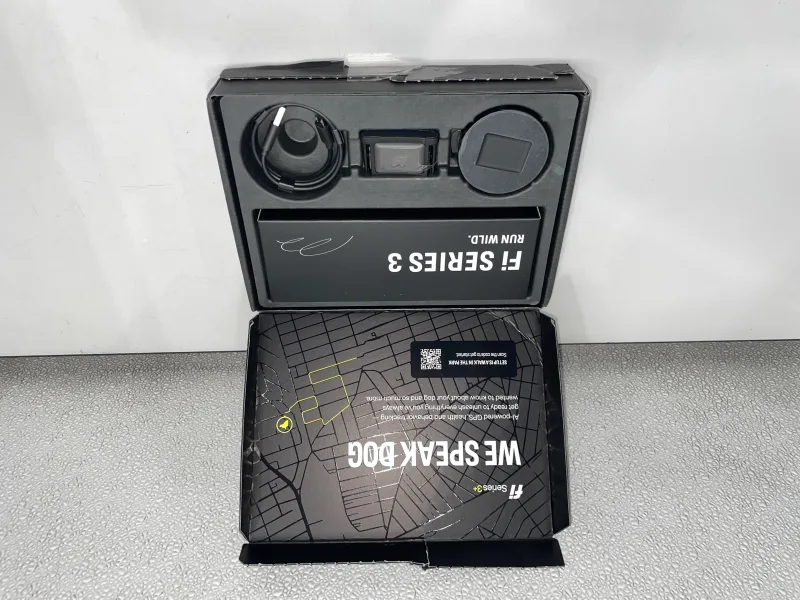
Fi Series 3 is more of an ecosystem commitment: it’s designed around the collar plus the Fi Base for charging/at-home functionality, and it’s explicitly positioned as a «persistent relationship» between hardware, app, and service. Pricing also increases the sense of buy-in: $19/month on the monthly plan (or prepaid tiers like $189/year), plus a $20 one-time activation fee and a minimum 6‑month commitment. That structure makes switching away costlier midstream—especially if you’ve prepaid—reinforcing lock-in.
Conclusion: Petivity Smart GPS has the edge on low-commitment ownership and lower lock-in, because it’s collar-agnostic and avoids Fi’s activation fee and minimum-term membership mechanics.
Petivity Smart GPS keeps day-to-day maintenance relatively light with a stated up to 30 days of battery life and wireless charging, aligning with a more passive «check when needed» usage pattern. Its simplicity can be a downside if your expectations grow—editor notes flag that it may feel «sparse» for users who want richer insights or more proactive monitoring. Still, from an ownership-commitment perspective, fewer routines generally means less friction.
Fi Series 3 can reduce charging frequency on paper—Fi cites up to 3 months in the best-case «Homebuddy» profile (but also 4–6 weeks «Outdoorsy» and up to 2 weeks «The Rancher»), and about 2 days of battery in Lost Mode. The trade-off is a more rigid routine: charging via the Fi Base and a more «active» app experience that nudges regular checking and status monitoring (per the editor notes). Multiple reviewers report unreliable app connectivity and customer support problems in community spaces (Reddit ; Facebook group), which can make that deeper ecosystem feel higher-stakes when something goes wrong.
Conclusion: Petivity Smart GPS is generally the lower-friction, «set-and-forget» option, while Fi Series 3 offers a deeper (but more demanding) system that can pay off for highly engaged owners—at the cost of routine and potential support/app headaches.
Winner: Petivity Smart GPS
The Bottom Line
After digging into tracking responsiveness, durability, battery routines, and day-to-day usability, the choice comes down to whether you want an always-on monitoring system or a lightweight check-in tracker.
Escape-prone dogs or large properties: The Fi Series 3 is the better pick thanks to faster Lost Mode updates («every few seconds»), instant escape-alert posture, and a continuous-wear design built for higher-risk roaming.
Urban walks and occasional reassurance: The Petivity Smart GPS makes more sense if you mainly want simple location checks, with a lightweight add-on form factor and a lower-cost, lower-effort daily experience.
Hiking, off-leash activity, rough weather: The Fi Series 3 is the clear choice, pairing stronger water/dust protection (IP68 plus IP66K for the band) with a more rugged build that suits messy, outdoorsy use.
Owners who dislike rigid routines or heavy app involvement: The Petivity Smart GPS fits best, since it stays collar-agnostic, feels more «set it and mostly forget it,» and doesn’t push the same app-centric ecosystem.
Overall, Fi Series 3 earns the win for the scenarios where a tracker matters most: fast escape response, sturdier wear, and a more developed monitoring experience. Petivity Smart GPS still does better on comfort flexibility and low-commitment ownership, especially if you prefer a simpler, more passive tracker.
If you’re regularly managing real roaming risk, pick Fi Series 3; if you just want lightweight, affordable reassurance without the ecosystem buy-in, Petivity Smart GPS is the smarter fit.
FAQ
Which is better for escape alerts: Petivity Smart GPS or Fi Series 3?
Do Petivity Smart GPS and Fi Series 3 both require subscriptions?
Which has better waterproofing for swimming and rain?
Which is easier to wear on an existing collar or harness?
Which tracker updates location more frequently in Lost Mode?
What are the main connectivity differences between Petivity Smart GPS and Fi Series 3?
How does battery life compare between Petivity Smart GPS and Fi Series 3?
What are common issues reported with Fi Series 3?
"Images are used for editorial and informational purposes only. All trademarks and images belong to their respective owners."
Navigating the Smart Pet Device Landscape
- a reliable automatic pet feeder with camera features → PETLIBRO Granary Automatic Cat Feeder with Camera vs PETKIT Fresh Element Solo Smart Pet Feeder: Camera Control or Simple Reliability?
- to improve pet hydration with a smart fountain → PETKIT Eversweet 3 Pro vs PETLIBRO Dockstream: Which Wins?
- a pet camera for interactive monitoring → Furbo 360 Dog Camera vs Petcube Bites 2 Lite
- self-cleaning litter boxes for odor control → FEELNEEDY vs OROLEY Self-Cleaning Litter Box Comparison
- a GPS tracker for extensive pet roaming → Tractive Smart vs Tractive XL: Best GPS Tracker for Your Dog?
- a Bluetooth tracker for short-range monitoring → Tractive Smart vs Apple AirTag: Pet GPS vs Bluetooth Tracker
- evaluating pet camera vs baby monitor → Furbo 360 vs Nanit Pro: Pet Camera or Baby Monitor?
- UPFAS Little Box 500C vs Lohhuby CAST LB500B: Best Pick?