
Furbo 360 Dog Camera vs. Petcube Bites 2 Lite: Interactive Monitoring vs. Treat-First Simplicity
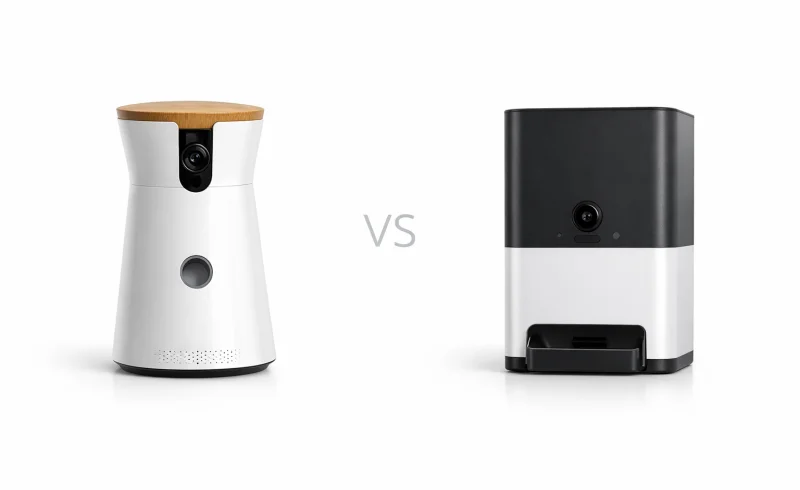
Compare Furbo 360 Dog Camera vs Petcube Bites 2 Lite on coverage, video, alerts, treat tossing, app experience, and value. See which pet camera fits your home setup as of Feb 2026.
TL;DR
Quick Decision
- If you want proactive alerts and the ability to follow your pet around the room with a rotating camera → choose Furbo 360 Dog Camera.
- If you prefer a simpler, more passive check-in routine focused on reliable treat tossing without a mandatory subscription → choose Petcube Bites 2 Lite.
- If you just need a basic video feed and your pet stays in one predictable spot → either camera works, but Petcube offers lower long-term costs.
Key Differentiators The core trade-off is between Furbo's behavioral monitoring and room coverage via its 360-degree rotating lens, which requires more active app management and a subscription for full value, and Petcube's predictable, treat-centric design with a fixed wide-angle view that excels at set-and-forget use. Your choice hinges on whether you value situational awareness and alerts over daily simplicity and lower ongoing costs.
Who Should NOT Buy Either If you need a truly hands-off device with minimal notifications, no subscription pressure, and no mechanical parts, or if your pet freely roams a large, multi-room area, a basic multi-purpose security camera system would be a better fit.
| Feature | Furbo 360 Dog Camera | Petcube Bites 2 Lite |
|---|---|---|
| Physical | ||
| Weight | 1.7 lbs | |
| Dimensions | 8.8 x 4.9 x 4.9 in | 5.7 x 3 x 10.6 inches |
| Audio & Alerts | ||
| Two-Way Audio | Supported (real-time 2-way audio) | Supported (2-way audio) |
| Sound & Motion Alerts | Supported (barking alert; additional alerts via subscription) | Supported (sound and motion alerts) |
| Treat Dispenser | ||
| Treat Tossing | Supported | Supported |
| Treat Capacity | 100 pieces treats capacity | Holds up to 1.5 lbs of treats |
| Recommended Treat Size | Round treats, diameter of 1cm (0.4 inches) recommended | Use crunchy treats with dimensions of 1 inch or less |
| Video & Imaging | ||
| Digital Zoom | 4x digital zoom | 8x digital zoom |
| Night Vision | Color Night Vision | Automatic night vision |
| Video Resolution | 1080p FHD | 1080p HD |
| Field of View / Coverage | Rotating 360° view | 160° wide-angle view |
| Camera Rotation (Pan) Support | Supported (rotating 360° view) | Not supported (fixed camera) |
| Connectivity & App | ||
| Wi-Fi Frequency Support | 2.4GHz only | 2.4GHz (802.11 b/g/n) |
| Mobile App Compatibility | iOS/Android (Furbo app) | iOS/Android (Petcube app) |
| Subscription & Cloud | ||
| Optional Subscription Service | Furbo Nanny (subscription) | Petcube Care (optional subscription) |
| Video History / Cloud Playback | Video history via subscription | Video history (subscription service described on product page) |
📑 Table of Contents
Coverage & Camera Control

Furbo 360 Dog Camera is built around a rotating 360° view with pan support, so you can actively sweep the room to relocate a pet that’s moved off-center. In practice, this is a fundamental coverage advantage in multi-zone rooms because the camera can be steered instead of forcing you to accept whatever falls inside a fixed frame.
Petcube Bites 2 Lite, by contrast, uses a fixed 160° wide-angle view with no rotation/pan support, so coverage depends heavily on where you mount it and how predictable your pet’s hangout spot is. The wide angle helps in smaller rooms, but if your dog steps outside the lens’ cone, there’s no camera-side way to «re-find» them.
Conclusion: On pure coverage and control, Furbo’s 360° rotation is a clear, defensible advantage over Petcube’s fixed 160° view, especially in larger spaces or when pets move unpredictably.
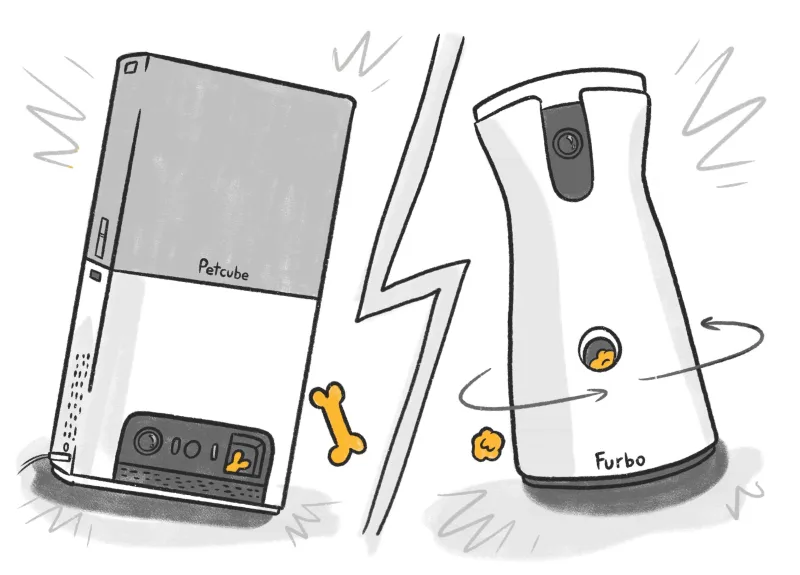
Furbo 360 Dog Camera also tends to support a more «active monitoring» style: you’re more likely to interact with the app to reposition the view (and potentially respond to behavior cues like barking/meowing alerts). That flexibility can be valuable, but the moving-camera design adds mechanical complexity, and some owners may notice occasional latency between a pan command and the camera’s response.
Petcube Bites 2 Lite leans into a «set-and-check» workflow: once placed and aimed, you typically open the app, glance at a stable frame, and optionally interact (including treat tossing). The trade-off is structural—if the pet leaves the 160° frame, the camera can’t compensate, which becomes a real constraint in larger rooms or multi-room sightlines.
Conclusion: Furbo has the edge for dynamic, multi-zone monitoring, while Petcube is better for predictable, fixed-angle setups where you value a calmer, more passive check-in routine over camera control depth.
Winner: Furbo 360 Dog Camera
Video Clarity & Night Viewing

Furbo 360 Dog Camera streams in 1080p FHD and pairs it with a rotating 360° view, which can help maintain usable framing as pets move (less time staring at empty floor). Its low-light spec is Color Night Vision, which can preserve contextual cues (toy color, pet position relative to furniture) that matter for quick checks.
Petcube Bites 2 Lite also streams in 1080p HD, but it relies on a fixed 160° wide-angle view—you get a stable perspective, but you can’t reframe if the pet drifts out of the shot. Its low-light mode is listed as night vision/automatic night vision, which prioritizes visibility over color detail.
Conclusion: On baseline clarity, they’re effectively even at 1080p vs 1080p, but Furbo has the edge for situational awareness in the dark thanks to Color Night Vision and the ability to re-aim coverage via its rotating view.
Furbo 360 Dog Camera offers 4x digital zoom, which is useful for quick checks but can run out of detail fast when you’re trying to inspect something small (like a collar tag or what’s in a pet’s mouth). With its pan/rotation, you may zoom less often because you can move the camera to re-center the subject.
Petcube Bites 2 Lite doubles that to 8x digital zoom, giving you more reach for detail inspection from the same mounting position—handy when the camera is placed farther away or higher on a wall. The trade-off is that zoom can’t compensate for a pet leaving the frame, since the camera can’t pan.
Conclusion: Petcube wins on zoom power (8x vs 4x) for close-up inspection, while Furbo’s advantage is more about keeping the subject in view.
Winner: Tie — Furbo is stronger for low-light context and keeping pets in frame (color night vision + rotating view), while Petcube is better for detail checks at distance with 8x vs 4x zoom.
Alerts & Monitoring Style

Furbo 360 Dog Camera is built to behave like a proactive monitor: it explicitly supports barking alerts and broader alerting that’s framed around pet behavior (with «additional alerts via subscription» in the spec sheet). That aligns with third-party roundups noting it can send alerts when your pet is barking or meowing and that many features require a paid subscription (e.g., Furbo Nanny). In practice, that posture tends to produce more pings and more «check what happened» moments, which is useful if you want the camera to act like a sentry.
Petcube Bites 2 Lite also supports sound and motion alerts (per the specs context), but it’s positioned more as a calmer check-in camera with treats rather than a behavior-analysis system. A key practical difference is that it can function without a subscription for basic monitoring and treating, so you’re not forced into a paid plan just to get core day-to-day value. That generally maps to a more manual routine: open the app, check the feed, then interact when you choose.
Conclusion: For owners who want proactive, behavior-leaning monitoring, Furbo’s alert ecosystem is clearly more aligned; for a quieter, more self-directed check-in cadence (especially without paying extra), Petcube is the lower-friction approach.
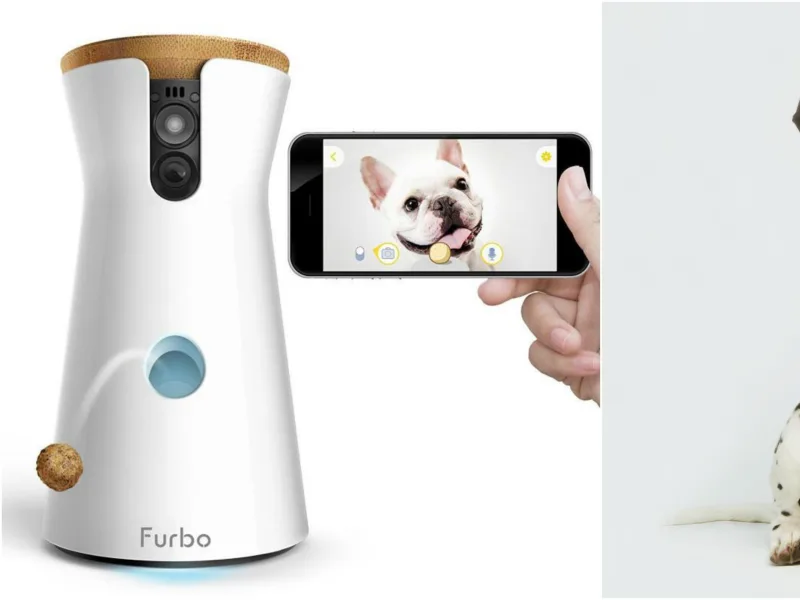
Furbo 360 Dog Camera can also increase monitoring «coverage confidence» because its view isn’t fixed: the camera supports a rotating 360° view (and pan support), so you can react to an alert by steering the camera to re-acquire your pet instead of hoping they’re still in frame. The trade-off is UX overhead—because you can control the view, you may end up doing it more often, and the added mechanical complexity can introduce small moments of latency between an input and the camera response (as noted in the editor context).
Petcube Bites 2 Lite relies on a fixed 160° wide-angle view with no pan/rotation, which makes its monitoring style more predictable: what you see is always from the same angle, and you’re not managing camera orientation. The downside is situational awareness—if the pet exits that 160° frame, there’s no recovery mechanism besides waiting for them to return, which becomes more limiting in larger spaces or when pets roam.
Conclusion: Furbo has the stronger monitoring control model because 360° rotation lets you follow up on alerts and track movement across a room; Petcube’s advantage is predictability, but its fixed angle can turn alerts into «out of frame» dead ends.
Winner: Furbo 360 Dog Camera
Treat Tossing & Dispenser Control

Capacity & refill frequency
Furbo 360 Dog Camera stores treats by count, with a listed capacity of 100 pieces. That can be convenient for consistency (you know roughly how many tosses are left), but it also means refill frequency depends heavily on the size and density of your treats.
Petcube Bites 2 Lite specifies capacity by weight: up to 1.5 lbs of treats. In practice, that usually translates to longer stretches between refills than a fixed 100-piece bin, especially if you use smaller training treats.
Conclusion: Petcube Bites 2 Lite has the edge on capacity because 1.5 lbs is a materially larger, more flexible storage target than 100 pieces, reducing refill hassle for many owners.
Treat size rules & snack compatibility
Furbo 360 Dog Camera recommends round treats ~1 cm (0.4") diameter, which narrows what you can reliably use. The upside is that this tighter sizing guidance is designed to keep the mechanism feeding consistently rather than accommodating lots of shapes.
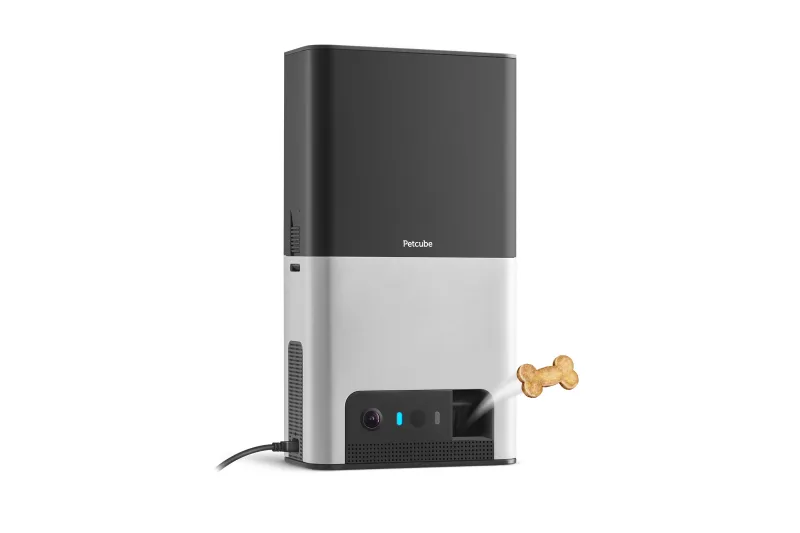
Petcube Bites 2 Lite recommends dry crunchy treats with dimensions of 1" or less and explicitly warns against non-crunchy treats to avoid mechanical problems. That gives you more size headroom than Furbo (up to 1"), but still keeps you within a «dry and firm» treat category.
Conclusion: Petcube Bites 2 Lite is more flexible on treat sizing (≤1" vs ~0.4"), but both systems reward using the right treat type to prevent jams or dispensing issues.
Control features & jam handling
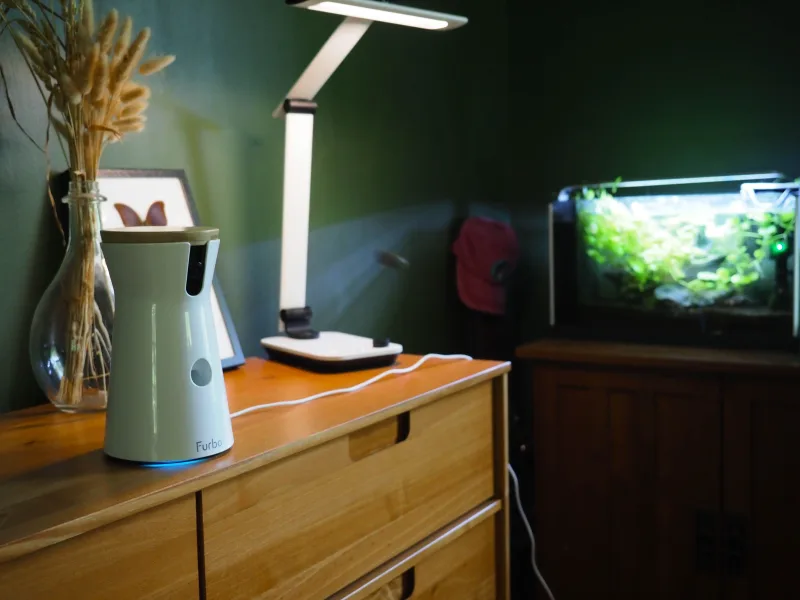
Furbo 360 Dog Camera includes a clear reliability safeguard: if treats don’t dispense, the mechanism reverses for 2 seconds to loosen the jam. That’s a practical, mechanical «self-recovery» behavior that can reduce how often you need to intervene when a treat gets stuck.
Petcube Bites 2 Lite focuses more on control over where the treat lands by letting you adjust treat dispensing force. That’s useful if the camera is mounted at different heights/distances, but it doesn’t inherently guarantee jam recovery—real-world testing can still involve occasional misfires (as shown in the video).
Conclusion: It’s a trade-off—Petcube wins on dispensing control (adjustable force), while Furbo wins on anti-jam behavior (2-second reverse) that’s specifically aimed at keeping treats flowing.
Winner: Petcube Bites 2 Lite — It delivers clearer dispenser flexibility overall (notably 1.5 lbs capacity and adjustable toss force), while Furbo’s advantage is more narrowly focused on jam recovery rather than day-to-day treat-system versatility.
App, Setup & Daily Use
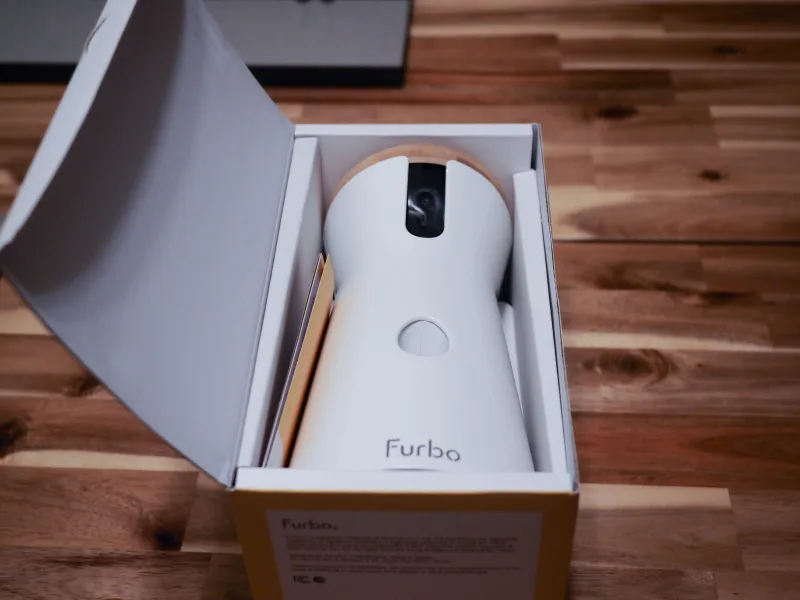
Furbo 360 Dog Camera tends to feel «hands-on» in daily use because its value is tied to active monitoring: you can pan the camera with a rotating 360° view instead of relying on a fixed angle. It also leans into proactive notification-style use with barking/meowing alerts and other behavior-driven signals, but many of its meaningful features are tied to the Furbo Nanny subscription (priced at $69/year or $129 for 2 years). In practice, that combination can make it powerful—but also more demanding if you just want a quick check-in.
Petcube Bites 2 Lite, by contrast, is closer to a «mount it, then check the feed» routine: it offers 1080p HD, night vision, and 2-way audio, and it can run without a subscription for basics like monitoring and treat tossing. Because it’s a fixed camera with a 160° wide-angle view (no pan/tilt), the day-to-day workflow is usually faster and more predictable—open the app, verify what’s happening, optionally toss a treat. Both cameras are 2.4GHz Wi‑Fi only, so neither gains an ease-of-setup advantage from 5GHz support.
Conclusion (setup & daily routine): Petcube Bites 2 Lite has the edge for lower-friction, «set-and-check» daily use, while Furbo’s deeper control and proactive alerts better suit owners who don’t mind more app interaction.
Alert style & ongoing «mental load»
Furbo 360 Dog Camera is optimized for behavioral monitoring: it supports barking alerts (and broader alerting via subscription), which encourages a more proactive, notification-driven relationship with the app. That can be genuinely useful if you’re tracking anxiety, restlessness, or want to react quickly—but it can also translate into more settings to tune over time as alert behavior evolves with app updates. Furbo’s moving camera can also introduce small moments of friction (e.g., needing to reposition the view rather than passively glancing at a stable frame).
Petcube Bites 2 Lite supports sound and motion alerts, but the overall ecosystem is simpler and typically feels calmer because the camera angle is consistent and the core loop is straightforward. Its experience tends to be more passive once installed: check the live view, use 2-way audio, and toss treats when desired, with fewer behavior assumptions baked into the default experience. That makes it easier to keep using long-term if you prefer minimal «alert management.»
Conclusion (alerts & cognitive overhead): Petcube Bites 2 Lite wins for a more predictable, less demanding daily UX; Furbo is better when you specifically want behavior-centric monitoring and are willing to manage it.
Winner: Petcube Bites 2 Lite
Connectivity & Reliability
Furbo 360 Dog Camera is limited to 2.4GHz Wi‑Fi only (no 5GHz), which can be a constraint in congested apartment networks. It’s also plug-in only (no batteries), so uptime depends on stable placement and power. In troubleshooting guidance, Furbo acknowledges that connectivity problems can impact functionality, and an iFixit troubleshooting page notes Wi‑Fi/Bluetooth issues as a potential cause of problems.
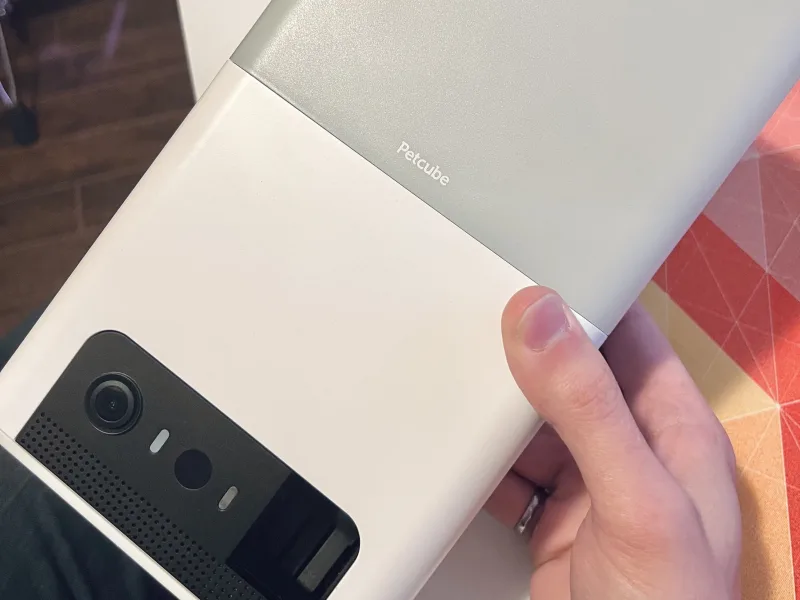
Petcube Bites 2 Lite similarly supports 2.4GHz Wi‑Fi (802.11 b/g/n) and relies on the Petcube App for operation, so it shares the same «router quality matters» reality. For basic stability, Petcube’s own troubleshooting suggests simple power-cycling (unplug/replug) for power issues, which is a common practical reset path. Like Furbo, it’s not positioned as a battery-backed device, so outages or unplugging stop the camera.
Conclusion: On pure connectivity constraints, it’s essentially even—2.4GHz-only + plug-in power for both means reliability is more about your home network and setup than a spec advantage.
Furbo 360 Dog Camera adds mechanical complexity because the camera head rotates (360° pan), and that can introduce occasional latency between your command and the camera response (a trade-off of «coverage control» versus simplicity). Furbo does include a reliability safeguard for the dispenser: if a toss fails, the mechanism reverses for 2 seconds to try to clear a jam. That’s a concrete design choice aimed at reducing treat-related downtime.
Petcube Bites 2 Lite avoids motorized panning entirely (fixed camera), which reduces moving parts in the viewing system—but the treat system still depends on using the right snack format. Petcube recommends dry, crunchy treats ≤1 inch, and warns against non-crunchy treats to help prevent mechanical issues; it also lets you adjust treat dispensing force, which can help tune performance to treat size/weight. In practice, Petcube’s reliability posture is «prevent jams by treat choice + quick resets,» rather than adding more automated mechanical recovery behaviors.
Conclusion: Furbo has the edge in self-recovery design for treat jams (2-second reverse), while Petcube leans on prevention (treat constraints) and simplicity—so reliability depends on whether you prefer active mechanical safeguards or fewer moving parts.
Winner: Tie — both share the same network/power limitations, and their reliability advantages come from different philosophies (Furbo’s safeguard features vs Petcube’s simpler, more prevention-driven approach).
Subscriptions & Ongoing Costs

Furbo 360 Dog Camera is more subscription-dependent if you want its «best» monitoring experience. It offers the Furbo Nanny plan, and published pricing examples include $69/year or $129 for 2 years, with key items like video history/cloud playback tied to subscription. In practice, Furbo’s ecosystem leans into proactive behavioral monitoring (e.g., barking/meowing alerts), which tends to push owners toward paid features for fuller context and richer notifications.
Petcube Bites 2 Lite can deliver meaningful baseline value without ongoing fees: it can function without a subscription for basic monitoring and treat tossing, while keeping Petcube Care optional for things like video history. That makes the device easier to budget long-term if you mainly need a dependable live view and occasional treat interaction rather than a «security-camera-style» feature set. The trade-off is that deeper, archival, or expanded features still live behind the subscription tier, but the core utility doesn’t collapse without it.
Conclusion: Petcube Bites 2 Lite has the edge on ongoing costs because it remains broadly useful without a recurring plan, whereas Furbo 360’s most compelling monitoring value is more tightly coupled to paid subscription features.
Winner: Petcube Bites 2 Lite
The Bottom Line
After breaking down coverage, video performance, alerts, treat tossing, daily usability, and ongoing costs, the decision comes down to whether you value active tracking or a simpler routine.
Best for whole-room monitoring: The Furbo 360 Dog Camera is the better fit thanks to its rotating 360° view, which helps you re-acquire a roaming pet instead of getting stuck with a fixed frame.
Best for treat-based interaction on a budget: The Petcube Bites 2 Lite is the smarter pick because it delivers strong «treat cam» value with less day-to-day dependence on paid features.
Best for minimal notifications and calmer UX: The Petcube Bites 2 Lite wins for a more predictable, set-and-check workflow, without the same alert-driven mental load.
Best for proactive barking/behavior monitoring: The Furbo 360 Dog Camera is the clear choice, since its experience is built around more behavior-forward alerts and active follow-up.
Overall, Petcube Bites 2 Lite edges ahead as the better all-around buy: it’s easier to live with daily and keeps core value intact without pushing you into a subscription. Furbo’s key advantage is still real—its 360° rotation (and stronger «follow-up» control) is the better tool when coverage confidence matters most.
Make coverage your deciding factor: if you need to track a roaming pet across a room and want proactive monitoring, choose Furbo 360 Dog Camera—but if you want a simpler, lower-cost treat camera that stays useful without ongoing fees, Petcube Bites 2 Lite is the purchase you’ll regret less long-term.
FAQ
Which is better for a dog that moves around a lot?
Do both cameras work on 5GHz Wi‑Fi?
Can I use Petcube Bites 2 Lite without paying monthly?
Do both have night vision and two-way audio?
What treats work best with these cameras?
Which camera has better treat dispensing capacity?
Does Furbo require a subscription for key features?
Which camera is better for low-light viewing?
📄 Used Manuals & Documentation
Furbo 360 Dog Camera
"Images are used for editorial and informational purposes only. All trademarks and images belong to their respective owners."
Navigating the Smart Pet Device Landscape
- a reliable automatic pet feeder with camera features → PETLIBRO Granary Automatic Cat Feeder with Camera vs PETKIT Fresh Element Solo Smart Pet Feeder: Camera Control or Simple Reliability?
- to improve pet hydration with a smart fountain → PETKIT Eversweet 3 Pro vs PETLIBRO Dockstream: Which Wins?
- self-cleaning litter boxes for odor control → FEELNEEDY vs OROLEY Self-Cleaning Litter Box Comparison
- a GPS tracker for extensive pet roaming → Tractive Smart vs Tractive XL: Best GPS Tracker for Your Dog?
- comparing pet GPS trackers for security and range → Petivity Smart GPS vs Fi Series 3: Best Dog GPS Tracker?
- a Bluetooth tracker for short-range monitoring → Tractive Smart vs Apple AirTag: Pet GPS vs Bluetooth Tracker
- evaluating pet camera vs baby monitor → Furbo 360 vs Nanit Pro: Pet Camera or Baby Monitor?
- UPFAS Little Box 500C vs Lohhuby CAST LB500B: Best Pick?