
iHealth Jurni vs Greater Goods Bluetooth Upper Arm Blood Pressure Monitor: Rechargeable Smarts or Battery Simplicity?
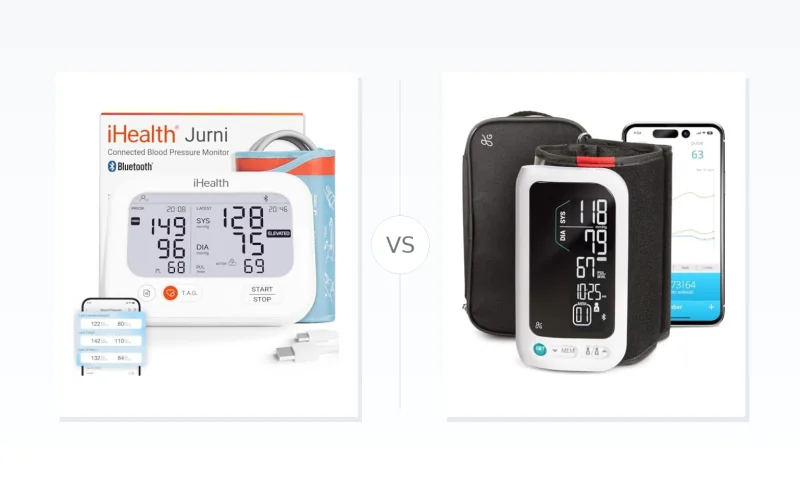
Compare the iHealth Jurni and Greater Goods Bluetooth upper arm blood pressure monitors. We dive into battery life, memory capacity, app experience, cuff comfort, and long-term reliability to help you choose the right device for your needs.
TL;DR
Quick Decision
- If you want a rechargeable monitor, massive onboard memory, and deep health‑app integration → choose iHealth Jurni.
- If you care about instant battery swaps, a no‑fuss app, and a device that doesn’t carry a built‑in expiration date → choose Greater Goods Bluetooth Upper Arm Monitor.
- If you only measure a couple times a week and don’t mind a quick phone sync, either works — your preference on power and app style will decide.
Key Differentiators
The iHealth’s sealed battery delivers months of cordless use but eventually degrades and makes the whole unit unusable; the Greater Goods runs on standard AAs for endless uptime, though you’ll buy and swap batteries regularly. iHealth stores 360 readings per user, letting you sync weekly without losing anything — Greater Goods holds only 60 and silently overwrites old data once full, forcing a more disciplined sync schedule. The iHealth app ties into Apple Health and Google Fit but feels cluttered and cloud‑dependent; Greater Goods offers a simpler, quieter logging experience with fewer integrations and a lighter privacy footprint.
Who Should Skip Both
If you need a monitor that works completely standalone — no smartphone pairing and no online account — skip both and look for a traditional upper‑arm unit that keeps all readings locally with zero app requirement.
| Feature | iHealth Jurni | Greater Goods Bluetooth Upper Arm Blood Pressure Monitor |
|---|---|---|
| Power | ||
| Power Source | Built-in 2200mAh rechargeable battery | 4 AA alkaline batteries (included) |
| Charging Port | USB-C | None (battery-powered only) |
| Rechargeable Battery | Yes (2200mAh) | No (disposable batteries) |
| General | ||
| Product Type | Upper Arm Blood Pressure Monitor | Upper Arm Blood Pressure Monitor |
| Measurement | ||
| Display | Backlit LCD | Backlit LCD |
| Cuff Size | 8.7-16.5 in (22-42 cm) | 8.75-16.5 in (22-42 cm) |
| Measurement Site | Upper Arm | Upper Arm |
| Measurement Method | Automatic | Automatic |
| Measurement Parameters | Systolic, Diastolic, Pulse | Systolic, Diastolic, Pulse |
| WHO Blood Pressure Indicator | Yes (color-coded) | Yes (color-coded) |
| Irregular Heartbeat Detection | Yes | Yes |
| Memory & Users | ||
| App Memory | Unlimited | Unlimited |
| Device Memory | 360 readings per user (720 total) | 60 readings per user (120 total) |
| Number of Users | 2 | 2 |
| Connectivity & App | ||
| App Name | iHealth app (iOS/Android) | Balance Health app (iOS/Android) |
| Bluetooth | Yes | Yes |
| App Features | Unlimited storage, trend tracking, export, share | Unlimited storage, trend tracking, export, share |
📑 Table of Contents
Power & Battery
The iHealth Jurni and Greater Goods monitor take fundamentally different approaches to power, each with distinct practical implications for daily use and long-term ownership. The Jurni embraces modern rechargeable convenience, while Greater Goods sticks with field-replaceable disposables.
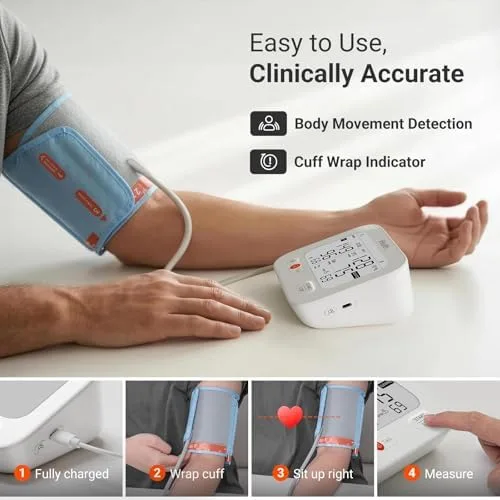
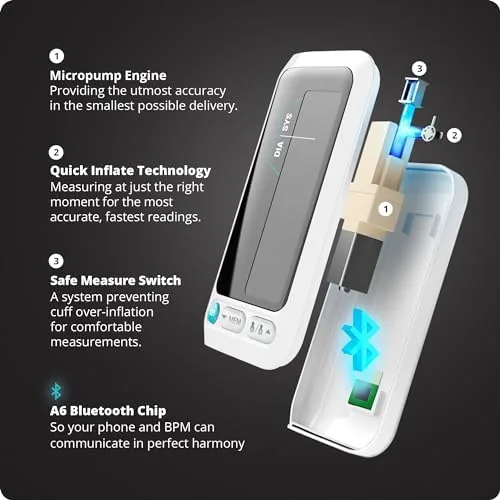
Power source and daily convenience. The iHealth Jurni packs a built-in 2200 mAh rechargeable battery that delivers up to 540 measurements per charge — roughly six months of typical use. It refuels via USB‑C, the same cable many phones and accessories use, and requires an initial charge out of the box. The Greater Goods Bluetooth monitor, by contrast, runs on four AA alkaline batteries (included) with an optional AC adapter for wall power; no charging step exists. The Jurni wins on everyday convenience: you never need to source or keep spare AAs, and a single charge lasts for months.
What happens when you’re out of power. With the Jurni, a dead battery means downtime — the device can’t measure while plugged in, so you must wait for a charge. Drained AAs in the Greater Goods, however, can be swapped in seconds, restoring full function immediately. Some users note that low-battery conditions on the Jurni also block data sync, adding friction when you need it least. Greater Goods holds a clear edge in uptime: battery exhaustion never sidelines the device longer than it takes to open a pack of AAs.
Longevity and hidden failure modes. The Jurni’s lithium cell is non‑replaceable. After 2–3 years of regular cycling, capacity will fade, and when the battery eventually dies, the whole unit becomes e‑waste — there’s no user‑serviceable path. The USB‑C port itself is another mechanical vulnerability. Greater Goods avoids built‑in‑battery obsolescence, but its AA design carries a different risk: alkaline cells can leak if left unused for months in hot or humid environments, corroding internal contacts. Neither design is immune to age, but Greater Goods’ simpler architecture offers a more repairable, longer potential lifespan.
Environmental and cost trade‑offs. The rechargeable Jurni generates essentially zero disposable battery waste over a normal ownership period. Greater Goods creates a steady stream of spent AAs — four at a time — plus the ongoing cost and hassle of buying replacements. The AC adapter eliminates battery waste entirely for stationary home use, but many users will still rely on disposable cells. For eco‑conscious buyers, the Jurni is the cleaner choice.
Winner: iHealth Jurni. The rechargeable design secures the win because it solves the daily-use pain points — no battery shopping, months between recharges, and zero disposable waste — that matter most to a typical home blood pressure monitor owner. Greater Goods’ instant‑swap capability and lifespan advantage are legitimate benefits, but they come with recurring battery costs and leak risks that tilt the balance toward the Jurni’s modern, low‑maintenance approach. Just be aware that the Jurni’s embedded battery imposes a finite device life that may frustrate anyone hoping for a decade of service.
Memory & Data Storage
iHealth Jurni packs a uniquely large onboard memory for a home blood pressure monitor: 360 readings per user, with distinct storage for its two-user mode, bringing the total to 720 readings. The Greater Goods Bluetooth Upper Arm Monitor provides only 60 readings per user (120 total) — one‑sixth of iHealth’s capacity. For anyone who measures several times a day and syncs to a phone only once a week, the iHealth buffer is dramatically more forgiving, substantially lowering the odds of losing data between app transfers.

The bigger practical problem lies in how each device handles a full memory. Greater Goods silently overwrites the oldest readings with no warning. If you log three measurements a day, you’ll hit that 60‑reading ceiling in under three weeks; sync less frequently and older records vanish without a trace. iHealth’s 360‑slot bank per user makes such forced loss exceedingly unlikely. Even at four daily readings, it takes about three months to exhaust the per‑user log, giving you plenty of breathing room to sync. The iHealth simply doesn’t ambush you with data loss the way Greater Goods does.
Both monitors rely on companion apps for unlimited cloud storage and trend analysis, so all readings eventually land safely off‑device. But onboard buffer size does affect how much data is at risk before a sync — losing the iHealth monitor could mean losing hundreds of un‑synced points, while the Greater Goods unit holds far fewer. In practice, the ability to keep weeks or months of measurements intact easily outweighs that edge‑case risk. Silently discarding health data because you didn’t sync fast enough is a far more tangible frustration than a hypothetical lost‑device scenario.
Winner: iHealth Jurni — Its 6× larger per‑user memory eliminates the constant threat of silent data overwrite, making it the stress‑free option for anyone who doesn’t want to babysit their sync schedule.
App Experience & Ecosystem
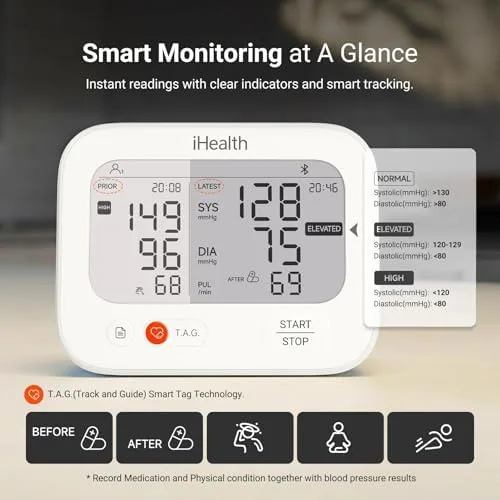
The iHealth MyVitals app is a full-featured health hub that syncs to Apple Health, Google Fit, and other iHealth devices, supporting multi-user families and unlimited cloud storage. It adds T.A.G. (Track and Guide) labels for medication and condition tagging, giving users granular trend analysis. The Greater Goods Balance Health app, by contrast, sticks to a simple log and chart view with optional Apple Health sync—Android integration is less polished, sometimes requiring manual re-pairs after OS updates, and Google Fit is absent. For ecosystem breadth and cross-platform connectivity, iHealth takes a clear lead.
Where Greater Goods pulls ahead is in everyday usability. iHealth’s app surrounds its powerful analytics with promotional banners and a busy interface that can feel overwhelming, especially for newcomers. Greater Goods’ deliberately sparse design avoids up-sells and unexpected prompts, lowering the cognitive load for someone who just wants to see numbers. A simpler interface makes for a calmer daily logging experience—here Greater Goods is the winner.
Privacy-concerned users will note a fundamental difference. iHealth mandates an online account; all readings pass through company servers, a red flag for anyone subject to strict health-data rules or who objects to cloud dependency. Greater Goods also syncs to the cloud, but its app architecture and lack of heavy promotion make it feel less intrusive. For those who prioritize data minimalism, Greater Goods has the advantage.
Bluetooth reliability introduces another trade-off. Some users note that iHealth’s app occasionally loses a reading if the Bluetooth connection drops mid-transfer—a frustration during daily syncs. Greater Goods’ syncing proves more stable in day-to-day use, with fewer reports of lost data. In raw reliability, Greater Goods edges ahead.
Taken together, iHealth’s MyVitals app delivers deeper health-platform integration, richer analytics, and more frequent updates, making it the stronger choice for users who want a comprehensive digital health record. Greater Goods’ Balance Health app wins on simplicity, stability, and a lighter privacy footprint, but can’t match iHealth’s ecosystem. For most users seeking a connected, insight-driven experience, Winner: iHealth Jurni.
Cuff & Comfort
The iHealth Jurni cuff fits arm circumferences from 8.7 to 16.5 inches (22–42 cm). The Greater Goods cuff matches this almost exactly with an 8.75–16.5 inch (22–42 cm) range. Both include a printed artery alignment guide and use an adjustable hook-and-loop closure.
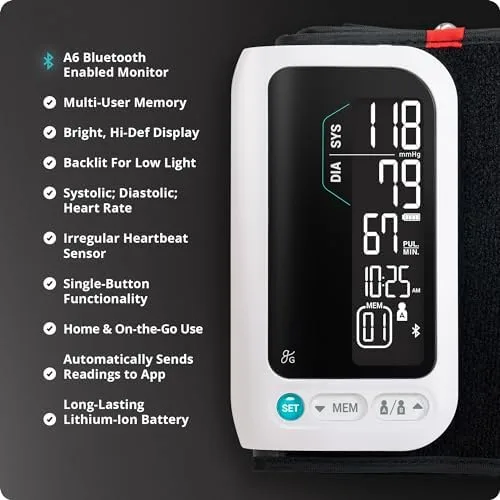
Neither manufacturer signals a standout material advantage—both cuffs are made from typical nylon and feel comparable during repeated daily use. No widespread comfort complaints appear for either device.
One practical difference: Greater Goods bundles a travel case, while iHealth doesn’t include a carrying solution. The extra protection is handy for users who take their monitor on the go, though it doesn’t change how the cuff feels on the arm.
Winner: Tie — cuff dimensions and wear comfort are essentially identical. The included Greater Goods travel case is a nice convenience bonus, but it doesn’t move the needle on cuff comfort itself.
Long-Term Reliability & Maintenance
How these monitors are powered directly shapes their maintenance demands and usable lifespan. The design choices ripple into mechanical durability and the support you can expect over the years.
Battery & power longevity
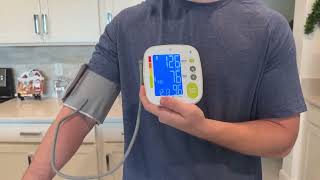
The iHealth Jurni packs a 2200mAh rechargeable lithium battery that delivers up to 540 measurements per charge, but the cell is sealed inside and non-replaceable. Once the battery reaches the end of its typical 2–3 year service life, the entire device becomes a paperweight. The Greater Goods Bluetooth Upper Arm Monitor runs on four user-swappable AA batteries (included). There’s no buried degradation clock—you simply replace the cells when they fade and the monitor keeps working indefinitely. While the iHealth’s rechargeable design is handy for frequent travel, Greater Goods takes the edge here because its field-replaceable power source prevents a built-in, device-killing expiration date.
Mechanical failure points
The iHealth Jurni charges over USB‑C, and that port is its Achilles’ heel. Any physical damage to the port—bent pins, debris ingress, cable strain—can leave the monitor unable to charge and brick the device. The internal charge controller adds another potential failure node. The Greater Goods monitor has no charging port, no charge controller, and no rechargeable battery to manage; its analog AA battery sled is about as failure-proof as consumer electronics get. A simpler electro-mechanical layout means fewer components that can break under normal use. Greater Goods again offers a more durable design with less to go wrong mechanically over the long haul.
Warranty & support
iHealth typically backs the Jurni with a 1-year warranty, and international support quality can vary. Greater Goods historically provides a longer warranty—commonly 2 to 5 years depending on purchase channel—and maintains a highly rated U.S.-based customer support team that handles claims personally. A longer warranty and more accessible support reinforce the confidence you can place in the device over multiple years.
There is one minor trade‑off: alkaline AA cells can leak if the device sits unused in hot, humid environments for many months, potentially corroding battery contacts. However, this is a manageable risk with periodic checks, whereas the iHealth’s internal battery degradation is inevitable. Winner: Greater Goods Bluetooth Upper Arm Blood Pressure Monitor — its simpler, serviceable power design and stronger warranty support translate directly into longer practical lifespan and less e‑waste.
The Bottom Line
After weighing power, memory, apps, and reliability, the right choice depends on your measuring habits.
For frequent travelers, the iHealth Jurni’s rechargeable battery and large memory make it the clear pick.
For infrequent measurers, Greater Goods’ AA batteries stay charged for years and can be swapped instantly.
Privacy-focused users will prefer Greater Goods for its lighter cloud interaction.
Multi‑device households should choose the iHealth Jurni for its unified health dashboard.
Budget buyers save with Greater Goods at just $44.99.
Overall, the iHealth Jurni wins Best Overall for its rechargeable convenience, huge memory, and rich app ecosystem. However, Greater Goods fights back with field‑replaceable batteries, a longer warranty, and a simpler privacy footprint—ideal for occasional use and longevity. For most daily health trackers, the Jurni is the smarter buy.
Choose based on how often you measure and your tolerance for battery maintenance.
FAQ
Can I use these monitors without a smartphone?
Is the iHealth Jurni battery replaceable?
How many users can each device support?
Which monitor is more accurate?
How long does the iHealth Jurni battery last on a charge?
What is the memory capacity difference between these two monitors?
Does the Greater Goods monitor include a travel case?
📄 Used Manuals & Documentation
iHealth Jurni
Greater Goods Bluetooth Upper Arm Blood Pressure Monitor
"Images are used for editorial and informational purposes only. All trademarks and images belong to their respective owners."