
InBody Dial H30 vs FITINDEX Body Pod Scale: Precision Body Comp or Budget Family Scale?
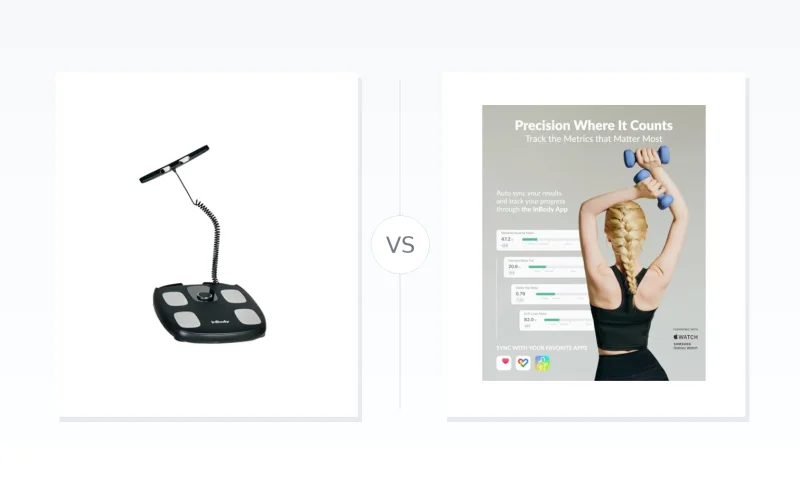
Compare the InBody Dial H30 and FITINDEX Body Pod Scale on accuracy, connectivity, and family features. Discover which smart scale fits your body composition tracking needs and budget.
TL;DR
- If you demand repeatable, medical-style body composition analysis and automatic Wi-Fi sync → choose InBody Dial H30.
- If your priority is an affordable family scale with unlimited users and a dedicated baby mode → choose FITINDEX Body Pod Scale.
The InBody delivers lab-inspired consistency and phone-free Wi-Fi syncing, but at a premium and with a 20-user ceiling. The FITINDEX cuts cost with a plastic build and Bluetooth-only operation, trading measurement repeatability for unlimited profiles and a practical baby mode.
If you need a scale for users over 400 lb or want body composition data without any app interaction, neither fits—consider a dedicated high-capacity scale or a simple weight-only device.
| Feature | InBody Dial H30 | FITINDEX Body Pod Scale |
|---|---|---|
| Features | ||
| Maximum Users | 20 | Unlimited |
| Baby Weighing Mode | No | Yes |
| Software | ||
| App Name | InBody App | FITINDEX App |
| Connectivity | ||
| Wi-Fi | Yes | No |
| Bluetooth | Yes | Yes |
| Physical Specifications | ||
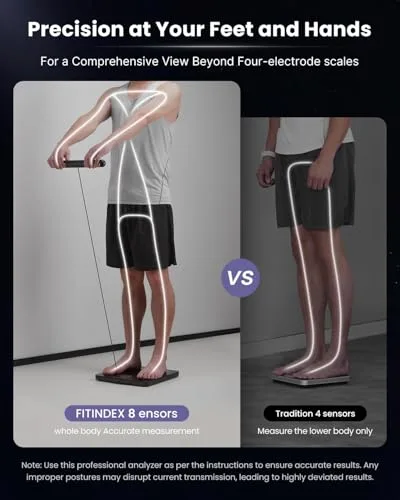
| Electrodes | 4 | 8 |
| Weight Capacity | 330 lb (150 kg) | 400 lb (180 kg) |
| Body Composition Metrics | ||
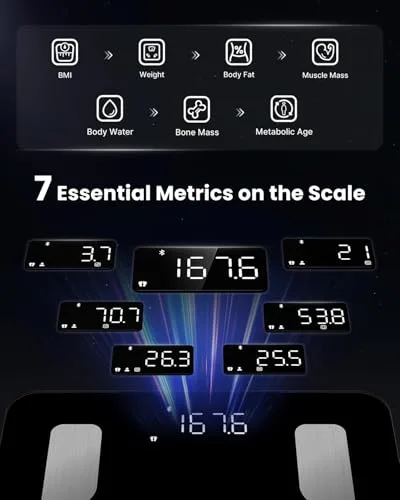
| BMI | Yes | Yes |
| Bone Mass | Yes | Yes |
| Body Weight | Yes | Yes |
| Muscle Mass | Yes | Yes |
| Body Fat Percentage | Yes | Yes |
| Basal Metabolic Rate (BMR) | Yes | Yes |
📑 Table of Contents
Accuracy & Measurement Technology
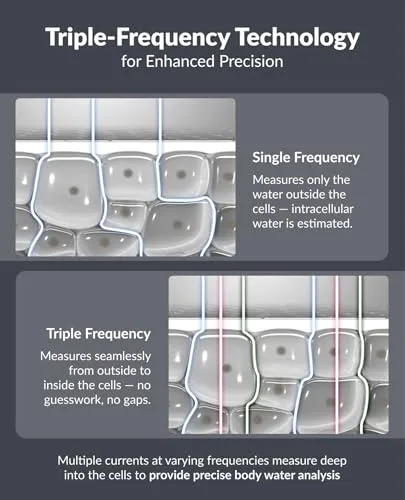
Body composition scales live or die by the science inside them, and the two products here take fundamentally different approaches. InBody Dial H30 relies on triple‑frequency bioelectrical impedance analysis (BIA), which sends multiple electrical signals through the body to more reliably distinguish intracellular and extracellular water. This multi‑frequency method, borrowed from InBody’s commercial‑grade devices, reduces the hydration‑related error that plagues cheaper analyzers. The FITINDEX Body Pod Scale uses a standard single‑frequency BIA even though it packs eight electrodes—four more than the InBody’s four‑electrode setup. More electrodes can improve segmental contact, but without algorithmic refinement they don’t automatically upgrade accuracy. While an eight‑electrode design sounds superior on paper, the FITINDEX’s single‑frequency foundation leaves its readings more vulnerable to daily fluctuations. InBody’s triple‑frequency architecture wins on raw measurement technology.

The real‑world fallout is consistency. The InBody H30 delivers repeatable, test‑retest numbers that athletes and clinics trust—measurements take 15 seconds or less and the app layers on medically styled metrics like visceral fat level and the proprietary InBody Score, giving a deeper view of fat‑muscle balance beyond a simple percentage. The FITINDEX scale also captures 13 body composition metrics, but unlike the InBody it suffers from reported day‑to‑day swings in body fat percentage, because its algorithm’s sensitivity to impedance changes is lower. Editorial notes confirm that FITINDEX readings can «fluctuate noticeably» due to hydration shifts, while InBody’s methodology significantly tightens that window. If you’re tracking the slow arc of a recomposition or rehab, reliable numbers matter. InBody’s superior repeatability and medical‑style reporting give it a decisive edge.
Winner: InBody Dial H30 — for its triple‑frequency BIA science, faster measurement, and the consistency demanded by anyone who needs numbers they can act on.
Connectivity & Day‑to‑Day Convenience
How a smart scale syncs your data defines whether it smooths your routine—or adds friction every morning. The gap here isn’t about raw specs; it’s about how each device keeps you in the habit without extra steps.
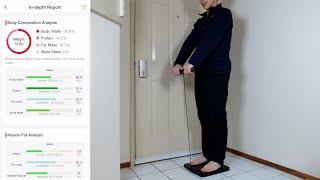
The InBody Dial H30 combines Bluetooth 5.0 for initial pairing with built‑in Wi‑Fi that handles daily syncing. After a one‑time setup that links the scale to your home network, every weigh‑in uploads automatically—no phone needed nearby. Even if your phone is in another room, the measurement lands in the InBody App via the cloud, and auto‑user recognition for up to 20 profiles makes stepping on effortless.
The FITINDEX Body Pod Scale relies exclusively on Bluetooth, with no Wi‑Fi fallback. You must have your phone in range and the FITINDEX App open at the moment you step on; otherwise, the reading is stored only temporarily and may never sync, creating a frustrating data gap. Multiple reviewers report that forgetting to open the app leads to missed weigh‑ins, and the window for re‑syncing older measurements isn’t generous.
The practical outcome is straightforward: InBody’s Wi‑Fi backbone turns the scale into a true «step‑on‑and‑go» device, while FITINDEX chains you to a phone‑on‑hand ritual. InBody dials in a clear advantage for daily consistency.
Setup friction tilts the other way slightly, but the trade‑off is worth it. The InBody Dial H30’s Wi‑Fi onboarding can be finicky on mixed 2.4/5 GHz networks, requiring a bit of patience during the first pairing. The FITINDEX Body Pod Scale avoids any network‑configuration headache entirely—Bluetooth pairing is dead simple out of the box. Yet that simplicity comes at a recurring cost: every single day you step on the scale, you’re reminded of the extra step InBody users already forgot about.
Winner: InBody Dial H30. The initial Wi‑Fi setup is a one‑time investment that pays daily dividends in automatic, phone‑free syncing. FITINDEX’s Bluetooth‑only design may feel simpler at first, but it creates an avoidable daily chore that erodes long‑term convenience.
Software, App & Data Insights
App Stability & Ecosystem
The InBody Dial H30 is supported by the InBody App, a platform shaped by the company’s research heritage. It receives regular updates, presents a clean, ad‑free interface focused on medical‑style trend reporting, and stores all data server‑side so moving to a new phone is painless. The FITINDEX App, by contrast, covers the basics well enough but is updated infrequently; the interface can feel cluttered with promotional banners for other FITINDEX products. Winner: InBody Dial H30 — a polished, consistently maintained platform gives it a clear trust advantage for long‑term health data.
Health Integration & Data Portability
InBody’s app reliably syncs with Apple Health, Google Fit, and Samsung Health, and thanks to built‑in Wi‑Fi, every measurement auto‑uploads without needing your phone nearby. That server‑side storage makes your full history accessible from any device. The FITINDEX App also integrates with Apple Health, Google Fit, Samsung Health, and Fitbit, but multiple reviewers note inconsistent syncing after OS updates. While CSV export is available, the app’s infrequent updates and limited long‑term data portability effectively lock your history into the FITINDEX ecosystem. Winner: InBody Dial H30 — effortless, automatic cloud sync across major platforms provides a decisive convenience and continuity edge.
Insights, Metric Presentation & Guidance
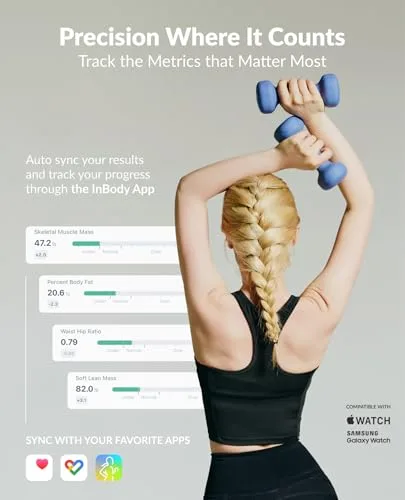
The InBody App goes beyond weight and body fat by delivering segmental analysis, an InBody Score, muscle‑fat balance, and a body type coordinate — all presented in clear, research‑informed reports. It guides users with actionable measurement tips (consistent timing, clean feet) to improve repeatability. The FITINDEX App covers standard metrics like BMI, body fat percentage, muscle mass, and BMR, and includes goal setting and a baby weighing mode, but its visualizations lack the depth of segmental breakdowns. Some users also find auto‑recognition confusing for family members with similar weights. Winner: InBody Dial H30 — clinical‑style insights and proactive guidance make it far better for serious body composition tracking.
Multi‑User Handling & Special Modes
InBody supports up to 20 users with automatic profile detection; recognition is generally reliable, though occasional manual switches may be needed. FITINDEX allows unlimited users and offers a dedicated baby weighing mode, which is a practical perk for large families. However, its profile auto‑recognition is less consistent, occasionally mixing up individuals of similar weight. Winner: Tie — FITINDEX wins on raw capacity and baby mode, while InBody delivers more dependable automatic profiling for typical households.
Privacy & Data Trust
InBody’s app operates with a clear data‑usage policy and does not request unnecessary permissions, reflecting its professional medical background. The FITINDEX App, on the other hand, has been flagged for asking for superfluous permissions and presents an ambiguous privacy policy, leaving some users uneasy about how sensitive health metrics are handled. Winner: InBody Dial H30 — a transparent and restrained approach to privacy provides a significant trust advantage.
Overall
The InBody Dial H30 dominates this category with a more stable app, seamless Wi‑Fi‑powered ecosystem integration, richer analytical insights, and stronger privacy protections. The FITINDEX Body Pod Scale’s unlimited user storage and baby mode are genuine perks, but they don’t compensate for design clutter, sync hiccups, and data‑portability limitations. Winner: InBody Dial H30
Multi‑User Experience & Household Flexibility
The InBody Dial H30 supports automatic user recognition for up to 20 individuals, storing each person’s profile and syncing measurements via Wi‑Fi without a phone nearby. Once configured, the scale reliably places data into the correct account, making daily weigh‑ins frictionless for small households or shared fitness buddies. Some families note that auto‑detection can occasionally misidentify users with nearly identical weights, requiring a quick manual profile switch.
FITINDEX Body Pod Scale, by contrast, imposes no user limit — a significant advantage for large families, shared rentals, or gym settings. However, daily use demands that a phone be nearby with the app open to capture readings; without this, measurements may sit unsynced, creating potential data gaps. Users also report that profile auto‑recognition is less consistent, sometimes confusing similar‑weight family members, though unlimited capacity overshadows this friction for many.
When looking strictly at user management, InBody’s seamless, hands‑off experience is superior for groups within its 20‑person ceiling. FITINDEX trades that polish for sheer scalability — a decision that clearly benefits bigger, more diverse households.
The gap widens with dedicated baby‑weighing mode: the InBody Dial H30 completely lacks this feature, while the FITINDEX scale includes it out of the box. For parents tracking an infant’s weight, this single function can replace a separate scale and fits naturally into a family’s routine.
Conclusion: InBody’s polished auto‑recognition and Wi‑Fi sync excel for small, consistent groups, but FITINDEX wins for real‑world household flexibility. Unlimited users and a baby‑weighing mode make it the more adaptable, family‑ready choice — and the clear pick for anyone prioritizing a no‑limit scale.
Winner: FITINDEX Body Pod Scale
Design, Build & Long‑Term Reliability
How a scale is built determines more than just its appearance—it affects measurement repeatability, resistance to bathroom humidity, and whether the device remains useful five years from now.
Material and Construction
The InBody Dial H30 employs a thick tempered glass platform with four moisture-resistant electrodes that carry an IP21 splash-proof rating. The glass resists scratching better than plastic and, when combined with the IP21 design, holds up well in bathrooms where incidental splashes occur.
The FITINDEX Body Pod Scale, by contrast, relies on a plastic bottom housing and thinner electrode pads. While functional, these materials are more susceptible to micro‑scratches and can show accelerated wear in high‑humidity environments, with some users noting that electrode sensitivity may degrade over time.
InBody’s glass‑and‑sealed‑electrode approach gives it a clear edge for durability and everyday moisture resistance, leaving FITINDEX’s build feeling more cost‑constrained.
Power and Independent Use
The InBody Dial H30 is powered by four AA batteries that last months and, critically, functions as a weight‑only scale even if the app is offline or abandoned. This means the scale retains basic utility even if software support eventually wanes—an important point for long‑term reliability.
The FITINDEX Body Pod Scale uses three AAA batteries (included), but its full value hinges on the FITINDEX App. Bluetooth‑only syncing means that without an active phone or in the event of discontinued app support, body‑composition history becomes inaccessible, though weight readings still appear on‑screen.
InBody’s app‑independent weight mode and longer‑established track record with AA batteries give it a significant advantage in long‑term resilience.
Weight Capacity
On the capacity front, the FITINDEX Body Pod Scale accommodates up to 400 lb (180 kg), while the InBody Dial H30 tops out at 330 lb (150 kg). For households with heavier users, FITINDEX is the more inclusive choice. However, this is the one area where FITINDEX substantially outpaces InBody; across materials, moisture protection, and software‑independent longevity, the H30 remains the more robust investment.
Winner: InBody Dial H30 — the scale’s tempered glass, IP21 rating, battery design, and app‑optional operation point to a longer, more reliable lifespan. FITINDEX earns a nod for its higher weight capacity, but that single advantage does not outweigh the H30’s superior build quality and future‑proof utility.
The Bottom Line
Our comparison reveals the InBody Dial H30’s superior precision and convenience, but the right choice depends on your priorities.
Serious trackers: InBody Dial H30 — its medical-grade BIA and Wi‑Fi sync deliver reliable data without daily phone hassle.
Large families: FITINDEX Body Pod Scale — unlimited profiles and baby mode provide unmatched value for the whole household.
Casual users: FITINDEX Body Pod Scale — a quick, affordable snapshot at roughly a third of the price.
For dedicated users, the InBody Dial H30’s triple‑frequency BIA, Wi‑Fi sync, and medical‑style insights make it the clear winner.
Choose InBody for precision and effortless tracking; pick FITINDEX for family‑friendly value.
FAQ
Which scale is more accurate for body fat percentage?
Can I use these scales without a smartphone?
Is the FITINDEX Body Pod Scale suitable for an athlete?
Does the InBody Dial H30 support multiple users?
Does the FITINDEX Body Pod Scale have a baby weighing mode?
Is the InBody Dial H30 safe for pacemaker users?
What extra metrics does the InBody App provide beyond the scale's display?
📄 Used Manuals & Documentation
"Images are used for editorial and informational purposes only. All trademarks and images belong to their respective owners."