Garmin Index BPM vs Checkme BP2A: Connected Tracking or Standalone Simplicity?
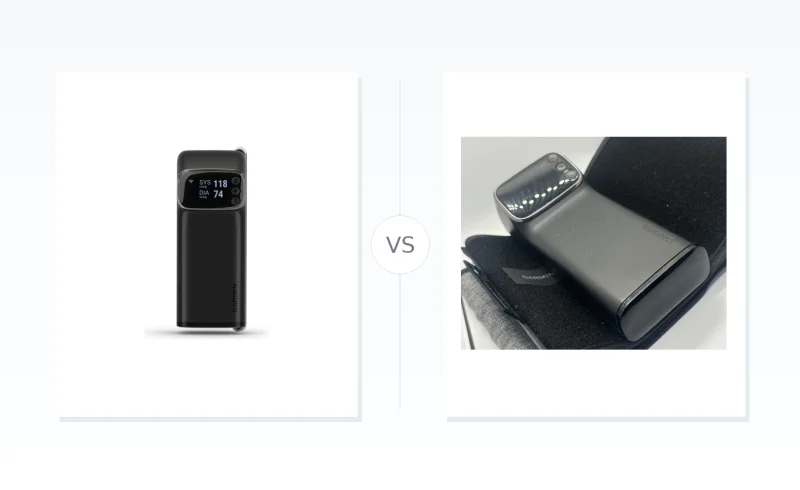
Compare the Garmin Index BPM and Checkme BP2A blood pressure monitors. Explore accuracy, app ecosystems, multi-user support, and battery life to decide which fits your health tracking needs.
TL;DR
The Garmin Index BPM and Checkme BP2A are both FDA-cleared upper-arm blood pressure monitors, but the practical difference is less about measurement specifications than about what happens before and after each reading.
- Garmin Index BPM fits routines where automatic averaging, reliable separation of readings among multiple people, Wi-Fi syncing, and long-term records inside Garmin Connect matter.
- Checkme BP2A fits a simpler single-user routine: it stores up to 50 readings on the monitor itself, lets you review them without a phone, uses a rechargeable battery, and has a shorter stated time for a typical single measurement.
- Garmin has the stronger true multi-user implementation. It supports up to 16 registered users, lets them select their names on the monitor, and sends readings to the appropriate Garmin Connect accounts.
- Checkme's ViHealth app supports multiple profiles and report sharing, but the BP2A itself does not provide an equivalent on-device user selector.
- The BP2A is the blood-pressure-only model. ECG functionality associated with the closely related Checkme BP2 belongs to that model, not the BP2A.
- Neither device should be considered more accurate simply because of regulatory language or a specification-sheet number. There is no head-to-head clinical evidence here establishing one as more accurate in normal home use.
For routine home monitoring, technique still matters more than the app ecosystem: correct cuff fit, five minutes of quiet rest, proper arm position, and repeated readings can affect the usefulness of the resulting record.
| Feature | Checkme BP2A | Garmin Index BPM |
|---|---|---|
| General | ||
| Measurement Site | Upper Arm | Upper Arm |
| Features | ||
| Companion App | ViHealth | Garmin Connect |
| Connectivity | ||
| Wi-Fi | Yes | Yes |
| Bluetooth | Yes | Yes |
📑 Table of Contents
- Accuracy, FDA Clearance & What the Numbers Actually Mean
- Measurement Experience: One Reading vs a Better Routine
- Syncing: Wi-Fi Changes the Experience More Than It Sounds
- Garmin Connect vs ViHealth
- Multi-User & Family Support
- Power & Battery Life
- Hardware, Portability & Cuff Fit
- The Real Decision
- Who Should Look Beyond Both?
- FAQ
Accuracy, FDA Clearance & What the Numbers Actually Mean
Both devices use the standard oscillometric method with an upper-arm cuff and are FDA-cleared as noninvasive blood pressure monitors.
Garmin specifies blood-pressure accuracy of ±3 mmHg or ±2% and pulse accuracy of ±5%. Viatom lists the Checkme BP2A at ±3 mmHg for pressure and ±2 beats per minute for pulse, and its documentation states compliance with IEC 80601-2-30 for automated noninvasive sphygmomanometers.
Those specifications should not be turned into a claim that one device is clinically superior. FDA 510(k) clearance establishes that a device can legally be marketed for its cleared use based on substantial equivalence and supporting evidence; it is not a ranking system, and there is no generic rule under which two cleared monitors can automatically be declared equally accurate in every real-world setting.
There is also an important model distinction. The FDA clearance covering Viatom's BP2 and BP2A includes ECG-related material because both models were submitted together, but the clearance documentation specifies that the ECG unit is present only on the BP2. The BP2A compared here measures blood pressure and pulse.
Both standard cuffs cover 22–42 cm upper-arm circumferences. Garmin specifies the Index BPM for adults ages 18 to 75. Anyone outside a device's stated population or cuff range, or anyone who needs a monitor validated for a specific condition or population, should treat that as a more important constraint than either app.
The American Heart Association recommends an automatic upper-arm monitor, correct cuff sizing, at least five minutes of quiet rest before measuring, and multiple readings separated by about a minute. That last point gives Garmin one meaningful workflow advantage: it can automate a three-reading session and calculate the average.
Accuracy verdict: No demonstrated winner. The available documentation supports both devices for their intended use but does not establish a real-world accuracy advantage for either one.
Measurement Experience: One Reading vs a Better Routine
For a single spot measurement, both monitors are straightforward. Position the cuff correctly, sit still with the arm supported at heart level, and start the reading from the monitor itself. Neither requires a phone simply to display blood pressure and pulse.
The differences become more noticeable when measurements are repeated every day.
The Checkme BP2A manual describes a typical measurement as taking about 30 seconds. Afterward, the result remains accessible through the monitor's history function. The BP2A stores 50 blood-pressure records, and its function button lets you step through previous readings directly on the device.
The Garmin Index BPM specifies a measurement cycle of roughly 50 to 60 seconds, depending on pressure. Its monitor can display the most recent reading again, but it does not provide the BP2A's 50-entry browsable device history.
Garmin compensates with a more useful feature for structured home monitoring: 1X and 3X modes. A normal press starts one measurement; holding the measurement control starts three consecutive measurements with a one-minute rest between them and calculates an average. That closely matches the general principle behind recommendations to rely on repeated readings rather than a single snapshot.
That distinction matters. Someone who occasionally checks a number and wants to look back at yesterday's result without opening an app may prefer the BP2A's local history. Someone recording blood pressure systematically may find Garmin's automated multi-reading routine more valuable than a longer list on the monitor.
Both use a 1.3-inch OLED display, so the original idea that Checkme has a dramatically larger display is not supported by the manufacturers' specifications. Checkme does provide more history interaction on that display; Garmin uses the screen more sparingly.
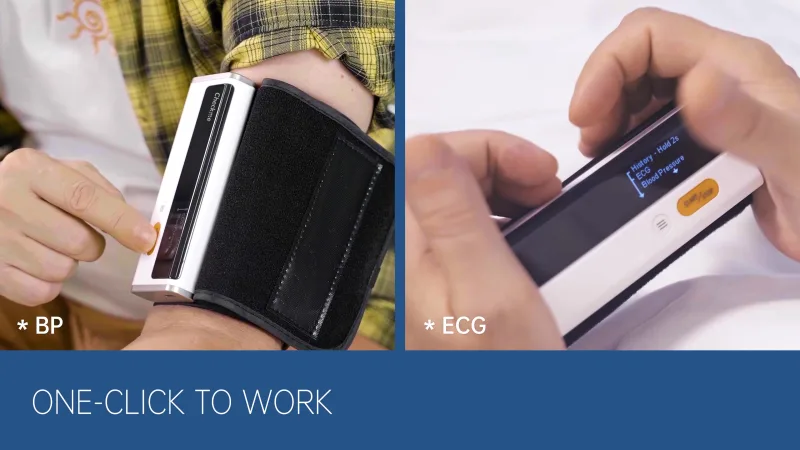
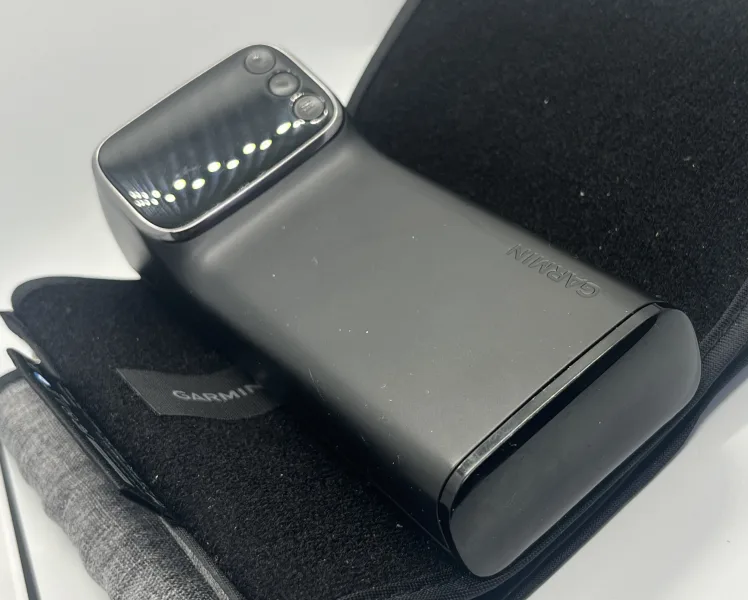
Edge: Checkme BP2A for quick standalone checks and on-device history. Garmin Index BPM for a structured repeated-measurement routine.
Syncing: Wi-Fi Changes the Experience More Than It Sounds
This is one of the clearest functional differences between the two monitors.
The Checkme BP2A uses Bluetooth 4.0 BLE. Its stored readings can be transferred to a compatible iOS or Android device and managed in the ViHealth app. The monitor remains fully usable without that connection, but moving its data into the app is fundamentally a Bluetooth workflow.
The Garmin Index BPM supports both Bluetooth and 2.4 GHz Wi-Fi. Bluetooth is involved in setup, but once Wi-Fi is configured, new measurements can upload directly to the appropriate Garmin Connect account after a reading. A phone does not need to be beside the monitor each time.
That matters more over months than it does on the first day. A connected health device is most useful when recording data does not become a separate chore. Garmin's approach makes the digital record much easier to keep current automatically, particularly when the monitor stays in one home and regularly sees a known Wi-Fi network.
Checkme has an advantage when none of that infrastructure matters. Its 50-reading local memory means the monitor can still function as a useful log even when the app has not been opened recently.
Edge: Garmin Index BPM for automatic digital record keeping.
Garmin Connect vs ViHealth
The two apps reflect different priorities.
Garmin Connect treats blood pressure as one health statistic inside a much larger platform. Someone already recording sleep, heart rate, HRV, activity, workouts, weight, or other Garmin metrics gets blood-pressure history in the same account rather than in another isolated app.
That should not be overstated as medical analysis. Garmin Connect does not turn a BP reading into a proven explanation of how a particular workout, sleep score, or stress measurement caused it. The advantage is organizational: those data streams live in the same platform and can be reviewed over the same periods.
For blood pressure specifically, Garmin Connect supports history and trends, reminders, 1-day, 7-day, 4-week, and 1-year views, and downloadable PDF reports. Blood-pressure data can also be exported as CSV through Garmin Connect on the web.
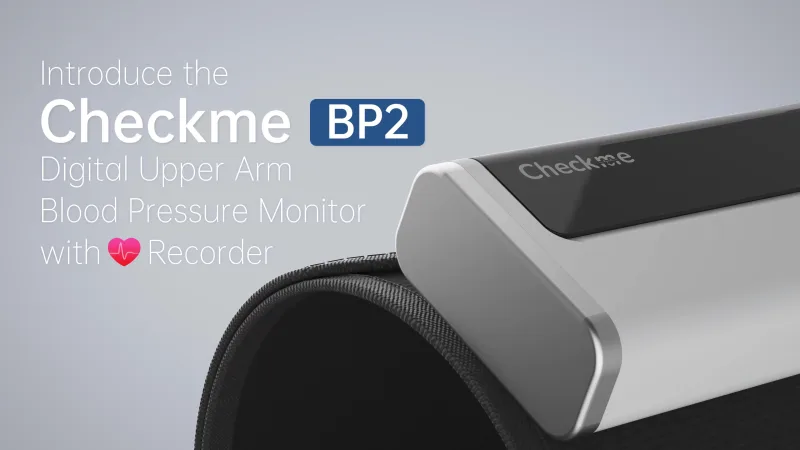
ViHealth is narrower. For the BP2A, its job is mainly to receive Bluetooth readings, maintain history, display trends, manage profiles, and generate reports. Checkme's current product documentation describes daily, 7-day, 1-month, and 3-month reports that can be shared in PDF or CSV form. The manufacturer also advertises Apple Health synchronization on compatible iOS devices.
That makes the apps closer in basic blood-pressure functionality than the original comparison suggested. Both can keep a longer digital record and produce information that can be shared outside the app. Garmin's advantage is not that ViHealth cannot handle reports; it is that Garmin provides Wi-Fi automation, a web interface, and a much broader existing health-data ecosystem.
Edge: Garmin Index BPM when blood pressure is part of a wider Garmin health record. ViHealth is sufficient for focused blood-pressure history and report sharing.
Multi-User & Family Support
This is where the original comparison needs its largest correction.
The Garmin Index BPM supports up to 16 registered users: the primary user plus as many as 15 invited secondary users. Each secondary user needs a Garmin Connect account and must accept an invitation during setup, so there is more administrative work at the beginning.
Once those profiles are installed on the monitor, however, switching people does not require opening the app and performing a new setup. The user button cycles through the available names directly on the Index BPM. With Wi-Fi configured, the resulting measurement can then upload to that person's Garmin Connect account.
Garmin also provides a guest mode for an occasional measurement. Guest readings are displayed but are not retained in Garmin Connect.
The Checkme BP2A takes a different approach. The monitor itself stores up to 50 BP readings, but its manual does not describe named user profiles or an on-device user selector comparable with Garmin's. ViHealth provides multi-user management at the app level, which can be useful for maintaining records for several people, but that is not the same thing as identifying the person on the cuff before a measurement is recorded.
That distinction becomes important in a household. If several people routinely use one monitor and every reading needs to end up under the correct name automatically, Garmin's device-level profile selection is the more explicit system.
Checkme remains simpler when the real scenario is different: one person takes most of the measurements and occasionally sends a report to a relative or clinician. ViHealth supports report sharing without requiring that recipient to become another user of the cuff.
Edge: Garmin Index BPM for multiple regularly tracked users. Checkme BP2A for a primarily single-user device with app-based sharing.
Power & Battery Life
The two power systems are genuinely different, but neither is inherently superior.
The Garmin Index BPM uses four replaceable AAA batteries. Garmin rates battery life at up to nine months. Contrary to the original article, the Index BPM does provide low-battery information on its own display: its documentation includes both a low-battery warning and a critically low battery symbol.
The practical advantage is simple. When the batteries are exhausted, they can be replaced immediately. There is no charging cycle and no permanently installed battery to manage.
The Checkme BP2A uses a rechargeable lithium-polymer battery. Viatom's technical specifications rate it for up to 500 measurements per charge, and the manual specifies approximately two hours for a full charge. A battery symbol on the display indicates remaining status. The BP2A cannot take measurements while charging.
A rechargeable design reduces disposable-battery handling, while AAAs make power restoration nearly instantaneous if replacements are available. It is not justified, however, to turn that difference into a claim that the Checkme will fail after two or three years or that Garmin will necessarily last longer. The source documentation does not establish such a lifespan comparison.
Garmin does publish an expected service life of three years for the Index BPM. The BP2A documentation reviewed here does not provide a directly comparable service-life figure, so no defensible longevity ranking follows from the battery type alone.
Power verdict: Depends on routine. Garmin favors replaceable power; Checkme favors rechargeability.
Hardware, Portability & Cuff Fit
The two monitors are closer physically than the earlier comparison implied.
Both integrate the pump and display into the cuff rather than relying on a desktop base connected through a long air hose. Both standard configurations accommodate 22–42 cm upper arms.
Viatom lists the BP2A main unit at 240 g. Garmin lists the Index BPM at 280 g without batteries. Those figures are not perfectly comparable because the manufacturers describe their physical measurements differently, but neither device belongs to the traditional large tabletop-monitor category.
The Garmin cuff uses a retaining bar and hook-and-loop strap. Its manual specifically suggests adjusting the loop once and then leaving it fastened so the monitor can be slid on and off during later sessions. That can make a personal monitor quicker to position after the first fitting.
More important than the fastening mechanism is whether the cuff actually fits the user's arm and is positioned correctly. A poorly fitted cuff can undermine the value of every smart feature that follows.
There is not enough reliable evidence here to declare one chassis, cuff fabric, or fastening system materially more durable than the other. Claims that Garmin uses categorically superior materials, that Checkme's cuff wears faster, or that replacement parts will remain available longer are speculative and should not determine this comparison.
Hardware verdict: No clear winner.
The Real Decision
The strongest case for the Garmin Index BPM is not brand reputation or a claim of superior accuracy. It is workflow.
It can automate a three-reading average, distinguish as many as 16 registered users directly on the monitor, send their readings over Wi-Fi to separate Garmin Connect accounts, and maintain those records in a platform that already handles a broad range of Garmin health data. PDF and CSV reporting make that history usable outside the app as well.
The Checkme BP2A makes a different set of compromises. A typical single measurement is specified at about 30 seconds, up to 50 results remain browsable on the monitor, the battery is rechargeable, and ViHealth provides longer-term history and report sharing when Bluetooth synchronization is wanted.
That makes Checkme particularly coherent as a personal blood-pressure monitor that does not need a phone for every interaction. Garmin becomes more compelling as soon as the digital record itself is important—especially for repeated measurements, several household users, or someone already maintaining health data in Garmin Connect.
There is no corresponding evidence that Garmin is inherently more accurate, nor that Checkme is inherently easier for every household. Their real separation is automated connected record keeping versus stronger on-device history and rechargeable standalone use.
Who Should Look Beyond Both?
Neither monitor covers every home-monitoring scenario.
A different upper-arm monitor may be more appropriate when the user's arm falls outside the supported cuff range, when a clinician recommends a specific validated model or population-specific device, or when several people need completely separate local memory banks without creating online accounts.
Similarly, app features should not compensate for an unsuitable cuff or inconsistent measurement technique. For medically meaningful home records, correct positioning and repeated measurements are more consequential than whether a chart appears in Garmin Connect or ViHealth.
FAQ
Can I use the Garmin Index BPM without a Garmin watch?
Which blood pressure monitor is more accurate?
Is the Checkme BP2A app easy to share data with my doctor?
Does the Garmin Index BPM support multiple users?
Can I view my blood pressure history on the device itself without a phone?
Which blood pressure monitor’s battery is more reliable in the long run?
📄 Used Manuals & Documentation
Garmin Index BPM
"Images are used for editorial and informational purposes only. All trademarks and images belong to their respective owners."