iFever Smart Thermometer vs Xiaomi Smart Thermometer 3: Continuous Wearable Monitoring or Quick Spot Checks?
Discover the key differences between the iFever wearable continuous thermometer and the Xiaomi Smart Thermometer 3. Compare monitoring approaches, display usability, accuracy, battery life, and more to decide which suits your needs.
TL;DR
If you want overnight fever tracking, automatic alerts, and a continuous trend log without waking the patient → choose iFever Smart Thermometer.
If you care about fast standalone readings, an on-device display, and low-maintenance everyday use → choose Xiaomi Smart Thermometer 3.
If you need object-temperature checks or a phone-free thermometer for multiple daily spot readings → choose Xiaomi Smart Thermometer 3.
The real divide is continuous phone-driven tracking versus one-off manual checks. iFever Smart Thermometer has no screen, so it lives entirely in its companion app; it catches changes between checks but can trigger false alarms from skin warming and should not be used for absolute spot accuracy. Xiaomi Smart Thermometer 3 reads instantly on its own display, works without a phone, and handles object temps, but it misses fever spikes that happen between manual readings.
If you need both true continuous overnight alerts and lab-like single-reading accuracy in one independent device, consider a clinical-grade monitor or plan to use separate tools instead.
iFever Smart Thermometer is classified as a wearable continuous thermometer, and the spec matrix confirms continuous temperature monitoring: Yes. It has no display, so readings, history, and alerts are handled entirely through the companion app. Xiaomi Smart Thermometer 3, by contrast, is a digital stick thermometer with continuous temperature monitoring: No and an LCD display for instant on-device results. This creates the fundamental split: continuous, app-mediated trend tracking versus discrete manual sampling.
The iFever sensor is meant to stay on the body for continuous trend tracking.
Xiaomi's stick form factor is built for quick, handheld readings.
On the measurement workflow, the iFever depends on phone connectivity: readings appear only in the app, so a dead phone or closed app interrupts visibility. The Xiaomi Smart Thermometer 3 works standalone for single checks, with the phone needed only for history and sync. For a caregiver watching a fever overnight or after vaccination, iFever's automatic, continuous log is the stronger fit; for fast, independent spot checks, Xiaomi has the edge.
Use-case coverage also differs. iFever enables overnight monitoring, trend history, and alerts without waking the patient, but it does not support object temperature measurement. Xiaomi Smart Thermometer 3 supports object temperature measurement: Yes, making it practical for water or food checks as well as multiple daily human readings. However, it cannot warn about temperature spikes between manual readings.
Winner: iFever Smart Thermometer — for the continuous monitoring and caregiver-oriented trend tracking this section evaluates. Choose Xiaomi Smart Thermometer 3 if you need a general-purpose digital stick thermometer with standalone readings and object-temperature flexibility.
Display & Usability
The iFever Smart Thermometer has no built-in display. Its readings are visible only through the paired iFever app, so checking temperature requires a nearby phone with Bluetooth connected. This supports background trend tracking, but creates total dependence on phone battery and connection.
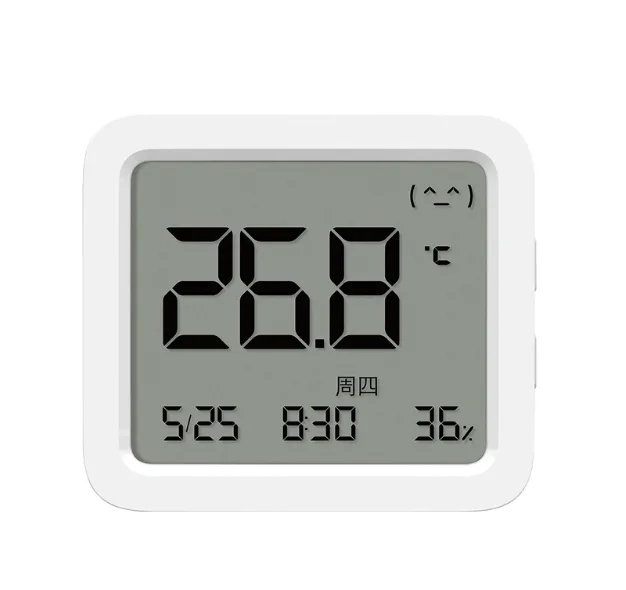
The Xiaomi Smart Thermometer 3 has a built-in LCD display, and results appear directly on the device after measurement. A phone is unnecessary for one-off readings; the Xiaomi Home app only adds history and syncing. This makes the Xiaomi usable as a standalone tool.
Xiaomi clearly wins on immediate readability: it never forces a smartphone into the basic measurement loop, while iFever has no on-device fallback.
The built-in LCD screen is what makes the Xiaomi usable without a phone.
Daily setup also differs. iFever requires charging, pairing, sensor placement, and checking contact before background operation; if the phone is out of range or the app is closed, live data disappears. Xiaomi Smart Thermometer 3 needs minimal prep: power it on, position the tip, and read the LCD result. Its main constraint is holding the thermometer correctly, not managing a phone link.
Again, Xiaomi has the usability edge: iFever's phone-centric prep adds friction before every reading.
The iFever Smart Thermometer does not support object temperature measurement. The Xiaomi Smart Thermometer 3 explicitly includes this mode, making it useful for water or food checks as well as body readings. That adds everyday versatility iFever cannot match.
Winner: Xiaomi Smart Thermometer 3 — it offers standalone on-device readings, simpler daily use, and an extra object-measurement mode.
Accuracy & Reliability
iFever Smart Thermometer measures temperature at the skin-contact point, not in the mouth or underarm. Those readings may not match conventional spot checks and can lag behind rapid internal changes. It is best treated as a trend tool rather than a source of absolutely accurate one-time values. Xiaomi Smart Thermometer 3 is a digital stick thermometer that delivers a familiar oral/axillary-style spot reading. With correct probe placement and full hold time, its results are comparable to standard digital thermometers; rushed or loose contact, however, can produce low or inconsistent values. Conclusion: For a single, repeatable measurement, Xiaomi Smart Thermometer 3 is the more accurate and directly interpretable device.
iFever offers continuous temperature monitoring, so it can catch spikes that occur between manual checks — a meaningful reliability advantage for overnight fever tracking. The trade-off is that local skin warming from clothing or sleeping position can trigger false alarms or create misleading trends. Xiaomi Smart Thermometer 3 cannot detect changes between readings; if a fever worsens overnight, it will not alert until the next manual measurement. Its spot-reading reliability is straightforward, but it provides no temporal safety net. Conclusion: iFever is stronger for continuous trend detection, while Xiaomi is stronger for individual measurement reliability.
Winner: Xiaomi Smart Thermometer 3 — for accuracy in the traditional sense, it produces a spot reading closer to conventional clinical values. iFever excels at tracking changes over time, but it is not a substitute for absolute point-in-time accuracy.
Battery & Power
iFever Smart Thermometer uses a Rechargeable Li-ion battery, which is convenient for a wearable continuous monitor because there are no coin cells to buy. The trade-off is that the sealed pack requires periodic charging and charge-level monitoring, and a dead battery interrupts monitoring until recharged. Xiaomi Smart Thermometer 3 runs on a CR2032 replaceable coin cell. It needs no charging routine and creates no battery-health anxiety, only an occasional user-performed coin-cell swap when the cell is depleted. For households that use a thermometer only occasionally, this avoids adding another charger and cable to manage. In daily upkeep, Xiaomi wins.
Over the long term, the iFever's built-in battery will gradually degrade and cannot be self-replaced, eventually requiring service or full device replacement. The Xiaomi avoids this sealed-battery problem because users can replace the widely available CR2032 themselves as needed, keeping long-term ownership predictable and inexpensive. Winner: Xiaomi Smart Thermometer 3.
Software & Ecosystem
The iFever Smart Thermometer connects via Bluetooth and relies entirely on the dedicated iFever app; because it has no display, all readings, history, and notifications are accessible only through the phone. The Xiaomi Smart Thermometer 3 also has Bluetooth and uses the Xiaomi Home app, but its LCD display allows basic temperature checks without opening the app. That makes the iFever app mandatory for every function, while Xiaomi’s app is optional for core readings—giving Xiaomi a clear day-to-day usability edge.
The iFever app is narrowly specialized for this wearable continuous thermometer and offers almost no integration with other devices or platforms. Xiaomi Home, by contrast, is a mature ecosystem with account sync, regular updates, and broader smart-home compatibility, though it does create dependency on Xiaomi’s account and regional platform policies. On ecosystem depth and update cadence, Xiaomi has the advantage.
Long-term software risk is also higher for iFever: a small, device-specific platform is more likely to lag behind iOS/Android updates or lose support. Xiaomi’s larger ecosystem makes sustained compatibility and continued app support more probable. Winner: Xiaomi Smart Thermometer 3 — its mature platform, optional app use, and stronger long-term update outlook beat iFever’s mandatory, narrowly focused software.
Comfort & Wearability
iFever Smart Thermometer is a wearable continuous thermometer designed to be attached to the body and left in place for background monitoring. The Xiaomi Smart Thermometer 3 is a digital stick thermometer with an LCD display that must be manually held for each reading. For passive or overnight use, iFever has a decisive structural advantage: Xiaomi cannot monitor without active holding.
iFever’s comfort depends on correct placement and stable skin contact. Prolonged wear can provoke sweat-related irritation, and a shifted sensor may reduce data reliability, requiring periodic adjustment. Xiaomi involves no sustained skin contact, so it avoids chafing, strap pressure, or adhesive discomfort entirely. However, its handheld design is unsuitable for continuous wear and demands an awake, cooperative user for every measurement.
Conclusion: For this section, iFever Smart Thermometer wins as the only truly wearable option, but its comfort is conditional on fit; Xiaomi is more comfortable for quick spot checks but offers no continuous-wear capability.
Long-Term Ownership & Maintenance
iFever Smart Thermometer relies on a sealed rechargeable Li-ion battery, which will degrade with repeated charge cycles. Since the battery is not user-replaceable, long-term use may require service or replacement of the entire unit. Its wearable contact zones, straps, and connectors are also exposed to wear from sweat, cleaning, and daily wear.
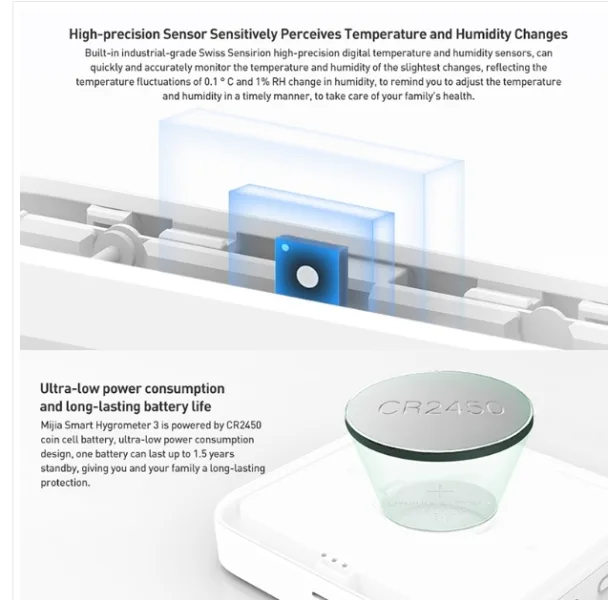
Xiaomi Smart Thermometer 3 uses a CR2032 replaceable coin cell, letting owners swap the battery themselves without service. It has no consumables or planned maintenance, and its simple stick design is built for ordinary household use. The main long-term risk is physical damage from drops or impact to the display or tip.
Long-term upkeep clearly favors Xiaomi: replaceable power and fewer wear-prone parts make it cheaper and easier to maintain over years. iFever carries higher maintenance demands due to sealed battery degradation and accessory wear. Winner: Xiaomi Smart Thermometer 3.
The Bottom Line
After comparing all key categories, the right choice depends on your primary use case.
Overnight fever monitoring:iFever Smart Thermometer — continuous alerts without waking the patient.
Budget-conscious basics:Xiaomi Smart Thermometer 3 — meets essential needs at less than half the price.
Overall, Xiaomi Smart Thermometer 3 wins for most households with lower price, standalone display, replaceable battery, and mature app ecosystem. Choose iFever only if continuous overnight monitoring is essential. If not, Xiaomi is the smarter buy.
✦✧✦✧
🏆
Best Overall
Best fit for most usersXiaomi Smart Thermometer 3
Evaluate your primary use case before buying—most homes will be better served by Xiaomi.
FAQ
Can I use the iFever Smart Thermometer without a smartphone?
No. The iFever Smart Thermometer has no built-in display, so all readings, history, and alerts are accessible only through the paired iFever app over Bluetooth. A dead phone battery, closed app, or out-of-range connection interrupts visibility. It cannot operate as a standalone thermometer.
Does the Xiaomi Smart Thermometer 3 support continuous temperature monitoring?
No. The Xiaomi Smart Thermometer 3 is a digital stick thermometer with continuous temperature monitoring: No. It requires manual spot checks and cannot track temperature changes between readings or send fever spike alerts. Its LCD display shows immediate results, but there is no wearable or continuous logging mode.
Which thermometer is more accurate?
It depends. For a single repeatable oral/axillary-style reading, the Xiaomi Smart Thermometer 3 is more accurate when the probe is correctly positioned, comparable to standard digital thermometers. The iFever measures skin contact and is best for trend tracking; it may lag internal changes and is not ideal for absolute point-in-time accuracy.
Which device is cheaper to maintain long-term?
The Xiaomi Smart Thermometer 3. It uses a replaceable CR2032 coin cell, avoiding charging and sealed-battery degradation. The iFever has a sealed Li-ion battery that degrades over time and cannot be self-replaced, potentially requiring service or device replacement. Xiaomi has fewer wear-prone parts and no consumables beyond battery swaps.
Does the iFever Smart Thermometer support object temperature measurement?
No. The iFever Smart Thermometer does not support object temperature measurement. It is designed solely for continuous body temperature monitoring. In contrast, the Xiaomi Smart Thermometer 3 explicitly includes an object-temperature mode, making it useful for checking water, food, or other surfaces.
Can the Xiaomi Smart Thermometer 3 be used without a phone?
Yes. The Xiaomi has a built-in LCD display and works standalone for one-off readings. A phone is only needed for history and syncing through the Xiaomi Home app. This is a key advantage over the iFever, which has no display and requires a smartphone for every reading.
Which thermometer is better for overnight fever monitoring?
The iFever Smart Thermometer. It is a wearable continuous thermometer that can track temperature trends overnight and send alerts without waking the patient. The Xiaomi cannot monitor between manual readings, so it will not detect a fever spike until the next check. However, iFever's skin contact may cause false alarms from clothing or sleeping position.
"Images are used for editorial and informational purposes only.
All trademarks and images belong to their respective owners."
Aug 17, 20261 views2 products
Share this post
iFever Smart Thermometer vs Xiaomi Smart Thermometer 3: Continuous Wearable Monitoring or


 Gshopper