
Philips Sonicare 6500 Series HX7412/05 vs Oral-B Pro 1000: Sonic Customization or Round-Head Simplicity?
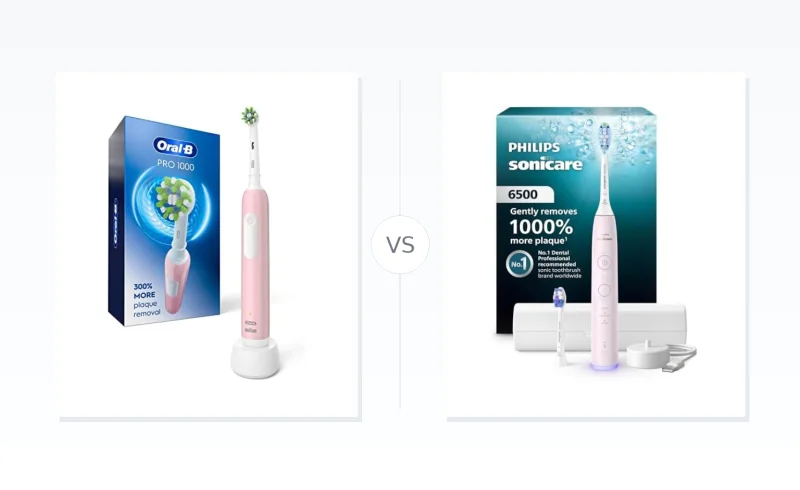
Comparing the Philips Sonicare 6500 Series HX7412/05 and Oral-B Pro 1000: which electric toothbrush offers better cleaning, comfort, and long-term value? Find out in this detailed head-to-head comparison.
TL;DR
The Philips Sonicare 6500 Series HX7412/05 and Oral-B Pro 1000 can both handle everyday powered brushing, but they approach the job differently.
- Philips Sonicare 6500 offers three modes, three intensity levels, a visible pressure-warning ring, BrushSync head-replacement tracking, optional app connectivity, a travel case, and an official battery rating of up to 21 days.
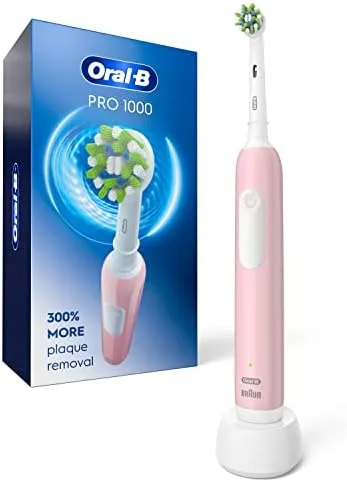
- The pink Oral-B Pro 1000 shown here uses a compact round CrossAction head, oscillating-rotating-pulsating cleaning action, a two-minute timer with 30-second pacing, and a pressure sensor that stops pulsations when excessive force is detected.
- The practical distinction is technique: Sonicare is designed to glide slowly along the gumline, while Oral-B's round head is guided from tooth to tooth.
- Independent research comparing powered-brush technologies has sometimes found a small plaque and gingivitis advantage for oscillating-rotating brushes over side-to-side designs, but the clinical importance of that difference is uncertain and those studies are not direct tests of these two exact models.
Important Pro 1000 model note: Oral-B has revised the Pro 1000 without consistently changing the product name. The pink version pictured in this comparison is widely listed with a single Daily Clean mode, while newer Pro 1000 versions are also available with Daily Clean, Sensitive, and Whitening modes. Oral-B's current U.S. product pages themselves contain conflicting one-mode and three-mode information. The mode comparison below therefore refers to the one-mode pink configuration shown here.
| Feature | Oral-B Pro 1000 | Philips Sonicare 6500 Series HX7412/05 |
|---|---|---|
| Power & Battery | ||
| Battery Life | Up to 21 days | |
| Brushing Performance | ||
| Brushing Modes | 1 mode | 3 modes |
📑 Table of Contents
Cleaning Technology & Real-World Technique
The fundamental difference is not a headline plaque-removal percentage. It is how each brush head moves and how that changes the way the handle is guided around the mouth.
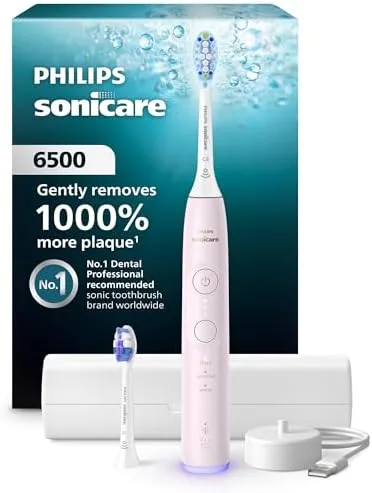
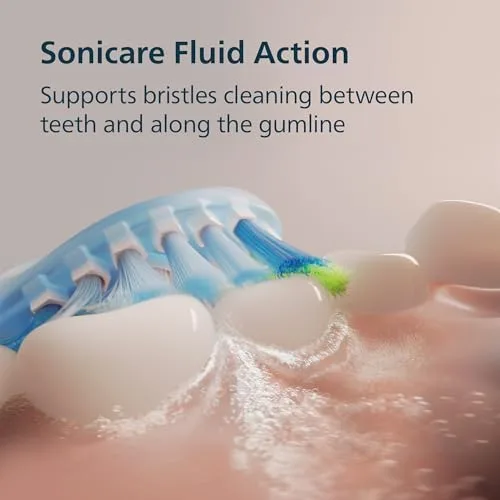
The Sonicare 6500 uses Philips' next-generation sonic system, rated at 62,000 bristle movements per minute. Philips instructs users to hold the bristles at roughly a 45-degree angle to the gumline, apply light pressure, and slowly glide the head across the teeth rather than scrub.
The Oral-B Pro 1000 uses an oscillating-rotating-pulsating action with a round CrossAction head. Oral-B's recommended technique is correspondingly more deliberate: guide the head slowly from one tooth to the next and allow it to remain against each surface briefly while the motor provides the brushing action.
That difference can matter more than the motor specifications. The Oral-B head covers a relatively small area at a time and may be easier to position around individual teeth and tight areas. The Sonicare head covers a longer section of the dental arch and suits a continuous gliding routine.
Both companies publish large plaque-removal claims against manual toothbrushes. Philips states that the C3 head can remove up to 1000% more plaque than a manual brush, while Oral-B advertises up to 300% more plaque along the gumline. Those numbers should not be compared as though they came from the same test: the manufacturers use different protocols, brush heads, endpoints, and wording.
Research comparing the broader technologies provides a more useful perspective. Systematic reviews have reported modest average advantages for oscillating-rotating brushes over high-frequency sonic designs for some plaque and gingivitis measures. Earlier Cochrane evidence also found a small short-term advantage for rotation-oscillation, while noting that its clinical importance was unclear. None of that establishes that the Pro 1000 will outperform this specific Sonicare 6500 for every person.
Verdict: no clear cleaning-performance winner from specifications alone. The Oral-B favors a tooth-by-tooth technique with a compact head; the Sonicare favors a light, gliding technique with an elongated head.
Modes & Intensity Control
This is where the Sonicare 6500 HX7412/05 has the clearest hardware advantage over the one-mode pink Pro 1000 shown here.
Philips provides three modes:
- Clean for routine brushing
- Sensitive for a less intense session
- White for surface-stain removal
Each mode can be paired with High, Medium, or Low intensity, giving nine mode-and-intensity combinations. The distinction is useful because mode and power are separate controls: the handle can remain in a familiar brushing program while the intensity is reduced.
The pictured Oral-B Pro 1000 has Daily Clean only. There is no handle-level intensity adjustment. Its pressure sensor can interrupt the pulsating component when excessive force is detected, but that is a protective response rather than a selectable lower-power setting.
Newer Pro 1000 revisions complicate the comparison. Some current versions add Sensitive and Whitening alongside Daily Clean. Even on those versions, however, the interface remains much simpler than the Sonicare's three modes combined with three independently selectable intensities.
For anyone who regularly changes brushing intensity, the Sonicare provides substantially finer control. For someone who prefers the same routine at every session, the Pro 1000's simpler interface removes most settings from the equation.
Advantage: Philips Sonicare 6500 Series HX7412/05 for adjustment range.
Pressure Feedback, Timers & Brushing Guidance
Both handles attempt to prevent two common problems with powered brushing: excessive pressure and uneven coverage. They do it differently.
The Sonicare 6500 has a clearly visible pressure system. When too much force is detected, the ring around the base of the handle illuminates purple, accompanied by a change in vibration and a pulsing sound. The feedback is difficult to miss without requiring a phone.
The classic Pro 1000 also detects excessive pressure, but its response is less explicit: it stops the pulsating movement until pressure is reduced. It does not provide the prominent illuminated pressure ring found on more advanced Oral-B models.
Timing is competent on both.
The Sonicare's SmartTimer marks the end of a two-minute session, while BrushPacer prompts movement to another area every 20 seconds. That divides the session into six intervals.
The Oral-B timer also runs for two minutes, with a pulse every 30 seconds to indicate movement to another quarter of the mouth.
Neither pacing system is inherently more correct; they simply divide the same two-minute period differently.
The Sonicare adds another useful cue through BrushSync. With compatible smart Philips brush heads, the handle tracks accumulated brushing time and pressure and signals when the head has reached its replacement point. The Pro 1000 does not electronically track brush-head wear.
Advantage: Philips Sonicare 6500 Series HX7412/05 for more visible and more detailed on-handle feedback.
Connected Features
One of the original comparison's biggest omissions is that the Sonicare 6500 HX7412/05 is a connected toothbrush.
Philips lists Bluetooth support for the Sonicare app, including brushing tracking and progress reports. The app is optional; the handle's timer, pressure warning, mode selection, intensity controls, and BrushSync indicator continue to function without a phone.
The Oral-B Pro 1000 does not provide Bluetooth coaching or app-based brushing records.
That does not automatically make the Sonicare's app necessary. The most important feedback already exists on the handle, and someone who has no interest in logging brushing sessions can ignore the connected functions. But between these two models, the Sonicare is the only one that offers a connected layer at all.
Advantage: Philips Sonicare 6500 Series HX7412/05 for optional tracking.
Comfort, Head Shape & Noise
The two brushes feel different largely because of their head movement.
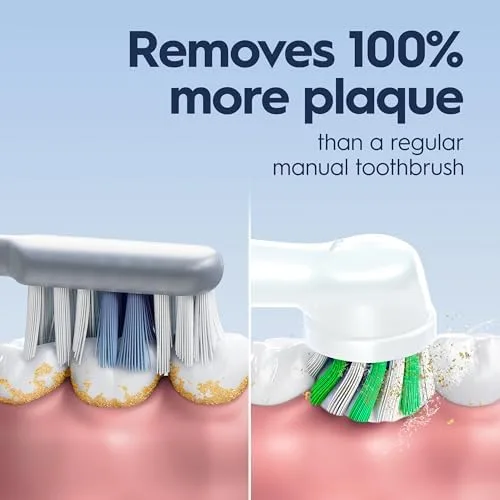
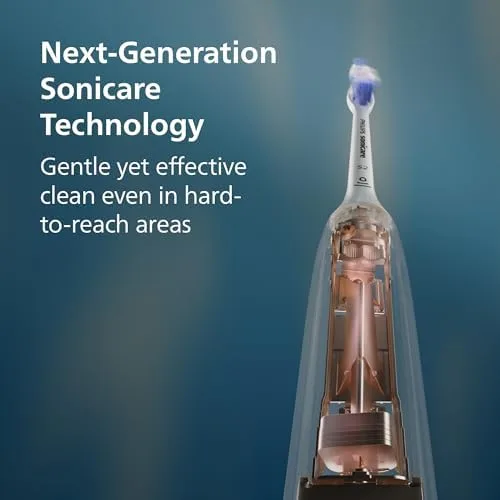
The Oral-B's oscillating mechanism produces a more mechanical sensation and sound. The Sonicare produces a higher-frequency vibration with a steadier hum.
There is independent measurement behind the noise distinction. Electric Teeth recorded the Sonicare Series 6500 at about 63 dB and the Pro 1000 at about 73 dB in its testing. Exact readings depend on the measurement environment, but the gap is large enough to support describing the Sonicare as the quieter design.
Head shape is more personal. The Oral-B's small round head can be easier to position around individual molars or crowded areas. The Sonicare's longer head covers more surface at once but may feel comparatively large in a smaller mouth.
Neither head should be scrubbed aggressively. Both manufacturers instruct users to apply light pressure and let the powered movement perform the work.
Advantage: Sonicare for lower measured noise; head shape depends on mouth geometry and preferred technique.
Battery, Charging & Travel
Philips gives the Sonicare 6500 HX7412/05 an official operating-time rating of up to 21 days on a full charge.
The package also includes a travel case and USB-A charging stand. A wall power adapter is not included, so the charging cable needs an available USB-A power source or compatible adapter.
Oral-B's current U.S. Pro 1000 materials do not provide an equally clear day-count battery specification. In independent testing, Electric Teeth recorded roughly 10 days from its Pro 1000 sample and a full recharge of up to about 12 hours. Because the Pro 1000 has gone through multiple revisions, that result is more useful as a measurement of the tested unit than as a universal specification for every Pro 1000 package.
For routine use beside an outlet, battery endurance may make little practical difference. It becomes more relevant when the handle regularly spends a week or more away from its charger.
The Sonicare's combination of a published 21-day rating, USB-A charging, and included travel case gives it the more travel-oriented setup of the two.
Advantage: Philips Sonicare 6500 Series HX7412/05.
Brush Heads & Maintenance
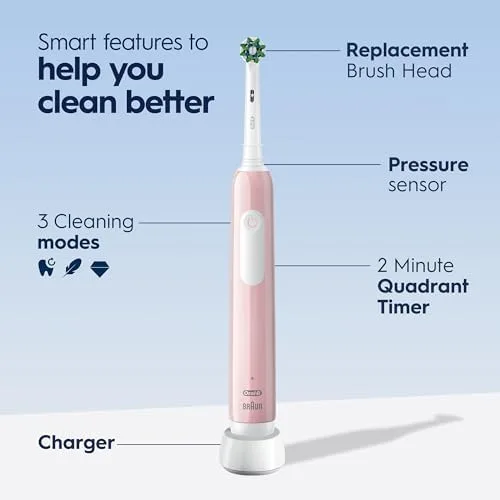
The Pro 1000 works with Oral-B's established non-iO replacement-head system, including CrossAction, Precision Clean, FlossAction, 3D White, Sensitive Gum Care, and several other designs. Oral-B iO heads are not compatible.
The Sonicare 6500 uses Philips' click-on Sonicare head system. The HX7412/05 package includes a C3 Premium Plaque Control head and an S2 Sensitive head.
There is an important distinction between physical compatibility and smart functionality. Many click-on Sonicare heads fit the handle, but BrushSync replacement tracking requires a BrushSync-enabled smart head. With one attached, the handle can track accumulated use and brushing pressure rather than relying only on a calendar reminder.
Both brushes use rechargeable internal batteries rather than normal user-swappable cells. Routine maintenance is otherwise similar: remove and rinse the brush head, clean the handle around the attachment point, and allow the components to dry.
There is no meaningful overall winner here. Oral-B offers a broad established round-head ecosystem; Sonicare integrates compatible smart heads more closely with the handle.
Which Design Fits Which Routine?
The most useful way to separate these brushes is by routine rather than by declaring one cleaning technology universally superior.
Philips Sonicare 6500 HX7412/05 is the stronger fit when:
- selectable intensity matters;
- a visible pressure warning is useful;
- lower operating noise matters;
- longer rated battery life and a travel case are relevant;
- electronic brush-head tracking is useful;
- optional brushing records in an app are desirable.
The pictured Oral-B Pro 1000 is the stronger fit when:
- a small round head is preferable;
- tooth-by-tooth positioning feels more natural than gliding an elongated head;
- a minimal control scheme is desirable;
- app connectivity and electronic head tracking are unnecessary.
People considering a newer three-mode Pro 1000 should treat the customization comparison differently, because those revisions add Sensitive and Whitening modes. The Sonicare still provides more granular control through its three intensity levels.
The Bottom Line
The Philips Sonicare 6500 Series HX7412/05 is the more feature-complete handle. Its strongest differences are not Philips' plaque-removal percentage but the things encountered twice a day: three intensity levels, clear pressure feedback, quieter operation in independent testing, BrushSync tracking, optional app connectivity, and a published 21-day battery rating.
The Oral-B Pro 1000 remains a distinctly different proposition rather than simply a stripped-down Sonicare. Its compact round head and oscillating-rotating-pulsating motion encourage deliberate tooth-by-tooth coverage, and some users may prefer that technique.
The biggest caution is the Pro 1000 name itself. One-mode and three-mode versions coexist, and current listings are not always internally consistent. Any comparison involving the Pro 1000 should therefore start by identifying the exact version rather than assuming every handle carrying the name has the same controls.
For customization, feedback, connectivity, noise, and battery specification, the Sonicare 6500 has the broader feature set. For a compact round head and a simpler tooth-by-tooth brushing routine, the Pro 1000 remains the more relevant alternative.
FAQ
Which toothbrush has more brushing modes?
Does the Sonicare 6500 Series require a smartphone app?
Which is cheaper to maintain long-term?
Which toothbrush is better for sensitive gums?
How long does the Sonicare 6500 battery last?
Does the Sonicare 6500 have a pressure sensor?
Does the Sonicare 6500 remind you to replace the brush head?
"Images are used for editorial and informational purposes only. All trademarks and images belong to their respective owners."