Amazon Echo Time vs Hatch Sleep Clock: Sunrise and Sleep Tracking
TL;DR
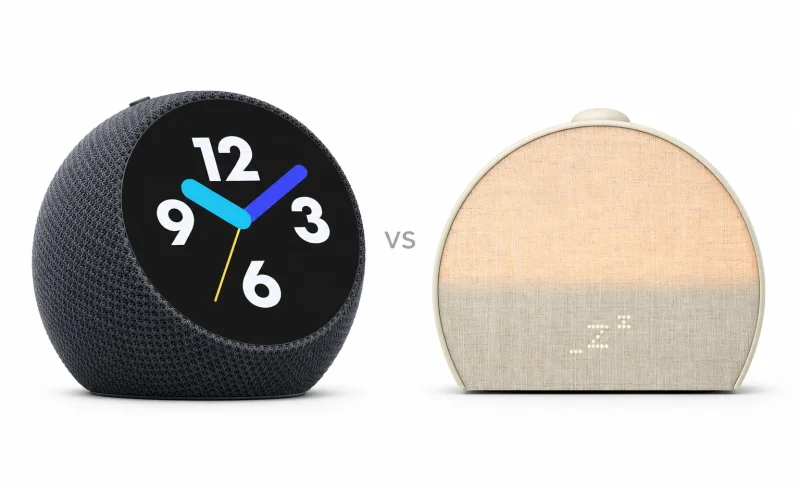
The Hatch Sleep Clock fits people who want one clock to light the room at dawn and keep an automatic sleep diary without a subscription. The Amazon Echo Time fits an Alexa household, especially with Prime and a morning routine that can accommodate an earlier alarm.
On Nov. 21, 2026, Echo Time was $99.99 for Black Friday, down from its $199.99 launch price. Hatch listed at $249.99, or $187.49 with its 25% checkout discount, which still left it $87.50 above the Echo. For the Echo smart alarm, the clock adds $99.99 to an existing Prime membership. Starting a new annual Prime membership brings the clock and two years of service to $377.99 at those prices.
| Bedside feature | Amazon Echo Time | Hatch Sleep Clock |
|---|---|---|
| Scheduled alarm | Yes | Yes |
| Smart alarm for lighter sleep | 10 to 60 minutes before the set time with Alexa+ and sleep sensing on | — |
| Sunrise light | Gradually brightening screen, with a compatible lamp for room light | Built-in room light |
| Wake audio | Smart alarm tone starts quietly and builds with each snooze | Alarm audio sounds at the end of the sunrise |
| Contactless sensor | Ultrasound for breathing and proximity | Radio sensing for breathing and small movements |
| Sleep history | — | App history with estimated sleep stages |
| Voice assistant | Yes (Alexa) | — |
| U.S. device price on Nov. 21, 2026 | $99.99 Black Friday price | $249.99 before checkout discount |
Hatch advertised 25% off at checkout on Nov. 21, which would bring its price to $187.49 if applied.
📑 Table of Contents
- Hatch lights the room on its own
- Echo can ring before your scheduled alarm
- Hatch adds a sleep diary to the sunrise alarm
- Hatch runs a bedtime routine and Echo puts alarm settings on the clock
- Hatch tracks one sleeper and Echo sensing stops on mute
- Prime changes the two-year cost of the smart alarm
- Final Verdict
- FAQ
Hatch lights the room on its own
Hatch lets you choose the light and how long it takes to brighten before the alarm sounds. At 5:30 a.m., the clock gradually lit a Tom's Guide reviewer's room. T3's Bethan Morgan found the light brightened too quickly for her.
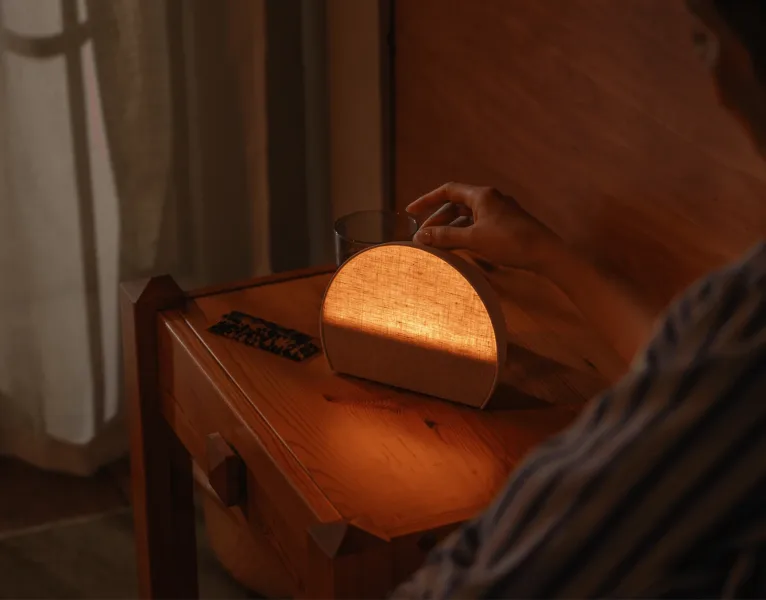
In a Hatch-sponsored review using a supplied clock, Fit-Tested says the highest setting lit the room (02:09).
Echo Time starts its sunrise on the 3.2-inch touchscreen. The Verge's Jennifer Pattison Tuohy found the screen's glow subtle in a brightly lit demo room. For room light with Echo, pair it with a separate compatible smart lamp.
Echo can ring before your scheduled alarm
Echo Time can use ultrasound to sense breathing and proximity. With Alexa+ and sleep sensing on, it can ring up to an hour before the scheduled alarm if it detects lighter sleep, as The Verge describes. That suits mornings when you have some flexibility about when to get up.
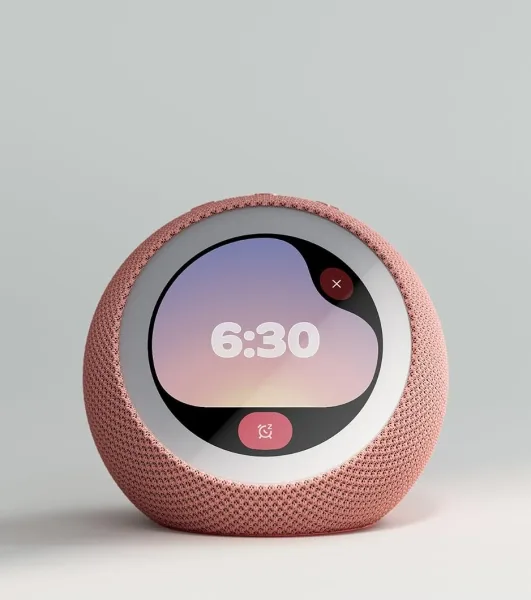
Echo's smart alarm tone starts quietly and builds with each snooze, up to four times. Both clocks have a fixed-time alarm for mornings when timing matters. Hatch's wake sound comes on at the end of its sunrise.
Hatch adds a sleep diary to the sunrise alarm
Hatch's app records when you went to bed, fell asleep and woke up, so you can spot a bedtime that keeps drifting later. Take the core, REM and deep sleep totals as estimates.
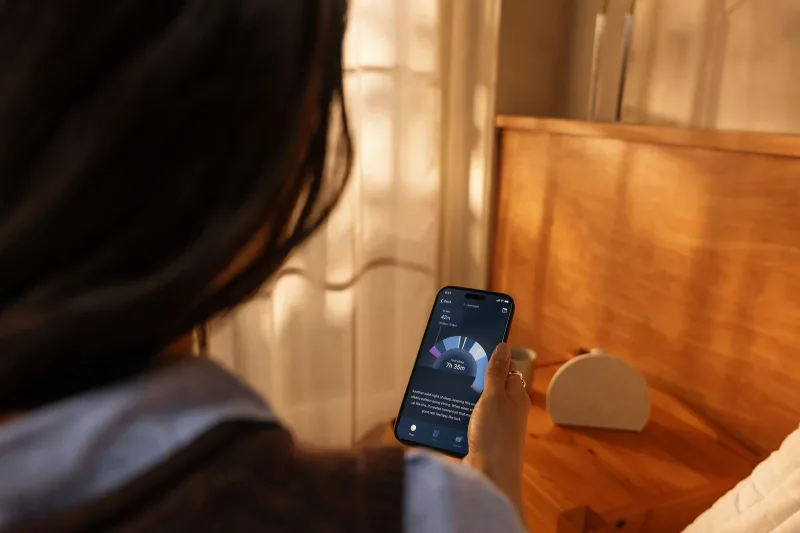
In a Hatch-sponsored review, Fathercraft describes how the app read a late bedtime (06:07). The app suggested the reviewer's wife set aside time for herself earlier in the evening. She was up with a six-month-old.

After a month, WIRED found that total sleep usually lined up with readings from an Oura Ring 5 and an Apple Watch Series 12. The devices differed on stages, and the Hatch app left gaps unmarked. Over three weeks, Tom's Guide's Ruth Jones often saw longer REM and deep sleep estimates on Hatch than on her Oura Ring 5.
T3's Hatch unit, in a U.K. setup with a U.S. adapter, asked for a reboot and stopped working after a day or two. It resumed nightly tracking after the reviewer switched off power while away. On one night after the restart, it logged three hours of sleep against her own estimate of about seven. Morgan liked it as a wake-up light and wanted more consistent readings before using it as her regular sleep tracker.
Hatch runs a bedtime routine and Echo puts alarm settings on the clock
Hatch can cue bedtime automatically with light and sound. Its night plan, basic sounds and suggestions based on your sleep history come with the clock. The clock has light and volume controls and a switch that pauses all scheduled alarms. Changing an alarm or a routine takes the Hatch app and Wi-Fi on both your phone and the clock.
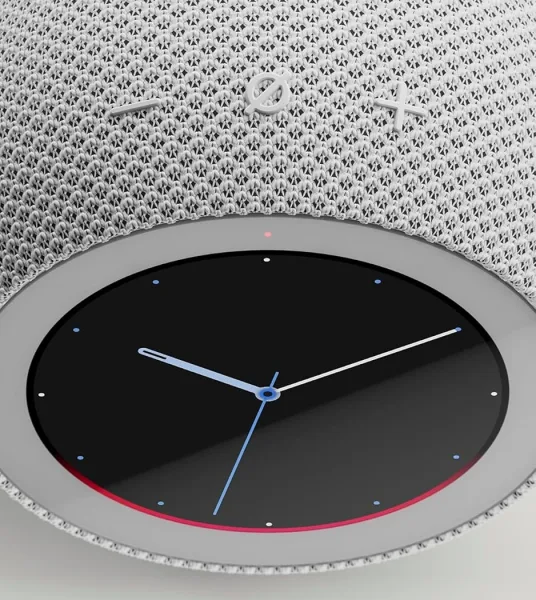
Echo’s touchscreen lets you set tomorrow’s alarm without a voice command if someone is already asleep beside you. At bedtime, Alexa+ can play relaxing music through a supported service or adjust a compatible thermostat. Echo can also control compatible Alexa lights by voice.
Hatch tracks one sleeper and Echo sensing stops on mute
Hatch spends seven nights calibrating for one sleeper. Set it 2 to 4 feet from the sleeper. As WIRED explains, Hatch calls for the clock to sit roughly level with the mattress and face the sleeper’s chest, with nothing in between. In a shared bed, Hatch tries to pick up the nearer person, and placement can change the result.
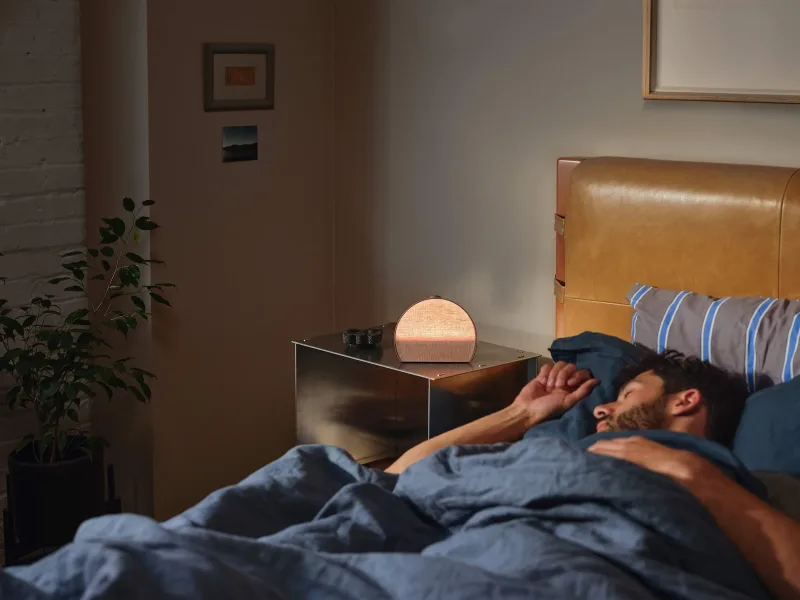
Hatch fits a bedroom where you want sleep sensing without using a camera or microphone. Hatch says it processes sleep data on its own servers within its ecosystem. Echo has no camera and lets you opt in to sleep sensing. Its physical mic button also stops sensing, so leave the microphone enabled to use the smart alarm.
Prime changes the two-year cost of the smart alarm
On Nov. 21, 2026, the graphite Echo Time was $99.99 for Black Friday. It launched at $199.99. The Hatch clock was $249.99 before any checkout discount. Even at the conditional $187.49 price, Hatch was $87.50 more than the Echo hardware. A separate compatible smart lamp adds to the cost of setting up Echo for room light.

The Echo clock and two years of service work out four ways at that device price. Alexa+ comes with Prime.
| Echo Time setup | Cost with two years of service where needed |
|---|---|
| Standard alarm without Alexa+ | $99.99 |
| Smart alarm with Prime you already pay for | $99.99 extra for the clock |
| Smart alarm with new Prime | $377.99 with two $139 annual payments, or $459.75 at $14.99 a month |
| Smart alarm with standalone Alexa+ | $579.75 at $19.99 a month |
Hatch includes its sleep diary without Hatch+, so its two-year cost starts at the device price. The optional Hatch+ audio library costs $5.99 a month. With an eligible free first month and 23 paid months, Hatch and two years of Hatch+ total $387.76 at the posted device price. With 24 paid months, the total is $393.75. If the checkout discount applies, those totals fall to $325.26 and $331.25. Hatch advertises a separate 30-night bedside trial for clocks sold through its own site.
The Echo figures assume paid service at the stated rate, with no Prime trial or free Alexa+ access. Both sets of figures exclude taxes, shipping, price changes, electricity and accessories. Hatch costs less for its room light and sleep diary than Echo with a new paid membership for its smart alarm. The standard alarm and the existing Prime scenarios have the lowest added cost.
Final Verdict
Choose the Hatch Sleep Clock if you want a sunrise lamp and automatic sleep logs in one device.
- Room light and bedtime patterns: Hatch Sleep Clock lights the room before the alarm, and its diary can show when bedtime is drifting.
- Alexa and flexible mornings: Amazon Echo Time controls compatible devices by voice, and its smart alarm can ring early with Alexa+ and sleep sensing enabled.
Skip Echo Time if you want room light from a single bedside device.
Skip Hatch Sleep Clock if you already track sleep and need only a basic alarm.
For sunrise light and wind-down sounds alone, the Hatch Restore 3 listed at $169.99 on Nov. 21, $80 below the Sleep Clock. With both Black Friday checkout discounts applied, it was $135.99, or $51.50 less.