Smart Cupping Device with Breathing Light vs Hangsun CP100: What Actually Separates Them
Compare the Smart Cupping Device with Breathing Light versus the standard model. Explore differences in visual feedback, safety, user experience, and reliability to find the best fit for your recovery routine.
TL;DR
The names make this look like a comparison between a lighted device and a plain one. It is not. The Smart Cupping Device shown here is the Hangsun CP100, which also has red LEDs. The differences that matter more are how each device is controlled, how clearly its suction and heat settings are documented, whether it has an automatic session cutoff, and whether the model can be traced to a consistent manual.
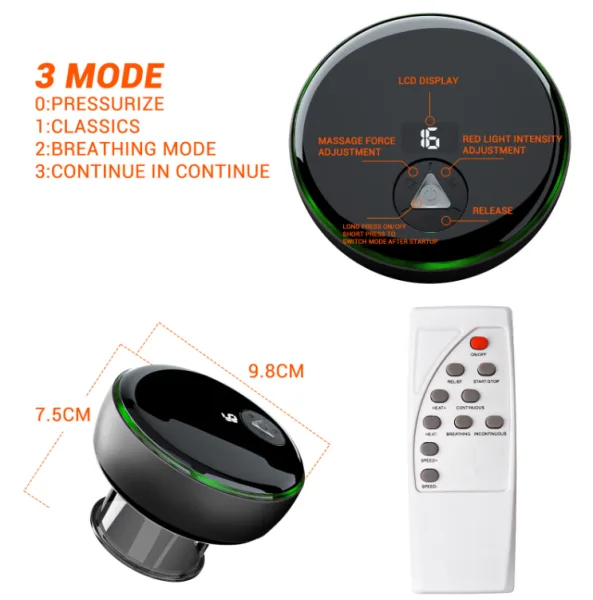
The Smart Cupping Device with Breathing Light has a separate remote, 16 stated suction steps, and four stated suction patterns. The remote can help when the onboard buttons are difficult to reach, but the available documentation does not establish that the illuminated ring reports heat level, suction intensity, or remaining session time.
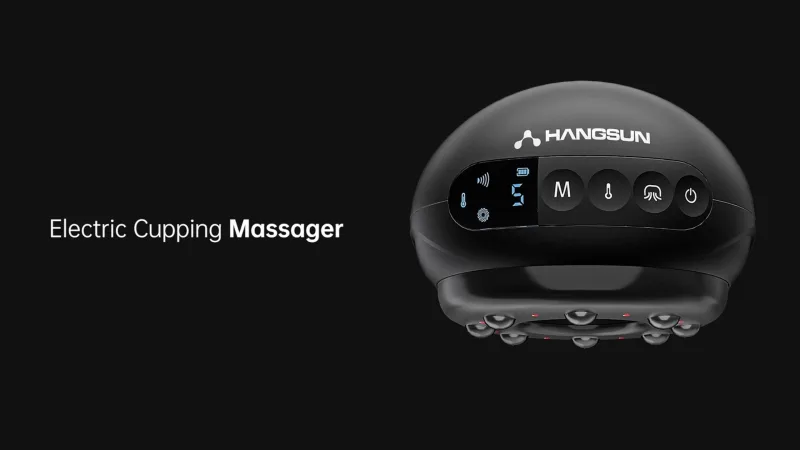
The Smart Cupping Device (Hangsun CP100) uses onboard controls, seven stated suction levels, three heat settings, two suction modes, red LEDs, and a stated 10-minute timer.
Neither available product description establishes app control, Apple Health or Google Fit integration, firmware support, or clinically validated outcomes.
The CP100 is the more predictable general-purpose design because it has a stable model number and a clearly stated session cutoff. The remote-controlled model has a practical advantage only when remote operation is genuinely useful.
Model-specific figures in this comparison come from manufacturer or seller materials, not independent performance testing. Cupping is not a substitute for diagnosis or medical treatment. People who are pregnant or who have bleeding or clotting disorders, cardiovascular disease, a pacemaker, eczema, psoriasis, or another condition that could affect skin safety should discuss cupping with a qualified clinician first.
Market price overview
Smart Cupping Device with Breathing Light, Electric Heating Scraping Device
Gshopper
$28
Last checked May 30
Smart Cupping Device
Gshopper
$28
Last checked Sep 2
Feature
Smart Cupping Device
Smart Cupping Device with Breathing Light, Electric Heating Scraping Device
“Breathing light” sounds like a treatment feature or a status display, but the available listing for the remote-controlled device describes a separate breathing suction mode that repeatedly varies the vacuum. It does not clearly explain whether the illuminated ring is tied to suction, heat, timing, or power. The light therefore should not be treated as a reliable session indicator unless the exact manual defines its behavior.
The supposedly standard Smart Cupping Device is not light-free. The Hangsun CP100 documentation describes eight red LEDs beneath the cup, alongside suction and heat. This means the meaningful comparison is not visual feedback versus no visual feedback. It is remote operation and finer stated suction adjustment versus on-device controls, an identifiable model number, and a stated automatic timer.
The breathing-light model combines onboard buttons with a separate remote.
The Hangsun CP100 uses onboard controls and includes red LEDs beneath the cup.
Both are single-cup electric dry-cupping devices. Terms such as “massage,” “scraping,” “gua sha,” “dynamic suction,” and “red-light therapy” often appear together in their descriptions, but they do not necessarily represent separate mechanisms. The core action remains suction against the skin, with electronically controlled heat or changing suction patterns layered on top.
Controls and Hard-to-Reach Placement
The strongest case for the breathing-light model is its handheld remote. A cup placed on the upper back may leave its top buttons difficult to see or reach, and a remote can make it easier to change a setting or stop the motor without twisting toward the device. The listing also states that the remote uses two AAA batteries, so it adds a second power source and another component that must remain available.
That convenience has limits. A remote cannot confirm that the cup has formed an even seal, show how the skin is responding, or replace a clearly documented pressure-release procedure. Before using either device on an area that is hard to reach, the manual should explain how suction can be released immediately if the session becomes painful or the controls stop responding.
The CP100 keeps all controls on the device. That is simpler when it is used on an arm, thigh, shoulder, or another reachable area, but less convenient when the cup is behind the user. Its advantage is not effortless placement; it is a more conventional control path with no separate remote to power or keep track of.
Practical edge: the breathing-light model for remote operation; the CP100 for straightforward use on reachable areas.
Suction Adjustment: Step Count Is Not Suction Strength
The remote-controlled model is advertised with 16 suction levels, while the CP100 lists seven. Sixteen steps may allow smaller adjustments between settings, but the number alone does not show that the device can create a stronger vacuum, hold pressure more consistently, or feel gentler at its lowest level.
A meaningful power comparison would require maximum and minimum vacuum values in a common unit such as kilopascals, along with information about pressure regulation. Published specifications do not provide those figures. The conclusion is therefore limited: the remote-controlled device offers more stated adjustment steps, while maximum suction and control accuracy remain unverified.
The mode count needs the same restraint. The remote-controlled model lists four suction patterns, including steady and pulsed operation; the CP100 lists two. More patterns can change how often suction rises or releases, but they do not establish greater therapeutic benefit.
Practical edge: the breathing-light model for finer stated adjustment, with no demonstrated advantage in maximum power or outcomes.
Heat and Red LEDs
The remote-controlled model’s seller documentation states an operating temperature range of approximately 38°C to 45°C. The CP100 is described with three heat settings, but the available model documentation does not provide a directly comparable temperature range for each setting. Without measurements taken under the same conditions, neither heating system can be judged faster, more even, or more accurate.
The illuminated ring on the remote-controlled model should not be used as a temperature gauge unless the exact manual explicitly links its color or pulse pattern to heat. Likewise, the CP100’s red LEDs do not indicate how hot the contact surface is.
Hangsun materials describe the CP100’s LEDs as 655–660 nm red light. Wavelength by itself is not enough to establish a meaningful light dose: irradiance, exposure time, distance, and optical losses through the device all matter. The product materials do not provide those measurements or independent clinical data for the LEDs in this specific device.
For either model, a clearly labeled heat control and an accessible stop or pressure-release control matter more than the presence, color, or animation of the light.
Practical edge: neither model has a verified heating-performance or light-therapy advantage.
Timer and Session Predictability
The CP100 is described with a 10-minute automatic timer. That gives the session a defined upper boundary if the user loses track of time, although an automatic cutoff is only a backup and does not make an uncomfortable setting safe.
The remote-controlled model’s available listing describes its modes, temperature range, battery, and remote, but does not clearly document an automatic session cutoff. A claimed four-hour figure elsewhere in the listing is labeled as idle time, not active operating time, and should not be compared with another device’s runtime.
Battery capacity also does not settle the comparison. The remote-controlled model is listed at 2,000 mAh and the CP100 at 2,200 mAh, but motor load, suction setting, heat, LEDs, control electronics, and battery quality can change actual duration substantially. No like-for-like runtime test is available.
Practical edge: the CP100, because its stated timer makes session length easier to understand.
App, Connectivity, and the Meaning of “Smart”
Neither product is documented as an app-connected device. The remote-controlled model uses a dedicated handheld controller, while the CP100 uses physical controls on the cup. Available materials do not establish phone control, account-based features, Apple Health or Google Fit integration, firmware updates, or coordinated control of multiple cups.
Here, “smart” is a loose marketing label for electronically managed suction, heat, timing, or pulsed modes. It should not be read as evidence of Wi-Fi, Bluetooth, data tracking, or an ongoing software ecosystem.
This is useful in one respect: core operation does not appear to depend on a phone account or cloud service. It also means that interface quality, automatic safeguards, and the accuracy of the printed manual matter more than software features.
Practical edge: neither; both are standalone electronic devices rather than connected health platforms.
Documentation, Cleaning, and Replacement Parts
The Hangsun device has a specific model identifier, CP100. That makes it easier to match a listing to model-specific instructions and to check whether accessories or replacement components are intended for the same device. The breathing-light model is distributed under several generic titles, so photographs alone may not establish that two listings describe identical electronics, firmware, remote behavior, or included parts.
Neither device should be assumed to be waterproof or safe to submerge. The cup, air path, filter, valve, heating surface, charging port, and electronics may require different cleaning methods. The exact manual should state which parts detach, whether a filter is replaceable, what cleaning agents are permitted, and how long components must dry before the next session.
Generic naming does not prove that the remote-controlled model is unreliable, and a recognized model number does not prove longer service life. The difference is traceability: the CP100 is easier to identify consistently, while the remote-controlled model demands closer matching of the manual, button layout, remote, and included accessories.
Practical edge: the CP100 for model traceability, not for proven durability.
Safety and What the Evidence Actually Supports
Electric cupping can leave temporary circular marks, and the addition of heat creates another source of discomfort or injury if intensity is too high. The U.S. National Center for Complementary and Integrative Health says most cupping research is low quality. Cupping may reduce some pain, but the evidence is not strong, and there is not enough high-quality research to support many other claimed uses.
The same NCCIH guidance notes potential harms including persistent skin discoloration, scars, burns, infections, and worsening of eczema or psoriasis. Cleveland Clinic’s medically reviewed overview also lists bruising, soreness, burns, infection, itching, and scarring among possible adverse effects.
Neither a higher suction-step count, visible skin marks, a pulsing light, nor red LEDs demonstrate that an underlying medical condition has been treated. Severe pain should not be treated as a sign that the device is working. Release suction and end the session if the device causes severe pain, burning, or another concerning reaction.
Cleveland Clinic advises particular caution for people who are pregnant or who have anemia, bleeding or clotting disorders, cardiovascular disease, a pacemaker, eczema, psoriasis, or seizures. A clinician familiar with the person’s health history is the appropriate source for individualized guidance.
Which Model Fits Which Routine?
The Smart Cupping Device with Breathing Light is the more practical fit when a dedicated remote is essential and the exact listing includes a matching manual with clear instructions for suction release, heat control, and timer behavior. Its 16 stated levels may also suit someone who values smaller setting changes, though they do not establish a broader or stronger vacuum range.
The Smart Cupping Device (Hangsun CP100) is the more predictable fit when model identification, a stated 10-minute timer, onboard controls, and simpler documentation matter more than remote access. Its seven suction levels and three heat settings still provide adjustment, but the top controls may be awkward on the back.
Neither model is a strong fit when the listing omits a readable manual, a clear model number, heat behavior, an immediate pressure-release method, cleaning instructions, or the contents of the package. Those omissions matter more than the number of modes or the appearance of the LEDs.
The Bottom Line
The breathing light is not a sound basis for distinguishing these devices. The remote-controlled model’s real advantage is the remote and its larger number of stated suction steps. The Hangsun CP100’s real advantage is predictability: an identifiable model, clearly described onboard controls, and a stated 10-minute timer.
For a typical reachable placement, the Smart Cupping Device (Hangsun CP100) is the more straightforward option. For an awkward placement where the cup’s buttons cannot be reached comfortably, the remote-controlled model may be more practical, provided its exact manual clearly documents release and heat controls.
Neither device has demonstrated superior therapeutic outcomes, and neither product’s LEDs should drive the decision.
✦✧✦✧
🏆
More Predictable Controls
Best fit for most usersSmart Cupping Device
FAQ
Does the breathing light affect cupping performance?
No. The breathing light is purely cosmetic and does not change the suction, heat, massage, or scraping functions. Both devices share the same core therapy modes with adjustable suction and heat. The light only adds an ambient visual cue, so therapeutic performance remains identical.
Are both devices controlled by an app?
Both devices can be controlled via a companion app, but the standard device keeps suction, heat, and timer controls usable through onboard inputs. The app offers extras like cupping time from 1 second to 12 minutes and control of up to 6 cuppers. The breathing-light model may rely more on the app for light control.
Which is better for beginners?
The standard Smart Cupping Device is better for beginners. It has a shorter learning curve because there is no breathing light mode to interpret or manage. The main challenge is getting a reliable seal, rather than deciding if the light is cosmetic or tied to heating. Fewer modes and simpler controls make daily operation less mentally taxing.
Which device should I choose for dim or solo sessions?
For dim evening recovery or solo treatment of hard-to-reach areas like the mid-back, the breathing-light model is better. Its visible status cue helps confirm heating state when the cup is out of sight. The standard device relies on skin sensation, which can lag behind actual temperature changes, making it less ideal in low light.
How long should beginners use the device per area?
Beginners should limit use to 2–3 minutes per area and stay under 5 minutes total until skin adjusts. This cautious approach helps avoid skin irritation or overstimulation. The article and manufacturer guidance both emphasize starting slowly to build tolerance.
What safety precautions should I follow when using these cupping devices?
Avoid using the devices over lesions, arteries, varicose veins, thin skin with prominent veins, or the face. Do not use during pregnancy, with cancer or severe cardiovascular disease, or under the influence of drugs or alcohol. Both devices share these contraindications, so follow the same safety guidelines.


 Gshopper