Anker EverFrost 30 vs. EverFrost 50: Which Cooler Fits Your Trips?
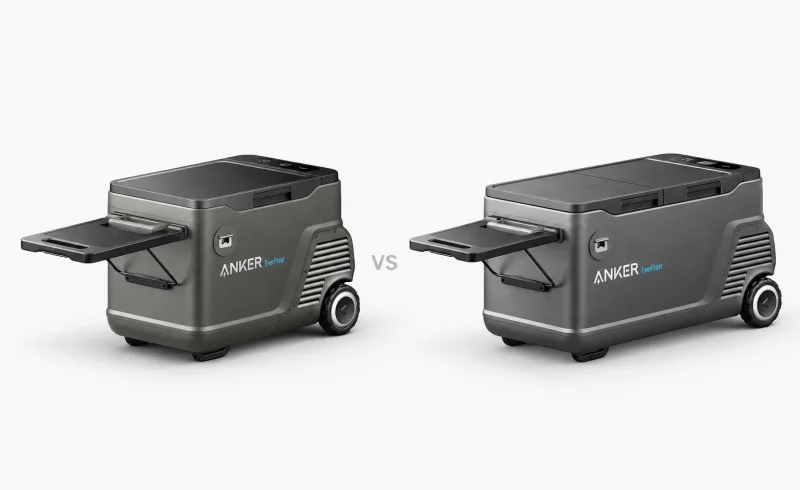
The EverFrost 30 suits single-temperature loads and tighter cargo spaces, while the EverFrost 50 stores chilled and frozen food together but requires a heavier lift.
TL;DR
The Anker EverFrost 30 and EverFrost 50 solve different storage problems. The 30 gives you 33 liters of space with one adjustable temperature zone. The 50 increases capacity to 53 liters and adds two independently controlled compartments, allowing you to keep drinks cold while storing frozen food separately.
The trade-off is physical. The 50 is 8.7 inches (22 cm) longer and approximately 11.7 pounds (5.3 kg) heavier before you add food and drinks. That difference matters when loading a vehicle, navigating a crowded trunk, or moving the cooler without help.
Both models use a removable battery rated at 299.52 Wh and support AC, vehicle DC, and compatible solar power. Anker advertises up to 42 hours of cooling under specified conditions, but that figure should not be treated as a guarantee for hot weather or simultaneous refrigeration and freezing.
The practical distinction: The EverFrost 30 makes more sense for shorter trips, limited cargo space, and supplies that can share one temperature. The EverFrost 50 is more versatile for longer outings, larger groups, and trips where refrigerated and frozen food need to travel together.
| Feature | Anker EverFrost Powered Cooler 30 | Anker EverFrost Dual-Zone Powered Cooler 50 |
|---|---|---|
| Cooling and storage | ||
| Capacity and zones | 33 L; one temperature zone [1] [2] | 53 L; dual zones for cooling and freezing [1] |
| Stated cooling range | −20 to 20°C (−4 to 68°F) [3] [2] [1]Operating ambient: 0–40°C (32–104°F). | −20 to 20°C (−4 to 68°F) [4] [1]Operating ambient: 0–40°C (32–104°F). |
📑 Table of Contents
- The biggest difference: One temperature or two?
- Cooling performance: Do they reach the same temperatures?
- Battery life: How long can they run without external power?
- Charging options: Vehicle, household outlet, and solar
- Size and weight: The difference you'll notice every trip
- Everyday usability: Controls, app, and compartment access
- Cleaning, drainage, and maintenance
- Which EverFrost works better for different trips?
- What to check before deciding
- Final Verdict
- FAQ
The biggest difference: One temperature or two?
Capacity matters, but the number of temperature zones changes what you can actually carry.
The EverFrost 30 has a single 33-liter compartment. You can set it anywhere within its supported temperature range, so it can function as either a refrigerator or a freezer. What it cannot do is maintain refrigerator and freezer temperatures simultaneously.
That distinction is easy to overlook. If you're bringing sandwiches, fresh produce, dairy products, and drinks for a weekend, one refrigerated compartment is generally sufficient. You can arrange everything around a common temperature setting without worrying about ice taking up space.
But if you're also carrying frozen meat, ice cream, or prepared meals that need to remain frozen, the 30 forces a compromise. You would need to change the entire compartment's temperature or provide separate storage for those items.
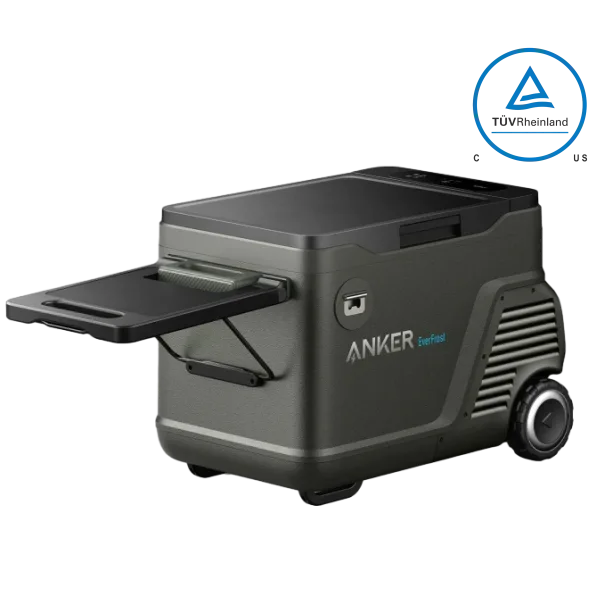
The EverFrost 50 addresses that problem with 53 liters of total capacity divided between two independently adjustable compartments.
You can keep beverages and fresh ingredients refrigerated in one section while maintaining freezing temperatures in the other. That makes a meaningful difference on a multiday camping trip, particularly when frozen ingredients are intended for meals later in the week.
There is a catch: 53 liters is the combined capacity, not the amount available in either compartment. A large item that fits comfortably inside the 30's uninterrupted storage space may not fit inside one of the 50's divided sections.
Before relying on the larger capacity figure, consider the dimensions of the actual items you plan to carry. The 50 provides more total room and greater temperature flexibility, but its divided interior is not automatically better for every load.

When does dual-zone storage actually matter?
Consider three common situations:
- A weekend road trip: Drinks, sandwiches, fruit, and other refrigerated supplies can share a temperature. The 30 covers this scenario without requiring the extra space of the 50.
- A four-day camping trip: Fresh ingredients for the first meals and frozen food for later days benefit from separate temperature zones. The 50 offers more flexibility.
- A family gathering or group outing: The 50's additional capacity is useful for a larger quantity of drinks and food, even if both compartments are set to refrigeration temperatures.
The 50's advantage isn't simply that it holds more. It lets you organize food according to different storage requirements.
Cooling performance: Do they reach the same temperatures?
Both models have a specified internal temperature range of −4°F to 68°F (−20°C to 20°C).
That means either cooler can be configured for refrigeration or freezing. The EverFrost 50 does not offer a lower minimum temperature than the 30; its advantage is maintaining different settings in separate compartments.
For ordinary refrigerated food, the FDA recommends keeping temperatures at or below 40°F (4°C). Frozen food should be maintained at 0°F (−18°C) or below.
These are food-storage targets, not guarantees that a portable cooler will maintain its setting under every condition. Actual performance depends on ambient temperature, how much warm food is added, how often the lid is opened, and available power.
For food-safety guidance, see the FDA's refrigerator and freezer storage recommendations.
What happens in very hot or cold weather?
Anker specifies an operating ambient temperature range of 32°F to 104°F (0°C to 40°C) for both models.
This matters for summer road trips. A vehicle parked in direct sunlight can become substantially hotter than the outside air, potentially exceeding the cooler's specified operating range.
Neither model should be expected to maintain normal performance inside an excessively hot parked vehicle. Providing ventilation around the cooler and keeping it out of direct sunlight are important, especially when the compressor is working continuously.
The lower ambient limit also matters. Neither model is specified for operation below freezing, so winter camping introduces conditions outside its rated operating range.
There is no clear advantage for either model in extreme ambient temperatures. Both have the same published limits.
Battery life: How long can they run without external power?
The EverFrost 30 and EverFrost 50 use the same nominal battery capacity: 299.52 watt-hours.
Anker advertises up to 42 hours of cooling at 39°F (4°C) for the EverFrost range. This is a manufacturer runtime claim under particular test conditions, not a fixed duration you can expect on every trip.
The distinction becomes especially important with the 50.
Running two compartments at different temperatures, particularly when one is freezing, can increase energy demand compared with maintaining a single refrigerated compartment. The amount depends on ambient temperature, temperature settings, contents, and compressor operation.
Anker's advertised maximum runtime does not establish how long the 50 will operate while simultaneously refrigerating and freezing.
Why identical batteries don't guarantee identical endurance
Battery capacity tells you how much energy is available, not how quickly the cooler consumes it.
A 299.52 Wh battery would theoretically supply:
- 10 watts of average electrical demand for approximately 30 hours.
- 15 watts for approximately 20 hours.
- 20 watts for approximately 15 hours.
These are mathematical examples, not measured EverFrost consumption figures. Real operating time will also be affected by electrical losses and usable battery capacity.
A compressor cooler cycles on and off as needed. It may consume relatively little energy after reaching its target temperature in mild weather, but significantly more when cooling warm groceries or maintaining freezing temperatures in summer heat.
For that reason, the same cooler can deliver very different battery life on different trips.
How can you extend runtime?
Several habits can reduce the amount of cooling required:
- Pre-chill food and drinks before loading them.
- Cool the compartment before disconnecting external power, when practical.
- Keep the lid closed rather than repeatedly searching through the contents.
- Leave adequate ventilation around the cooler.
- Use vehicle, AC, or compatible solar power when available rather than relying entirely on the battery.
Pre-chilling is especially useful. Bringing a large quantity of room-temperature drinks down to refrigerator temperature requires energy that would otherwise be available for maintaining the temperature later.
For a trip lasting several days without dependable external power, neither model's advertised maximum runtime should be the sole basis of your power plan.
Charging options: Vehicle, household outlet, and solar
Both coolers support multiple power sources:
- AC power: 100–240 V input for compatible household electrical supplies.
- Vehicle DC power: 12 V or 24 V input for use with suitable vehicle connections.
- Solar input: Up to 100 W with compatible equipment and the required battery configuration.
This makes either model practical for a trip that starts with household power, continues with vehicle power, and ends at a campsite.
The EverFrost 30 user manual specifies that solar charging requires the battery to be installed and an appropriate XT60-to-XT60 connection.
Solar input is a maximum rating, not a promise of continuous 100 W charging. Actual output depends on the panel, sunlight, positioning, weather, and electrical compatibility.
A 100 W panel will not necessarily replenish a depleted battery during a short period of daylight, especially while the cooler is also consuming power.
A practical vehicle-power consideration
Using a cooler while driving is different from leaving it connected to a parked vehicle.
The electrical outlet may remain active after the engine stops, depending on the vehicle. If it does, the cooler could draw energy from the vehicle's battery.
Check how your vehicle's outlet behaves and whether the power arrangement provides adequate battery protection. The cooler's removable battery is useful for stationary operation, but it does not eliminate the need to understand how the vehicle connection works.
Neither EverFrost model has a meaningful advantage in the variety of supported power sources.
Size and weight: The difference you'll notice every trip
The EverFrost 50's larger interior comes with a substantial increase in exterior length.
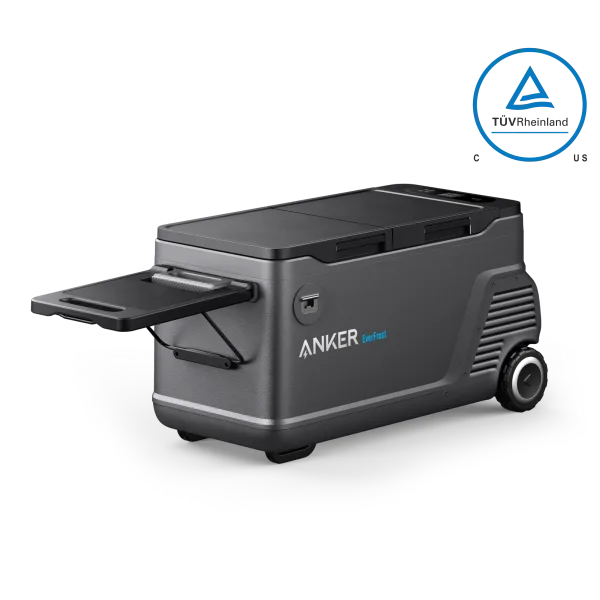
According to Anker's EverFrost specifications, the dimensions including the handle are:
- EverFrost 30: 29.2 × 16.9 × 19.2 inches (742 × 430 × 487 mm).
- EverFrost 50: 37.9 × 16.9 × 19.2 inches (962 × 430 × 487 mm).
Both have the same listed width and height, but the 50 is approximately 8.7 inches longer.
That extra length can determine whether the cooler fits across a vehicle's cargo area, behind a seat, or alongside other camping equipment.
The lifting difference is just as important
Anker lists the EverFrost 30 at 48.9 pounds (22.2 kg) and the EverFrost 50 at 60.6 pounds (27.5 kg).
That's an additional 11.7 pounds before food, drinks, or other contents.
A full cooler can become considerably heavier. For perspective, 12 standard 12-ounce beverage cans contain roughly 9 pounds (4.1 kg) of liquid alone, excluding the containers.
Both EverFrost models feature wheels and a pull handle, which help when moving the cooler across suitable ground. Wheels do not solve the problem of lifting it over a vehicle's loading lip, up stairs, or onto a raised platform.
If you regularly load and unload the cooler alone, the 30's lower weight may matter more than its smaller capacity.
Measure the opening, not just the cargo floor
A cooler can fit inside a trunk on paper and still be difficult to get through the opening.
Check the available length, the height and width of the opening, and the space needed to maneuver the unit into position.
Also consider where it will sit during operation. You need access to the lid, sufficient airflow around the ventilation openings, and a practical route for the power cable.
The 50's extra length is easier to accommodate in a larger SUV, van, or open cargo area. In a compact car, the 30 is often the more manageable arrangement.
Everyday usability: Controls, app, and compartment access
Both models have onboard controls, so basic temperature adjustment does not require constant access to a smartphone.
That matters when you're at a campsite without cellular service, sharing the cooler with other people, or simply trying to change a setting quickly.
The EverFrost 30's documented controls allow temperature adjustment and switching between Fahrenheit and Celsius directly on the unit.
Anker also provides app connectivity for remote monitoring and control. However, app availability should not be confused with an uninterrupted internet connection.
The EverFrost 30's documentation describes initial network setup requirements and notes that Bluetooth can turn off after an extended period without a connection. A previously configured device may support local control away from normal network coverage, but reconnection behavior depends on its state and setup.
For the EverFrost 50, confirm the applicable app instructions and firmware behavior if remote control is important to your routine.
Is the 50 more complicated to use?
It requires a little more attention because there are two temperature zones to manage.
With the 30, you set one temperature for everything. With the 50, you need to consider which compartment holds refrigerated items and which holds frozen items, then configure them accordingly.
That flexibility is useful when your food requires different conditions. For a cooler filled entirely with beverages, it may offer little practical benefit.
One more consideration is access. With two compartments, you can open the section you need without exposing the entire interior. That may help limit warm-air exchange during brief openings, although it does not establish a measured runtime advantage.
Cleaning, drainage, and maintenance
Portable compressor coolers need regular cleaning and drying, particularly after carrying fresh food, spilled drinks, or condensation.
For the EverFrost 30, Anker's user manual recommends cleaning with a well-wrung cloth and mild soapy water, wiping away residue with a damp cloth, and drying the interior thoroughly.
Disconnect the power supply before cleaning. Do not hose down the unit or use aggressive solvents.
The 30 also has a drain opening that can help remove collected water. After cleaning, allow the interior to dry before closing it for storage.
The EverFrost 50's divided interior means there are two separate compartments to inspect and clean. Check the model-specific instructions for drainage and cleaning details rather than assuming every feature is identical to the 30.
For either model, keeping ventilation openings clear is important for compressor operation.
Neither is a conventional ice chest designed to be filled with melting ice and washed out with a hose. Their electrical components and ventilation requirements call for more careful handling.
Which EverFrost works better for different trips?
Weekend camping for one or two people
EverFrost 30
For a couple of days with drinks, sandwiches, fresh ingredients, and other refrigerated supplies, 33 liters may be sufficient.
The single compartment is straightforward to organize, and the shorter body is easier to fit into a crowded vehicle.
The 50 becomes more relevant if frozen food is part of the plan or the quantity of supplies exceeds the 30's usable space.
Multiday camping with refrigerated and frozen meals
EverFrost 50
Separate temperature zones allow fresh ingredients and frozen meals to remain at their respective storage temperatures.
This can simplify meal planning over several days without relying on a second cooler.
The limitation is energy use. Maintaining a freezer compartment can increase demand, so dependable charging becomes particularly important on longer stays.
Road trips with limited cargo space
EverFrost 30
The shorter body and lower weight are practical advantages when the cooler must share space with luggage, camping equipment, or other passengers' belongings.
Both models support vehicle DC power, so the 50 does not offer an inherent advantage for charging while driving.
Larger groups and family outings
EverFrost 50
The additional 20 liters of nominal capacity can accommodate more food and drinks.
The divided compartments also allow different storage temperatures, although the partition may restrict the size of individual items.
If everything needs the same temperature, capacity and available vehicle space become more important than dual-zone capability.
Frequent solo loading and unloading
EverFrost 30
A difference of 11.7 pounds before packing is significant when repeatedly lifting a cooler into a vehicle.
The 50's wheels are useful once it is on the ground, but the lighter 30 is less demanding when carrying or lifting is unavoidable.
What to check before deciding
Three details deserve more attention than the headline capacity or advertised maximum battery life.
First, consider the actual food load. If all your supplies can remain at refrigerator temperature, a single zone is usually enough. If frozen food must stay frozen while drinks remain chilled, the 50's independent compartments provide a clear functional advantage.
Second, check usable space. The 50 has greater total capacity, but its divided interior may not accommodate the same large objects as a single uninterrupted compartment. Exterior dimensions also matter, particularly in smaller vehicles.
Third, plan for realistic power consumption. Both models have the same nominal battery capacity, but operating time depends heavily on temperature settings and conditions. A long trip with continuous freezing requires a more conservative power plan than a short outing with pre-chilled drinks.
These considerations will generally make a bigger difference in everyday use than minor differences in controls or accessories.
Final Verdict
The Anker EverFrost 30 is better suited to trips where 33 liters of storage and one temperature setting are sufficient. Its shorter body and lower weight make it easier to accommodate in a vehicle and less demanding to load repeatedly.
The Anker EverFrost 50 makes more sense when you need additional capacity or simultaneous refrigeration and freezing. Its two independently controlled compartments offer meaningful flexibility for multiday trips, larger groups, and meals that require different storage temperatures.
Neither model has a demonstrated battery-life advantage based solely on its published capacity. Both use a 299.52 Wh battery, and Anker's advertised maximum runtime does not establish performance across every operating condition.
Ultimately, the deciding factor is whether you need more room at one temperature or separate spaces at different temperatures. The 30 favors portability and simplicity; the 50 favors storage flexibility, with additional size and weight as the trade-off.
FAQ
Does the EverFrost 50 give me 53 L of frozen-food storage alongside chilled groceries?
What should I check before using my existing solar setup with the EverFrost 30?
Will I need my phone to change the EverFrost 30’s temperature after storing it?
📄 Sources & Documentation
Anker EverFrost Powered Cooler 30
Anker EverFrost Dual-Zone Powered Cooler 50
Images are used for editorial and informational purposes only. All trademarks and images belong to their respective owners.