
Ray-Ban Meta vs RayNeo 4 Pro: Hands-Free Camera or Wearable Screen?
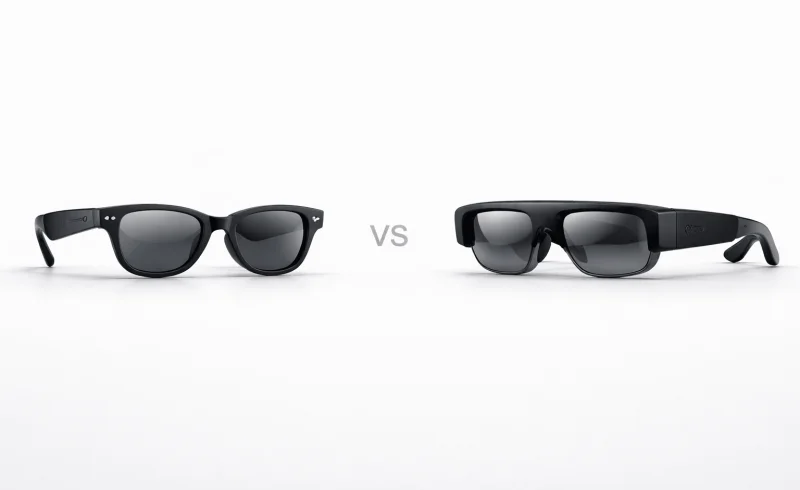
Ray-Ban Meta and RayNeo 4 Pro target totally different needs: capture-first smart glasses vs a display-first personal screen. Compare display, camera, audio, connectivity, comfort, software, and value to pick the right pair for your daily use.
TL;DR
Quick Decision
- If you want to capture first-person photos and videos hands-free and stay connected on the move → choose Ray-Ban Meta.
- If you want a high-quality, private screen for movies, gaming, or a laptop second monitor → choose RayNeo 4 Pro.
- If you need a single device for both capturing content and viewing it, neither fits the bill.
Key Differentiators This is a choice between two distinct tools. The Ray-Ban Meta excels as a social and capture device you wear all day, but offers no visual display. The RayNeo 4 Pro is a superb wearable monitor for consuming content, but must be tethered by a cable and cannot record anything. Your priority—spontaneous creation or immersive viewing—decides the winner.
Who Should NOT Buy Either If you need true augmented reality with digital objects anchored in your real-world view, both of these are the wrong category; consider dedicated AR glasses instead.
| Feature | Ray-Ban Meta | RayNeo Air 4 Pro |
|---|---|---|
| Audio | ||
| Speaker System | 2 open-ear speakers | Audio by Bang & Olufsen |
| Display | ||
| HDR Support | Not supported | HDR10 |
| Refresh Rate | No display | 120Hz |
| Visual Display | No display | 0.6-inch SeeYa Micro-OLED |
| Peak Brightness | No display | 1200 nits |
| Display Resolution | No display | 2D: 1920×1080; 3D: 3840×1080 |
| Imaging | ||
| Camera | 12 MP ultra-wide | No camera |
| Photo Capture | Supported | Not supported |
| Video Recording | 3K Ultra HD | Not supported |
| Wearability | ||
| Prescription Lens Support | Supported | Supported |
| Connectivity | ||
| Primary Device Connection | Wi-Fi 6 + Bluetooth 5.3 | USB-C with DisplayPort |
📑 Table of Contents
Display experience
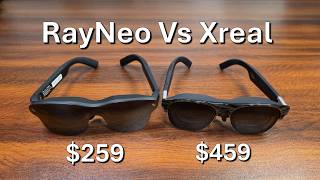
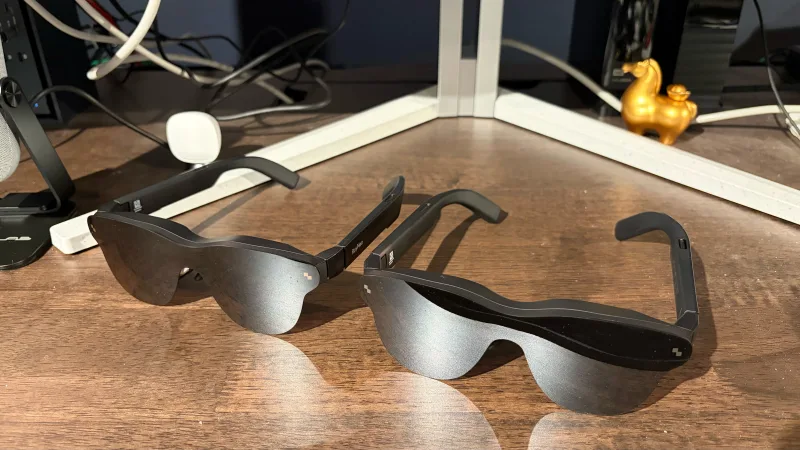
Ray-Ban Meta has no visual display, so it can’t function as a wearable monitor for movies, work, or gaming. In practice, that locks it into a «capture/communication-first» workflow: you use audio, voice assistance, and your phone—not an on-lens screen—for information and media.
RayNeo 4 Pro, by contrast, is built explicitly as a personal screen, using 0.6-inch micro-OLED displays with HDR10 support. It targets «display-first» use cases—video consumption, a laptop/phone second screen, and gaming—rather than camera-led social capture.
Conclusion: For anything that involves actually viewing content on the glasses, RayNeo 4 Pro is the only one of the two that meaningfully competes.
Ray-Ban Meta can’t be compared on panel quality metrics like HDR, brightness, or refresh rate because there’s no display pipeline at all—no HDR format support, no nits rating, and no refresh rate. If your goal is a «personal cinema» on your face, the best it can do is act as audio output while your phone remains the screen.
RayNeo 4 Pro provides concrete display specs that map directly to perceived smoothness and dynamic range: 120Hz refresh and 1200 nits peak brightness, plus HDR10 for compatible video. Its resolution is also explicitly display-centric: 1920×1080 in 2D and 3840×1080 in 3D mode, which is the type of spec you actually shop for when you want a wearable second screen.
Conclusion: On viewing quality and display capability, RayNeo 4 Pro wins decisively because it offers measurable screen performance (HDR10, 120Hz, 1200 nits, up to 1080p/3D 3840×1080) while Ray-Ban Meta offers none.
Ray-Ban Meta also can’t simulate a large «virtual screen» experience because there’s no projection/display system—so there’s no equivalent to screen size or perceived distance. That’s why it’s best understood as «normal glasses + capture and comms,» not as an AR display device.
RayNeo 4 Pro is designed to present a large, theater-like canvas: it can project a virtual screen up to ~135 inches at a ~6m perceived distance (per review specs). That framing matters for laptop extension and long-form viewing because it describes how the image is intended to feel spatially, not just how many pixels it has.
Conclusion: For «big screen» immersion and second-screen ergonomics, RayNeo 4 Pro has the clear edge because it’s explicitly engineered to render a large virtual display, while Ray-Ban Meta isn’t a display product at all.
Winner: RayNeo 4 Pro
Camera & capture

Ray-Ban Meta is built for capture: it has a 12MP ultra-wide camera, supports photo capture, and records up to 3K Ultra HD video. That aligns with its «capture-first» workflow—quick POV clips, stories, and in-the-moment recording without pulling out your phone, plus voice-assistant-driven operation through the Meta app.
RayNeo 4 Pro is not a capture device: it has no camera, and photo/video capture is not supported. Its hardware and value proposition are display-first (external-screen glasses), so there’s simply no equivalent capture workflow to compare in practice.
Conclusion: For photos and video—especially spontaneous POV capture—Ray-Ban Meta is the clear winner because RayNeo 4 Pro can’t shoot at all.
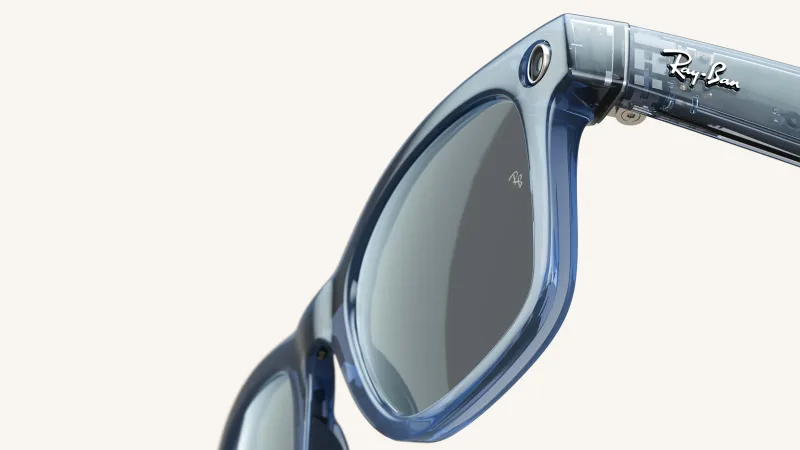
Ray-Ban Meta also benefits from a more «always-available» recording model because it connects over Wi‑Fi 6 + Bluetooth 5.3 and is designed around hands-free use (voice + touch controls) for fast start/stop capture. That said, reliability is not flawless: some users report camera malfunctions, Bluetooth issues, and headaches, which can matter if you’re buying specifically to record key moments.
RayNeo 4 Pro connects via USB‑C with DisplayPort, reinforcing that it’s meant to be tethered to a source device rather than used as a spontaneous camera. Because it’s not capturing media, it avoids camera-specific failure modes entirely—but that’s less an «advantage» than a confirmation it serves a different job.
Conclusion: Ray-Ban Meta still wins on capture utility, but if you need dependable recording every time, it’s worth weighing the reported camera/connectivity complaints against your tolerance for troubleshooting.
Winner: Ray-Ban Meta
Everyday usability

Ray-Ban Meta is built for «capture-first» daily wear: it keeps a classic Wayfarer-style form factor and focuses on fast, low-friction interactions like audio playback, hands-free calls, and voice assistance (Snapdragon AR1 Gen 1 platform). Control is designed to be immediate—touch gestures handle basics like music playback and calls, plus AI activation, without needing to pull out your phone every time. In practice, it tends to feel like «normal glasses + features,» which lowers the adaptation cost for everyday routines.
RayNeo 4 Pro is «display-first,» so everyday usability starts only when you have a compatible source device connected over USB-C (DisplayPort). Its value shows up in sit-down sessions: a 0.6-inch micro-OLED display, 1920×1080 (2D) / 3840×1080 (3D) resolution, 120Hz refresh rate, and HDR10 support—great for turning a phone/handheld/laptop into a large virtual screen. The trade-off is inherent friction: cable dependence plus the need to tune fit/brightness/position makes it less «grab-and-go» and more «put on when you’re ready to watch/work/game.»
Conclusion: For pure daily «wearability» and low learning curve, Ray-Ban Meta has the edge; for day-to-day use that centers on a personal screen, RayNeo 4 Pro is the more capable session device—but it asks more of you (and your setup) each time.
Spontaneity: capture/communication vs set-up-to-view
Ray-Ban Meta can actually do something the moment it’s on your face: a 12MP ultra-wide camera supports photo capture and 3K video recording, which aligns with quick, in-the-moment sharing. Because it pairs over Wi‑Fi 6 + Bluetooth 5.3 and relies on the Meta mobile app for operation, it’s still phone-dependent—but the workflow is optimized for fast capture and hands-free comms. That said, some users report issues like camera malfunction, Bluetooth problems, and headaches, which can undermine «everyday reliable» expectations.
RayNeo 4 Pro has no camera and does not support photo/video capture at all, so it can’t replace the spontaneous «record what I’m seeing» behavior. Instead, it creates usability through screen quality—up to a 135-inch projected virtual screen (at a stated 6 m depth) and up to 1080p (2D) / 4K (3D mode) input support—making it a strong everyday companion when your day includes media or a second screen. The friction is that none of this is available without a tethered device, and long sessions can be limited by comfort/eye fatigue rather than battery life.
Conclusion: If «everyday usability» means spontaneous capture and quick communication, Ray-Ban Meta wins clearly; if it means having a high-quality wearable display for daily viewing/work blocks, RayNeo 4 Pro is the better tool—but it’s not as spontaneous.

Controls and dependency: app-centric smart glasses vs wired display glasses
Ray-Ban Meta leans into simple controls—touch gestures for play/pause, calls, volume, and AI—so common actions don’t require learning a complex UI. However, it does require the Meta mobile app for pairing and operation, and real-world usability can be shaped by software/account and regional AI availability rather than hardware alone. Some users also note pairing and «not connecting anymore» complaints, which matters if you expect seamless daily pickup-and-go.
RayNeo 4 Pro is simpler in one narrow sense: with USB-C DisplayPort, it behaves like an external monitor—plug in and you get a screen without needing a mature companion ecosystem to be «useful.» But that simplicity is conditional on device compatibility and your willingness to use a cable nearly every time, which limits quick on-the-move interactions. Its usability ceiling is high for media (e.g., 120Hz + HDR10), but its usability floor is lower when you don’t have the right device/cable situation.
Conclusion: For everyday ease with minimal setup, Ray-Ban Meta generally has the more frictionless control model (despite app dependence); RayNeo 4 Pro is «simpler» only once you’re already in a wired, compatible viewing workflow.
Winner: Ray-Ban Meta — It better matches true everyday, low-friction use (wear-and-act immediately, voice/touch controls, hands-free comms, and built-in 12MP/3K capture), while RayNeo 4 Pro’s excellent display specs are gated by cable/compatibility and a more session-based routine.
Connectivity & mobility
Connection model: wireless pairing vs wired video input
Ray-Ban Meta is built around wireless, phone-centric connectivity, using Wi‑Fi 6 + Bluetooth 5.3 for everyday pairing and hands-free features like calls, audio playback, and voice assistance (Snapdragon AR1 Gen 1 platform). That makes it practical for quick interactions while moving—when your phone is in a pocket, the glasses can still handle control via touch and voice. The trade-off is that core functionality depends on the phone/app pairing workflow and staying reliably connected.
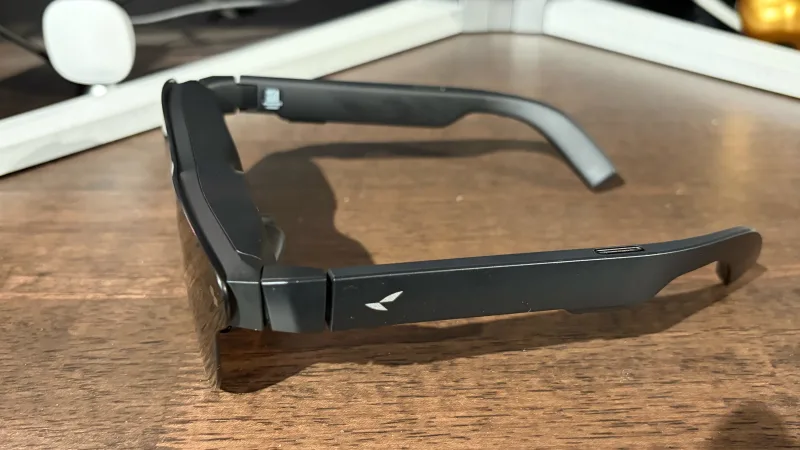
RayNeo 4 Pro, by contrast, connects primarily via USB‑C with DisplayPort as an external display. That’s a different dependency: it needs a compatible source device (phone/laptop/handheld) to do anything, but once connected it behaves more like a «plug in and use» monitor rather than a networked wearable. The downside is obvious for mobility—most use cases involve a physical cable, which limits truly on-the-go use.
Comparative conclusion: Ray-Ban Meta wins for untethered mobility (Wi‑Fi 6 + BT 5.3), while RayNeo 4 Pro wins for direct, device-to-display connectivity when you can accept a cable; this is a use-case split, not a universal win.
Reliability on the move: connection friction vs compatibility friction
Ray-Ban Meta minimizes friction with a «wearable-first» workflow—wireless pairing plus touch/voice controls are designed for quick starts and short interactions. However, some users note connectivity problems and camera malfunctions that can undermine the whole «grab-and-go» premise if pairing becomes unreliable. If your priority is spontaneous capture and hands-free communication, these reports are worth factoring into expectations.
RayNeo 4 Pro avoids Bluetooth pairing drama in the classic sense because its main link is the wired USB‑C/DP video path. But it replaces that with compatibility and setup friction: if your phone/handheld doesn’t support video out over USB‑C, the glasses won’t function as intended, and the cable itself is an ever-present mobility constraint. In practice, it’s more «sit and use» (plane/train seat, desk) than «walk and use.»
Comparative conclusion: Ray-Ban Meta has the edge for walking-around convenience but carries more wireless/app reliability risk; RayNeo 4 Pro is more deterministic once connected but is fundamentally less mobile due to USB‑C tethering and source-device requirements.
Winner: Tie — Ray-Ban Meta is meaningfully better for wireless, on-the-go connectivity, while RayNeo 4 Pro is meaningfully better when you want a dependable wired screen connection and can tolerate being tethered.
Audio & calls
Ray-Ban Meta is explicitly built around open-ear audio as a core interface: it uses 2 open-ear speakers and supports audio playback, hands-free calls, and voice assistance (Snapdragon AR1 Gen 1 platform). Control is also call-friendly in practice, with touch controls for common actions like play/pause, answering calls, volume changes, and activating AI. Conclusion: On call handling and voice-led interaction, Ray-Ban Meta has the edge because the audio stack is central to how you use the device.
RayNeo 4 Pro, by contrast, positions audio as part of a «personal cinema» kit: it uses Bang & Olufsen–tuned audio and includes four speakers, aligning with its media-first role. While the provided specs don’t quantify call features, the product’s overall design assumption is that you’re connected over USB‑C (DisplayPort) to a phone/console/PC, where audio is primarily supporting viewing and gaming rather than voice workflows. Conclusion: For immersive playback to match video/gaming sessions, RayNeo 4 Pro has the advantage on paper thanks to its B&O tuning and multi-speaker setup.

Ray-Ban Meta also carries a reliability caveat for communication: some users note Bluetooth issues and even headaches, alongside other malfunctions, which can undermine calls if you’re relying on it daily (report). Even so, the overall interaction model (voice + touch + phone pairing via the Meta app) is optimized for quick, hands-free communication without thinking about cables. Conclusion: Ray-Ban Meta is the more natural «talk more than watch» choice, but it’s not immune to real-world friction.
RayNeo 4 Pro avoids a lot of «call device» expectations by design: because it’s tethered over USB‑C DisplayPort, call quality and stability will often be dictated by the connected phone/PC and the specific app, not just the glasses. That same tethering makes it less suited to spontaneous calls on the move, but very consistent for sit-down sessions where you want dependable audio for content. Conclusion: RayNeo 4 Pro is stronger for planned media sessions; Ray-Ban Meta is stronger for spontaneous voice/calls.
Winner: Tie — Ray-Ban Meta wins for calls and voice-first use (2 open-ear speakers + a feature set centered on hands-free communication), while RayNeo 4 Pro is the better fit for media playback with B&O-tuned, four-speaker audio.
Software, AI & ecosystem

Ray-Ban Meta is explicitly software-led: it requires the Meta AI mobile app for pairing and operation and supports voice commands, with the platform built on Qualcomm Snapdragon AR1 Gen 1 for always-on assistant-style use. That tighter stack also enables touch-driven controls (music, calls, volume, AI activation), which reduces day-to-day friction because the primary features live inside one ecosystem rather than being split across devices and apps.
RayNeo 4 Pro is software-light by design: it behaves more like an external monitor you plug in via USB‑C (DisplayPort), so the «ecosystem» you experience is largely your phone/PC/console and whichever apps you run there. It does have its own hardware platform (a Vision 4000 chip) and display features like HDR10 and 120Hz, but those don’t translate into a cohesive software layer in the same way an app/assistant platform does.
Conclusion: Ray-Ban Meta has the edge for software cohesion because its core functionality is centralized in Meta’s app + voice/touch workflows, while RayNeo 4 Pro’s experience is inherently dependent on the connected device and third-party apps.
Ray-Ban Meta also brings more explicit «AI assistant» positioning, but that comes with ecosystem constraints: features can be region-dependent, and the glasses are designed around Meta’s account/app pathway for updates and operation. On the downside, some users note issues with Bluetooth connectivity and camera malfunction, which can undermine the otherwise streamlined software promise if you hit those reliability snags.
RayNeo 4 Pro avoids the «account-first» assistant ecosystem entirely for basic use: in many cases it’s closer to «connect cable → display works,» which can be simpler if you don’t want a dedicated wearable app controlling your workflow. The trade-off is that compatibility, feature richness, and stability vary with host devices and software—there’s no single, mature platform layer that guarantees a consistent experience across use cases.
Conclusion: Ray-Ban Meta wins on platform maturity and AI/app integration, while RayNeo 4 Pro wins only if you prioritize a minimal, app-light «display accessory» model over a tightly managed ecosystem.
Winner: Ray-Ban Meta
Privacy & social comfort
Ray-Ban Meta puts a 12MP ultra-wide camera in the frame and supports photo capture plus 3K Ultra HD video recording, which inherently changes the social dynamic in public. That «capture-first» design can create friction because bystanders may assume they’re being filmed even when you’re not.
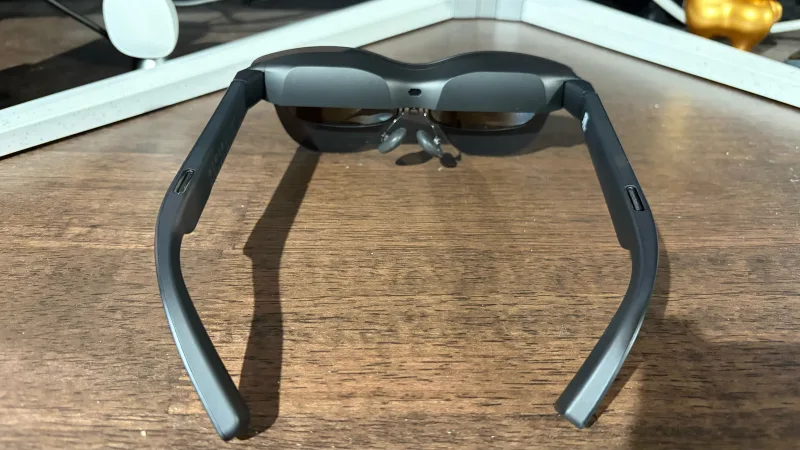
RayNeo 4 Pro, by contrast, has no camera and doesn’t support photo/video capture at all, which removes the most common trigger for public discomfort. Its purpose is clearly «display-first» (e.g., 0.6-inch micro‑OLED, HDR10, 120Hz), so it typically reads as private viewing rather than recording.
Conclusion: For social comfort around strangers, RayNeo 4 Pro has the edge simply because no camera means less perceived surveillance.
Ray-Ban Meta also carries heavier privacy baggage because it relies on app/online features: it requires the Meta AI mobile app for pairing and operation, and numerous privacy concerns have been raised about data collection and potential misuse. Multiple threads raise concerns and complaints around misuse and privacy implications for Meta’s smart glasses (Multiple concerns raised), which matters if you’re sensitive to platform-linked data flows.
RayNeo 4 Pro is less centered on cloud/app-driven capture and more like a wired external monitor, using USB‑C with DisplayPort from a host device. While that doesn’t automatically make it «private» in a technical sense, it avoids the optics and data anxieties tied to an always-ready camera and a tightly integrated social/AI ecosystem.
Conclusion: On privacy optics and reducing bystander suspicion, RayNeo 4 Pro is the safer choice; Ray-Ban Meta is better only if you explicitly want camera-first features and accept the platform/privacy trade-offs.
Winner: RayNeo 4 Pro
The Bottom Line
After digging into the real-world differences, this matchup comes down to a simple split: capture-first vs display-first.
You want hands-free stories, travel clips, and quick POV video: The Ray-Ban Meta is the clear pick thanks to its 12MP camera and up-to-3K recording built around fast, voice-led capture.
You want a private big screen for Netflix/YouTube on the go: Choose the RayNeo 4 Pro, since it’s a true wearable display with HDR10, high brightness, and a large virtual-screen experience.
You want a second screen for a laptop/phone (focus sessions): The RayNeo 4 Pro fits better because its USB‑C DisplayPort «external monitor» model is designed for desk/plane/train viewing workflows.
You mostly want calls, voice assistant, and everyday ‘smart’ convenience: Go with the Ray-Ban Meta for its wireless connectivity and app/assistant-led experience that’s built for day-to-day communication.
You’re sensitive to social privacy vibes in public spaces: The RayNeo 4 Pro is the safer choice since the lack of a camera reduces bystander discomfort and perceived recording risk.
On balance, there isn’t one universal winner because the strengths barely overlap: Ray-Ban Meta dominates everyday smart/capture use, while RayNeo 4 Pro wins decisively anywhere a real on-face screen matters—just remember Meta’s advantage comes with camera/privacy trade-offs, and RayNeo’s comes with a tethered, compatibility-dependent setup.
Pick the model that matches your top scenario, then sanity-check compatibility (for RayNeo) or your tolerance for app/ecosystem/privacy concerns (for Meta), and buy at today’s lowest in-stock price.
FAQ
Is RayNeo 4 Pro real AR or more like a wearable monitor?
Can Ray-Ban Meta replace AR display glasses for watching videos?
Do Ray-Ban Meta glasses need an app to work?
Does RayNeo 4 Pro work without a phone or laptop connected?
Which is better for gaming: Ray-Ban Meta or RayNeo 4 Pro?
Which is more comfortable for all-day wear?
What are common issues reported with Ray-Ban Meta glasses?
Which smart glasses are better for privacy in public settings?
"Images are used for editorial and informational purposes only. All trademarks and images belong to their respective owners."
New Draft 2026-03-25 01:21
- Track daily health with a smart ring → Oura Ring 4 vs Samsung Galaxy Ring: Best Smart Ring?
- Fitness monitoring and smartphone integration → Apple Watch Series 10 vs Samsung Galaxy Watch 6
- Optimize training and recovery → WHOOP 5.0 vs Oura Ring 4: Best for Recovery & Training?
- Choose earbuds for commuting with superior audio quality → Galaxy Buds 3 Pro vs Liberty 4 Pro vs Bose Ultra Open