
Instant Pot Duo Plus vs Ninja HyperHeat 9-in-1 6.5-qt Pressure Cooker: Durable Daily Driver or Quick Weeknight Companion?
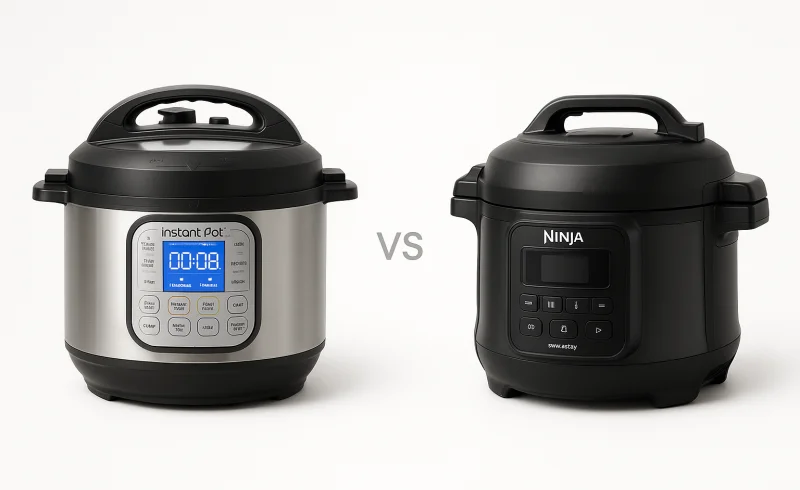
Compare the Instant Pot Duo Plus with Ninja HyperHeat to determine the best pressure cooker for your needs. Discover features like stainless steel durability, nonstick convenience, quick cooking, and recipe compatibility to make an informed decision.
TL;DR
Quick Decision
- If you want a stainless steel workhorse with unmatched recipe plug-and-play and long-term durability → choose Instant Pot Duo Plus
- If you care about fast sear-to-pressure workflows, easy nonstick cleanup, and one-pot weeknight speed → choose Ninja HyperHeat 9-in-1 6.5-qt Pressure Cooker
- If you just need a basic pressure cooker and don’t mind a small learning curve → either works, but the Instant Pot’s recipe ecosystem makes sticking to blogs and cookbooks far simpler
Key Differentiators
The Instant Pot’s 18/8 tri-ply stainless pot shrugs off metal utensils and high heat, rewarding consistent batch cooking, but demands good sauté technique to avoid sticking. The Ninja’s ceramic nonstick pot turns browning-and-pressure cycles into a smoother, nearly stick-free experience and is dishwasher safe, though it requires gentler care to preserve the coating long-term. While both deliver 9 functions, only the Instant Pot benefits from a massive community of recipes written specifically for its presets—a real advantage if you follow them verbatim.
Who Should Skip Both
If you need near-instant speed for small portions or expect a fully app-guided cooking journey, neither excels—a stovetop pressure cooker or a smart countertop oven may fit better.
| Feature | Instant Pot Duo Plus | Ninja HyperHeat 9-in-1 6.5-qt Pressure Cooker |
|---|---|---|
| Power | ||
| Voltage | 120 V~ | 120 volts |
| Wattage | 1000 watts | 1,200 watts |
| Capacity | ||
| Cooker Capacity | 6.0 Quart | 6.5 Qt |
| Approximate Serving Capacity | Up to 6 servings | 8–10 people |
| Warranty | ||
| Warranty | One (1) Year Limited Warranty | One (1) Year Limited Warranty |
| Construction | ||
| Inner Pot Material | 18/8 stainless steel pot with tri-ply bottom | Aluminum with nonstick ceramic coating |
| Cooking Functions | ||
| Rice | Supported | Supported |
| Steam | Supported | Supported |
| Yogurt | Supported | Supported |
| Keep Warm | Supported | Supported |
| Slow Cook | Supported | Supported |
| Sous Vide | Supported | Supported |
| Sear/Sauté | Supported | Supported |
| Cake Program | Supported | Not supported |
| Pasta Program | Not supported | Supported |
| Pressure Cook | Supported | Supported |
| Number of Cooking Functions | 9 | 9 |
📑 Table of Contents
Cooking Performance & Speed
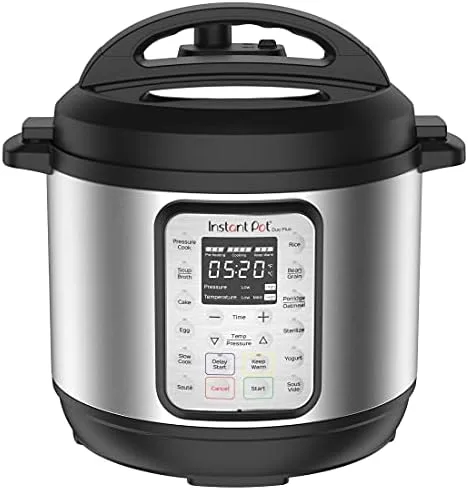
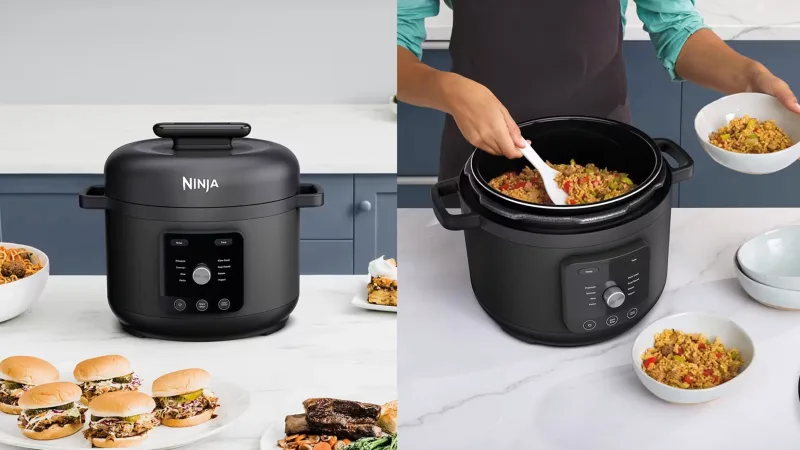
Instant Pot Duo Plus runs at 1000W (120 V~), which is enough for dependable pressure cooking but can make the «time to start cooking» feel longer on short recipes because the unit still needs to preheat and come to pressure. In practice, it tends to reward a set-and-forget routine—lock the lid, pick a program, and let it run consistently, especially for staples like beans, grains, and stews.
Ninja HyperHeat 9-in-1 6.5-qt steps up to 1,200W (120 volts) and is explicitly positioned to speed things up, with third-party reporting of a claim to cook «up to twice as fast» as a standard pressure cooker. That extra wattage can translate into stronger heating during the ramp-up and more responsive transitions when you move between sautéing, pressure, and finishing steps.
Conclusion: On pure heating potential and «get to pressure sooner» expectations, Ninja has the edge—but both still have unavoidable preheat/pressurization overhead that can blunt the real-world difference on quick sides.
Instant Pot Duo Plus uses an 18/8 stainless steel inner pot with a tri-ply bottom, which is durable and forgiving long-term but can demand more technique when sautéing—sticking can slow you down if you need extra deglazing before you seal and pressure cook. That makes it excellent for repeatable pressure cycles, but not always the fastest path if your recipe starts with aggressive browning or ends with reduction.
Ninja HyperHeat 9-in-1 6.5-qt uses an aluminum pot with a nonstick ceramic coating (reported as dishwasher safe), which generally makes sauté-to-pressure workflows quicker because food releases more easily and cleanup friction is lower. It also aligns with Ninja’s «stovetop-style finishing in the pot» approach—browning, pressure cooking, then reducing without switching cookware.
Conclusion: For weeknight cooking that relies on fast sautéing and easy release before/after pressure, Ninja is typically faster in the full workflow, while Instant Pot prioritizes durability and consistency over speed in those phases.
Winner: Ninja HyperHeat 9-in-1 6.5-qt Pressure Cooker
Pot Design & Material
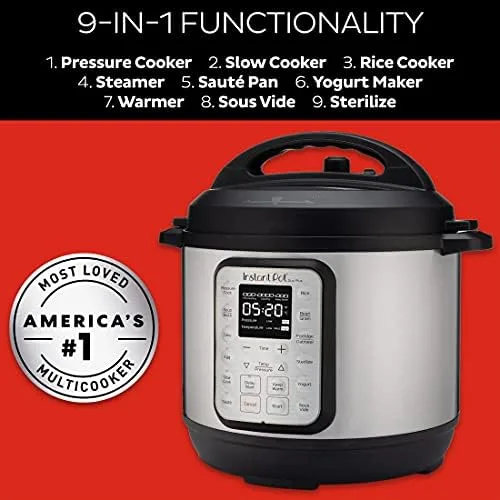
Instant Pot Duo Plus uses an 18/8 stainless-steel inner pot with a tri‑ply bottom, a combination that’s well-suited to high-heat sautéing, repeated temperature swings, and long-term use with fewer «care rules.» In practical terms, stainless is more tolerant of metal utensils and abrasive scrubbing, which matters if the cooker is a daily staple for beans, grains, stews, and batch cooking.
Ninja HyperHeat 9‑in‑1 6.5‑qt Pressure Cooker uses an aluminum pot with a nonstick ceramic coating, and the pot is positioned as easy to clean (including being described as dishwasher safe in review coverage). The trade-off is that ceramic/nonstick surfaces generally demand gentler habits—avoiding metal tools, aggressive scouring, and overheating—to preserve the coating over time.
Conclusion: Duo Plus has the edge for durability and long-term wear because 18/8 tri‑ply stainless is inherently less sensitive to utensil choice and cleaning approach than a ceramic-coated aluminum pot.
Instant Pot Duo Plus can be more «technique-dependent» during sautéing and reductions because stainless is more prone to sticking if heat management and deglazing aren’t dialed in. That makes it better for users who accept a learning curve in exchange for a pot that ages well cosmetically and structurally.
Ninja HyperHeat 9‑in‑1 6.5‑qt Pressure Cooker tends to support a more forgiving «one-pot flow» for browning and sauce work because nonstick ceramic reduces adhesion—often lowering cleanup friction after sticky or delicate dishes. It also pairs with the cooker’s slightly larger 6.5‑qt capacity (vs 6.0‑qt on the Duo Plus), which can matter when sautéing bulky ingredients before pressure cooking.
Conclusion: Ninja has the edge for low-stick cooking and easy cleanup, while Instant Pot is the safer bet if you prioritize a pot that tolerates rougher, everyday use.
Winner: Instant Pot Duo Plus — the stainless 18/8 tri‑ply pot is a more defensible long-term ownership advantage than ceramic nonstick, even though Ninja’s ceramic-coated pot can be easier day-to-day for sticking and cleanup.
Cooking Functions & Programs
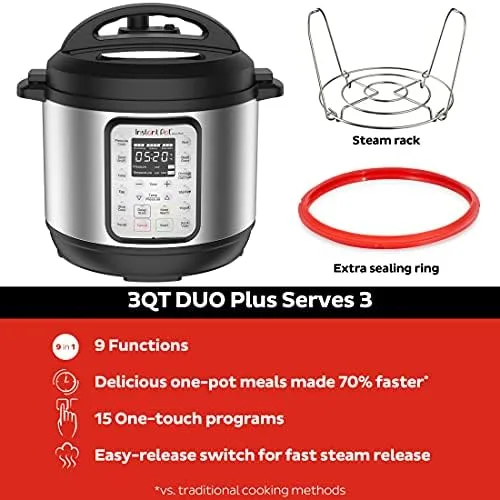
Instant Pot Duo Plus is a 9‑in‑1 with core staples covered: pressure cook, slow cook, rice, steam, sous vide, yogurt, sear/sauté, and keep warm (plus one extra program). Its standout add-on is a dedicated Cake program (supported), which is useful if you want a one-touch preset intended for simple baking-style results in a multi-cooker. In practice, it also aligns well with «Instant Pot» recipe conventions, so many third-party recipes map cleanly to its program set.
Ninja HyperHeat 9-in-1 6.5-qt Pressure Cooker also delivers 9 programmable functions, including the same fundamentals—pressure cook, slow cook, rice, sear/sauté, steam, sous vide, yogurt, and keep warm—as cited in third-party reviews and manufacturer materials. Instead of Cake, it adds a dedicated Pasta program (supported), which can reduce guesswork for one-pot pasta workflows. This fits Ninja’s positioning as a fast weeknight cooker where you may sauté, pressure cook, and finish in the same pot.
Conclusion: Function coverage is effectively even (9 vs 9), and neither misses must-have modes; Duo Plus has the edge for baking-oriented «Cake» preset users, while Ninja HyperHeat is more tailored to pasta-first, one-pot weeknight cooking with its dedicated program. Winner: Tie
Ease of Use & Cleaning
Instant Pot Duo Plus is typically easiest when you treat it as a preset-driven «daily driver»: lock the lid, pick a program, set time, and let it run. Its 18/8 stainless steel pot with a tri-ply bottom is durable and utensil-forgiving, but it tends to demand better sauté habits—more oil and more deliberate deglazing—to avoid stuck-on fond when you brown first and pressure-cook second. Instant Pot also documents common pressure-cooking friction points via support content like error codes (e.g., «Ovht» overheating and «noPr» pressure not building), reinforcing that day-to-day ease depends on nailing sealing-ring/valve basics.
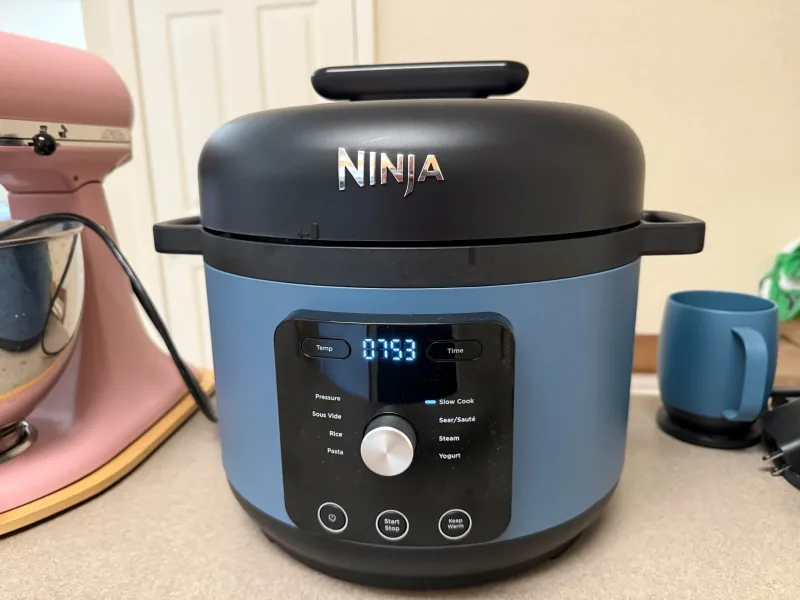
Ninja HyperHeat 9-in-1 6.5-qt Pressure Cooker is built around a smoother sauté-to-pressure workflow, helped by an aluminum pot with nonstick ceramic coating and a higher-power base (1,200 W vs 1,000 W). The nonstick surface generally reduces sticking during browning and makes it simpler to transition into pressure cooking (and then reduce sauces afterward) without pulling food out to prevent scorching. Ninja also positions the removable SimpleServe Pot as easy to clean, and the ceramic-coated pot is cited as dishwasher safe, which can remove a lot of cleanup friction after sticky or sugary cooks.
Conclusion: Ninja HyperHeat has the clearer advantage for hands-on cooking flow and cleanup thanks to its nonstick ceramic pot and higher wattage (1,200 W), while the Instant Pot Duo Plus remains easier for users who want a consistent, preset-first routine and prefer the long-wearing practicality of stainless steel. Winner: Ninja HyperHeat 9-in-1 6.5-qt Pressure Cooker
Recipe Ecosystem & Community
Instant Pot Duo Plus benefits from «Instant Pot» being a de facto recipe standard: a large share of pressure-cooker recipes, blogs, and cookbooks are written to match Instant Pot timing, liquid minimums, and common workflows (like lock-lid → preset → natural release). That matters in practice because you can more often follow recipes verbatim without recalculating for a different platform, especially for staples like beans, grains, stews, and shredded meats. The Duo Plus also has a mature troubleshooting culture around common outcomes like overheating («Ovht») or pressure not building («noPr»), which can shorten the learning curve when results don’t match expectations.
Ninja HyperHeat 9-in-1 6.5-qt Pressure Cooker has plenty of generic pressure-cooker recipes you can adapt, but fewer recipes are written explicitly for «Ninja HyperHeat» defaults. Even though it offers 9 functions like pressure cook, slow cook, rice, pasta, sear/sauté, steam, sous vide, yogurt, and keep warm, the cook-along experience often involves small technique tweaks (e.g., deglazing habits, sauté intensity, and liquid management) rather than plug-and-play replication. In other words, the recipe base is usable, but it’s less standardized around the exact device behavior.
Conclusion: For recipe «plug-and-play» and community troubleshooting, Instant Pot Duo Plus has the clear edge because more recipes and how-tos are written specifically around Instant Pot conventions.
Instant Pot Duo Plus also tends to be the easier long-term ownership pick for parts and accessory compatibility. Its 18/8 stainless-steel inner pot with a tri-ply bottom is a common format in the Instant Pot world, and the brand’s scale typically translates into broader availability for consumables like sealing rings, racks, and replacement pots. That availability reduces downtime if a gasket absorbs odors or a part wears out.
Ninja HyperHeat 9-in-1 6.5-qt Pressure Cooker uses an aluminum pot with a nonstick ceramic coating, which can be very convenient day-to-day but is a more brand-specific ecosystem for replacements and care expectations. Ninja provides official support documentation for the PC200-series models, but the overall third-party accessory and replacement landscape is less «universal Instant Pot» by default. Over years of use, that can mean fewer interchangeable options when you need a spare pot or extra sealing parts.
Conclusion: On accessories and replacement-part ecosystem depth, Instant Pot Duo Plus is the more defensible choice for most buyers who value easy sourcing and broad compatibility.
Winner: Instant Pot Duo Plus
Long-Term Durability & Maintenance
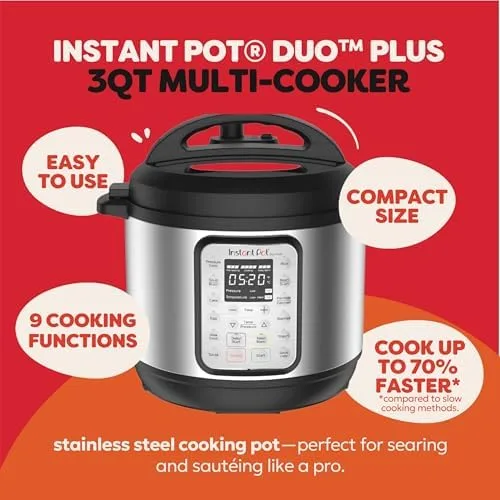
Instant Pot Duo Plus has an 18/8 stainless-steel inner pot with a tri-ply bottom, which is inherently tolerant of long-term wear and metal utensils without relying on a coating. Practically, that makes it the lower-risk choice for owners who sear frequently or don’t want to baby the cooking surface over time. Both the cooker and pot are built around a «repeatable staples» workflow, which tends to minimize edge-case use that can accelerate wear.
Ninja HyperHeat 9-in-1 6.5-qt Pressure Cooker uses an aluminum pot with a nonstick ceramic coating, and sources note it’s dishwasher safe—a real maintenance convenience day to day. The trade-off is durability sensitivity: ceramic nonstick generally demands more careful utensil choice and heat discipline to avoid premature wear compared with bare stainless. If you’re strict about nonstick care, it can stay easy-clean for a long time, but it’s a higher-maintenance surface profile.
Conclusion: On inner-pot longevity, Instant Pot Duo Plus has the defensible edge because stainless steel (18/8) is less failure-prone than a ceramic-coated nonstick surface under typical long-term use.
Instant Pot Duo Plus also benefits from an ownership model that assumes regular, simple upkeep—cleaning valves, keeping the sealing ring seated, and checking the float valve—since pressure issues can surface if those parts aren’t maintained (e.g., manufacturer guidance emphasizes the float valve and sealing ring condition). When something does wear out, the broader «Instant Pot» ecosystem tends to make sourcing common consumables (like sealing rings and replacement inner pots) relatively straightforward, reducing downtime.
Ninja HyperHeat 9-in-1 6.5-qt requires the same core maintenance (gasket/valve hygiene) and includes a removable pot designed for easier cleanup. However, replacement-part convenience is less evidenced here beyond official model coverage (PC200/PC201 series support), and the coated pot adds a second long-term variable: even if the cooker base lasts, pot coating wear can be the first component that forces a replacement decision.
Conclusion: For long-term ownership friction—especially parts/accessory availability and «keep it running» maintenance—Instant Pot Duo Plus is the safer bet based on the stronger standardization and lower-risk pot material.
Winner: Instant Pot Duo Plus
The Bottom Line
After weighing speed, pot design, programs, cleanup, and long-term ownership, the choice comes down to whether you value faster weeknight workflow or a lower-risk, more standardized platform.
Best for Speed and Sautéing: The Ninja HyperHeat 9-in-1 6.5-qt Pressure Cooker wins thanks to its higher wattage and nonstick ceramic pot, which make browning and sauté-to-pressure transitions feel quicker and less fussy.
Best for Recipe Followers: The Instant Pot Duo Plus is the clear pick because the Instant Pot recipe ecosystem is the closest thing to a plug-and-play standard for timings, liquids, and troubleshooting.
Best Budget & Flexible Sizing: The Instant Pot Duo Plus (3‑quart variant) is the smarter buy if cost and footprint matter, since the lineup’s smaller capacity option keeps entry price and space requirements down.
Best for Long‑Term Durability: The Instant Pot Duo Plus takes it on inner-pot longevity and ownership friction—its 18/8 tri-ply stainless pot is simply less sensitive to wear than a coated surface, with easier parts sourcing over time.
Overall, the Instant Pot Duo Plus is the more dependable long-term pick: it pairs a durable stainless pot with a massive recipe/community advantage and a lower lifetime-cost ownership model—even though the Ninja HyperHeat is better for nonstick convenience and faster sear-to-pressure workflows.
If you want the broadest recipe compatibility and the safest «buy once, use for years» bet, go Duo Plus; if your priority is fast weeknight sautéing with easier release and cleanup, the HyperHeat is the better fit.
FAQ
Which pressure cooker cooks faster?
Can I use Instant Pot recipes in the Ninja HyperHeat?
Which one is easier to clean?
How much food can the Ninja HyperHeat 6.5-qt cook?
What cooking functions does the Ninja HyperHeat have?
What does the 'Ovht' error mean on an Instant Pot Duo Plus?
Where should I place my Instant Pot Duo Plus?
📄 Used Manuals & Documentation
Instant Pot Duo Plus
Ninja HyperHeat 9-in-1 6.5-qt Pressure Cooker
"Images are used for editorial and informational purposes only. All trademarks and images belong to their respective owners."