
Amazon Basics Digital Kitchen Scale vs Ozeri Pronto: Everyday Cooking or Precision Baking?
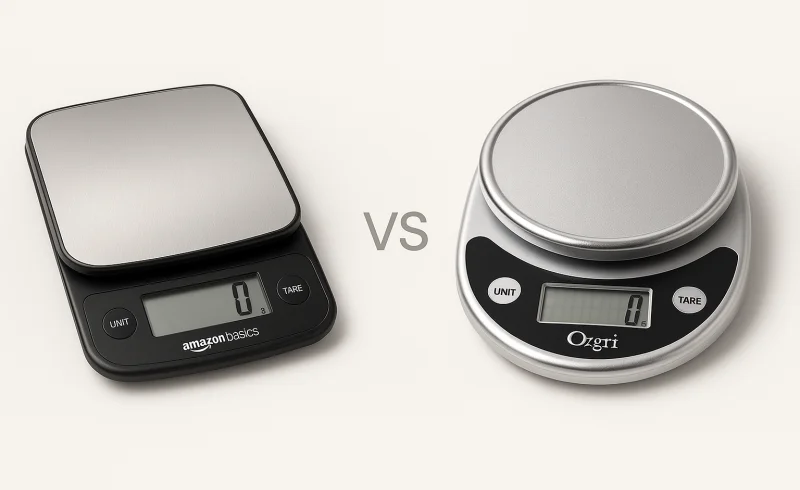
Compare the Amazon Basics Digital Kitchen Scale and Ozeri Pronto Digital Kitchen Scale to identify which suits your culinary needs best. Evaluate measurement precision, unit flexibility, design quality, and everyday usability to make an informed decision for c...
TL;DR
- If you want a no-learning-curve scale that just works for quick weigh-ins and shared kitchens → choose Amazon Basics Digital Kitchen Scale.
- If you need finer 0.1 g precision for baking, plus kg and lbs:oz for international recipes → choose Ozeri Pronto Digital Kitchen Scale.
- If your cooking rarely demands sub-gram accuracy or jumping between unit systems → either handles basic tasks well, but Amazon Basics keeps things simpler.
The real trade-off is measurement resolution and unit flexibility versus interface simplicity. Ozeri Pronto reads in 0.1 g steps below 1000 g and includes kg and lbs:oz modes that serious bakers and global recipe followers will use heavily. Amazon Basics sticks to 1 g resolution and core household units, so there’s less button-cycling and less to misinterpret—ideal if you just want a predictable scale, not a multi-mode tool. Both share an 11 lb capacity and wipe-down stainless tops, but Ozeri’s long-running design makes replacing it with the same experience easier down the line.
If you need app-based nutrition logging, recipe syncing, or a truly sealed design that can take heavy spills without care, look at smart scales or commercial-grade alternatives instead—neither of these is built for that.
| Feature | Ozeri Pronto Digital Kitchen Scale | Amazon Basics Digital Kitchen Scale |
|---|---|---|
| Power | ||
| Battery Type | 2 AAA | 2 AAA |
| Batteries Included | Yes | Yes |
| General | ||
| Scale Type | Digital multifunction kitchen and food scale | Digital kitchen scale |
| Capacity | ||
| Maximum Capacity | 11 pounds | 11 pounds |
| Measurement Resolution | 0.1 g increments below 1000 g | 1 gram |
| Features | ||
| Display Type | LCD | LCD |
| Tare Function | Yes | Yes |
| Dimensions | ||
| Item Weight | 12 ounces | 0.38 Kilograms |
| Product Dimensions | 8.2 x 1.8 x 6 inches | 8.3 x 7 x 1.3 inches |
| Measurement | ||
| Supported Units | g, lbs, lbs:oz, oz, ml, and kg | pounds, ounces, grams, fluid ounces, and milliliters |
📑 Table of Contents
Measurement Precision & Resolution
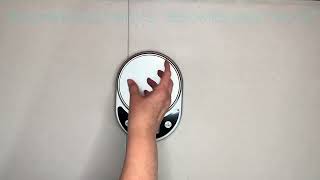
Amazon Basics Digital Kitchen Scale uses a 1 g measurement resolution, and it also has a 2 g minimum weight requirement before it will register a reading. In practice, that means tiny additions (pinches of salt, small yeast doses, spices) can disappear into rounding, and you may need to add more ingredient before the display changes.
Ozeri Pronto Digital Kitchen Scale uses Variable Graduation Technology with 0.1 g increments below 1000 g, while still reaching the same 11 lb maximum capacity as the Amazon scale. That finer step size is designed for small-quantity work where 1-gram jumps are too coarse, especially when you’re «sneaking up» on a target weight.
Conclusion: Ozeri Pronto is the clear winner for precision and resolution, because 0.1 g (sub-1000 g) vs 1 g is a meaningful advantage for baking and other small-dose tasks—and Amazon’s 2 g minimum further limits ultra-small weighing.
Amazon Basics can still be «accurate enough» for general cooking where ingredients are typically measured in tens or hundreds of grams, and both scales support tare for container weighing. However, the 1 g resolution sets a hard ceiling on how finely you can dial in a recipe.
Ozeri Pronto benefits most when your workflow involves slow pours and micro-adjustments—because the display can reflect changes at the 0.1 g level (below 1000 g). That said, real kitchens add noise (counter vibration, bumping a bowl, drafts), so you’ll still need stable technique; higher resolution doesn’t eliminate stabilization limits, it just makes small differences visible.
Winner: Ozeri Pronto Digital Kitchen Scale
Unit Flexibility & Modes
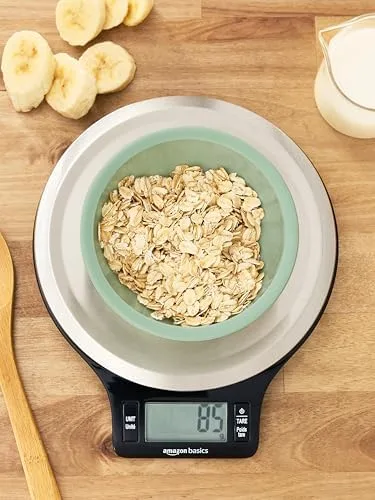
Amazon Basics Digital Kitchen Scale supports pounds, ounces, grams, fluid ounces, and milliliters. That covers the most common U.S.-centric cooking workflows plus a convenience option for liquids, without adding more modes than many casual cooks will ever use. In practice, that «fewer choices» approach can reduce unit-cycling friction in shared kitchens where people just want the scale to behave predictably.
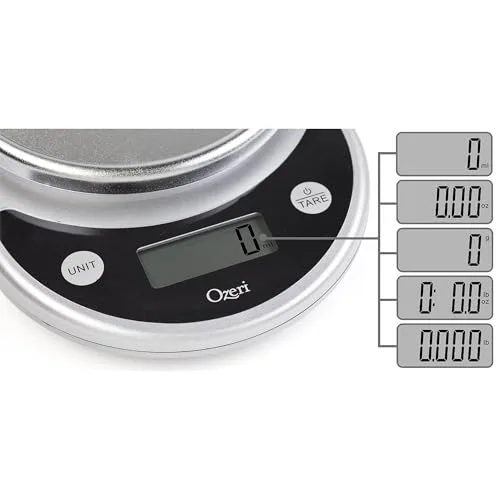
Ozeri Pronto Digital Kitchen Scale, by contrast, supports g, oz, lbs, lbs:oz, ml, and kg. The added kilograms and lbs:oz compound unit are genuinely useful for international recipes and for users who think in mixed imperial weights (e.g., 1 lb 4 oz) without doing mental conversion. This broader unit set aligns with the Pronto’s «multifunction» positioning and common meal-prep/baking workflows.
Conclusion: Ozeri Pronto has the edge on pure unit flexibility because it includes kg and lbs:oz on top of the basics, while Amazon Basics wins if you prioritize a simpler, lower-interpretation interface.
Amazon Basics Digital Kitchen Scale includes milliliters and fluid ounces, which can be convenient when a recipe calls for liquids—but it’s still fundamentally a kitchen scale, not a volumetric tool. Per the provided context, «ml» modes on scales are best treated as approximations for water-like liquids (density differences in oil, honey, and syrups can skew results). The key advantage here is convenience, not lab-grade volume accuracy.
Ozeri Pronto Digital Kitchen Scale also offers ml, and its marketing/usage patterns often encourage people to lean on that mode more heavily. The same limitation applies: ml readouts are a shortcut for water-like liquids, not a guarantee of true milliliters across ingredient types. Where Ozeri benefits is that the ml mode sits alongside kg and lbs:oz, so it better supports rapid unit switching mid-recipe—if you actually need that.
Conclusion: Tie on liquid modes (both are approximations), but Ozeri Pronto is more versatile overall for multi-unit recipes—while Amazon Basics is less fussy if you rarely switch units.
Winner: Ozeri Pronto Digital Kitchen Scale — its kg + lbs:oz options make it meaningfully more flexible for international and multi-unit workflows, even though Amazon Basics may feel smoother for users who want fewer modes to cycle through.
Design & Build Quality
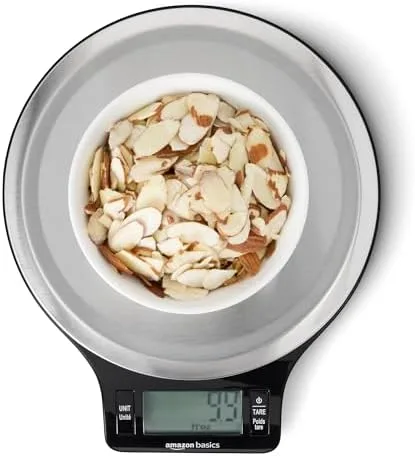
Amazon Basics Digital Kitchen Scale uses food-safe, BPA-free plastic components with a stainless steel platform, aiming for a straightforward, wipe-down-friendly top surface. Its body size is 8.3 x 7 x 1.3 in and weight is 0.38 kg, which gives it a fairly stable footprint for typical bowls. That said, it’s still a consumer plastic-body scale rather than a ruggedized, sealed device.
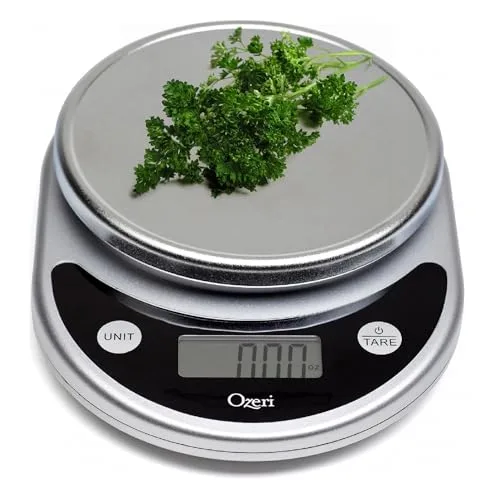
Ozeri Pronto Digital Kitchen Scale is similarly a plastic-bodied digital scale, and the brand explicitly positions it as a «durable design that cleans easily and stores neatly.» Its dimensions are 8.2 x 6 x 1.8 in and it weighs 12 oz, making it slightly narrower and notably lighter than the Amazon Basics unit. The extra thickness (1.8 in vs 1.3 in) can help keep the display and buttons accessible, but it doesn’t change the fact that it’s not built like commercial prep equipment.
Conclusion: On pure materials and form factor, they’re more alike than different—stainless-and-plastic builds with nearly identical footprints—so there’s no clear winner for build quality. Practical durability is likely to hinge more on how messy your kitchen workflow is (flour dust, sticky spills) than on the modest size/weight differences.
Winner: Tie
User Experience & Daily Workflow
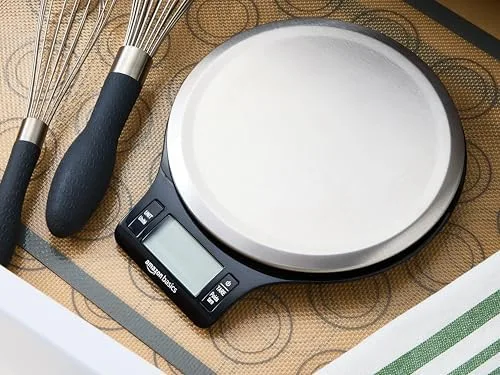
Amazon Basics Digital Kitchen Scale is a more single-purpose interface by design: it’s a «digital kitchen scale» (not marketed as multifunction), with tare, an LCD, and the common kitchen units (grams/ounces/pounds plus fl oz and ml). In shared kitchens or for quick portion checks, that straightforwardness reduces interpretation—turn it on, tare, weigh, done. One caveat: a forum post claims it «requires calibration prior to use,» which—if true—adds friction versus a pure out-of-box workflow.
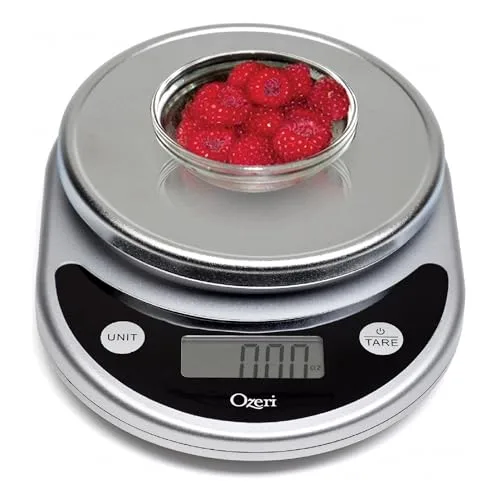
Ozeri Pronto Digital Kitchen Scale is explicitly positioned as a «digital multifunction kitchen and food scale,» and its unit set is broader on paper: g, kg, oz, lbs, lbs:oz, ml. That’s useful if you frequently jump between recipe conventions (e.g., lbs:oz for meat, grams for baking), but for minimalists it can translate into extra mode-cycling during prep. It also supports the same core workflow staples (LCD + tare) while leaning into multi-unit flexibility.
Conclusion: Amazon Basics has the edge for «no-learning-curve» daily weighing, while Ozeri Pronto suits cooks who routinely switch unit conventions and want that flexibility close at hand.
Amazon Basics Digital Kitchen Scale doesn’t document auto-off behavior in the provided specs/facts, so battery-saving expectations are harder to set even though it uses the same 2×AAA (included) setup as its competitor. In day-to-day use, uncertainty here mainly matters if you frequently forget to power down between steps.
Ozeri Pronto Digital Kitchen Scale, by contrast, has a stated auto-off timer: it turns off after 2 minutes of inactivity to conserve battery. With the same 2×AAA (included) power, that predictable shutoff can reduce «dead scale» moments in busy meal-prep routines.
Conclusion: Ozeri Pronto wins on power-management clarity thanks to the explicitly stated 2-minute auto-off.
Amazon Basics Digital Kitchen Scale has an 8.3 × 7 × 1.3 in footprint, and like most compact scales, real workflow friction often comes from container overhang: large bowls can block the LCD and make tare/unit presses awkward. Its 11 lb capacity is ample, but the practical limit in use is often visibility, not max load.
Ozeri Pronto Digital Kitchen Scale is 8.2 × 6 × 1.8 in, slightly narrower but thicker, and it faces the same bowl-overhang reality during baking and mixing. Although Ozeri is marketed as «cleans easily and stores neatly,» button-and-seam hygiene still tends to be a day-to-day constraint at this price tier when flour or sticky ingredients get involved.
Conclusion: Tie on everyday ergonomics—both are compact, both can have displays obscured by big bowls, and neither format fundamentally solves that workflow constraint.
Winner: Tie — Amazon Basics is more straightforward for «just weigh it» usage, while Ozeri Pronto offers clearer battery-saving behavior and a more unit-flexible routine for users who actually benefit from it.
Long-Term Reliability & Maintenance
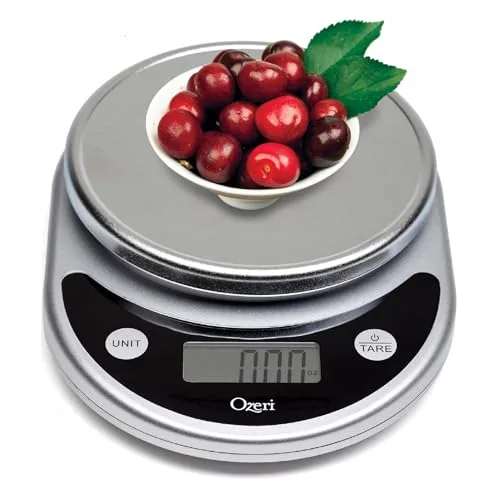
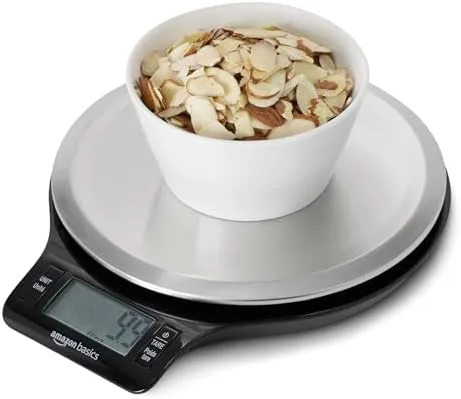
Amazon Basics Digital Kitchen Scale is best understood as a simple, low-commitment tool: it runs on 2×AAA (included) and covers the standard 11 lb capacity, but the long-term ownership model tends to be «use it, then replace it» rather than maintain or repair. A niche maintenance consideration is that at least one community post says it requires calibration prior to use—not a deal-breaker, but it adds a bit of «keep it behaving» overhead beyond just changing batteries. Over time, button seams and edges are where flour dust and sticky residue typically accumulate, which can affect day-to-day satisfaction even when the scale still works.
Ozeri Pronto Digital Kitchen Scale also uses 2×AAA (included) and matches the same 11 lb maximum capacity, but it has two practical traits that can make long-term use feel steadier: its long-running, widely distributed model family, and consistent familiarity for replacements. Ozeri positions the Pronto as a «durable design that cleans easily,» and typical long-term wear is more mundane than catastrophic—battery contacts occasionally needing a quick clean, buttons losing crispness, and cosmetic scuffing from sliding on counters. There are isolated reports that it «may not read accurately under certain conditions,» which aligns with how most kitchen scales can drift with vibration, drafts, or slow-pour workflows rather than indicating a systemic defect.
Comparative conclusion: Both scales share the same 11 lb capacity and AAA power, and neither is built for restaurant-level abuse—careful handling and basic cleaning matter more than specs here. Ozeri Pronto has the edge for long-term ownership because its established, repeatable product line makes it easier to replace with the «same experience» years later, while Amazon Basics is more of a straightforward, replace-if-needed purchase.
Winner: Ozeri Pronto Digital Kitchen Scale
The Bottom Line
After breaking down precision, unit modes, daily workflow, and long-term ownership, the choice comes down to whether you need finer control or just a simple, dependable scale for everyday weighing.
Precision Baking & Pastry: Choose the Ozeri Pronto Digital Kitchen Scale, because its 0.1g resolution (below 1000g) avoids the rounding—and the 2g minimum-read limitation—that can throw off small-dose ingredients.
Everyday Meal Prep & Simple Portions: Pick the Amazon Basics Digital Kitchen Scale, since its 1g accuracy is plenty for proteins and produce, and it keeps the workflow straightforward: tare, weigh, done.
Multi-User or Shared Kitchen: Go with the Amazon Basics Digital Kitchen Scale, because its simpler unit set and «no-fuss» interface reduce mode-cycling and confusion when multiple people use it.
Long-Term Daily Driver: Buy the Ozeri Pronto Digital Kitchen Scale, as its established, widely distributed model line and consistent day-to-day experience make it the steadier long-term pick.
Overall, Ozeri Pronto Digital Kitchen Scale earns the win by pairing meaningfully better precision with a broader unit set (including kg and lbs:oz) and clearer power-management behavior for real kitchen routines. The trade-off is that Amazon Basics Digital Kitchen Scale can feel simpler and more predictable if you rarely switch units and just want quick weigh-ins at the lowest price.
If you bake by weight or routinely «sneak up» on target grams, the Pronto is worth the small step up; if your priority is basic portions on a tight budget, the Amazon Basics scale still delivers the essentials reliably.
FAQ
Is the Ozeri Pronto more accurate than the Amazon Basics scale?
Can these scales accurately measure liquids?
Do the scales come with batteries included?
Do these scales have an automatic shut-off feature?
What are the dimensions of the Amazon Basics and Ozeri Pronto scales?
Do both scales have a tare function?
📄 Used Manuals & Documentation
Amazon Basics Digital Kitchen Scale
"Images are used for editorial and informational purposes only. All trademarks and images belong to their respective owners."