
Breville Barista Pro vs Ninja Luxe Cafe Premier: Espresso Craftsmanship or Countertop Versatility?
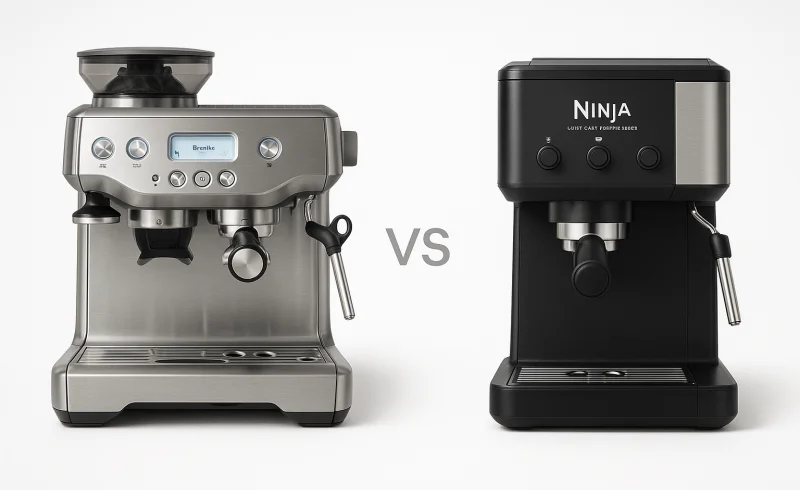
Compare Breville Barista Pro and Ninja Luxe Cafe Premier to choose between espresso precision and coffee versatility. Breville offers 30 grind settings and manual steaming, ideal for espresso purists. Ninja excels in multi-drink households with its 3-in-1 desi...
TL;DR
Quick Decision:
- If you want to develop hands-on espresso skills and enjoy the daily ritual of dialing in grind and steaming milk → choose Breville Barista Pro.
- If your household needs espresso, drip coffee, and cold brew from one machine, and you want the appliance to guide dosing and frothing for consistent results → choose Ninja Luxe Cafe Premier Series.
Key Differentiators: The Breville Barista Pro is a dedicated semi-automatic with 30 grind settings and a manual steam wand—it rewards practice but ties quality directly to your technique. The Ninja Luxe Cafe Premier Series is a 3-in-1 system that adds drip and cold brew, leaning on weight-based dosing and hands-free frothing to deliver cross-beverage convenience with less manual decision-making. The real trade-off is between direct control and long-term hardware simplicity (Breville) versus multi-drink versatility and guided repeatability (Ninja).
Who Should Skip Both: If you want a completely hands-off experience with no dial-in, cleaning routine, or technique required, look instead to a super-automatic espresso machine or a premium pod brewer.
| Feature | Ninja Luxe Cafe Premier Series | Breville Barista Pro Espresso Machine |
|---|---|---|
| Milk | ||
| Cold milk frothing | Supported | Not supported |
| Milk frothing system | Hands-free Dual Froth System | Manual steam wand |
| Power | ||
| Power | 1650W | 1680 W |
| Voltage | 120V~, 60Hz | 120 V ~ 60 Hz |
| Brewing | ||
| Cold brew brewing | Supported | Not supported |
| Drip coffee brewing | Supported | Not supported |
| Water reservoir capacity | 70 oz | 68 fl oz (2L) |
| General | ||
| Product type | 3-in-1 espresso, drip coffee & cold brew machine | Espresso machine |
| Grinding | ||
| Grinder type | Conical burr | Conical burr |
| Grind settings | 25 | 30 |
| Integrated grinder | Yes | Yes |
| Weight-based dosing | Supported | Not supported |
| Bean hopper capacity | 12 oz (340 g) | 8.8 oz (250g) |
| Grind size recommendations | Supported | Not supported |
| Dimensions & Build | ||
| Tamper | Assisted tamper | Integrated removable 54mm tamper |
| Material | Stainless Steel | Brushed Stainless Steel |
| Dimensions | 12.95 in L x 13.39 in W x 14.57 in H | 13.5" x 13.9" x 13.5" (WxDxH) |
| Removable bean hopper | Yes | Yes |
| Removable water reservoir | Yes | Yes |
📑 Table of Contents
Brewing Versatility
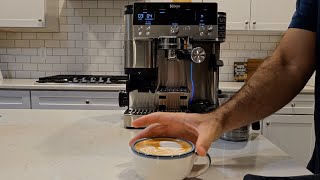
Breville Barista Pro Espresso Machine is a dedicated espresso machine, so its drink range is fundamentally espresso-first. In the provided specs, drip coffee brewing and cold brew brewing are both Not supported, which means any non-espresso coffee styles typically require a separate brewer.
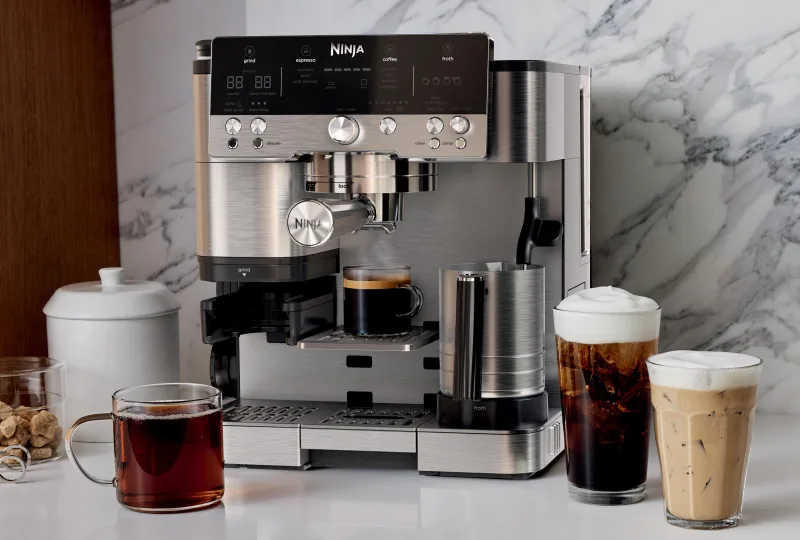
Ninja Luxe Cafe Premier Series is explicitly a «3-in-1 espresso, drip coffee & cold brew machine» and lists drip coffee brewing: Supported and cold brew brewing: Supported. That widens the menu without needing extra countertop gear, aligning with mixed-beverage households that rotate between espresso-style drinks and batch-style coffee.
Conclusion: On sheer brewing range, Ninja clearly wins because it adds drip + cold brew modes that the Breville doesn’t offer.
Breville Barista Pro Espresso Machine keeps things convenient on capacity: its water reservoir is 68 fl oz (2L), which is solid for several espresso drinks before refilling. Because it’s espresso-focused, that tank size is mainly serving shorter pulls and steaming workflows.
Ninja Luxe Cafe Premier Series is nearly identical for day-to-day refills at 70 oz, despite supporting more beverage types. That means its added drip/cold-brew functionality doesn’t come with an obvious convenience penalty in reservoir size.
Conclusion: Reservoir capacity is effectively a tie (68 oz vs 70 oz), but paired with broader brew modes, Ninja has the practical edge for versatility without added refill hassle.
Winner: Ninja Luxe Cafe Premier Series
Espresso Quality & Control
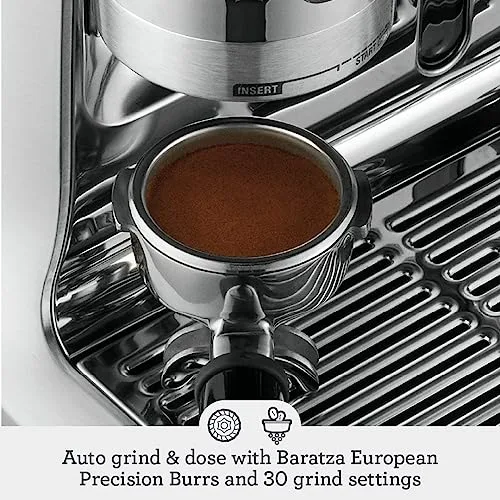
The Breville Barista Pro is built around manual espresso technique: you’re responsible for dialing in grind, puck prep, and shot timing, and it gives you 30 grind settings to make small, repeatable adjustments as beans change. That extra step of granularity matters when you’re chasing target flow/time, but it also means a steeper learning curve—some users report needing patience to hit consistent pour times. Breville’s own troubleshooting also calls out classic semi-manual failure points (extraction problems, pressure, leaks, steam wand, grinder performance), reinforcing that results are tightly coupled to setup and maintenance discipline.
The Ninja Luxe Cafe Premier Series pushes espresso toward consistency through guidance and automation, notably weight-based dosing (supported) plus grind size recommendations (supported), with a 25-setting conical burr grinder. That design reduces the number of «micro-decisions» that can derail a shot, especially in multi-user households, but it can feel less transparent if you like controlling every variable end-to-end. On the reliability side, some users note leaks and grinder-related issues, which can directly impact espresso consistency if they show up.
On raw electrical capacity, they’re essentially even—1680W (Breville) vs 1650W (Ninja)—so espresso quality differences mostly come down to workflow and control rather than heating power. Breville has the clearer advantage for espresso purists because its more granular 30-step grind control and manual-first design better support iterative dialing-in, while Ninja’s edge is repeatability via weight-based dosing and guided recommendations.
Conclusion: If you want maximum espresso control and are willing to learn technique, Breville is the better fit; if you want the machine to drive consistency with fewer manual variables, Ninja is compelling.
Milk Frothing & Texture
The Breville Barista Pro Espresso Machine uses a manual steam wand, which is the classic path to café-style microfoam when your technique is dialed in. The upside is direct control over stretching, whirlpooling, and final texture—key for latte art—but the results are tightly linked to user skill and consistency. As the editor notes, manual milk on the Breville «is a commitment,» because every milk drink requires attention, timing, and cleanup.
The Ninja Luxe Cafe Premier Series uses a Hands-free Dual Froth System, shifting texture control from technique to automation. It also supports cold milk frothing, which expands drink options beyond hot lattes/cappuccinos (e.g., iced and cold-foam-style beverages) without needing steam. In practice, that hands-free approach is aligned with the Ninja’s guided, repeatability-first workflow, which tends to reduce early inconsistency for beginners and multi-user households.
Conclusion: For most households, Ninja’s hands-free system plus cold milk frothing (Supported vs Not supported) is a meaningful advantage in convenience and consistency, while Breville mainly wins if you specifically want hands-on control to chase microfoam nuance and latte art.
Winner: Ninja Luxe Cafe Premier Series
Grinding & Dosing
The Breville Barista Pro Espresso Machine uses an integrated conical burr grinder with 30 grind settings, giving you slightly finer step control when dialing in espresso. Its bean hopper holds 8.8 oz (250 g), which is enough for regular use but will need refills sooner in multi-drink households. Dosing is fundamentally more manual: you grind, then manage distribution/tamping yourself with the integrated removable 54 mm tamper.
The Ninja Luxe Cafe Premier Series also has an integrated conical burr grinder, but with 25 grind settings—a bit less granular than Breville on paper. Its hopper is larger at 12 oz (340 g), and it adds weight-based dosing, aiming to deliver the target dose to the basket with less trial-and-error. Ninja also includes grind size recommendations, which can reduce early guesswork for users who don’t want to learn espresso variables upfront.
Conclusion: For pure manual fine-tuning, Breville’s 30 settings are a real advantage—but for day-to-day consistency and lower effort, Ninja’s weight-based dosing + recommendations + larger 12 oz hopper are more meaningful. Winner: Ninja Luxe Cafe Premier Series.
User Experience & Workflow
Setup & learning curve
The Breville Barista Pro Espresso Machine is built around a classic portafilter workflow, so setup quickly turns into learning dose, distribution/tamping, and dialing in shot timing by adjusting grind. That hands-on approach is enabled by its 30 grind settings (conical burr, integrated), but it also means patience is part of onboarding—some users report difficulty consistently hitting the «right» pour time when starting out. Because it’s espresso-only (no drip/cold brew modes), the machine expects you to engage with espresso technique rather than route around it.
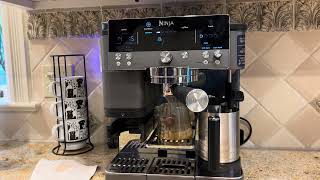
The Ninja Luxe Cafe Premier Series is structured more like a guided appliance: it supports grind size recommendations and weight-based dosing, both of which reduce early trial-and-error compared to manual timing/guessing. Its grinder still offers meaningful adjustment with 25 settings, but the experience is oriented toward repeatability and prompts rather than skill-building. In practice, this is more approachable for households where multiple people want to make drinks without learning a full espresso routine.
Conclusion: For onboarding and ease of getting «good enough» results quickly, Ninja has the edge thanks to weight-based dosing + grind recommendations; Breville is better if you explicitly want to learn and control the craft.
Daily drink-making flow (solo vs multi-user repeatability)
The Breville Barista Pro can feel fast and satisfying once your routine is set: grind, dose/tamp, pull, and steam with a manual steam wand. The trade-off is that it’s less forgiving day-to-day—bean changes and technique variance can force re-dialing, and the hands-on process tends to create more small mess (grounds and wiping). On the reliability/friction side, a common complaint is extraction inconsistency or related issues like pressure/leaks/steam-wand quirks (Breville itself lists these as common problems) via its troubleshooting guidance.
The Ninja Luxe Cafe Premier Series pushes daily use toward consistency: an assisted tamper, weight-based dosing, and a hands-free Dual Froth System shift several «micro-decisions» away from the user. It also expands what «daily use» can mean, because it supports drip coffee and cold brew brewing in the same machine—useful when one person wants espresso and another wants a conventional cup. That said, some users note appliance-style issues like leaks or drip-tray overflow, which can add friction if you’re prioritizing low-maintenance operation.
Conclusion: For repeatability across multiple users and mixed drink routines, Ninja has the advantage; for a direct, barista-style rhythm (especially espresso-first), Breville can feel more natural once you’ve built the technique.
Automation vs long-term dependency
The Breville Barista Pro is largely appliance-native: core operation doesn’t rely on an app layer, and the manufacturer provides a detailed manual for operation, maintenance, and troubleshooting. That low software dependency typically translates to stable long-term usability—your workflow doesn’t change because an app experience changed. The flip side is that you also don’t get automated guidance to correct technique; the machine won’t «rescue» an inconsistent puck prep or a misdialed grind.
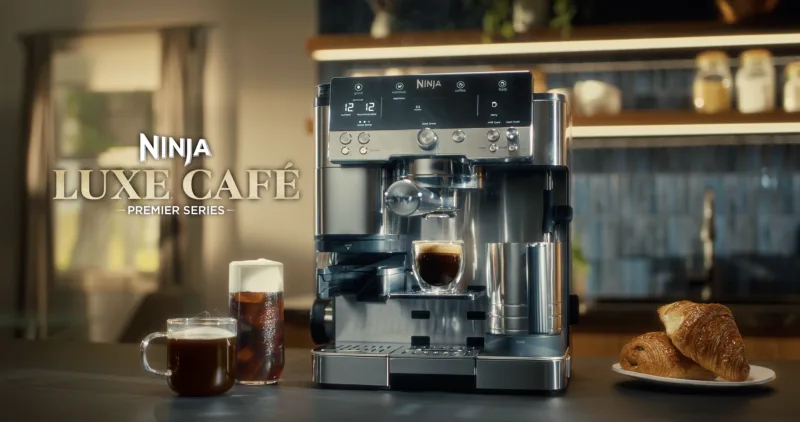
The Ninja Luxe Cafe Premier Series offers more built-in guidance (and potentially more ecosystem touchpoints depending on how it’s deployed/marketed), which can make it feel easier for non-hobbyists. But more guided/automated systems can add platform risk over time if key features or onboarding rely on software experiences that evolve. Ninja does provide a dedicated owner’s guide for operation and troubleshooting, but the overall value proposition still leans on the machine «deciding more» for you than a semi-manual espresso station would.
Conclusion: If you prioritize long-term stability with minimal software dependency, Breville is the safer bet; if you want automation and guidance to lower daily cognitive load, Ninja fits better.
Winner: Ninja Luxe Cafe Premier Series
Cleaning & Maintenance
Daily cleanup (milk + drip tray)
Breville Barista Pro Espresso Machine is an espresso-first setup, so daily cleaning is mainly the steam wand (wipe/purge right after use), drip tray, and standard portafilter/basket rinse. The upside is fewer drink pathways to keep sanitary, but the trade-off is that manual steaming demands consistent technique and immediate cleanup to avoid buildup.
Ninja Luxe Cafe Premier Series adds cleaning work because it’s a 3‑in‑1 espresso, drip coffee & cold brew machine, and it also includes a Hands-free Dual Froth System with cold milk frothing support. That means more components that contact liquid/coffee across modes—plus a drip tray that can see more varied use—so the «little cleans» tend to multiply even if each step is simple.
Conclusion: Breville is typically simpler day-to-day because its espresso-only design creates fewer surfaces and pathways to clean, while Ninja’s versatility increases routine cleanup scope.
Periodic maintenance (descaling + guided upkeep)
Breville Barista Pro Espresso Machine has a very appliance-native maintenance flow with strong documentation; its manual explicitly calls out steps like turning the machine off, letting it cool, and emptying the drip tray before descaling (per the Breville manual). Because it’s less dependent on software ecosystems, its maintenance experience is also less likely to change over time.
Ninja Luxe Cafe Premier Series also provides manual guidance for operation, maintenance, and troubleshooting (per the Ninja owner’s guide). In practice, the platform’s «guided» approach can help households stay on top of upkeep—especially when multiple people use the machine—but it’s still maintaining multiple subsystems (espresso/drip/cold brew + milk system) rather than one core workflow.
Conclusion: Ninja can be easier to stay compliant with thanks to a more guided, appliance-like experience, but Breville’s simpler system is easier to understand and keep consistent long-term.
Mess + failure points that affect maintenance
Breville Barista Pro Espresso Machine uses an integrated conical burr grinder with 30 grind settings, but some users note grinder retention behaviors and the need to inspect internal grinder settings for best performance (Some users note…). Breville also acknowledges common problem areas like leaks, steam wand issues, and grinder performance in its troubleshooting guidance, which can translate into additional cleaning or diagnostic time.
Ninja Luxe Cafe Premier Series also has an integrated conical burr grinder (with 25 grind settings) and more liquid pathways due to drip and cold brew support. Some users note issues such as leaks, overflowing drip trays, and grinder problems, which can turn «maintenance» into cleanup and troubleshooting (Some users note…).
Conclusion: Neither is maintenance-free—Breville’s pain point trends toward grinder/espresso tuning cleanliness, while Ninja’s broader feature set increases the number of places where leaks or overflow can create extra cleanup.
Winner: Tie — Breville has the edge for simplicity (espresso-only pathway, fewer parts to clean), while Ninja can win for guided upkeep and multi-user repeatability despite having more subsystems that inherently raise cleaning complexity.
The Bottom Line
After weighing brewing range, espresso control, milk systems, workflow, and upkeep, the decision comes down to whether you want a hands-on espresso craft machine or an all-in-one, guided coffee station.
For Espresso Purists & Hobbyists: Choose the Breville Barista Pro Espresso Machine for its semi-manual workflow, more granular 30-step grind control, and manual steam wand that rewards technique.
For Multi-Beverage Households: The Ninja Luxe Cafe Premier Series is the better fit because its true 3‑in‑1 espresso + drip + cold brew design replaces multiple appliances without sacrificing day-to-day tank convenience.
For Beginners & Busy Lifestyles: Go with the Ninja Luxe Cafe Premier Series—its weight-based dosing, grind recommendations, and hands-free frothing reduce the trial-and-error that the Breville demands.
For Best Overall Value: The Ninja Luxe Cafe Premier Series delivers more drink options and more guided consistency for less money, making it the strongest versatility-per-dollar pick.
Overall, the Ninja Luxe Cafe Premier Series takes the win for most people: it dominated on brewing versatility, ease-of-use, and repeatability, while staying competitive on core specs like reservoir size and power. The main trade-off is that Breville Barista Pro Espresso Machine remains the better choice if you prioritize maximum manual control and latte-art-ready steaming, and it’s typically simpler day-to-day because it has fewer pathways to clean.
If you’re excited to learn espresso technique and want the machine to stay out of your way, buy the Breville; if you want great coffee across more drink styles with less fuss for everyone in the house, the Ninja is the smarter purchase.
FAQ
Which machine makes better espresso?
Can the Ninja Luxe Cafe create latte art?
Is the Breville worth the higher price?
Which is easier to clean?
What are common problems with the Breville Barista Pro?
What are common issues with the Ninja Luxe Cafe?
What kind of coffee beans work best with the Ninja Luxe Cafe?
"Images are used for editorial and informational purposes only. All trademarks and images belong to their respective owners."