
usmile Y10 Pro vs Philips Sonicare DiamondClean Smart 9300: On-Handle Coaching or App-Based Tracking?
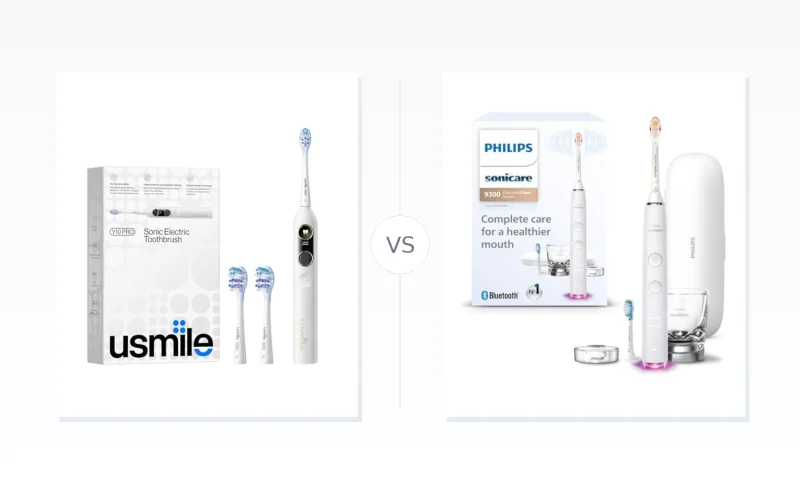
Compare the usmile Y10 Pro, with on-handle coaching and a 180-day battery, against the Philips Sonicare DiamondClean Smart 9300, offering app-based tracking and manual intensity control. Discover which smart toothbrush suits your brushing style.
TL;DR
Quick Decision
- If you want brushing guidance without a phone, app, or Bluetooth pairing → choose usmile Y10 Pro.
- If you want session history, manual intensity settings, and a mature brush-head ecosystem → choose Philips Sonicare DiamondClean Smart 9300.
- If you just want reliable cleaning without smart coaching or recurring smart-head costs → either works, but both are likely more than you need.
Key Differentiators
The usmile Y10 Pro puts feedback on the handle and combines a 180-day battery with USB-C charging, but it has no app, no historical data, and limited software evolution. The Philips Sonicare DiamondClean Smart 9300 offers richer app-based tracking and three manual intensity levels, but it depends on Bluetooth and a proprietary charger, and its legacy platform may not get meaningful future updates.
Who Should Skip Both
If you want current-generation app support with cheaper replacement heads or a basic brush without smart features, consider a non-smart brush or a newer app-connected model instead.
| Feature | usmile Y10 Pro | Philips Sonicare DiamondClean Smart 9300 |
|---|---|---|
| General | ||
| Product Type | Smart electric toothbrush | Smart electric toothbrush |
| Brushing | ||
| Brushing Modes | 4 | 4 |
| Intensity Settings | Automatic (pressure-based) | 3 manual levels |
| Smart Features | ||
| Coverage Guidance | Missed spot detection via built-in display | Location sensor |
| Guidance Interface | Built-in display | Smartphone app (Bluetooth) |
| Pressure Management | Intelligent pressure control | Pressure sensor |
📑 Table of Contents
Brushing Performance & Cleaning Efficacy
Both brushes promise high-level cleaning but take distinct paths to get there.
Both offer four brushing modes, but the profiles differ. The usmile Y10 Pro includes Smart, Clean, White, and Soft modes. The Philips Sonicare DiamondClean Smart 9300 counters with Clean, White+, Gum Health, and Deep Clean. Mode count is a draw, though each targets slightly different routines.
For plaque removal claims, usmile advertises up to 4.4x more plaque removal on inner surfaces, along with 2.3x on chewing surfaces and 1.8x on outer surfaces versus a manual brush. Philips does not publish an equivalent manual-brush multiplier, but its DiamondClean Smart 9300 earned an 88 overall score in Consumer Reports testing. The usmile figure is manufacturer-derived and manual-relative, while Philips benefits from independent evaluation; neither establishes a clear head-to-head cleaning superiority.
Intensity control splits the two. The usmile Y10 Pro uses automatic, pressure-based intensity adjustment, removing manual level selection. The Philips 9300 provides three manual intensity settings plus a pressure sensor. Philips wins for user control; usmile wins for hands-off protection.
Brush head strategy also differs. The usmile includes a diamond-embedded brush head targeting whitening. The Philips works with A3/C3 heads and BrushSync mode pairing, automatically matching modes to the installed head. Philips’ BrushSync adds smarter head communication, while usmile relies on the head’s physical design.
Winner: Tie. Both deliver four-mode sonic cleaning with meaningful, but different, supporting features. Choose Philips for manual intensity control and independent testing validation; choose usmile for automatic pressure management and simpler whitening-focused brushing.
Smart Guidance & Real-Time Feedback
Coverage guidance: The usmile Y10 Pro displays missed-spot detection and plaque monitoring directly on its built-in screen, with no phone pairing required. The Philips Sonicare DiamondClean Smart 9300, by contrast, sends location-sensor data over Bluetooth to the Sonicare app for its visual mouth map. The usmile wins for immediate, phone-free guidance.
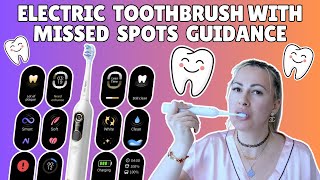
Pressure management: The usmile Y10 Pro uses intelligent pressure control that automatically adjusts intensity to protect teeth and gums. The Philips Sonicare DiamondClean Smart 9300 offers three manual intensity levels with a pressure sensor, giving users more direct control. Here it’s a trade-off: usmile is more hands-off, while Philips suits those who prefer manual adjustment.
Onboarding and daily friction: The usmile Y10 Pro requires no app installation, account, or Bluetooth pairing—charge, select a mode, and brush. The Philips Sonicare DiamondClean Smart 9300 typically demands app installation, account creation, and Bluetooth pairing; daily guidance depends on having your phone nearby, and some users report app connectivity issues. The usmile is clearly the lower-friction option.
Longitudinal data and coaching: The usmile Y10 Pro has no companion app, so it cannot provide session history, trend analysis, or progress scoring. The Philips Sonicare DiamondClean Smart 9300 excels here, with app-based session tracking, brush head management, and structured coaching over time. Philips wins for users who want historical data and a richer review flow.
Conclusion: The usmile Y10 Pro is the better smart-guidance pick for most users because it delivers real-time missed-spot and pressure feedback directly on the handle, eliminating phone dependence and app friction. The Philips 9300 remains the choice if you prioritize long-term tracking and are willing to manage an app. Winner: usmile Y10 Pro for immediate, phone-free convenience.
Pressure Management & Gum Safety
usmile Y10 Pro uses intelligent pressure control that automatically adjusts brushing intensity based on real-time pressure to protect teeth and gums. This hands-off approach reduces intensity on its own when excess force is detected, without requiring the user to react. Philips Sonicare DiamondClean Smart 9300 instead relies on a pressure sensor that alerts when brushing too hard, paired with 3 manual intensity levels. While the sensor provides a warning, the user must still actively ease off to prevent gum irritation. For less disciplined brushers, usmile's automatic adjustment is the more foolproof safeguard, though Philips' manual levels offer more user control.
For manual intensity control, the usmile Y10 Pro offers no user-selectable levels—its intensity is managed entirely by the automatic pressure response. In contrast, the Philips Sonicare DiamondClean Smart 9300 provides three manual intensity settings alongside its pressure sensor, letting users set a baseline that suits their sensitivity. This makes Philips more flexible for those who prefer a fixed low intensity or want to avoid automatic changes. Yet that flexibility still depends on the user responding correctly to pressure alerts, whereas usmile removes that dependency.
Winner: usmile Y10 Pro — for gum safety, its automatic pressure-based intensity adjustment offers a more proactive and user-independent safeguard. The Philips 9300 remains the better choice for users who specifically want manual intensity control.
Battery Life & Charging
usmile Y10 Pro is rated for up to 180 days on a single charge, with a full top-up taking 4–5 hours over standard USB-C. That endurance radically reduces charging frequency: most users can leave the cable in a drawer for months and rely on a generic USB-C charger when traveling.
Philips Sonicare DiamondClean Smart 9300, by contrast, is rated for up to 14 days on a full charge. Its charging system uses the included glass charging cup and travel case, both proprietary accessories rather than a standard connection. The shorter cycle makes charging a roughly biweekly task and means the specialized cup or case must stay accessible.
Battery endurance goes decisively to the usmile Y10 Pro: its 180-day figure is nearly 13 times longer than the Philips 9300’s 14-day estimate.
usmile Y10 Pro also wins on charging logistics. USB-C reduces cable clutter and suits shared bathrooms, travel kits, or users who simply don’t want another proprietary charger. The Philips Sonicare DiamondClean Smart 9300 counters with a premium glass charging cup, but that elegance adds upkeep. Some users warn that the cup must be cleaned regularly to avoid backwash buildup and potential water damage, and multiple reviewers report battery-hold issues over time.
Charging practicality is another usmile Y10 Pro win for travel and low-maintenance ownership, while the Philips 9300 is more charger-dependent.
Winner: usmile Y10 Pro — the 180-day battery and USB-C charging outclass the 9300’s 14-day runtime and proprietary setup.
Design & Usability
The usmile Y10 Pro puts real-time coaching directly on the handle, while the Philips Sonicare DiamondClean Smart 9300 depends on a paired phone for its smart feedback. That split shapes nearly every daily interaction.
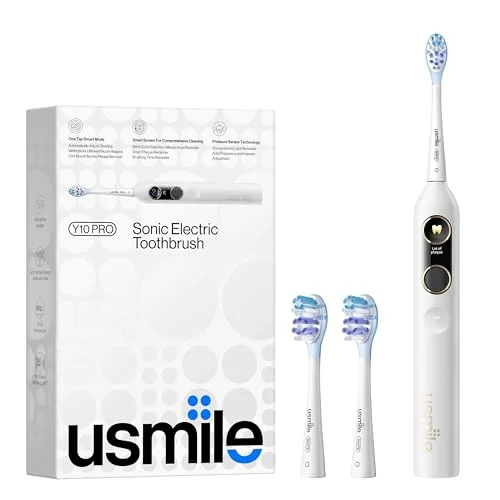
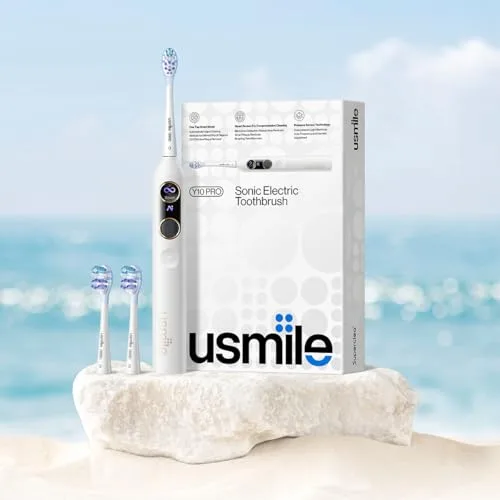
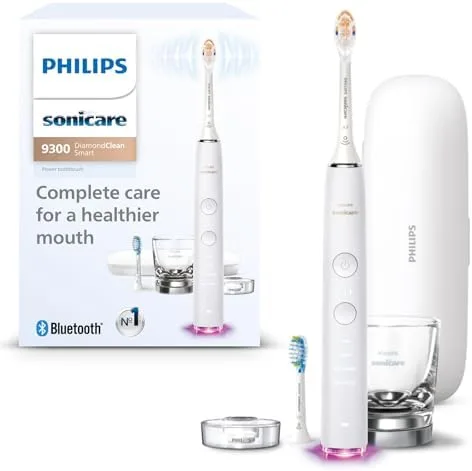
The usmile Y10 Pro uses its built-in display for missed-spot detection and plaque monitoring, supports English, Chinese, and Japanese language selection, and requires no phone at all. The Philips 9300, by contrast, relies on the Sonicare app over Bluetooth for location-sensor guidance and coaching; without a phone nearby, the smart layer is effectively unavailable. For immediate, self-contained feedback, the usmile has the edge.
The usmile adds some bulk for its screen, but it carries an IPX8 waterproof rating and charges over USB-C. The Philips counters with a premium glass charging cup and travel case, though isolated reports suggest the on/off button can stick from limescale buildup. Philips wins on premium countertop aesthetics, while usmile wins on waterproof durability and simpler daily use.
The usmile setup is essentially charge, select a mode, and brush—no account or pairing. The Philips requires app installation, account creation, Bluetooth pairing, and brush-head registration before smart coaching is fully useful, and some users report app connectivity issues. That heavier onboarding may deter non-tech-savvy users.
Winner: usmile Y10 Pro for daily usability because it removes phone and setup friction while keeping core guidance on the handle. The Philips 9300 offers a more premium accessory set, but adds maintenance and connectivity steps.
Smart Ecosystem & Long-Term Value
The usmile Y10 Pro runs entirely on embedded firmware: no app installation, account creation, or Bluetooth pairing is required, and all guidance is rendered on the built-in display. That makes daily use self-contained, but it also removes session history, trend analysis, and software-based feature expansion. The Philips Sonicare DiamondClean Smart 9300, by contrast, connects to the Sonicare app over Bluetooth and supports account sync, session tracking, brush head management, and BrushSync mode pairing with A3/C3 heads. While setup and phone dependency are heavier, the app provides a much richer longitudinal coaching experience. Philips wins on ecosystem depth; usmile wins on standalone simplicity.
Long-term software risk points in the other direction. The usmile Y10 Pro has no external software stack to abandon, so its offline brushing guidance should remain functional regardless of phone or app changes. The trade-off is a relatively fixed feature set with no meaningful update channel. The Philips Sonicare DiamondClean Smart 9300 is a legacy device within a mature ecosystem, and future app updates may prioritize newer handles; some users report Bluetooth and app connectivity issues. If app support fades, the 9300’s smart coaching could degrade into a conventional electric toothbrush experience. usmile has the long-term independence edge, but Philips remains more capable while supported.
Accessory and warranty coverage also favor Philips. The usmile Y10 Pro includes a 1-year warranty and 90-day money-back guarantee, but replacement head availability can be narrower depending on region. The Philips Sonicare DiamondClean Smart 9300 offers a 2-year limited warranty and broadly available first- and third-party head compatibility, though full-featured smart heads are generally more expensive. Philips wins on accessory ecosystem and warranty length.
Winner: Philips Sonicare DiamondClean Smart 9300
Philips offers the more complete smart ecosystem, wider replacement-head support, and longer warranty. The usmile Y10 Pro is the better choice only if offline independence and zero companion-device dependency are the top priority.
The Bottom Line
After comparing cleaning, smart guidance, battery life, design, and ecosystem, the choice hinges on phone involvement.
Phone-Free Brushing: usmile Y10 Pro — built-in display gives guidance without a smartphone.
App Enthusiasts & Data Trackers: Philips 9300 — session history and mouth mapping.
Long Battery Life Seekers: usmile Y10 Pro — 180-day battery versus 14.
Premium Brand & Ecosystem: Philips 9300 — broader head compatibility and mature app.
Budget-Conscious Buyers: usmile Y10 Pro — lower price with smart features.
Overall, the usmile Y10 Pro is best for most users, combining self-contained smart guidance, exceptional battery life, and a lower price. The Philips Sonicare DiamondClean Smart 9300 remains a premium alternative for those already invested in the Sonicare app and head ecosystem.
If you want smarter brushing without app friction, buy the Y10 Pro; if long-term data tracking and ecosystem depth matter more, the 9300 still delivers.
FAQ
Does the usmile Y10 Pro have a companion app?
Which toothbrush has better battery life?
Is the Philips Sonicare DiamondClean Smart 9300 still supported?
Which toothbrush is better for sensitive gums?
Are replacement heads expensive?
What is the waterproof rating of the usmile Y10 Pro?
How does the charging method differ between the usmile Y10 Pro and Philips 9300?
What warranty does each toothbrush come with?
"Images are used for editorial and informational purposes only. All trademarks and images belong to their respective owners."