
Ring Video Doorbell (2nd Gen) vs Google Nest Doorbell: Flexible Installation vs Smart Home Integration
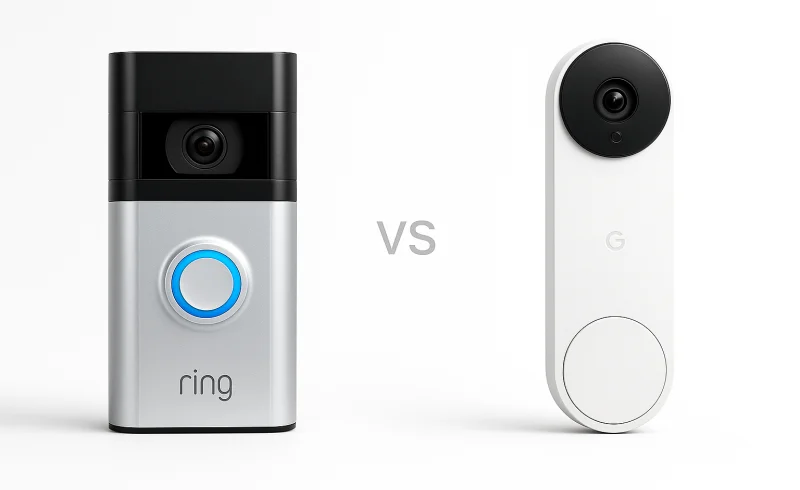
Learn the key differences between Ring and Google Nest doorbells. Discover which is best based on installation flexibility, smart home integration, video quality, and long-term maintenance. Decide which suits your home setup and lifestyle needs.
TL;DR
- If you want maximum placement flexibility (renters, apartments, no existing wiring) → choose Ring Video Doorbell (2nd Gen)
- If you want a continuously powered, deeply integrated smart-home doorbell (owners, Google Home households) → choose Google Nest Doorbell
- If video quality matters most (especially at night) → Nest has the edge with 2K HDR
The core trade-off is practical: Ring gives you battery-powered freedom and a lower upfront cost ($60), but that comes with periodic charging and no included video history. Nest demands hardwired installation and a higher price ($120+), yet rewards you with always-on power, sharper 2K HDR footage, IP65 weather sealing, and a doorbell that feels like a native part of Google Home. Both can work in Alexa setups, but Ring leans into Ring’s own security app while Nest lives in the Google Home ecosystem.
If you need a doorbell that works with Apple HomeKit or want truly free cloud storage (not just short previews), consider an alternative like the Logitech Circle View or Eufy Video Doorbell Dual instead.
| Feature | Google Nest Doorbell | Ring Video Doorbell (2nd Gen) |
|---|---|---|
| Audio | ||
| Two-Way Audio | Full-duplex 2-way audio with noise cancellation | Two-way audio with noise cancellation |
| Power | ||
| Primary Power Source | Hardwired | Built-in rechargeable battery |
| Transformer Requirements | 16-24VAC, 10-40VA, 50/60Hz | If hardwired: 8-24 VAC, 40VA max, 50/60Hz |
| Wired Installation Required | Yes | No |
| Video | ||
| Aspect Ratio | 1:1 | 16:9 |
| Night Vision | Night vision with HDR | Night Vision |
| Field of View | 166° diagonal | 155° horizontal, 90° vertical |
| Video Resolution | Up to 2K at 30 FPS, HDR2 | 1080p HD |
| Storage | ||
| Included Video History Without Subscription | Up to 6 hours of event video previews | Not supported |
| Physical | ||
| Dimensions | Height: 5.2 in (131 mm); Length: 1.7 in (42 mm); Width: 1.1 in (28 mm) | 2.4 in x 4.98 in x 1.10 in (12.8 cm x 6.3 cm x 2.7 cm) |
| Connectivity | ||
| Wi-Fi | 802.11ac-ready (2.4 GHz / 5 GHz) Wi-Fi | 802.11 b/g/n 2.4GHz Wi-Fi |
| Companion App | Google Home app | Ring app |
| Voice Assistant Compatibility | Gemini for Home voice assistant, Google Assistant, and Alexa | Alexa |
| Environmental | ||
| Weather Resistance | IP65 water and dust resistance | Weather Resistant |
| Operating Temperature | -4°F to 104°F (-20°C to 40°C) | -5°F to 120°F (-20.5°C to 48.5°C) |
📑 Table of Contents
Video & Image Quality


Resolution, detail, and dynamic range
Ring Video Doorbell (2nd Gen) records at 1080p HD, which is typically sufficient for confirming deliveries and recognizing familiar faces at close range. However, there’s no HDR callout in its video spec, which can limit readability when you have bright sky and deep porch shadows in the same frame.
Google Nest Doorbell captures up to 2K at 30 FPS with HDR, giving it more pixel detail to work with and better exposure balancing in tricky lighting. In practice, that combination is more likely to preserve fine features (like text on a label or facial detail) when subjects are backlit or moving through mixed lighting.
Conclusion: Nest has the clear edge for pure image detail and high-contrast scenes thanks to 2K + HDR vs 1080p without HDR.
Field of view and framing
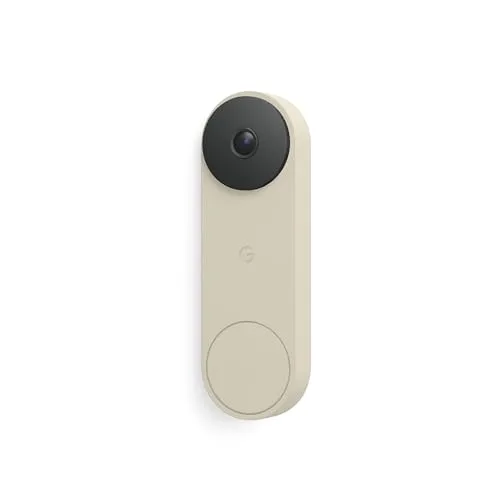
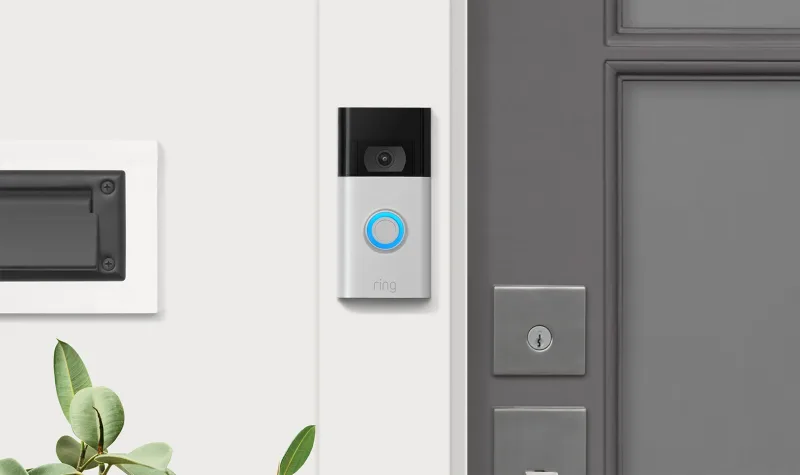
Ring Video Doorbell (2nd Gen) lists a 155° horizontal / 90° vertical field of view, which generally favors «wide porch coverage» across the doorway area. With its 16:9 aspect ratio, it’s also oriented toward a more traditional landscape framing.
Google Nest Doorbell specifies a 166° diagonal field of view and uses a 1:1 aspect ratio, which tends to prioritize a more square, head-to-toe style view around the threshold. That framing can be advantageous for seeing closer-in doorstep activity (like packages near the door) without relying on extreme wide-angle distortion.
Conclusion: No single winner on framing—Ring emphasizes wide horizontal coverage (155° H), while Nest pairs a wide 166° diagonal spec with 1:1 framing that may better suit «doorstep» monitoring.
Night vision capability (spec-based)
Ring Video Doorbell (2nd Gen) includes Night Vision, which is the baseline requirement for identifying visitors after dark. Without HDR noted in the night spec, very bright porch lights can still create harsher highlights and darker shadow areas.
Google Nest Doorbell lists night vision with HDR, which should help keep more usable detail in scenes with mixed nighttime lighting (porch light + dark yard). That matters when you’re trying to distinguish faces and objects at the edge of the illuminated area.
Conclusion: Nest wins at night on paper with night vision + HDR vs night vision alone, especially for porches with strong lighting contrast.
Winner: Google Nest Doorbell
Power & Installation
Power source (battery vs hardwired)
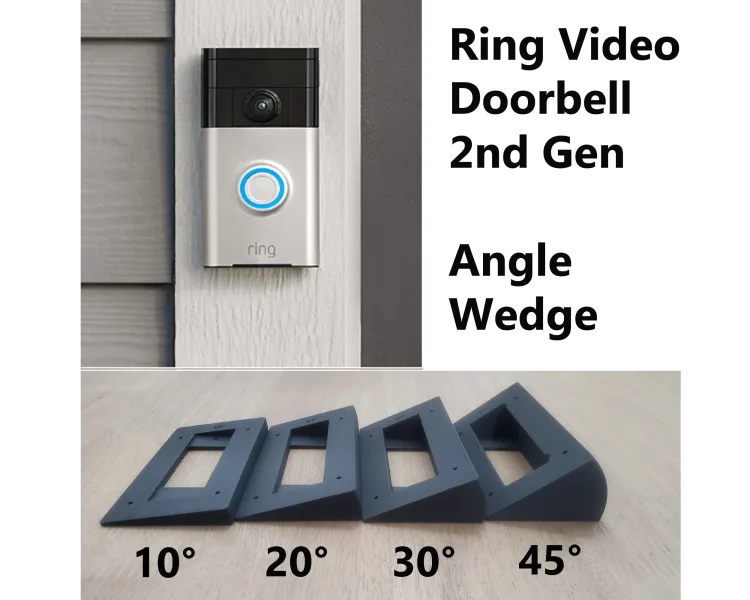
Ring Video Doorbell (2nd Gen) runs on a built-in rechargeable battery, and wired installation is not required per the specs. Real-world guidance pegs typical battery life at ~2–6 months with moderate use, which is the core reason it works well for apartments, older homes, or any place where you can’t rely on existing doorbell wiring.
Google Nest Doorbell, by contrast, is hardwired as its primary (and required) power source, with wired installation required in the specs. In practice, that means you’re betting on your existing doorbell wiring/transformer situation—or you’re ready to upgrade it—so the doorbell can stay continuously powered without a charging routine.
Conclusion: Ring clearly wins for installation flexibility (battery-first, no wiring required), while Nest wins for «set-and-forget» power because it avoids charging downtime—but only if your home is ready for a wired doorbell.
Transformer and wiring requirements
Ring Video Doorbell (2nd Gen) can be optionally hardwired and lists a wider compatible range: 8–24 VAC, 40VA max, 50/60Hz. That broader voltage window can make it easier to fit into mixed or uncertain doorbell setups, and it still retains the fallback of battery power if wiring is inconvenient.
Google Nest Doorbell requires 16–24VAC, 10–40VA, 50/60Hz, which is a more specific requirement and aligns with the expectation that a standard doorbell transformer is already present and delivering sufficient voltage. Google also notes the device can flag insufficient voltage during setup, reinforcing that wiring quality is a real gating factor rather than an optional nice-to-have.
Conclusion: Ring has the edge on compatibility and «unknown wiring» tolerance (and can bypass wiring entirely), while Nest is better suited to homes with known-good standard wiring where you want continuous power.
Maintenance, longevity, and install risk
Ring Video Doorbell (2nd Gen) shifts upkeep into periodic charging; if you rely on battery power, you’re accepting regular maintenance and potential downtime. Some users also note the unit has a non-replaceable battery, meaning battery aging can eventually imply whole-device replacement rather than a simple swap.
Google Nest Doorbell minimizes physical maintenance because it’s continuously powered once installed correctly, which tends to be the smoother long-term experience for homeowners. The trade-off is front-loaded installation dependency: if the transformer/wiring is marginal, you may spend more time troubleshooting setup before you get that stable, always-on behavior.
Conclusion: Ring wins for ease of deployment (especially renters/temporary installs), but Nest wins for low-maintenance ownership once properly hardwired.
Winner: Ring Video Doorbell (2nd Gen)
Smart Home Ecosystem
Ring Video Doorbell (2nd Gen) is built around the Ring app and Alexa voice assistant compatibility. It’s a more single-purpose «security workflow» setup: alerts come in, you open Ring, review an event/live view, and respond—effective, but typically less unified with broader smart-home control outside the Ring/Alexa lane.
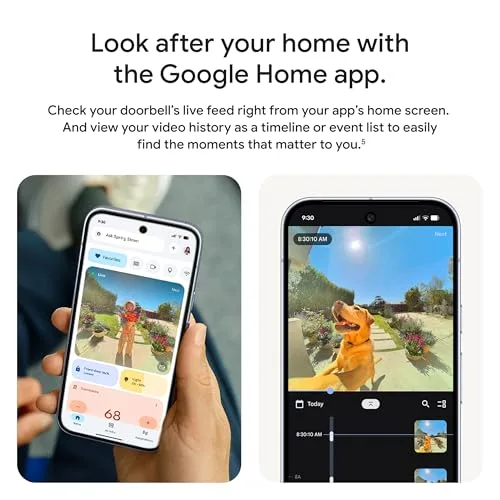
Google Nest Doorbell runs through the Google Home app and explicitly supports Gemini for Home, Google Assistant, and Alexa for voice control. In a Google-centric household, it’s designed to behave more like a first-class «home device» node—shared across the same Home/room structure as your other Google devices and routines, rather than living in a separate security-only app.
Conclusion: On ecosystem breadth and «one app for the whole household» cohesion, Google Nest Doorbell has the edge thanks to wider assistant support (Gemini + Google Assistant + Alexa vs Alexa-only) and deeper Google Home integration.
Ring Video Doorbell (2nd Gen) can operate with no required wiring (it has a built-in rechargeable battery, and wired installation required: No), which makes it easier to slot into an existing smart setup when you can’t depend on doorbell power. Real-world ownership can include a charging rhythm—battery life is often cited at ~2–6 months with moderate use—so your «always-on» experience depends on how you manage charging downtime.
Google Nest Doorbell is hardwired with wired installation required: Yes, and it expects 16–24VAC, 10–40VA transformer specs. That wired approach generally supports a more «set-and-forget» smart-home presence once installed, but it can create more setup friction in homes with questionable wiring/transformers, since adequate voltage is a prerequisite.
Conclusion: For installation flexibility that helps you get into a smart ecosystem quickly (especially rentals), Ring is better; for a more consistent always-powered node inside an automation-centric home, Nest is stronger—this point depends on whether you can (and want to) hardwire.
Winner: Google Nest Doorbell — It delivers the more comprehensive smart-home ecosystem story overall with Google Home integration plus broader voice assistant compatibility, while Ring’s main counter-advantage is install flexibility rather than ecosystem depth.
Price & Value
Ring Video Doorbell (2nd Gen) typically sells for $59.99 (often seen in Satin Nickel), with occasional pricing around $64.99, making it one of the lowest-cost entry points for a mainstream video doorbell. Its built-in rechargeable battery means wiring isn’t required, which can reduce upfront install costs if you’d otherwise need an electrician or a transformer upgrade. That said, battery value has a maintenance cost: SoT sources cite typical battery life of ~2–6 months under moderate use, meaning periodic charging downtime is part of ownership.
Google Nest Doorbell has a meaningfully higher entry price, commonly $119.99–$156.99 depending on color and bundles. It’s hardwired (requires 16–24VAC, 10–40VA), so the true upfront cost can increase if your existing doorbell wiring/transformer isn’t compatible. On the flip side, it includes up to 6 hours of event video previews without a subscription, while Ring provides no included video history without a plan—so Nest can offer more «out of the box» review capability for free.
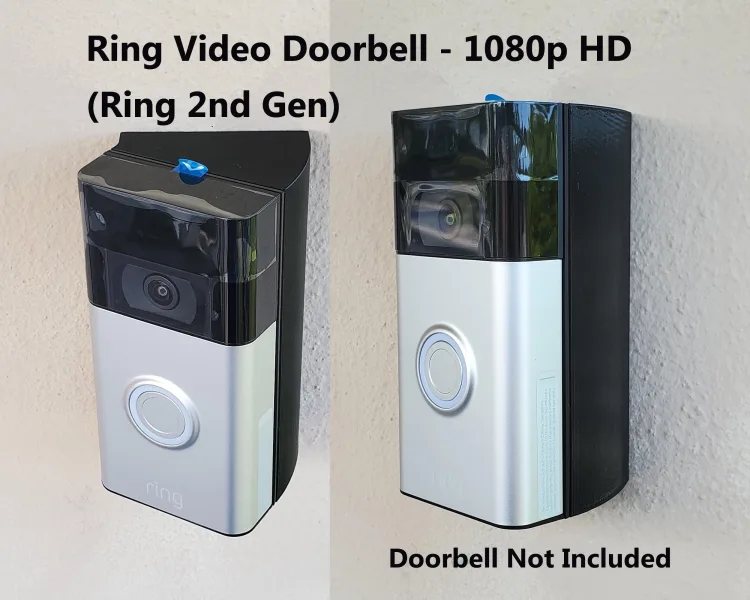
Conclusion: If your priority is the lowest upfront spend and flexible install (especially for renters or homes without reliable wiring), Ring’s ~$60 pricing and battery operation deliver stronger entry-level value. If you’re willing to pay about 2× more for a more «included-without-subscription» baseline (like 6 hours of event previews) and you can support hardwiring, Nest may be the better value over time.
Winner: Ring Video Doorbell (2nd Gen)
Night Vision & Durability
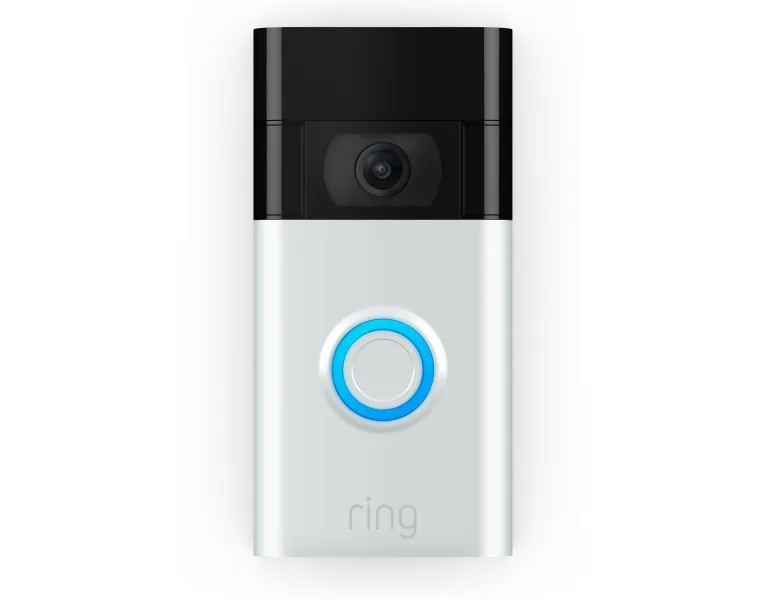
Ring Video Doorbell (2nd Gen) offers standard night vision (no HDR callout), which can be enough for identifying visitors at close range but tends to struggle more with high-contrast scenes (porch light glare, headlights). It also tops out at 1080p HD, which limits fine detail when zooming into nighttime clips.
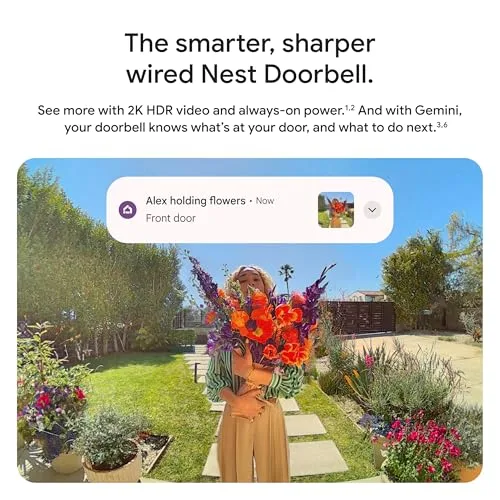
Google Nest Doorbell, by contrast, specifies night vision with HDR and records up to 2K at 30 FPS (HDR2), giving it more headroom to retain highlights and shadow detail in low light. That combination is better aligned with night scenarios where faces can be underlit and backgrounds overexposed.
Conclusion: Nest has the edge for night identification, thanks to HDR night vision + 2K versus Ring’s basic night vision and 1080p.
Ring Video Doorbell (2nd Gen) is described as weather resistant but does not list an official IP rating in the provided specs, so you’re relying on a general «built for outdoors» claim rather than a test standard. Temperature-wise, it’s rated for -5°F to 120°F, which is a notably wider high-end ceiling than many doorbells.
Google Nest Doorbell lists IP65 water and dust resistance, a clearer durability signal for exposure to rain and airborne dust, but its operating range is -4°F to 104°F, with a lower maximum temperature than Ring.
Conclusion: Nest wins on durability spec clarity (IP65 vs no IP rating), while Ring only wins on hot-weather operating range (120°F vs 104°F).
Winner: Google Nest Doorbell
Long-Term Ownership
Ring Video Doorbell (2nd Gen) is built around a built-in rechargeable battery, so long-term ownership includes periodic charging rather than continuous operation. Real-world guidance pegs typical battery life at about 2–6 months with moderate use, after which you’ll need to bring it inside and recharge via cable. A key lifecycle constraint is that the battery is non-replaceable, so once it degrades, the practical outcome is eventual full device replacement rather than a simple battery swap.
Google Nest Doorbell is hardwired-only («Wired Installation Required: Yes»), so it’s designed to run continuously without recharge downtime or battery aging concerns. Its wiring requirements are specific—16–24VAC, 10–40VA, 50/60Hz—and Google notes it may flag voltage issues during setup if the transformer or wiring can’t supply sufficient power. In steady conditions (solid wiring + Wi‑Fi), this architecture aligns with a more maintenance-light, «always on» ownership experience.
Conclusion: For long-term upkeep, Nest has the clearer advantage: hardwired power avoids the recurring charge cycle and sidesteps non-replaceable battery end-of-life. Ring’s battery-first design can still be a good fit if you prioritize placement flexibility, but it asks for ongoing maintenance and has a more finite hardware lifecycle.
Winner: Google Nest Doorbell
The Bottom Line
After breaking down video, power, ecosystem, price, and long-term ownership, the choice comes down to whether you value flexible setup and low upfront cost—or a higher-end, hardwired experience.
Best for Renters & Temporary Setups: The Ring Video Doorbell (2nd Gen) is the clear pick because its battery power avoids wiring and makes quick installs (and removals) straightforward.
Best for Google Home Households: The Google Nest Doorbell wins with tighter Google Home integration and broader assistant support, making it feel like a more unified part of a Google-centric smart home.
Best for Budget-Conscious Buyers: The Ring Video Doorbell (2nd Gen) is the smart buy since it delivers the lowest entry price while still covering the basics reliably.
Best for Video Quality Enthusiasts: The Google Nest Doorbell is the better choice thanks to its 2K HDR capture and stronger low-light/HDR handling for sharper footage.
Overall, the Google Nest Doorbell takes the win for most homeowners: it led on video quality, ecosystem cohesion, durability spec clarity (IP65), and lower-maintenance, always-powered ownership—assuming your home can support hardwiring. The main reasons to choose Ring instead are its dramatically lower price and battery-first installation flexibility.
If you can hardwire, go Nest for the cleaner long-term experience; if you can’t (or don’t want to), Ring remains the most practical way to get solid doorbell coverage without turning installation into a project.
FAQ
Which doorbell has better video quality?
Can I install the Ring doorbell without wiring?
Do I need a subscription for either doorbell?
Which doorbell is better for Alexa users?
How long does the Ring Video Doorbell (2nd Gen) battery last?
Does the Ring Video Doorbell (2nd Gen) have a non-replaceable battery?
What transformer voltage does the Google Nest Doorbell require?
Why might my Google Nest Doorbell show a voltage warning during setup?
"Images are used for editorial and informational purposes only. All trademarks and images belong to their respective owners."