
Ring Alarm 14-Piece Kit vs SimpliSafe KT056-01RUS: Smart-Home Hub or Security-First Appliance?
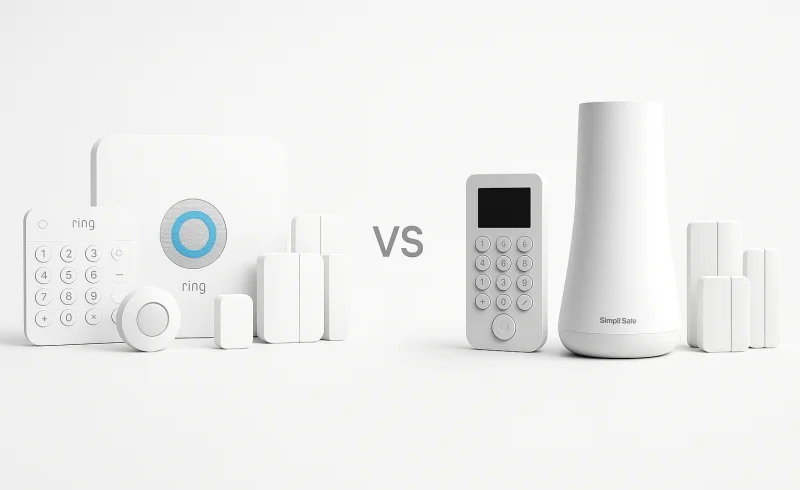
Explore the differences between the Ring Alarm 14-Piece Kit and SimpliSafe KT056-01RUS. Learn about their setups, smart home integration, and coverage options to determine which system best fits your security needs.
TL;DR
- If you want a security system that anchors a growing smart home and already use Ring cameras or Alexa routines → choose Ring Alarm 14-Piece Kit.
- If you care about a security-only experience that stays simple, quiet, and separate from the rest of your tech → choose SimpliSafe KT056-01RUS.
- If you need maximum out-of-box coverage for a larger home with two keypads and a range extender → Ring has the hardware edge.
Ring’s base station is also an eero Wi‑Fi 6 router, and it rewards all-in Amazon households with deep Alexa integration—but that same breadth often leads to alert fatigue and app clutter as you add devices. SimpliSafe omits the smart-home ambitions, delivering a predictable security flow that’s easier for guests and less technical users to manage, though it won’t become your home automation brain. The Ring kit includes 8 contact sensors and 2 keypads (vs. 6 and 1), whereas SimpliSafe throws in a wireless indoor camera, so your choice also hinges on whether you prioritize perimeter coverage or immediate video.
If you need robust outdoor-rated sensors, reliable cellular backup without a monthly subscription, or a system that avoids locking you into a specific ecosystem, both will disappoint—consider a dedicated, open-platform security system instead.
| Feature | SimpliSafe KT056-01RUS | Ring Alarm 14-Piece Kit |
|---|---|---|
| Alarm | ||
| Base station siren | 100 dB | 104 dB |
| Power | ||
| Base station backup battery | Backup battery, up to 24 hours | Internal rechargeable battery, up to 24 hours in Low Power Mode |
| General | ||
| Product type | Home security system kit | Home security system kit |
| Kit piece count | 11 pieces | 14 pieces |
| Connectivity | ||
| Wi-Fi bands | 2.4 GHz and 5 GHz | 2.4 GHz or 5 GHz |
| Cellular backup | Built-in cellular; operates on cellular with professional monitoring plan | Available with compatible Ring subscription |
| Wi-Fi implementation | Built-in Wi-Fi | Built-in eero Wi-Fi 6 router |
| Package Contents | ||
| Keypad included | 1 Keypad | 2 Keypads |
| Base station included | 1 Base Station | 1 Alarm Pro Base Station |
| Indoor camera included | 1 Wireless Indoor Camera | No camera |
| Motion sensors included | 2 Motion Sensors | 2 Motion Detectors |
| Range extender included | Not included | 1 Range Extender |
| Door/Window entry sensors included | 6 Entry Sensors | 8 Contact Sensors |
📑 Table of Contents
Kit Contents & Coverage
Included sensors (doors/windows + motion)
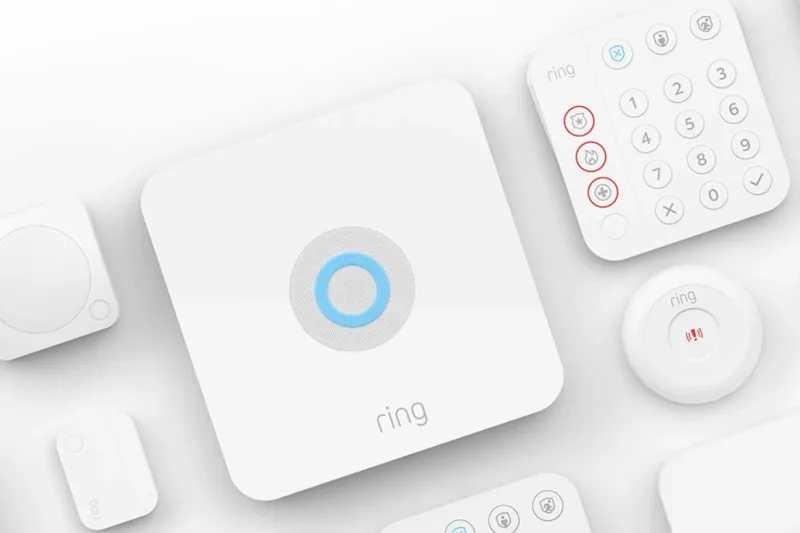
Ring Alarm 14-Piece Kit comes with 8 contact sensors and 2 motion detectors, giving it more perimeter coverage out of the box for doors and windows. That higher sensor count is also consistent with Ring positioning the kit as ideal for «2–4 bedroom homes» per manufacturer/retailer listings.
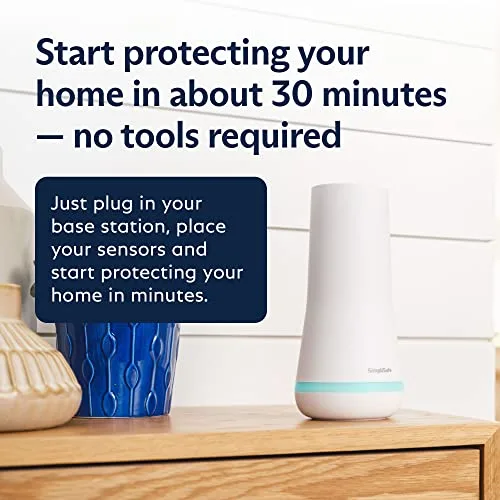
SimpliSafe KT056-01RUS includes 6 entry sensors and 2 motion sensors, which still covers a typical apartment or smaller home, but with fewer default placements for secondary windows and extra doors. If your layout has more openings than the included six sensors can cover, you’ll likely need add-ons sooner.
Conclusion: For baseline intrusion coverage, Ring has the edge thanks to 8 contact sensors vs. 6, while motion coverage is effectively tied at 2 vs. 2.
Keypads and practical access points
Ring Alarm 14-Piece Kit includes 2 keypads, which can reduce friction in larger layouts (e.g., one by the front door and one near a garage/bedroom hallway) without buying extras. This matters in real use because more access points typically means fewer missed arming/disarming moments and less reliance on phones.
SimpliSafe KT056-01RUS ships with 1 keypad, which is workable for smaller homes but may feel limiting if you want multiple entry points covered with a keypad-based routine. SimpliSafe does offer keypad features like a panic button (per reviews), but this kit still starts with fewer physical control points.
Conclusion: Ring wins on kit completeness for multi-entry homes with 2 keypads vs. 1.
Range and larger-home coverage support
Ring Alarm 14-Piece Kit includes a range extender, which is specifically aimed at keeping sensors connected across longer distances or through more walls—useful as you scale beyond a compact floor plan. Combined with the higher sensor count, it’s better positioned for «blanketing» more rooms without immediately troubleshooting marginal sensor links.
SimpliSafe KT056-01RUS does not include a range extender in the kit, so coverage in larger or RF-challenging homes is more dependent on base station placement and sensor proximity. SimpliSafe’s own troubleshooting guidance emphasizes that sensors need sufficient battery and must be close enough to the base station to function correctly.
Conclusion: Ring has the clearer advantage for larger spaces because it includes a range extender while SimpliSafe does not.
In-the-box video monitoring
Ring Alarm 14-Piece Kit includes no indoor camera, so adding video verification or indoor live view requires buying a separate Ring camera. That can be fine if you already own Ring cameras, but it’s not part of the default kit value.
SimpliSafe KT056-01RUS includes 1 wireless indoor camera, giving you immediate indoor video coverage without expanding the purchase on day one. For buyers who want at least one camera feed alongside entry/motion detection, that’s a tangible out-of-box capability difference.
Conclusion: SimpliSafe wins if you want video monitoring included upfront, with 1 indoor camera vs. none.
Winner: Ring Alarm 14-Piece Kit — It delivers more core security coverage hardware in the box (14 pieces, 8 contact sensors, 2 keypads, and a range extender) versus SimpliSafe’s 11 pieces with 6 entry sensors and 1 keypad, making Ring the stronger default fit for broader, multi-room coverage even though SimpliSafe uniquely includes an indoor camera.
Connectivity & Smart Features
Network connectivity (Wi‑Fi)
Ring Alarm 14‑Piece Kit supports dual-band Wi‑Fi (2.4 GHz or 5 GHz) and, uniquely, its base station is also a built-in eero Wi‑Fi 6 router. In practice, that means the security hub can double as a network upgrade—potentially improving coverage where weak Wi‑Fi would otherwise cause sensor/app delays.
SimpliSafe KT056‑01RUS also supports 2.4 GHz and 5 GHz Wi‑Fi, but its base station is strictly «security-first» with built-in Wi‑Fi rather than router functionality. That appliance-like approach can be easier to keep stable because it avoids tying your home’s routing and your alarm hub together.
Conclusion: On pure smart connectivity value, Ring has the edge because the eero Wi‑Fi 6 router adds a real, measurable capability beyond the shared dual-band spec.
Cellular backup and subscription dependence
Ring Alarm 14‑Piece Kit lists cellular backup as available with a compatible Ring subscription, meaning redundancy isn’t purely a hardware capability—you’re opting into it via service. The upside is that Ring’s broader ecosystem tends to scale well if you’re already using Ring devices and Alexa routines, but the «complete» experience is still service-backed.
SimpliSafe KT056‑01RUS has built-in cellular, but it operates on cellular with a professional monitoring plan, so it similarly gates full backup/monitoring behavior behind a subscription. The practical difference is positioning: SimpliSafe is typically more self-contained and security-centric day to day, with fewer cross-device dependencies.
Conclusion: Tie—both provide a path to cellular resilience, but both meaningfully depend on paid plans to unlock the most important cellular/monitoring behavior.
Real-world reliability considerations
Ring Alarm 14‑Piece Kit can be more sensitive to home network conditions because it’s designed to coexist with a broader smart-home stack, and some users note connectivity drops and delayed motion alerts. That risk matters more in households already juggling multiple Ring categories (cameras, doorbells, alarm) where notification volume and mode logic can get complex.
SimpliSafe KT056‑01RUS has a more bounded system surface area, but sensor performance still depends on fundamentals: battery level and proximity to the base station (a documented troubleshooting constraint). In other words, it’s less about app-ecosystem sprawl and more about straightforward placement/power discipline.
Conclusion: SimpliSafe has a slight edge for «appliance-like» consistency, while Ring’s experience can be stronger when it’s tuned well but may demand more network/notification management.
Winner: Ring Alarm 14‑Piece Kit — the built-in eero Wi‑Fi 6 router is a unique, defensible connectivity advantage, while cellular backup ends up being subscription-gated for both.
Setup & Daily Use
Onboarding flow & «how much thinking it requires»
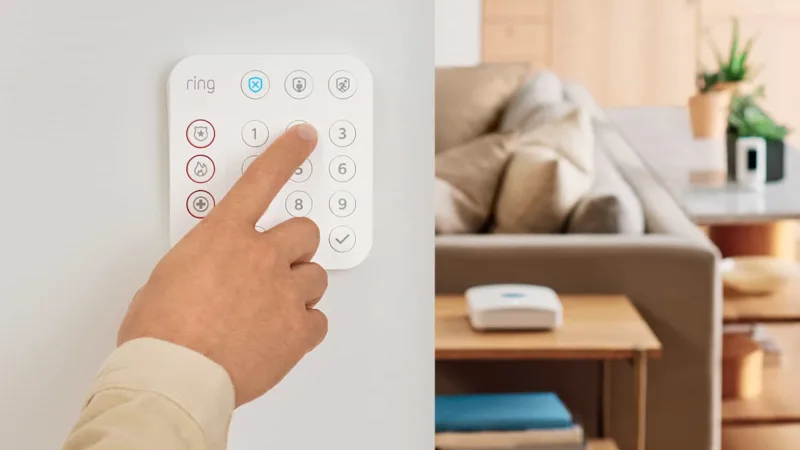
Ring Alarm 14-Piece Kit setup is straightforward on paper—place sensors and connect the system—but in practice it often becomes more decision-heavy because it lives inside the broader Ring app experience. The kit also includes a built-in eero Wi‑Fi 6 router in the Alarm Pro base station, which can be convenient, but it adds another layer of network choices during setup (especially if you already have a mesh/router you like).
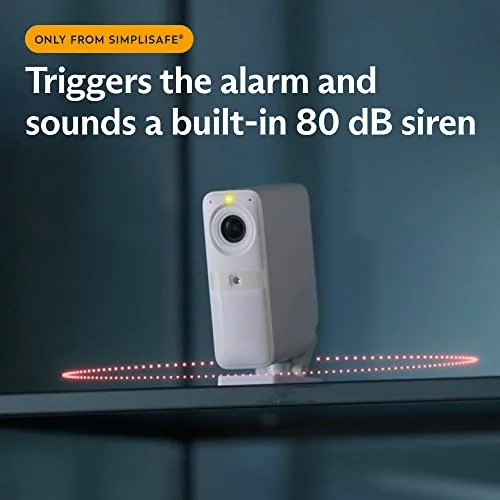
SimpliSafe KT056-01RUS typically feels more appliance-like: place sensors, name them, test them, and set entry/exit delays in a linear flow that’s focused on security behaviors rather than smart-home tinkering. It supports both 2.4 GHz and 5 GHz Wi‑Fi, which helps it fit into modern home networks without requiring you to split security across different apps or device families.
Conclusion: SimpliSafe KT056-01RUS has the edge for onboarding simplicity because its setup is designed to be security-first and linear, while Ring’s experience can become more complex once you account for the app ecosystem and optional router role.
Daily arming/disarming and guest-friendliness
Ring Alarm 14-Piece Kit ships with two keypads, which can make day-to-day operation easier in larger homes (e.g., one by the entry and one upstairs) and reduce reliance on phones. With 14 pieces total (including 8 contact sensors, 2 motion detectors, and a range extender), it’s also positioned as «ideal for 2–4 bedroom homes,» which can reduce the need for immediate add-ons and rework as you move from setup to routine use.
SimpliSafe KT056-01RUS includes one keypad in the box and 11 pieces total, so some households may need to buy an additional keypad sooner if they want the same multi-entry convenience. That said, its day-to-day experience tends to stay calmer because security events are less entangled with an all-in-one smart-home feed; it’s generally easier to teach to guests or less technical family members because there are fewer parallel device categories competing for attention.
Conclusion: Ring has a hardware convenience advantage (2 keypads vs. 1) for daily arming/disarming across multiple entry points, but SimpliSafe’s simpler, more «security-only» routines are typically easier to live with if guest-friendliness and low cognitive load are the priority.
App noise, notifications, and ongoing «system gardening»
Ring Alarm 14-Piece Kit centralizes security alongside other Ring categories (like cameras/doorbells and routines), which can be powerful but also increases the odds of alert fatigue as you expand. Some users report Wi‑Fi connectivity drops and delayed motion alerts, and even when the alarm hardware is fine, troubleshooting can blur into broader network/app management.
SimpliSafe KT056-01RUS is more bounded: the experience is less about building a cross-device ecosystem and more about keeping security behaviors consistent over time. Its main day-to-day friction is usually practical—sensor health and placement—since sensors require proper battery level and proximity to the base station to function correctly.
Conclusion: SimpliSafe KT056-01RUS is the cleaner daily-driver for households that want fewer alerts and less ongoing tweaking, while Ring’s experience can become noisier and more maintenance-heavy as you add devices and rules.
Winner: SimpliSafe KT056-01RUS — it provides the more consistent, low-friction setup and calmer daily operation, even though Ring’s kit is more generous for keypad placement out of the box.
Ecosystem & Smart Home Integration
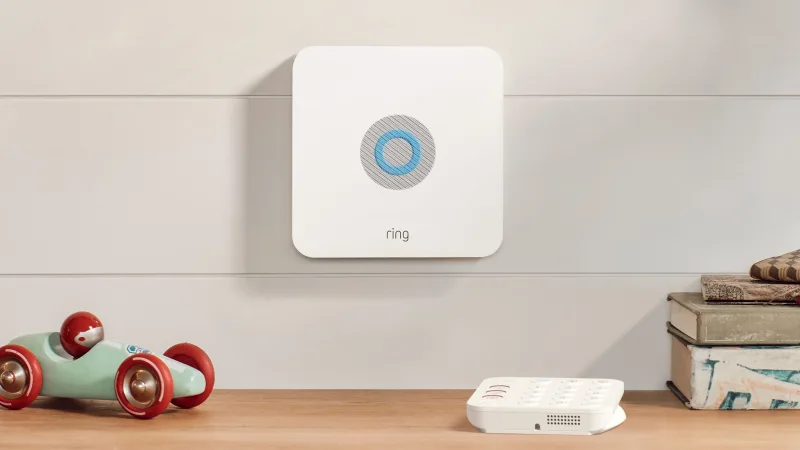
Ring Alarm 14-Piece Kit is built to live inside Amazon/Ring’s broader platform, and that shows up in how it’s positioned for multi-device households. The kit’s base station is the Alarm Pro Base Station with a built-in eero Wi‑Fi 6 router, which makes Ring feel more like a connected-home «hub» than a standalone alarm. In practice, that ecosystem-first approach tends to scale well as you add more Ring endpoints (doorbells/cameras/lights) and use Alexa routines to coordinate arming modes and behaviors.
SimpliSafe KT056-01RUS takes the opposite stance: it’s a security kit first, with integration as a convenience rather than the core identity. It supports 2.4 GHz and 5 GHz Wi‑Fi and has built-in cellular (tied to professional monitoring), but it doesn’t try to become your smart-home control center via a router/hub layer. Editorially, this «bounded» design is often easier to keep consistent over time—especially for renters or anyone who wants security separated from the rest of their smart-home experimentation.
Conclusion: Ring has the advantage if you want a security system that’s also a smart-home platform anchor (especially in Alexa/Ring households), while SimpliSafe is stronger if your priority is a self-contained security experience that doesn’t pressure you into deeper ecosystem lock-in.
Integration depth vs. ecosystem lock-in
Ring Alarm 14-Piece Kit rewards all-in adoption: it’s designed for cross-device behavior across the Ring/Amazon universe, which can make automations feel more «native» as your system grows. The trade-off is that your day-to-day experience tends to inherit Ring’s account structure and permission model, which can add friction in multi-adult households when you’re coordinating shared control and notifications. Some users note connectivity drops and delayed alerts, which matters more when you’re leaning heavily on app-driven routines.
SimpliSafe KT056-01RUS is intentionally less ambitious: it supports basic voice-assistant style control (per the section plan) but doesn’t position itself as the center of a sprawling device graph. That constraint reduces lock-in pressure—switching camera brands or broader smart-home platforms later typically doesn’t force a «rebuild your security brain» moment. The trade-off is fewer automation levers if your goal is deeper «if this, then that» smart-home choreography.
Conclusion: Ring wins on integration depth and ecosystem scale, but SimpliSafe wins on keeping security independent—your better choice depends on whether you value powerful cross-device automation or long-term platform flexibility.
Winner: Ring Alarm 14-Piece Kit
Monitoring & Subscriptions
Ring Alarm 14‑Piece Kit is designed as a service-backed system: key resiliency features like cellular backup are only available with a compatible Ring subscription (per the connectivity specs). In practice, that means the hardware purchase alone won’t deliver the most robust «always connected» security experience you’d expect during an internet outage. If you’re already in the Ring/Amazon ecosystem, that subscription can feel like an extension of an existing account and device stack—but it’s still a dependency.
SimpliSafe KT056‑01RUS similarly gates core protections behind a plan: it has built-in cellular, but it operates on cellular with a professional monitoring plan (per the connectivity specs). So while the radio is in the hardware, the value of that redundancy is still largely plan-dependent. The upside is a more self-contained security-first approach that doesn’t assume you’re building out a wider consumer smart-home bundle.
Conclusion: Tie — both push «complete» security (notably cellular backup + professional monitoring) into paid subscriptions, so neither is a truly free, fully featured system once you factor in real-world expectations for redundancy.
Ring Alarm 14‑Piece Kit remains usable without a plan for basic self-monitoring, but it’s best evaluated as part of an ecosystem that can expand over time (cameras, routines, shared accounts), which can also make plan packaging feel more subject to platform shifts. That matters because subscription changes can ripple into day-to-day workflows when security lives alongside other Ring devices in the same app experience. The practical takeaway is that Ring ownership often feels more like «hardware + ongoing platform.»
SimpliSafe KT056‑01RUS also supports basic self-monitoring, and its narrower, security-first product scope tends to keep the plan decision more straightforward: you’re primarily choosing how you want alerts handled and whether you want professional response. That narrower focus generally produces clearer separation between security events and broader smart-home noise—useful if you want monitoring to remain predictable over time. You’re still paying for the full experience, but the subscription relationship is typically easier to reason about because there are fewer adjacent product lines involved.
Conclusion: Tie — without a plan, the day-to-day difference is usually small (basic self-monitoring either way); with a plan, the choice is less about «who’s cheaper» (not specified here) and more about whether you want Ring’s ecosystem gravity or SimpliSafe’s more contained monitoring model.
Reliability & Backup Power
Backup battery during outages
Ring Alarm 14-Piece Kit specifies an internal rechargeable battery rated up to 24 hours in Low Power Mode, which is the key caveat: you should expect the full figure when the system is operating in its reduced-power state. In practice, that still covers the common «overnight outage» scenario where you mainly need the base station and sensors to stay online.
SimpliSafe KT056-01RUS also lists a backup battery rated up to 24 hours in the spec table, but there’s conflicting manufacturer info stating the system can run up to 180 minutes (5200 mAh) on battery. That mismatch makes its real-world backup runtime harder to predict from the provided sources.
Conclusion: On paper both claim 24-hour backup, but because SimpliSafe’s battery runtime is internally inconsistent in the provided data (24 hours vs 180 minutes), Ring is the safer pick for clearly defined outage endurance.
Siren output (audibility)
Ring Alarm 14-Piece Kit rates its base station siren at 104 dB, giving it a small numeric advantage for indoor audibility and «wake you up» impact. That can matter in larger homes or if the base station isn’t centrally located.
SimpliSafe KT056-01RUS rates its base station siren at 100 dB, which is still loud enough for indoor alerting and deterrence, but is objectively lower. The gap is only 4 dB, so it’s unlikely to be a night-and-day difference unless you’re already on the edge of hearing it in certain rooms.
Conclusion: Ring wins slightly on siren loudness (104 dB vs 100 dB), but the advantage is incremental rather than transformative.
Resilience via connectivity/range support
Ring Alarm 14-Piece Kit includes a Range Extender in the box and uses an Alarm Pro Base Station with a built-in eero Wi‑Fi 6 router, both of which can reduce weak-signal trouble spots as you add sensors across a bigger footprint. This aligns with the kit’s positioning for 2–4 bedroom homes, where distance and walls can start to impact sensor reliability.
SimpliSafe KT056-01RUS connects on 2.4 GHz and 5 GHz Wi‑Fi and includes built-in cellular capability, but the cellular operation is tied to a professional monitoring plan. It also does not include a range extender in the kit, and its troubleshooting guidance emphasizes that sensors need good battery levels and sufficient proximity to the base station to work correctly—limitations that can show up sooner in larger layouts.
Conclusion: Ring has the clearer out-of-box reliability assist for coverage (included range extender plus built-in router), while SimpliSafe’s cellular resilience depends more on plan choice and placement discipline.
Winner: Ring Alarm 14-Piece Kit
The Bottom Line
After breaking down coverage, connectivity, daily use, and ecosystem fit, the choice comes down to whether you want maximum hardware-and-smart-home leverage or a calmer, security-only experience.
For Smart Home Enthusiasts: Choose the Ring Alarm 14-Piece Kit thanks to its deep Alexa/Ring integration and the built-in eero router that helps unify security with a broader connected-home setup.
For Renters & Simplifiers: Choose the SimpliSafe KT056-01RUS because it’s easier to move and reconfigure, with a more self-contained app experience that keeps security separate from smart-home sprawl.
For Large Homes: Choose the Ring Alarm 14-Piece Kit for its stronger out-of-box coverage—more contact sensors, two keypads, and the included range extender built for multi-room reliability.
For ‘Set It and Forget It’ Users: Choose the SimpliSafe KT056-01RUS since the article’s daily-use findings favored its security-first flow, with fewer notifications and less ongoing «system gardening.»
Overall, this is a true «best for your priorities» matchup: Ring wins on kit completeness and smart-home upside, while SimpliSafe is better when you want focused operation (and it even includes an indoor camera in the box, where Ring doesn’t).
Ring offers superior hardware value and smart home perks, but SimpliSafe’s focused, calm operation makes it the wiser choice for pure security—so decide whether you want a security system that can grow into a connected home or one that simply protects without fuss.
FAQ
Do I need a subscription for either system?
Can I use these systems without Wi‑Fi?
Which is better for apartments?
Can I add extra sensors later?
How long does the SimpliSafe backup battery actually last during an outage?
Does the Ring Alarm include a built-in Wi‑Fi router?
Which system has better smart home integration?
📄 Used Manuals & Documentation
Ring Alarm 14-Piece Kit
"Images are used for editorial and informational purposes only. All trademarks and images belong to their respective owners."