
Cync 93131905 vs Tapo S500D: Multi-Location Control or Simple Setup?
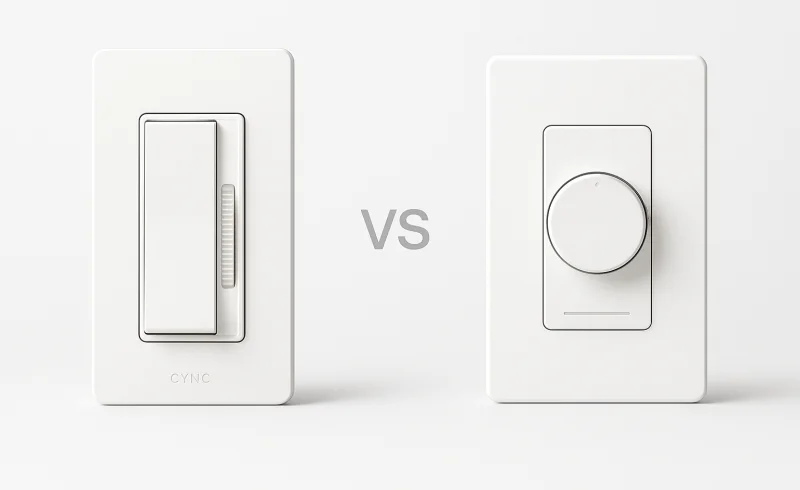
Explore the differences between Cync 93131905 and Tapo S500D to understand which smart dimmer switch best fits your needs. Whether you want multi-location control or a straightforward single-pole installation, this comparison covers wiring, ecosystem compatibi...
TL;DR
- If you need multi-location wall control (3-way/4-way circuits) and want future-proofing with Matter and HomeKit → choose Cync 93131905
- If you want a simple, cost-effective single-pole upgrade with fast setup and reliable app control → choose Tapo S500D
- If your room uses a single switch and you don’t plan on expanding the smart-home ecosystem → either works well
Cync 93131905 wins on wiring flexibility and ecosystem breadth (Matter, HomeKit, Bluetooth), but its setup can feel decision-heavy and dimming performance depends on bulb compatibility. Tapo S500D is dead-simple to install and predictable day-to-day, but it’s strictly single-pole and skips HomeKit and local BLE control. Your choice is really about long-term flexibility vs. grab-and-go simplicity.
If you lack a neutral wire in your wall box or need advanced scene control beyond basic dimming, consider a neutral-free smart switch or a smart bulb system instead.
| Feature | Tapo S500D | Cync 93131905 |
|---|---|---|
| General | ||
| Warranty | 2-year warranty | 2 year limited |
| Mobile App | Tapo app | Cync app |
| Product Type | Smart Wi-Fi light switch, dimmer | Smart paddle dimmer switch |
| Controls | ||
| On-Device Controls | Switch button, brightness up/down buttons | 1 paddle switch, 1 dimmer slider |
| Electrical | ||
| Max Load - LED | 150 W LED | 150 W LED |
| Electrical Rating | 120 V~, 60 Hz | 120 V, 60 Hz |
| Supported Bulb Types | Dimmable LED, Incandescent | Most dimmable LED and incandescent bulbs |
| Circuit Compatibility | Single-pole only; not compatible with 3-way wiring | Single-pole, 3-way, or 4-way |
| Neutral Wire Required | Yes | Yes |
| Max Load - Incandescent / Halogen | 300 W INC/HAL | 450 W Halogen/Incandescent |
| Connectivity | ||
| Out-of-Home Control | Yes, via Tapo app | Yes, via Cync app |
| Connectivity Protocols | IEEE 802.11b/g/n, 2.4 GHz Wi-Fi | WiFi, Bluetooth, Matter |
| Local Control Without Internet | Accessible via Tapo app when the household goes offline | Local Control with BLE |
| Voice Assistant / Platform Compatibility | Alexa, Google Assistant, Samsung SmartThings | Google Assistant, Amazon Alexa, Apple HomeKit, Samsung SmartThings |
| Environmental | ||
| Use Environment | Indoor use only | Dry location only |
| Operating Humidity | 10%–90% RH, non-condensing | < 88% at 32°C |
| Operating Temperature | 32°F to 104°F (0°C to 40°C) | -4°F to 104°F (-20°C to 40°C) |
📑 Table of Contents
Wiring & Installation
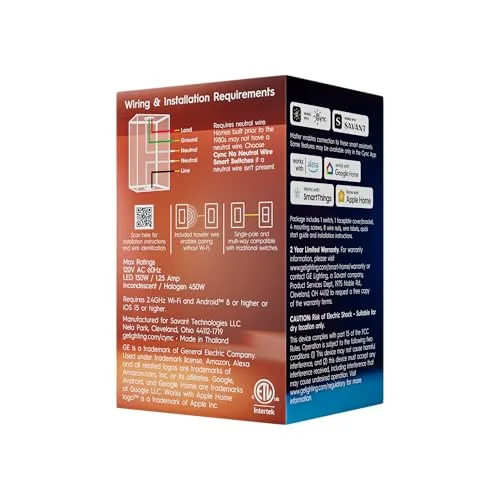
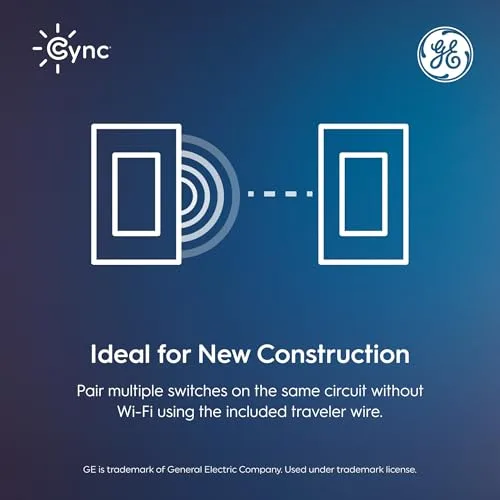
Cync 93131905 is built for more wiring scenarios: it supports single-pole, 3-way, and 4-way circuits per its specs. For real multi-location control, documentation notes you’ll need either two wired Cync switches or one wired + one wire-free companion for a 3-way setup (Multiple reviewers report… this requirement), and it also won’t work with traditional «dumb» 3-way hardware in the same circuit (A common complaint is… confusion about mixing switch types).
Tapo S500D is explicitly single-pole only and not compatible with 3-way wiring, which limits it to locations where a single wall box controls the lights. That narrower scope can still be a practical advantage if you’re doing a straightforward room-by-room swap, because you’re not planning around companion devices or multi-switch synchronization. Conclusion: Cync 93131905 wins clearly for multi-location control (3-way/4-way support vs single-pole only), while Tapo S500D is the simpler fit when you know your circuit is single-pole.
Cync 93131905 and Tapo S500D both require a neutral wire (specs list «Yes» for each), which is often the real pass/fail factor in older homes. Cync’s broader compatibility doesn’t remove that baseline electrical requirement—you still need the neutral present in the wall box.
Tapo S500D also requires a neutral wire and likewise won’t be the right pick if your box lacks one, even if it’s a simple single-pole circuit. Conclusion: Tie on the core prerequisite—both are neutral-required, so neither has an inherent install advantage in older, no-neutral wiring.
Winner: Cync 93131905 — Its single-pole + 3-way + 4-way support is a meaningful, defensible edge for real homes with multi-location lighting control, even if it can add complexity via companion switch requirements.
Connectivity & Ecosystem
Cync 93131905 is the more versatile connectivity option on paper because it supports Wi‑Fi + Bluetooth + Matter. That combination gives it more «paths» to control—cloud/app over Wi‑Fi plus local control with BLE—and it’s explicitly listed as compatible with Google Assistant, Amazon Alexa, Apple HomeKit, and Samsung SmartThings. For households planning to evolve platforms over time, Matter is the key spec that’s meant to reduce ecosystem lock-in.
Tapo S500D is simpler: it’s 2.4 GHz Wi‑Fi (802.11 b/g/n) only and lists compatibility with Alexa, Google Assistant, and Samsung SmartThings, but no Apple HomeKit support in the provided specs. It does, however, state local control without internet («accessible via Tapo app when the household goes offline»), which can matter if you want app control during an outage without leaning on a smart-home hub.
Conclusion: Cync 93131905 wins on ecosystem breadth and future-proofing thanks to Matter support plus the wider platform list (includes HomeKit) and the added Bluetooth control path, while Tapo S500D trades that flexibility for a more straightforward Wi‑Fi-only approach that still supports the major voice assistants most people start with.
Cync 93131905’s «local» story leans on BLE (spec lists «Local Control with BLE»), which can be useful for basic control even when Wi‑Fi or internet is down. That said, a common complaint is bulb/switch behavior variability—multiple sources note flickering or instability depending on bulb type or minimum load—so real-world performance can hinge on what you’re dimming and how the circuit is set up.
Tapo S500D emphasizes app-centric control through the Tapo app and keeps the connectivity model narrow and predictable (single 2.4 GHz Wi‑Fi radio). While it lacks Matter and HomeKit here, the offline-access note suggests the app can remain functional on the local network even if the internet drops, aligning with a «room-by-room, keep it simple» smart-switch deployment.
Winner: Cync 93131905
Controls & Dimming
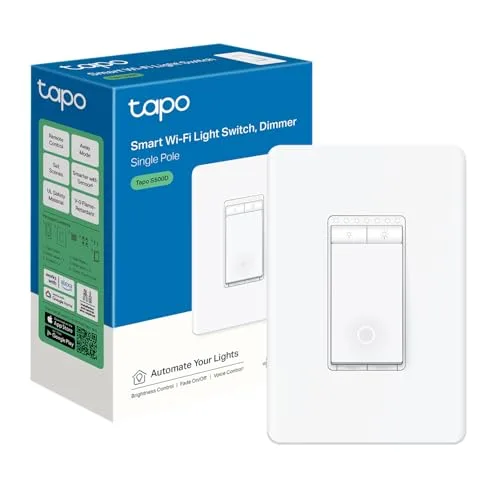
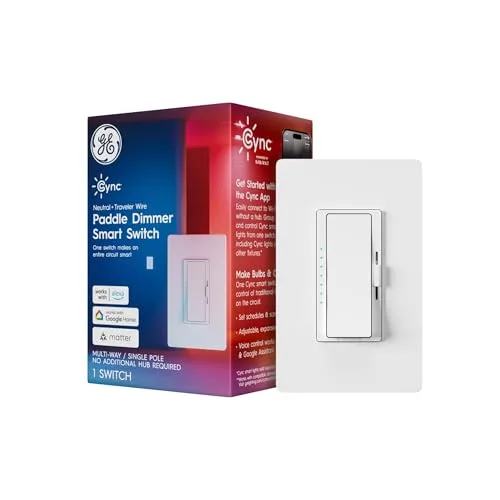
Cync 93131905 uses 1 paddle switch + 1 dimmer slider, which many users prefer for direct, «grab-and-set» brightness changes without repeated button presses. That physical design also tends to make it easier to land on a specific level quickly when walking by.
Tapo S500D uses a switch button + dedicated brightness up/down buttons, which is more «button-first» and can feel more consistent with other modern smart-switch layouts. The trade-off is that fine adjustments may take multiple taps rather than one continuous slide.
Conclusion: No clear winner on control feel—Cync’s slider favors fast, precise manual dimming, while Tapo’s buttons favor a clean, simple interface that’s easy to learn.

Cync 93131905 is rated for 150 W LED and up to 450 W incandescent/halogen, giving it more headroom on traditional loads. Both products require a neutral wire, but Cync’s higher incandescent rating can matter in older fixtures or multi-bulb setups still using incandescent/halogen.
Tapo S500D matches Cync on LED capacity at 150 W LED, but tops out at 300 W incandescent/halogen. For most LED retrofits that spec parity (150 W) is what you’ll hit first, but Tapo’s lower incandescent ceiling is a real constraint if you’re not fully on LEDs.
Conclusion: Cync 93131905 wins on load capacity thanks to 450 W vs 300 W for incandescent/halogen, while LED capability is a tie at 150 W vs 150 W.
Cync 93131905 supports single-pole, 3-way, or 4-way circuits, which is directly relevant to «controls» because it enables consistent wall control from multiple locations. However, the manual notes 3-way control requires two Cync switches or one wired + one wire-free, not a mix with traditional dumb switches, which can add cost/complexity.
Tapo S500D is single-pole only and explicitly not compatible with 3-way wiring, so it’s constrained to rooms with one wall location controlling the circuit. If you need multi-location behavior (hallways, stairs), this limitation can be a deal-breaker regardless of app features.
Conclusion: Cync 93131905 wins on multi-location control flexibility because it supports 3-way/4-way, whereas Tapo is single-pole only.
Cync 93131905 can dim «most dimmable LED and incandescent bulbs,» but some users report flickering/instability depending on bulb type or minimum load, meaning real-world smoothness can hinge on bulb compatibility. If you’re sensitive to low-end flicker, you may need trial-and-error with specific dimmable LEDs.
Tapo S500D supports dimmable LED and incandescent loads and, per the provided context, its typical friction points skew more toward Wi‑Fi/router/cloud variables than the dimming curve itself. That doesn’t guarantee perfect dimming, but there’s no specific bulb/min-load flicker advisory provided here for Tapo.
Conclusion: Tapo S500D has the edge for dimming predictability on paper, because Cync has documented flicker/instability scenarios tied to bulb type/minimum load.
Winner: Cync 93131905 — it delivers a more versatile wall-control setup overall with slider-based dimming and especially 3-way/4-way support, plus a higher 450 W incandescent/halogen rating; Tapo’s main advantage is a potentially more predictable dimming experience depending on bulb/load.
User Experience & Setup
Cync 93131905 setup is straightforward if you stay within the Cync app—the manufacturer explicitly notes the Cync App is necessary to complete setup. However, the experience can become more decision-heavy when you try to spread control across platforms, since it supports WiFi, Bluetooth, and Matter and lists compatibility with Alexa, Google Assistant, Apple HomeKit, and SmartThings. In practice, more pairing paths can mean more trial-and-error during onboarding if you’re aiming for multi-platform control.
Tapo S500D, by comparison, is oriented around fast time-to-first-success: add it in the Tapo app and connect over 2.4 GHz 802.11b/g/n Wi‑Fi. It supports major platforms too (Alexa, Google Assistant, SmartThings), but the integration surface is narrower than Cync’s, which tends to reduce «where should I pair it?» ambiguity. The reset flow is also quick and explicit (hold ~5 seconds until the Wi‑Fi LED blinks amber/green).
Conclusion: Tapo S500D has the edge for simpler, quicker setup, while Cync 93131905 trades simplicity for more ecosystem optionality (useful if you actually plan to use Matter/HomeKit or multi-platform control).
Cync 93131905 can introduce day-to-day friction if your bulbs don’t play nicely with the dimmer curve—a common complaint is flickering/instability depending on bulb type or minimum load, which can turn «setup» into a bulb-compatibility troubleshooting exercise. It’s also more complex in multi-location scenarios: while it supports single-pole, 3-way, or 4-way, the manual indicates 3-way control may require two wired switches or a wired + wire-free configuration.
Tapo S500D is simpler architecturally but more limited: it’s single-pole only and explicitly not compatible with 3-way wiring. For a typical single-switch room, that constraint reduces variables and helps it behave more «appliance-like» once installed, though multi-user access still requires getting household members set up correctly in the app.
Winner: Tapo S500D
Long-Term Reliability
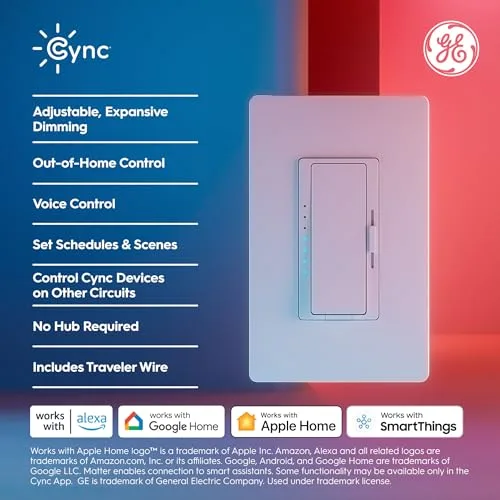
Cync 93131905 comes with a 2-year limited warranty and is rated for dry locations only, which is typical for in-wall dimmers. Its broader wiring compatibility (single-pole, 3-way, or 4-way) can reduce long-term «workaround risk» in multi-location circuits, but it may require the correct paired hardware for 3-way setups per the manual. A common complaint is flickering/instability with certain bulb types or minimum-load scenarios, so reliability can be bulb-dependent.
Tapo S500D also includes a 2-year warranty and is for indoor use only, with defined operating conditions like 32°F–104°F (0°C–40°C) and 10%–90% RH. It’s explicitly single-pole only (no 3-way), which simplifies the wiring topology but makes it a poor fit if your circuit needs multi-location control. In long-term ownership, the main maintenance burden tends to be «network housekeeping» around its 2.4 GHz 802.11b/g/n Wi‑Fi connection.
Conclusion: Tie. Both offer comparable baseline coverage (2-year warranties) and similar «wall switch» durability expectations, but reliability trade-offs shift by environment: Cync can be more future-proof in complex multi-location wiring (with some bulb-compatibility flicker risk), while Tapo tends to be more set-and-forget if your Wi‑Fi is stable and you only need single-pole control. Winner: Tie
The Bottom Line
After weighing wiring compatibility, ecosystem support, controls, setup, and long-term considerations, the choice comes down to whether you need flexibility across circuits and platforms—or just a straightforward dimmer that’s easy to roll out room by room.
Best for Multi-Location Control (3-way/4-way): Choose Cync 93131905, since it’s the only option here that supports single-pole plus 3-way/4-way wiring for real multi-switch locations like hallways and stairs.
Best for Simple Single-Room Upgrade: Pick Tapo S500D for a clean single-pole swap, with a simpler setup flow and a consistent Wi‑Fi/app-first approach that fits bedrooms and offices.
Best for Smart Home Integration Enthusiasts: Go with Cync 93131905 thanks to Matter support and broader platform compatibility (including HomeKit), which better matches multi-ecosystem households.
Best for Budget Multi-Pack: Buy Tapo S500D if you’re outfitting multiple single-pole locations, since the multi-pack pricing drives the lowest per-switch cost where 3-way/4-way isn’t needed.
Overall, this comparison ends essentially situational: Cync wins on capability (3-way/4-way wiring, Matter, broader compatibility, and higher incandescent/halogen headroom), while Tapo’s edge is simplicity—especially for quick setup and straightforward single-pole installs.
If your home has multi-location wiring or you’re building toward a more comprehensive Matter-enabled smart home, choose Cync 93131905; if you just want an affordable, easy-to-live-with dimmer for a single room, choose Tapo S500D and keep the upgrade simple.
FAQ
Do both smart dimmers require a neutral wire?
Can I use these dimmers with smart bulbs?
Which one supports Apple HomeKit?
Can I control these switches when the internet is down?
What is the warranty period for Cync 93131905 and Tapo S500D?
How do I reset the Cync 93131905 dimmer?
Can I use the Tapo S500D with a 3-way light switch?
Why do my Cync lights flicker?
📄 Used Manuals & Documentation
Cync 93131905
"Images are used for editorial and informational purposes only. All trademarks and images belong to their respective owners."