
Airthings View Plus vs Qingping Air Monitor 2: Set-and-Forget Monitoring or Real-Time Air Command Center?
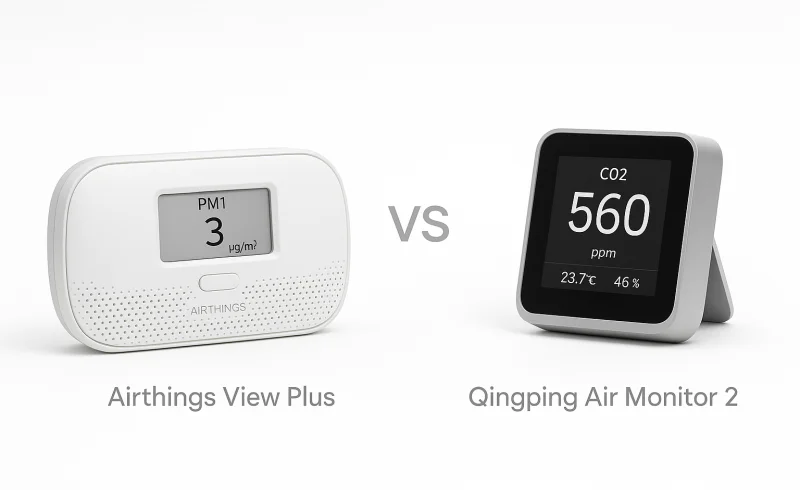
Compare Airthings View Plus and Qingping Air Monitor 2 for air quality management. Discover key features such as radon detection in Airthings and real-time feedback in Qingping. Understand their strengths for long-term monitoring versus interactive usage.
TL;DR
Quick Decision
- If you want radon detection and a hands-off, multi-year monitor that blends into the background → choose Airthings View Plus.
- If you care about immediate feedback, PM10 dust tracking, and an interactive touchscreen for daily air management → choose Qingping Air Monitor 2.
- If you only need basic CO₂ and VOC trends with occasional check-ins, either works — but the daily rhythm and level of interaction will feel completely different.
Key Differentiators Airthings is built for patience: up to 2 years on AA batteries, an always-on ePaper display, and radon sensing make it a trusted background sensor — but its slow stabilization and trend-focused approach frustrate anyone chasing real-time cause-and-effect. Qingping puts a responsive 4-inch touchscreen, PM10 coverage, and a replaceable particle sensor front and center, but its 3-hour battery life tethers it to USB power, and the value of its richer dashboard depends heavily on a more fragmented app ecosystem.
Who Should Skip Both If you need lab-grade accuracy, outdoor air sampling, or truly portable monitoring without Wi‑Fi, consider a professional handheld meter instead.
| Feature | Airthings View Plus | Qingping Air Monitor 2 |
|---|---|---|
| Power | ||
| Battery Runtime | Up to 2 years on battery ( [1]) | About 3 hours unplugged from fully charged ( [2]) |
| Power Configuration | 6 AA batteries or USB-C power ( [1]) | Built-in lithium-ion battery with USB-C power input (5V⎓1A) ( [2]) |
| Battery Specification | 6 AA batteries ( [3]) | 1800mAh / 3.7V lithium-ion battery ( [2]) |
| Display | ||
| Display | 2.9-inch ePaper display with red/yellow/green glow indicator ( [3]) | 4-inch IPS touchscreen with adjustable brightness ( [2]) |
| General | ||
| Product Type | Indoor air quality monitor ( [1]) | Multifunction air quality monitor ( [2]) |
| Metrics Measured | PM2.5, radon, CO2, VOC, temperature, humidity, air pressure ( [3]) | PM2.5, PM10, CO2, eTVOC, temperature, humidity, noise ( [2]) |
| Physical | ||
| Weight | 360 g ( [3]) | 250 g ( [2]) |
| Dimensions | 17 cm × 9 cm × 3.3 cm ( [3]) | 74 × 85 × 104 mm ( [2]) |
| Connectivity | ||
| Wi-Fi Support | 802.11b/g/n 2.4 GHz Wi-Fi only ( [3]) | 2.4 GHz or 5 GHz Wi-Fi; IEEE 802.11a/b/g/n/ac/ax ( [2]) |
| Companion Platform | Airthings app and web dashboard; smart home integrations include Alexa, Google Assistant, and IFTTT ( [3]) | Mi Home / Qingping+ app with remote monitoring and historical data export ( [2]) |
| Measurement Ranges | ||
| CO2 Range | 400–5000 ppm ( [3]) | 400–9999 ppm ( [2]) |
| PM10 Range | Not supported ( [3]) | 0–999 μg/m³ ( [2]) |
| PM2.5 Range | 0–500 μg/m³ ( [3]) | 0–999 μg/m³ ( [2]) |
| Radon Range | 0–500 pCi/L / 0–20,000 Bq/m3 ( [3]) | Not supported ( [2]) |
| VOC Range / Scale | 0–10,000 ppb ( [3]) | VOC Index 0–500, or 0.005–9.999 mg/m³ ( [2]) |
| Sensors & Features | ||
| PM10 Sensor | Not supported ( [3]) | Supported ( [2]) |
| Noise Sensor | Not supported in the standard consumer View Plus ( [3]) | Supported ( [2]) |
| Radon Sensor | Supported ( [1]) | Not supported ( [2]) |
| Air Pressure Sensor | Supported ( [3]) | Not supported ( [2]) |
Sources for this table
📑 Table of Contents
Radon Detection
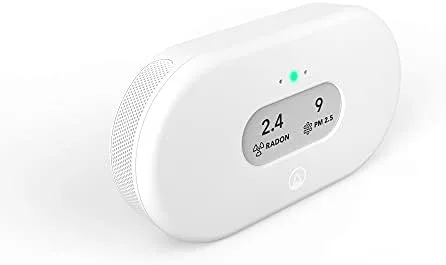
Airthings View Plus includes a dedicated radon sensor and explicitly measures radon across 0–20,000 Bq/m³ (0–500 pCi/L). It’s designed for long-term monitoring, but radon readings require an initial 1-month calibration period before you should treat them as fully settled.
Qingping Air Monitor 2 does not include radon detection at all (its measured metrics focus on PM2.5/PM10, CO₂, eTVOC, temperature, humidity, and noise). As a result, it can’t be used for radon risk awareness, baseline tracking, or mitigation verification in any form.
Conclusion: For radon specifically, this isn’t a close comparison—Airthings View Plus is the only one of the two that can monitor it, and its wide stated range supports serious, long-term tracking.
Winner: Airthings View Plus
Particulate Matter Sensing
PM coverage (what it can measure)
Airthings View Plus measures PM2.5 (and not PM10), positioning it as a fine-particle indicator alongside its broader IAQ suite. Its published PM2.5 measurement range is 0–500 μg/m³, which covers typical indoor baselines and most everyday pollution events.
Qingping Air Monitor 2 measures both PM2.5 and PM10, giving you visibility into larger particles like dust and some allergens that won’t always track neatly with PM2.5 alone. It also specifies a wider range for both particulate metrics: PM2.5 0–999 μg/m³ and PM10 0–999 μg/m³.
Conclusion: Qingping Air Monitor 2 has the clearer advantage for particulate monitoring breadth because it adds PM10 on top of PM2.5, and it supports a wider stated measurement range (999 vs 500 μg/m³ for PM2.5).
Maintenance and long-term serviceability
Airthings View Plus uses an integrated particulate sensor (no replaceable PM module is specified), so long-term upkeep is mainly about keeping placement sensible and trusting the device’s stability over time. That «set it down and forget it» ownership model aligns well with passive, trend-based monitoring—but it offers less flexibility if you ever suspect particulate sensor degradation.
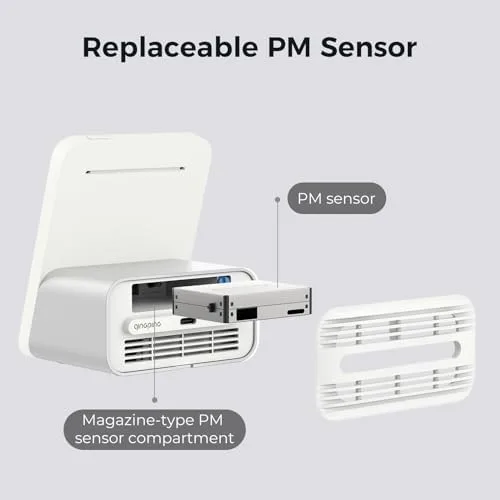
Qingping Air Monitor 2 is designed with a replaceable PM sensor, a concrete serviceability benefit if you plan to keep the unit for years or run it in dustier environments. This also fits Qingping’s more interactive «instrument panel» style use, where users may care more about responsive day-to-day particulate feedback loops.
Conclusion: Qingping Air Monitor 2 again has the edge because a user-replaceable PM sensor is a direct, practical lever for extending usable lifespan and reducing «whole-device replacement» risk.
Winner: Qingping Air Monitor 2
Gas & VOC Sensors
CO₂ sensing range (how high it can measure)
Airthings View Plus measures CO₂ from 400–5000 ppm, which is sufficient for typical indoor ventilation decisions (e.g., detecting buildup in bedrooms or offices). It’s also designed around longer-term environmental monitoring, which pairs well with CO₂ trend awareness rather than constant «minute-to-minute» tuning.
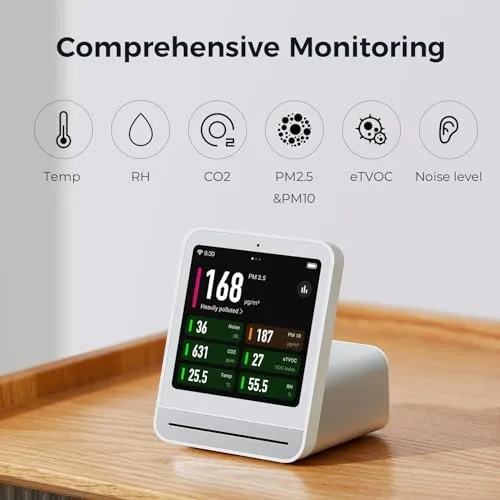
Qingping Air Monitor 2 measures CO₂ from 400–9999 ppm, giving it more headroom for edge cases like crowded rooms, poorly ventilated spaces, or testing the upper extremes of «stale air.» That wider ceiling can be useful if you want to quantify just how bad peak CO₂ gets before you intervene.
Conclusion: For maximum CO₂ headroom, Qingping Air Monitor 2 wins (9999 ppm vs 5000 ppm), though both cover the most common home ventilation range.
VOC reporting scale + calibration expectations
Airthings View Plus reports VOCs on an absolute scale of 0–10,000 ppb, which can be easier to interpret when you want a concrete concentration number. The trade-off is an initial stabilization period: Airthings notes 7 days of initial calibration for VOCs and CO₂, which aligns with its «slow and steady» monitoring philosophy.
Qingping Air Monitor 2 reports VOCs as a VOC Index (0–500) and also lists 0.005–9.999 mg/m³, which tends to emphasize relative changes and trend direction. It also claims real-time measurements without manual calibration (per review-source SoT), which can better suit hands-on «I changed something—did it help?» workflows.
Conclusion: Tie—Airthings is stronger if you prefer ppb-based VOC numbers, while Qingping is often better for trend/reactive use thanks to its VOC Index and no-user-calibration approach.
Extra «air context» sensors (pressure vs noise)
Airthings View Plus includes an air pressure sensor, which can add context to indoor-environment patterns and helps it function as a broader environmental monitor. That’s a meaningful add if you’re correlating comfort and seasonal shifts over time.
Qingping Air Monitor 2 does not include air pressure, but it does add a noise sensor, expanding «air quality» into a more general room-condition dashboard. For users actively managing a room (sleep, work calls, nursery), noise can be a practical metric alongside CO₂ and VOC changes.
Conclusion: Tie—Airthings wins on environmental context with air pressure, while Qingping wins on room-awareness with noise.
Winner: Tie
Display & Daily Interaction
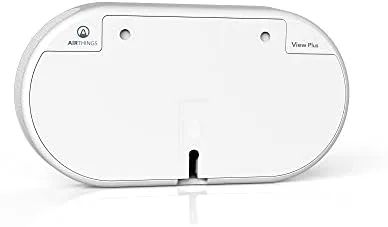
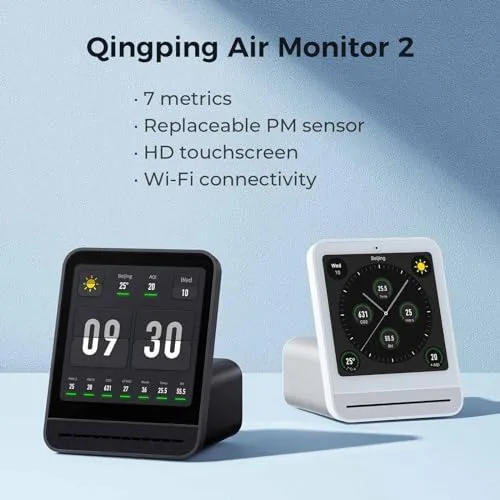
Airthings View Plus uses a 2.9-inch ePaper display with a red/yellow/green glow indicator, designed to be always-on and readable at a glance. Combined with its up to 2-year battery life on 6 AA batteries, it fits a «check status, walk away» routine rather than constant interaction. In practice, this aligns with Airthings’ strength in long-term, passive monitoring rather than rapid on-device exploration.
Qingping Air Monitor 2 uses a 4-inch IPS touchscreen with adjustable brightness, which supports denser at-a-glance information and direct navigation on the device. That interaction-first design pairs with a much shorter off-charger runtime—about 3 hours unplugged from a full charge—so it’s effectively meant to live on USB-C power while you tap and check it frequently. Reviews also describe it as providing real-time measurements without manual calibration, reinforcing the idea of quick feedback loops.
Conclusion: Qingping wins for active, high-information, on-device interaction (larger 4-inch touchscreen vs 2.9-inch e-paper), while Airthings wins for ambient visibility and low-maintenance daily use (always-on e-paper plus up to 2 years on batteries vs ~3 hours unplugged).
Airthings View Plus can feel less satisfying if your daily interaction is «try something and watch the number change right now,» because its monitoring approach emphasizes stabilization and trend confidence (including long sensor settle-in time: ~1 month for radon, 7 days for VOC/CO₂ per manufacturer guidance). Multiple reviewers report connectivity and syncing problems with Airthings that can interrupt the «glance and trust» experience if cloud updates lag or drop (report).
Qingping Air Monitor 2, by contrast, encourages frequent checking—great for ventilation or purifier adjustments—but that «instrument panel» style can lead to over-monitoring, and its value can hinge more on the companion ecosystem (Mi Home / Qingping+). While its Wi‑Fi spec lists broad support, the manufacturer also states it requires 2.4 GHz Wi‑Fi, which can add setup friction in mixed-band homes.
Winner: Tie — Airthings is better for glanceable, low-power, low-touch monitoring, while Qingping is better for hands-on, real-time interaction; the «best» display depends on whether you want ambient awareness or a control-panel workflow.
Power & Battery Life
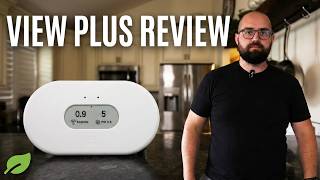
Airthings View Plus is built for low-maintenance placement: it runs on 6 AA batteries or can be powered via USB‑C, with a rated battery life of up to 2 years. That long runtime is a practical advantage for shelves, hallways, basements, or rentals where adding an outlet (or running a cable) isn’t realistic. It also aligns with Airthings’ «set it down and trend over time» monitoring style in long-term, fixed locations.
Qingping Air Monitor 2 uses a built-in 1800 mAh / 3.7 V lithium-ion battery and takes power over USB‑C (5V⎓1A), but its unplugged runtime is listed at about 3 hours from a full charge. In practice, that turns «battery power» into more of a short-term buffer for moving it briefly, rather than true cordless operation for days. For most desks and nightstands, you should expect it to live tethered to USB power.
Conclusion: For battery longevity and placement flexibility, Airthings View Plus has a decisive advantage (up to 2 years vs about 3 hours unplugged). Qingping’s battery is useful for brief moves and cable management, but it doesn’t materially support long-term portable use.
Winner: Airthings View Plus
Software & Ecosystem
Companion apps, dashboards, and multi-device management
Airthings View Plus uses the Airthings app plus a web dashboard, positioning it as a more dedicated IAQ monitoring platform for long-term trends and managing multiple monitors consistently. On the integration side, it explicitly supports Alexa, Google Assistant, and IFTTT via its companion platform spec.
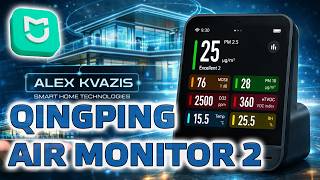
Qingping Air Monitor 2 relies on Mi Home / Qingping+ for remote monitoring and historical data export, which can be convenient if you already run Xiaomi-style smart home devices. The trade-off is app fragmentation: you’re effectively depending on a dual-app ecosystem for the full experience rather than one unified IAQ platform.
Conclusion: Airthings View Plus has the edge for a purpose-built monitoring platform and clearer third-party integration story (Alexa/Google/IFTTT), while Qingping’s ecosystem is better when you’re already invested in Mi Home and don’t mind juggling apps.
Connectivity expectations and long-term platform risk
Airthings View Plus is 2.4 GHz Wi‑Fi only (802.11b/g/n) and explicitly doesn’t support 5 GHz or captive portals, which can be a real constraint in modern networks. Multiple reviewers report connectivity/syncing friction from time to time, including discussions on Reddit.
Qingping Air Monitor 2 lists broader Wi‑Fi capability—2.4 GHz or 5 GHz, including 802.11a/b/g/n/ac/ax—which can make initial network compatibility easier on paper. That said, the SoT also notes a manufacturer claim that it requires 2.4 GHz Wi‑Fi, highlighting the kind of ecosystem/compatibility ambiguity that can crop up when value depends heavily on apps and cloud behavior over time.
Conclusion: Airthings is more «known-quantity» but more limited (2.4 GHz only, no captive portals), whereas Qingping can be more flexible—or more confusing—depending on how its app/cloud requirements shake out in your specific network and over years of ownership.
Winner: Airthings View Plus
The Bottom Line
After digging into sensors, daily usability, and long-term ownership, the decision comes down to whether you want maximum health-risk coverage or a more interactive, value-driven dashboard.
Best for Radon Monitoring: The Airthings View Plus is the only option here with dedicated radon detection, built for stable long-term tracking with low-maintenance power.
Best for Active Air Quality Management: Choose the Qingping Air Monitor 2 for its touchscreen-first experience, real-time feedback, and broader «instrument panel» approach (including PM10 and noise).
Best Budget Choice: The Qingping Air Monitor 2 delivers the strongest value by covering the core IAQ metrics (minus radon) while adding a more engaging display and serviceable PM module.
Best Set-and-Forget Monitor: The Airthings View Plus wins if you want always-on, glanceable monitoring plus up to two years on batteries—ideal for passive trend tracking across rooms.
Overall,
because radon detection is the non-negotiable differentiator in this comparison, and its long battery life and monitoring-first ecosystem reinforce the «place it and trust it» use case. The trade-off: the Qingping Air Monitor 2 is simply more satisfying for hands-on adjustments with its touchscreen and richer day-to-day feedback.If radon isn’t relevant where you live, go Qingping for the best bang-for-buck interaction; otherwise, pick Airthings and prioritize long-term health-risk visibility first.
FAQ
Does the Qingping Air Monitor 2 detect radon?
Can I use the Airthings View Plus without Wi‑Fi?
How often do the sensors need calibration?
Which monitor is better for allergies?
Is the Qingping Air Monitor 2 portable?
Does the Airthings View Plus detect carbon monoxide?
Can I replace the PM sensor myself on the Qingping Air Monitor 2?
Does the Qingping Air Monitor 2 have an audible alarm for poor air quality?
📄 Used Manuals & Documentation
Airthings View Plus
Qingping Air Monitor 2
"Images are used for editorial and informational purposes only. All trademarks and images belong to their respective owners."